 By Shelesh Joshi and Rajiv Menon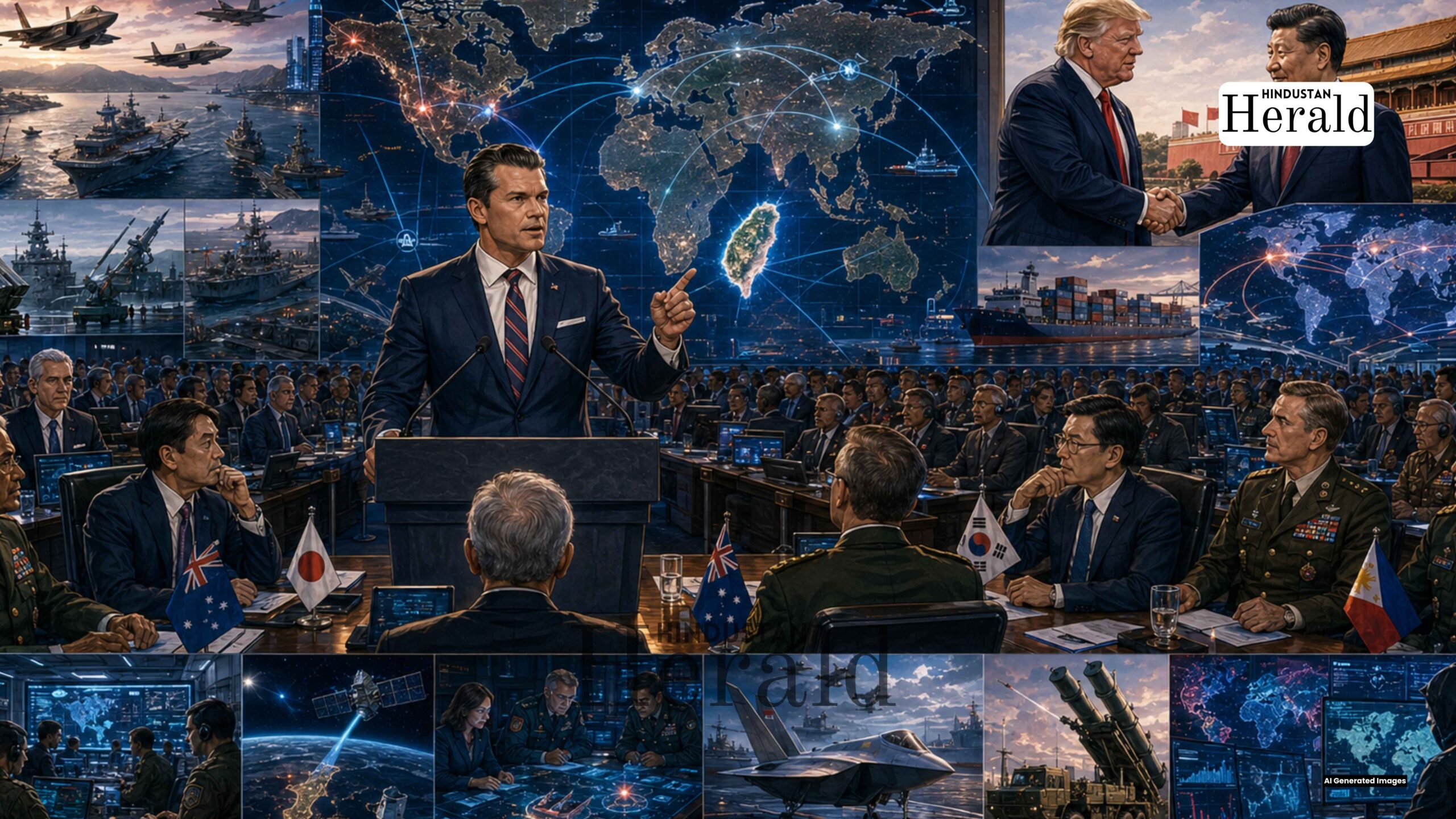
Singapore, May 30: When Pete Hegseth walked into the Shangri-La Hotel on Saturday morning, the room already knew what it wanted to hear. Allies across the Indo-Pacific had spent the better part of two weeks in quiet panic after watching President Trump shake hands with Xi Jinping in Beijing, call him a “great leader,” and talk about a “fantastic future together.” Defence ministers, military chiefs, senior diplomats all of them had been quietly recalibrating their assumptions since those photographs landed on their desks. They came to Singapore looking for clarity.
In the most direct sense, Pete Hegseth reassures Pacific allies on Saturday he stood at the podium, made the case for continued American engagement, and told the room that Washington was not going anywhere. But reassurance, it turns out, comes in different grades. And the grade delivered on Saturday left several important questions exactly where they started.
The nervousness in that conference room was not abstract or performative. These were people whose governments had genuine security decisions riding on what Washington was about to signal. They needed to know whether the warmth coming out of the Trump-Xi summit in Beijing had fundamentally rewritten the terms of American commitment to this part of the world, or whether it was the kind of diplomatic warmth that evaporates the moment things get serious.
Hegseth stood at the podium, made his case, and flew home. Whether the case landed the way Washington intended is a different question entirely.
Quick Summary
- Pete Hegseth reassures Pacific allies at the 23rd Shangri-La Dialogue in Singapore on May 30, 2026, his second consecutive appearance at the forum
- Taiwan was not mentioned even once in Hegseth’s 2026 address, against five direct mentions in his speech at the same forum in 2025
- The U.S. has paused a $14 billion weapons package to Taiwan following President Trump‘s summit with Xi Jinping in Beijing two weeks ago
- 10 Asian nations were publicly named by Hegseth as model defence partners, with India, Japan, Australia, the Philippines, and South Korea on that list
- Chinese Defence Minister Dong Jun did not attend the Shangri-La Dialogue for the second year running, with Beijing sending a lower level delegation instead
- Trump reportedly called Taiwan arms sales a “bargaining chip” in China negotiations and delayed signing a $14 billion arms deal for the island
A Different Speech From a Different Register
Last year at this same podium, Hegseth came out swinging. He told the forum that China was no longer simply building military capacity to take Taiwan. It was “actively training for it, every day.” He called the threat real and imminent. He named Beijing directly, repeatedly, without diplomatic cushioning. China‘s foreign ministry fired back within twenty four hours, accusing him of trying to sow division across the region. It was exactly the kind of confrontational address the Trump administration wanted to make at that particular moment. Saturday was different. Noticeably, deliberately different.
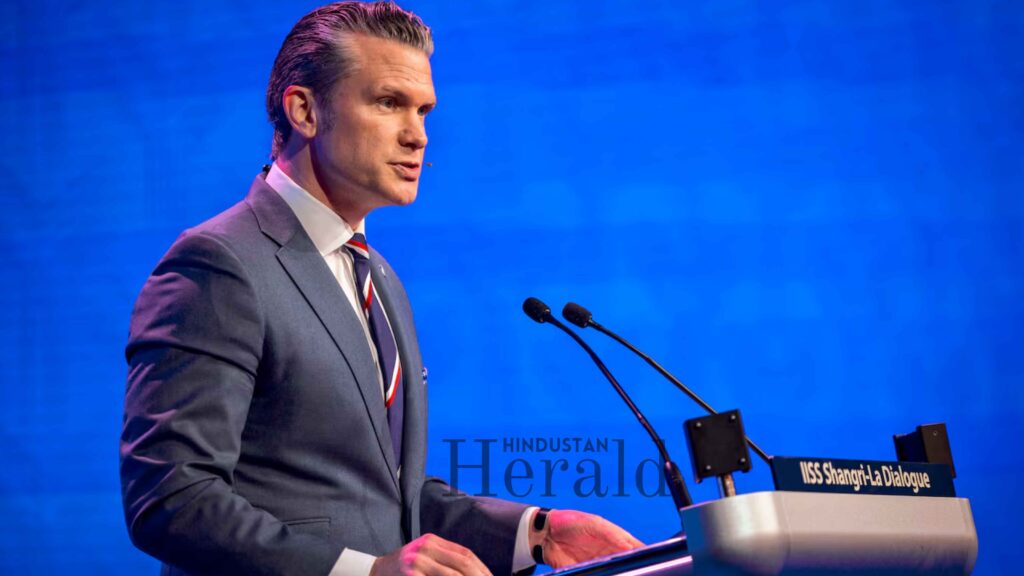
The word Hegseth kept returning to throughout his address was “quiet.” As reported by the Associated Press, he used it repeatedly, building an argument for what he called “measured and deliberate strength” rather than open confrontation. He spoke about Washington maintaining commitment to a “lasting and favorable balance of power” in the Pacific. The right words, all of them. Delivered in a register noticeably lower than anything this room had heard from him before. And then there was the silence around Taiwan.
Five mentions last year. Zero on Saturday. Not once, in an entire keynote address to Asia‘s most consequential annual defence gathering, did the word leave his mouth. He had just returned from Beijing alongside his president, who had been photographed warmly with the man who has spent decades insisting the island belongs to him. Every delegate in that room read the omission the same way. The question was what to do with it.
Pete Hegseth Reassures Pacific Allies But the Taiwan Silence Was Deafening
The Beijing summit is the only real lens through which Saturday’s tonal shift makes sense. Trump came away calling Xi a great leader and talking about a shared future in language that went well beyond diplomatic courtesy. It sounded like two men who had reached a genuine understanding, even if neither had publicly explained its full terms. Hegseth was present throughout those meetings. He came back to Washington and then flew almost immediately to Singapore to face the allies most directly affected by whatever had been discussed.
On the ground in Singapore, the broader picture became clear quickly. Pete Hegseth reassures Pacific allies as he softens China threat rhetoric that was the story the weekend was writing in real time, and every delegate in that room could feel it taking shape from the opening minutes of his address.
According to the Associated Press, he told the forum that both governments had agreed to pursue “a constructive relationship of strategic stability, based on fairness and reciprocity,” and that practical agreements remained possible “where our interests align.” That is not the language of strategic competition. The people seated in that conference hall understood the difference between those two things without needing it explained.
To his credit, Hegseth did not pretend the competition had ended. He maintained that China should not be allowed to dominate the Indo-Pacific, and that Beijing‘s military buildup remained a source of “rightful alarm.” He kept enough hard language in the speech to prevent it reading as a complete reversal of 2025.
Still, the question that hung over every seat in that room was one no prepared remarks can dissolve on their own. If something goes seriously wrong in the Taiwan Strait in the months ahead, what does Washington actually do? Nobody received a satisfying answer to that on Saturday. The people in that room are not the kind who let unanswered questions go quietly.
Taiwan: The Absence That Said Everything
The silence around Taiwan was not just rhetorical. It had operational weight that every delegate felt immediately. The U.S. is legally required to help Taiwan maintain its own defence. It has held to a posture of strategic ambiguity about direct military intervention for decades, a balancing act designed to deter both a Chinese attack and a unilateral independence declaration from Taipei. That ambiguity has always been uncomfortable to live with. Right now it is beginning to feel like something more actively destabilising.
As per the Associated Press, Hegseth said there had been “no change in our status” toward Taiwan when pressed at the forum. But he declined entirely to address the pending arms package. “Any decision about future Taiwan arms sales, as the president said, will rest with him.” Technically accurate. Diplomatically evasive. Practically useless to anyone in that room trying to understand where American commitment genuinely stands at this moment.
The Hill had reported before the forum opened that the U.S. had already paused a $14 billion weapons package to Taipei, with officials giving conflicting and sometimes contradictory explanations. Tomahawk missile deliveries to Japan had also been quietly delayed, setting back Tokyo‘s long range deterrence plans by a margin its defence planners consider significant. These are not symbolic gestures. These are real operational decisions with real consequences for how the regional security balance actually functions. Then the Fox News interview arrived in the hours after Hegseth‘s speech and managed to complicate everything he had just carefully constructed.
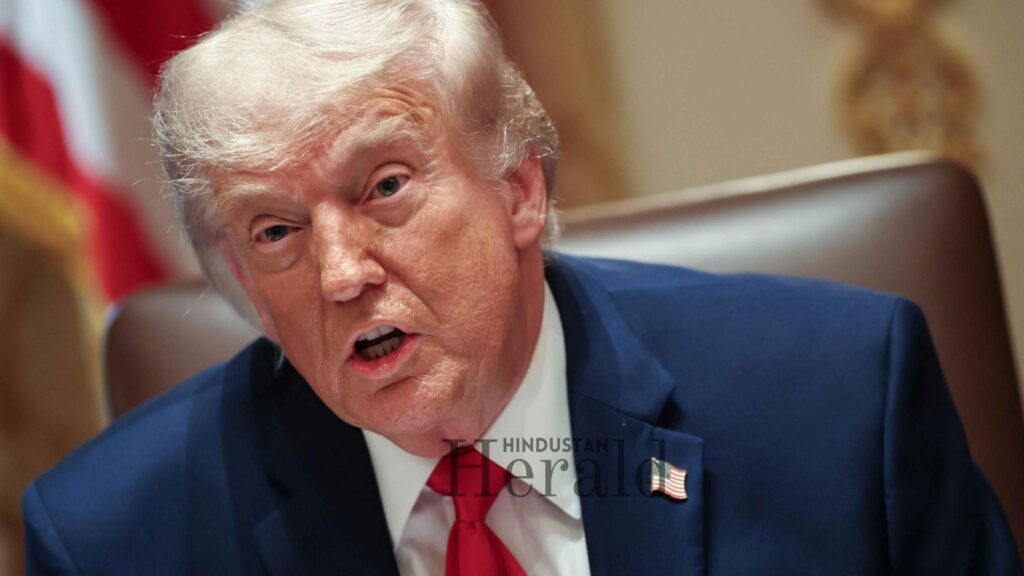
Trump, speaking publicly after the forum, said he was not looking to have someone “go independent” on Taiwan and questioned why he would travel “9,500 miles to fight a war.” Ryan Hass at the Brookings Institution wrote in response that those comments placed Trump‘s stated position on Taiwan independence closer to Beijing‘s preferences than any recent American president had openly expressed. That is not a fringe observation. That is a serious analyst at a serious institution putting something significant on the record.
Trump also reportedly described Taiwan arms sales as a “bargaining chip” in negotiations with China. Those two words landed in Taipei the way you would expect. The ripples are still moving.
The legal framework for supporting Taiwan remains intact. The military relationships continue. But the political will animating all of that architecture is now something allies watch with active concern rather than comfortable assumption. There is a meaningful difference between those two states of mind when you are a democracy sitting across a strait from the world’s largest military force.
India Named, and What It Is Actually Worth
New Delhi will have absorbed Saturday’s address with particular attention, because India appeared on the list that matters most in the current Trump administration’s Asia calculus. Hegseth publicly identified ten Asian nations as model defence partners, the governments the Trump administration considers genuinely serious about regional security and worth rewarding with deeper access. India made that list alongside Japan, Australia, South Korea, the Philippines, Indonesia, Singapore, Malaysia, Thailand, and Vietnam. For a government that has spent years repositioning India as an indispensable strategic partner rather than a hedging neutral, public acknowledgment at this level of forum carries genuine diplomatic weight.
“We are moving them to the front of the line,” Hegseth said explicitly, promising expedited arms sales, industrial collaboration, and expanded intelligence sharing. In practical terms, for a country deepening its defence relationship with Washington through QUAD, the iCET technology initiative, and a growing stack of bilateral defence agreements, that kind of public commitment opens real and operational doors. But India did not reach its current strategic position by accepting flattery without reading the full picture.
The same transactional logic that rewards New Delhi today can recalibrate the moment Washington‘s priorities shift. India has always guarded its strategic autonomy precisely because it understands, at an institutional level, that external guarantees carry an expiry date. The Trump administration’s interest based framing aligns naturally with how Indian foreign policy has always preferred to think about partnerships. But aligning with a framework and trusting a partner’s long term consistency are genuinely different things, and New Delhi knows the difference better than most.
India also carries its own live China tensions into every conversation about Indo-Pacific security. The Line of Actual Control in Ladakh remains an unpredictable friction point. Beijing‘s expanding footprint across the Indian Ocean Region is a direct and daily concern for New Delhi‘s strategic planners. India wants credible American engagement in the region not to outsource its security but because a credible U.S. presence complicates China‘s regional calculations in ways that serve Indian interests without requiring New Delhi to carry that burden entirely alone.
A Washington that quietly softens on Taiwan today may prove less willing to hold firm on other pressure points tomorrow. That concern does not get voiced from South Block in public. But it gets thought about continuously.
Partners, Not Protectorates: The Doctrine Behind the Speech
The most direct moment of Hegseth‘s address came when he stripped away the diplomatic language and said plainly what the Trump administration has been communicating at every major international forum since taking office. “We need partners, not protectorates.”
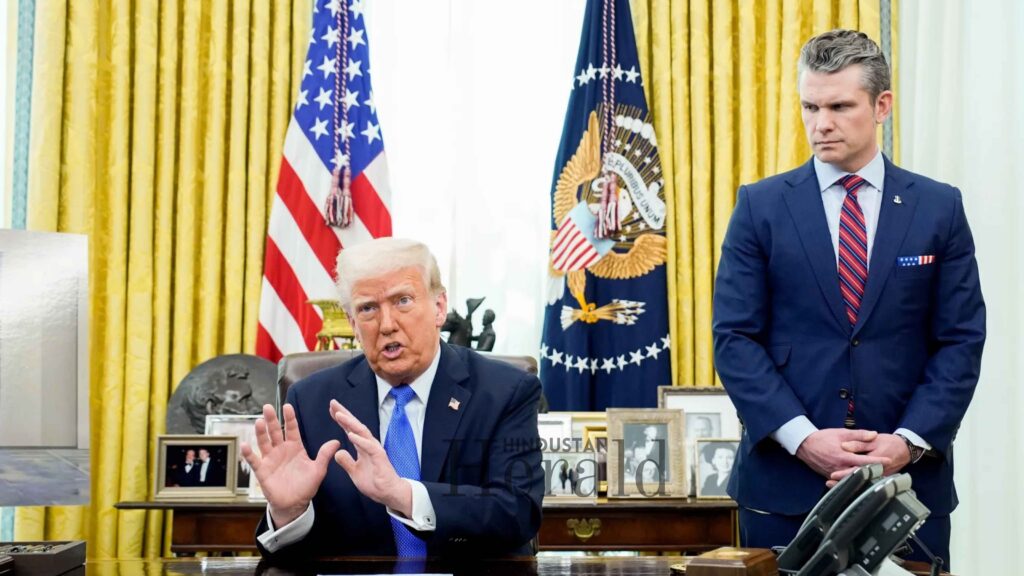
The room understood immediately. The era of broad American security cover provided at modest cost to the recipient is definitively over. Nations that invest seriously in their own defence and demonstrate genuine military capability will be rewarded with deeper access and stronger partnership. Nations that do not will find themselves without the backstop they perhaps assumed was permanent. He had pointed words for European allies, unnamed but unmistakable, who he said had gotten distracted by what he called “empty globalist rhetoric about the rules based international order.” His praise for Asian partners was deliberate by contrast.
“Our partners in Asia have long understood that the bedrock of a durable partnership is not based on idealistic values but on the concrete alignment of national interests,” he said. “When our interests diverge, we adjust pragmatically, without the drama or the moralizing.” There is something genuinely direct about that framing, even for those who find it uncomfortable. At minimum, it tells you clearly where you stand.
The problem is that transactional relationships are only as stable as the transaction itself. Transactions get renegotiated when one side decides the terms no longer serve its interests. For smaller nations across Southeast Asia watching a U.S. defence secretary praise interest alignment from a podium while his president simultaneously calls Taiwan a bargaining chip, the reassurance has visible and real limits. You cannot build a thirty year security strategy on a partnership that openly reserves the right to adjust pragmatically whenever interests shift.
Beijing Stays Away, and the Reason Matters
Chinese Defence Minister Dong Jun did not come to Singapore. Second consecutive year. The Shangri-La Dialogue is not a secondary regional event. It is Asia‘s most significant annual security gathering. Sending a lower level delegation two years running is a deliberate strategic communication, not an oversight. From Beijing‘s perspective, the forum amplifies Washington‘s narratives and marginalises China‘s interests. Downgrading its presence is a way of contesting that framing without dignifying it with a full ministerial engagement. Beijing was still scheduled to address the forum on Sunday through a more junior official, giving it the floor after Hegseth had already set the weekend’s conversational tone.
A senior U.S. senator present at the conference, as reported by The Star, delivered an observation that landed quietly but heavily among delegates. The Trump-Hegseth national defence strategy had actually “downgraded the importance of the Indo-Pacific” compared to the first Trump term. That is not political point scoring. That is a member of the U.S. establishment raising a substantive concern about whether the words delivered from a podium in Singapore are matched by the strategic documents being written back in Washington. Delegates heard that. They carried it home with them.
What Saturday Settled, and What It Did Not
There is a version of Saturday that reads as a qualified success. Hegseth showed up. He made a sustained and articulate case for American engagement in the Indo-Pacific. He named allies publicly. He made specific promises about arms access and intelligence sharing detailed enough to be meaningful. He kept enough hard language about Chinese military ambition to prevent the speech reading as strategic retreat. He did the work the job required. And then there is the other version of the same speech, which tells a harder story.
A defence secretary who did not say Taiwan once. Who deflected every arms question back to a president who has since described those arms as a bargaining chip. Who returned from Beijing and delivered his softest address to this forum yet, with his most careful hedging directed precisely at the country whose shadow falls heaviest over every conversation happening in that hotel this weekend.
Both versions are accurate. That is what makes the situation genuinely difficult to read, and genuinely concerning for the allies who came to Singapore most urgently needing clarity.
For India, the public recognition is real and the opportunities are worth pursuing seriously. For Taiwan, the silence, the paused weapons package, and the president’s subsequent comments form a picture that is harder to look at directly. For the broader Indo-Pacific, Saturday confirmed something experienced diplomats in this region have long understood but rarely say in official settings.
American commitment here has never been an unconditional guarantee. It has always been a relationship requiring constant management and active investment from the parties who depend on it most. The countries that understand that and plan accordingly are the ones that end up on the list of ten named partners. The countries that assumed the guarantee was permanent are learning a harder lesson in real time.
Hegseth came to Singapore to reassure Pacific allies, and in the most visible sense, he did exactly that. He made the commitments, named the partners, and held the strategic line just firmly enough to keep the room from open alarm. Whether those words hold their value as the Taiwan situation continues to evolve, and as the Trump-Xi relationship either deepens or fractures, is the question every capital from New Delhi to Tokyo to Manila is quietly sitting with right now.
Stay ahead with Hindustan Herald — bringing you trusted news, sharp analysis, and stories that matter across Politics, Business, Technology, Sports, Entertainment, Lifestyle, and more.
Connect with us on Facebook, Instagram, X (Twitter), LinkedIn, YouTube, and join our Telegram community @hindustanherald for real-time updates.

Tracking world politics, global markets, trade movements, policy decisions, and the changing balance of economic power.
- Shelesh Joshi

- Shelesh Joshi
- Shelesh Joshi
- Shelesh Joshi


Specializes in South Asian geopolitics and global diplomacy, bringing in-depth analysis on international relations.
- Rajiv Menon
- Rajiv Menon
- Rajiv Menon
- Rajiv Menon