 By Shelesh Joshi and Rajiv Menon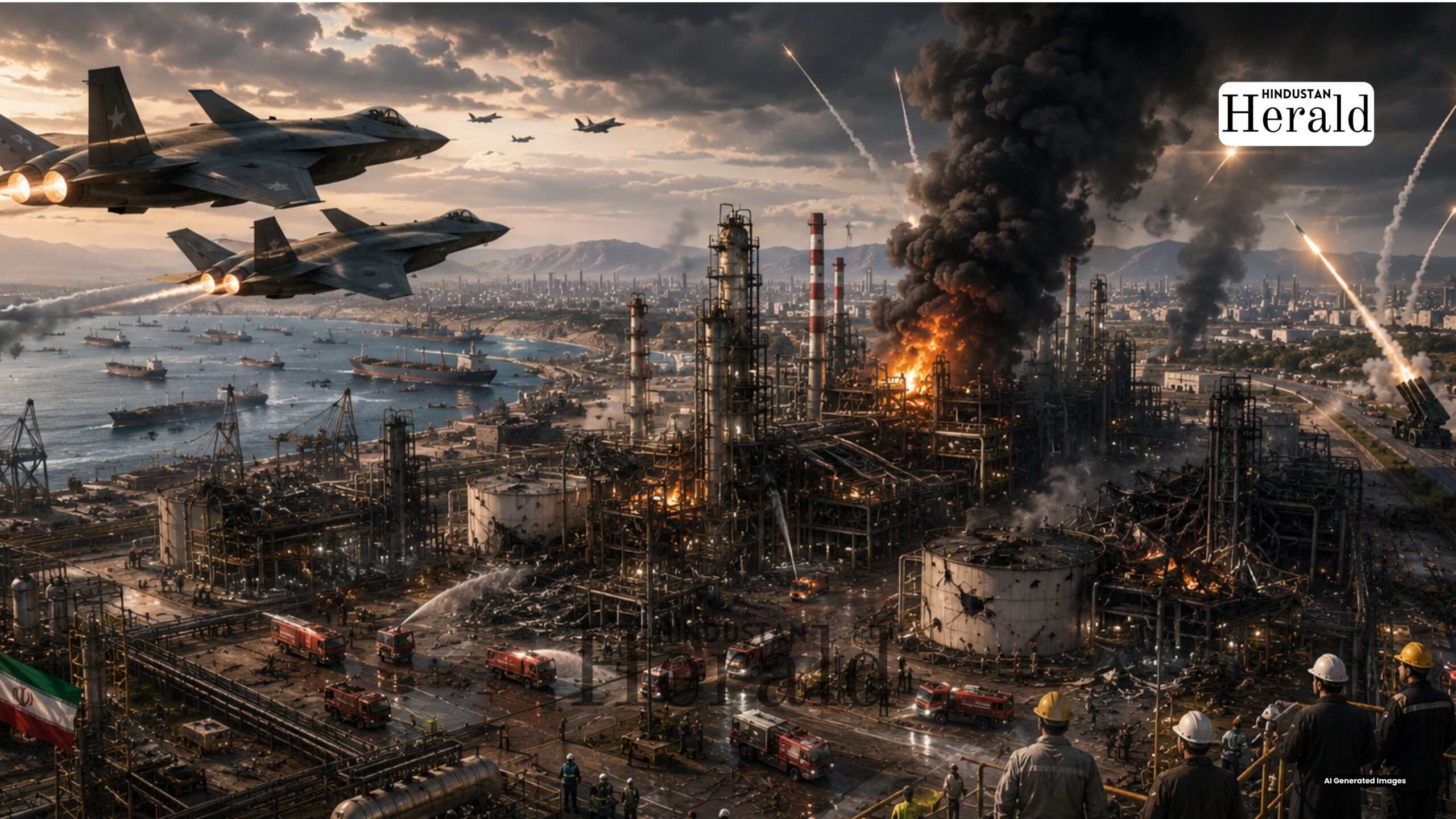
New Delhi, June 8: The Israel Iran strikes escalated sharply on Monday when Israeli jets hit the Karun Mahshahr Petrochemical Company in Khuzestan Province. Iran fired two waves of ballistic missiles back and the April 8 ceasefire, already fraying for weeks, did not survive the day.
The Mahshahr strike, confirmed by both the IDF and Iranian state linked agencies, was part of a broader Israeli assault across multiple Iranian cities combined with two waves of Iranian ballistic missiles intercepted over Israeli territory and a fresh Houthi launch from Yemen. Donald Trump spent his Sunday publicly trying to stop an ally that has stopped listening. For India, which has spent months threading a careful diplomatic line through this crisis, the return to open warfare between Israel and Iran is a direct problem: for energy supply, for supply chains, and for a foreign policy posture New Delhi has worked hard to maintain since February 2026.
Quick Summary
- The Israeli Air Force struck the Karun Mahshahr Petrochemical Company in Iran’s Khuzestan Province at approximately 07:30 on June 8, 2026. The IDF confirmed “several targets” hit; Iranian officials confirmed two separate impacts at the facility.
- Iran’s Mehr News Agency reported that Israeli television networks claimed up to 20 targets were struck across Iran during Monday’s broader assault, with confirmed explosions in Tehran, Tabriz, and Isfahan.
- This was the second Israeli assault on Mahshahr’s industrial zone. April 4, 2026 strikes destroyed the Fajr 1 and Fajr 2 utility plants and shut down production across more than 50 petrochemical facilities, cutting electricity to an estimated 500,000 Khuzestan residents.
- The trigger: Israel struck a residential building in Beirut’s southern suburbs on June 7, killing 2 and wounding 20, defying a Washington request to stand down. Iran responded by firing ballistic missiles at Israel for the first time since the April 8 ceasefire.
- US benchmark West Texas Intermediate crude jumped 3.05 percent to $93.30 a barrel Monday morning. Brent crude rose to $95.99.
- India’s Operation Urja Suraksha was already underway, escorting 22 Indian flagged vessels carrying over 600 seafarers out of the Persian Gulf. The Strait of Hormuz handles roughly 41 percent of India’s crude imports, 55 percent of its LNG imports, and 88 percent of its LPG imports.
Israel Iran Strikes Confirmed: What Monday Morning Revealed
The IDF issued a statement saying the Israeli Air Force had struck “several targets at the petrochemical complex in Mahshahr, in southwestern Iran,” with further details to follow. By the time that came out, Iran’s Fars and Mehr News Agencies had already published their own reports. Iran broke the story on itself.
A security official quoted by Fars named the specific target as the Karun Petrochemical Company and said it had suffered partial damage. The Organisation of the Special Economic Zone in Mahshahr confirmed an emergency evacuation of all day shift employees. Two impacts at the Karun facility, around 07:30. No casualties, Iranian officials said.
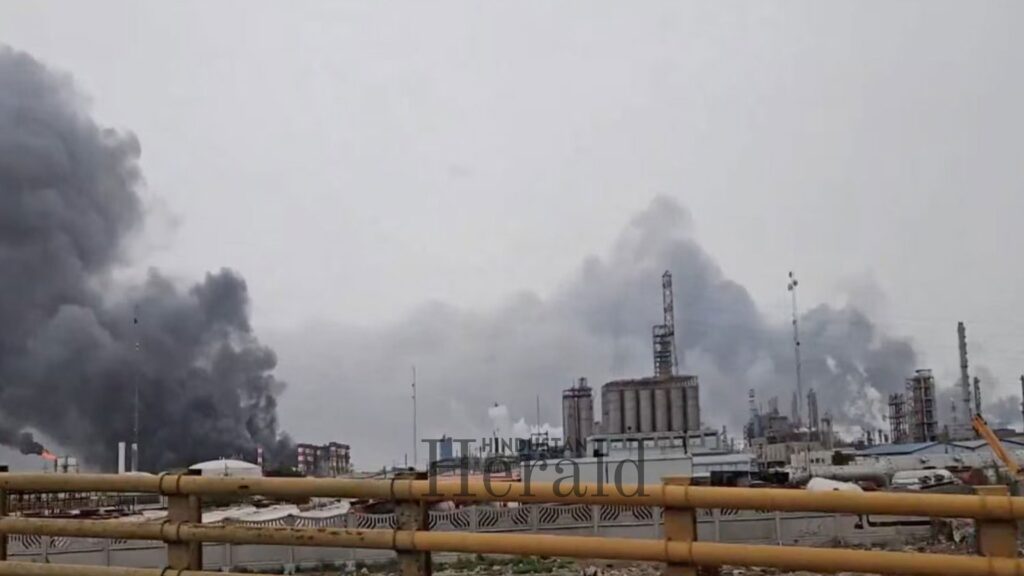
What Monday’s confirmation also revealed was how far the strikes had spread. The IDF confirmed hitting military targets across western and central Iran, posting on Telegram that Israeli forces had struck targets “belonging to the Iranian terror regime.” Mehr News Agency reported explosions in Tehran, Tabriz, and Isfahan three of the country’s biggest industrial and urban centres. Iran shut down airspace around Tehran’s Imam Khomeini International Airport shortly after, according to Axios, which gives some sense of the civilian disruption beyond the strike sites themselves.
An hour after the Israeli strikes, the IDF confirmed intercepting a ballistic missile from Yemen toward central Israel. First Houthi attack since April. The conflict’s multi front character, it turns out, was only paused.
Israeli television networks also claimed, per Mehr News Agency, that up to 20 separate targets were struck inside Iran during Monday’s broader wave. Specific details beyond the confirmed sites had not been independently verified at time of publication.
What Israel Keeps Hitting in Mahshahr, and Why It Matters
It is worth being specific about what Mahshahr actually is, because “petrochemical complex” doesn’t quite capture it. Bandar-e Mahshahr in Khuzestan Province forming a coastal industrial hub with Bandar Imam along the Gulf is home to Iran’s Petrochemical Special Economic Zone: roughly 3,000 hectares, close to a billion dollars in outside investment, and a production capacity target of 19 million tonnes a year. It makes basic chemicals, polymers, fertilizers, and raw materials that go into plastics, textiles, and medical equipment.
Iranian officials have publicly valued the total investment in the Mahshahr complex at around 30 billion dollars. The zone connects to railway networks and waterways. It is, in short, a genuine export gateway which is precisely what makes it financially significant to Iran’s non oil foreign exchange earnings.
The first Israeli assault here came on April 4, 2026. IranWire, reporting through verified local sources, confirmed that the Fajr 1 and Fajr 2 petrochemical plants and parts of the Bandar Imam Petrochemical facility were hit. Electricity across the entire zone went out immediately. The New York Times, citing two senior Iranian oil ministry officials, reported a total production shutdown across more than 50 plants. Fajr 1 and 2 had supplied gas, power, and industrial water to every facility in the zone destroying them was, effectively, cutting the power to an entire industrial city in the middle of summer.
Hamed Shams, head of marketing and communications for Iran’s petrochemical industries, noted publicly that the same infrastructure supplies electricity to 500,000 Khuzestan residents during summer. Mehdi Bostanchi, a representative of Iranian industrial leaders, wrote on social media that attacking Mahshahr “means attacking the heart of Iran, the vital arteries of Iran’s economy.”
The Middle East Forum documented that the broader Israeli campaign also hit two of Iran’s most significant steel production centres in Isfahan and Khuzestan which together account for roughly half the country’s total steel output. Steel exports bring Iran between five and seven billion dollars annually. Israel’s stated justification is that IRGC affiliated holding companies hold 49 percent of shares in Khuzestan Steel Company, making these facilities targets it classifies as dual use infrastructure with direct links to military financing.
Whether you accept that framing or not, what is not in dispute is that the economic damage to Iran from this campaign has been severe and structural and Monday’s strike on Karun suggests it is not over.
The 48 Hours That Ended the Ceasefire
The April 8 ceasefire, brokered with significant American involvement according to NBC News, had been holding barely, and in dispute for nearly two months. The thread snapped on Sunday, June 7, when Israel struck Beirut’s southern suburbs without warning, defying a Washington request to stand down, as reported by the Associated Press and NPR.
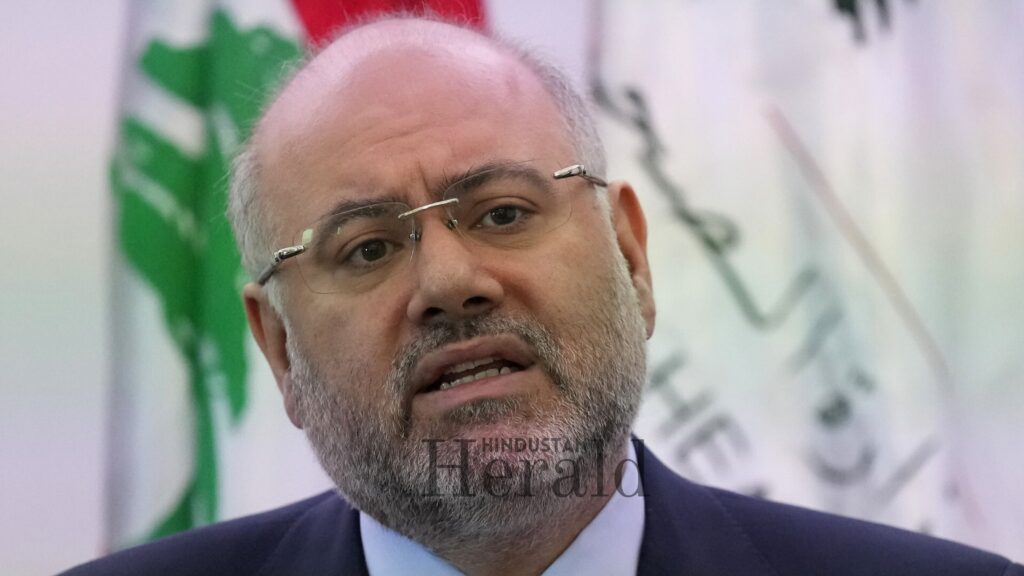
Lebanon’s health ministry confirmed two dead and 20 wounded in a residential building hit. Israel called it retaliation for Hezbollah firing at northern Israel earlier that day. That may well be true. What is also true is that Iran had said, explicitly and repeatedly, that a strike on Beirut would mean full scale war. On Sunday night, the IRGC delivered.
In a statement to The New York Times, the IRGC said the April ceasefire “was conditional on a cease fire on all fronts,” and that “tonight’s operation was a warning, and if aggressions are repeated, the responses will be broader.” First direct Iranian missile attack on Israel since the ceasefire. The language left no room for ambiguity about what came next.
On Monday, Israel struck Iran. Iran launched a second wave of missiles in return; all were intercepted. Iran’s Parliamentary Speaker MB Ghalibaf posted on X that the US “naval blockade and violation of agreements regarding Lebanon” had already voided the ceasefire from Washington’s side, per CNBC. Tehran was putting it on record: it considers April’s terms dead.
The President Who Can No Longer Pull His Ally Back
A White House official told CNBC, speaking anonymously, that Trump had “underestimated the willingness of Iran to restart the conflict,” and that “the recent negotiations with Iran in many ways have exposed a fundamental miscalculation from Trump and the White House.” Trump told Fox News on Sunday that the Iranian missile attacks were “certainly not going to help negotiations.” Then, according to Axios, he called Netanyahu and urged him not to retaliate. Israel struck Iran on Monday.
Earlier in the conflict, that kind of call had worked. Trump posted on Truth Social: “ISRAEL is not going to attack Iran. All planes will turn around and head home.” They turned around. The NBC News account of the original ceasefire had Trump telling Netanyahu directly: “No more war, no more fighting. The Iranians have been significantly weakened.”
Iran has since fired ballistic missiles at Israel twice. The gap between what Washington says publicly and what Israel does militarily is now hard to explain away and it matters beyond optics. A US president who cannot reliably restrain an ally loses one of the key levers that might otherwise bring both sides back to the table. Without that, the conflict runs on its own logic: provocation, retaliation, escalation, repeat. No external brake.
What This Has Done to Oil Markets
The International Energy Agency described the conflict’s cumulative effect as the “largest supply disruption in the history of the global oil market” a characterisation corroborated by Al Jazeera and the Council on Foreign Relations. Following the effective closure of the Strait of Hormuz, through which roughly 20 percent of global petroleum and 20 percent of global LNG exports move, Brent crude surged past 120 dollars a barrel at the worst point of the crisis. QatarEnergy declared force majeure on all exports.
Collective oil production from Kuwait, Iraq, Saudi Arabia, and the UAE dropped by a reported 6.7 million barrels per day by March 10, rising to at least 10 million barrels per day by March 12. Global prices were up more than 25 percent from the start of the war, per Al Jazeera in early March 2026. The WTO warned that if high energy prices held through the rest of 2026, forecasted global GDP growth could fall by 0.3 percent.
On Monday morning, WTI was up 3 percent at $93.30 a barrel. Brent was at $95.99. Those are the headline numbers. The quieter damage runs deeper.
Mahshahr was a primary polymer export source for Asian markets. The April strikes alone drove significant price increases in those commodity categories, which have since filtered into plastics, packaging, agriculture, and consumer goods across Asia. For countries like India that depend on those polymer inputs for domestic manufacturing, the fuel price shock and the raw materials shock arrived together. Two disruptions, same source, hitting industry from different angles at the same time.
India Is Not Watching This From a Distance
Sumit Pokharna, vice president at Kotak Securities, told Business Standard that India “faces elevated exposure to this disruption, with an estimated 50 to 55 percent of its crude oil and LNG imports transiting the Strait of Hormuz.” India’s strategic petroleum reserves cover roughly 8 to 9 days of demand. State run oil companies hold an additional 64.5 days of total net import storage capacity, per petroleum ministry data cited by S&P Global. That buffer is real. But this conflict is now past 100 days.
Wright Research placed the Strait of Hormuz‘s share of India’s imports at 41 percent of crude, 55 percent of LNG, and 88 percent of LPG during the first nine months of FY2026. In January 2026 alone, the crude import share jumped to 53 percent as Indian refiners increased Gulf purchases. Ajay Srivastava of Global Trade Research Initiative warned in Deccan Herald that “shipping insurance premiums and freight costs are also expected to surge, squeezing not only India’s energy markets but also broader trade between Asia and Europe.”
Anand Rathi PMS documented that 91 percent of India’s LPG comes from the Gulf. Domestic prices jumped per cylinder in the early weeks of the crisis. The government ordered refineries to stop producing petrochemicals and redirect propane and butane entirely toward household cooking gas. That is the point at which this stops being an energy policy story and becomes something more immediate the conflict reached Indian kitchens.
India’s response was characteristically its own: careful, calibrated, and publicly quiet. Operation Urja Suraksha Energy Security Operation was described by Indian government sources as proceeding with “the highest degree of caution and minimal publicity,” as reported by IANS and covered by the Maritime Executive, Maritime Gateway, and Dainik Jagran. At the start, 22 Indian flagged vessels carrying more than 600 seafarers were stranded in the western Persian Gulf. The Navy deployed destroyers and frigates to escort them through the Gulf of Oman and the Arabian Sea. None entered the Strait of Hormuz itself.
LPG carriers Shivalik and Nanda Devi were among the first out, with a combined 92,700 metric tonnes. Pine Gas and Jag Vasant followed with another 92,000 tonnes. New Delhi separately secured permission from Tehran for specific ships to transit a diplomatic workaround that kept India outside the US led naval coalition without publicly antagonising Washington.
India’s foreign ministry confirmed the country had “not engaged in bilateral discussions with the US regarding deploying naval vessels” for strait protection. Strategically autonomous to the last comma.
CNBC reported that India’s Strait supplies had fallen to approximately 247,000 barrels per day in April from 2.8 million in February, forcing New Delhi into direct competition with China for available Russian crude. Muyu Xu of Kpler told CNBC the competition “has been intense and will continue to be so.” India appears more exposed than China, given the structure of its import mix and the limited cushion its strategic reserves provide if the disruption runs much longer.
Why the Ceasefire Was Always Going to Break
The April 8 ceasefire with Qatar playing a critical intermediary role as confirmed by NBC News was described by Trump at the time as “unlimited” and expected to “go forever.” The problem with that description is that the two sides had never agreed on what the ceasefire actually covered.
Israel continued military operations in Lebanon after the agreement with Iran took effect, treating the two theatres as separate. Iran’s position, stated consistently and in public, was that a ceasefire on one front without a ceasefire on all fronts was not a ceasefire. The IRGC’s June 7 statement to The New York Times was not a surprise it was the formalisation of something Tehran had been saying since April. The gap between the two sides’ readings of the agreement was never bridged by any mediator, and June 8 is what happens when an unresolved contradiction finally runs out of time.

IDF Chief of Staff Lt. Gen. Eyal Zamir monitored the strikes from the Israeli Air Force war room on June 8, per The Times of Israel. Neither Jerusalem nor Tehran showed any sign of returning to talks. The UN, China, and the EU have called for restraint throughout this conflict. It has not moved the needle.
What happened at Mahshahr on Monday is a military event, but it is also a message to every government and energy market that had quietly started treating the ceasefire weeks as a stable new normal. For India, which committed real diplomatic capital and real naval resources to managing this crisis on its own terms, the situation is now more dangerous, less predictable, and further from resolution than at any point since April 8.
Stay ahead with Hindustan Herald — bringing you trusted news, sharp analysis, and stories that matter across Politics, Business, Technology, Sports, Entertainment, Lifestyle, and more.
Connect with us on Facebook, Instagram, X (Twitter), LinkedIn, YouTube, and join our Telegram community @hindustanherald for real-time updates.

Tracking world politics, global markets, trade movements, policy decisions, and the changing balance of economic power.
- Shelesh Joshi

- Shelesh Joshi
- Shelesh Joshi
- Shelesh Joshi





Specializes in South Asian geopolitics and global diplomacy, bringing in-depth analysis on international relations.
- Rajiv Menon
- Rajiv Menon
- Rajiv Menon
- Rajiv Menon