
 By Shelesh Joshi and Rajiv Menon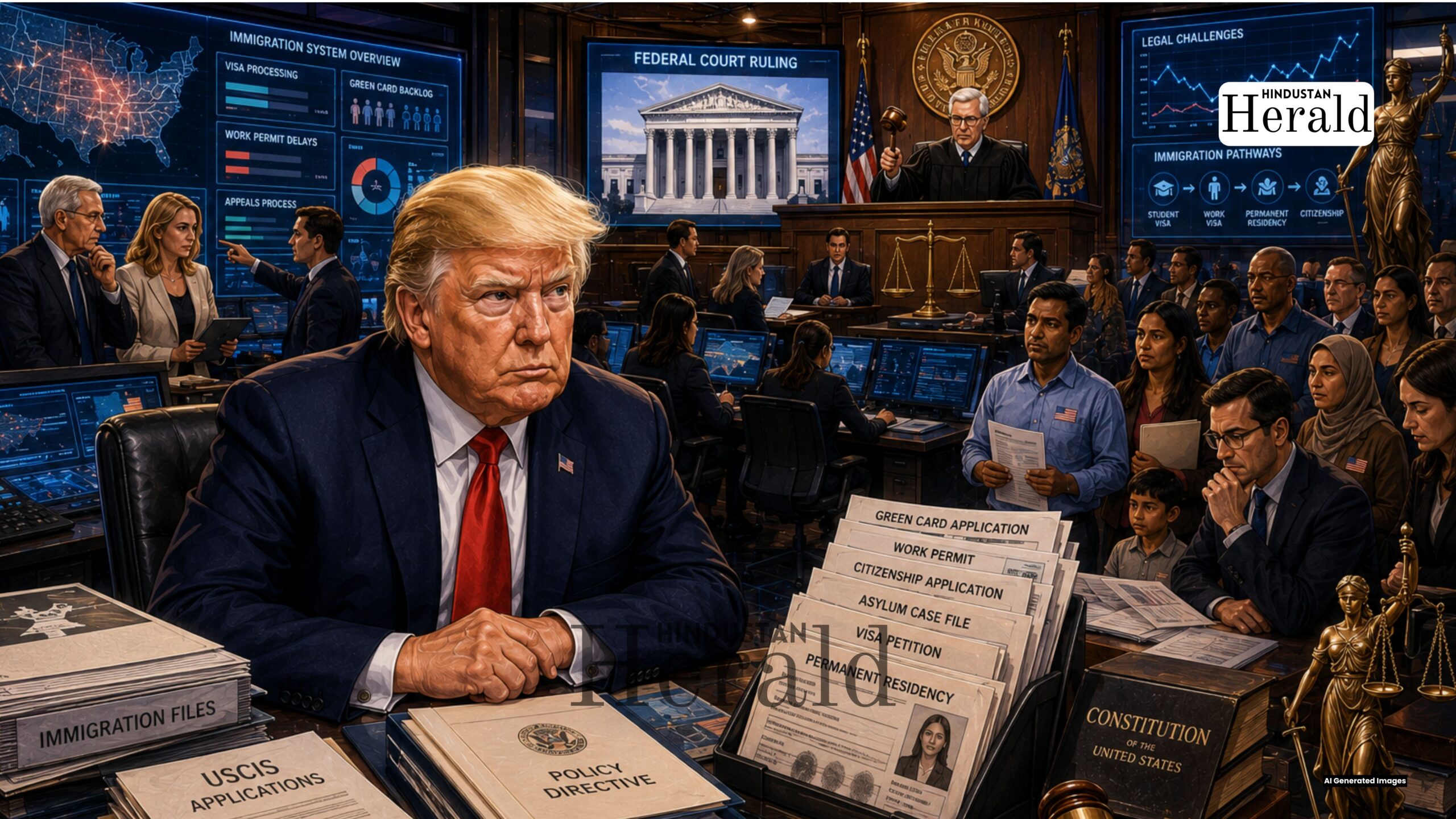
Washington DC / Providence, June 6:There is a particular kind of cruelty in being told to follow the rules, following them, and then watching the government move the goalposts anyway.
That is what happened to hundreds of thousands of immigrants living legally in the United States. They had done everything right. They had filed their paperwork, paid their fees, shown up for appointments, and waited, sometimes for years, inside a system that everyone agrees is broken but nobody has fixed. And then, after a single act of violence by a single man in Washington DC last November, the government essentially told all of them: we are done processing your cases. Sit and wait. We will get back to you eventually. Maybe.
Friday’s Trump immigration court ruling changed that. A federal judge looked at what had been done to these people and called it what it was. Not a national security measure. Not a reasonable exercise of executive discretion. He called it illegal.
As reported by CBS News and PBS NewsHour, US District Chief Judge John McConnell Jr. of the US District Court in Rhode Island found the administration’s sweeping limits on legal immigration benefits to be arbitrary, capricious, and directly contrary to federal law. He did not leave much room for ambiguity. He accused US Citizenship and Immigration Services of ignoring the very laws it was supposed to be administering. For the people whose lives had been frozen mid sentence since late last year, Friday felt like the first real exhale in months.
Quick Summary
- US District Chief Judge John McConnell Jr. of Rhode Island struck down 4 separate Trump immigration policies in a single 135 page ruling issued on June 5, 2026, as confirmed by Reuters, CBS News, and the Boston Globe.
- The freeze had affected nationals from 39 countries on the Trump travel ban list, blocking their green cards, work permits, asylum decisions, and citizenship applications for months, as reported by PBS NewsHour and Newsweek.
- The policies were introduced after Rahmanullah Lakanwal, a 29 year old Afghan national, shot two West Virginia National Guard members near the Farragut West Metro Station in Washington DC on November 26, 2025. Specialist Sarah Beckstrom, 20, died from her injuries the following day. Staff Sergeant Andrew Wolfe, 24, was critically injured, as confirmed by the US Department of Justice and CBS News.
- According to NPR’s April 2026 investigation, hundreds of thousands of people had been living in legal limbo for five months, many of them losing jobs when their work permits lapsed while USCIS sat on their paperwork and did nothing.
- The lawsuit that produced Friday’s ruling was led by two Providence based nonprofits, the Dorcas International Institute of Rhode Island and the Refugee Dream Center, with Democracy Forward among the legal organisations representing the plaintiffs, as confirmed by Rhode Island Current and PBS NewsHour.
- The Trump administration is widely expected to appeal the ruling to the First Circuit Court of Appeals, which means this particular battle is not over, as noted by Courthouse News Service.
It All Started on a Sidewalk in Washington DC
You cannot understand this story without going back to the day before Thanksgiving. On November 26, 2025, two young soldiers from the West Virginia National Guard were walking a routine patrol near the Farragut West Metro Station in Washington DC. According to the US Department of Justice, a 29 year old Afghan man named Rahmanullah Lakanwal had driven all the way from Bellingham, Washington, across the country, arrived at 17th and I Streets NW at around two in the afternoon, and opened fire on them without any warning.
Specialist Sarah Beckstrom was 20 years old. She was shot in the head. She died the following day, on Thanksgiving itself. Staff Sergeant Andrew Wolfe, 24, was critically wounded. These are not statistics. These were two young people doing their jobs on a public street, and that fact mattered enormously in the political firestorm that followed. All of this was confirmed by the US Department of Justice, CBS News, NPR, and ABC News.
According to CBS News, Lakanwal had come to the United States in 2021 through Operation Allies Welcome, the resettlement programme set up after the American military withdrew from Afghanistan. He had applied for asylum in 2024. That application had been granted in April 2025, under the Trump administration itself, not under Biden. His green card application was still sitting in the queue when he committed the attack. The administration’s response was fast and, as Friday’s ruling makes clear, far too broad.
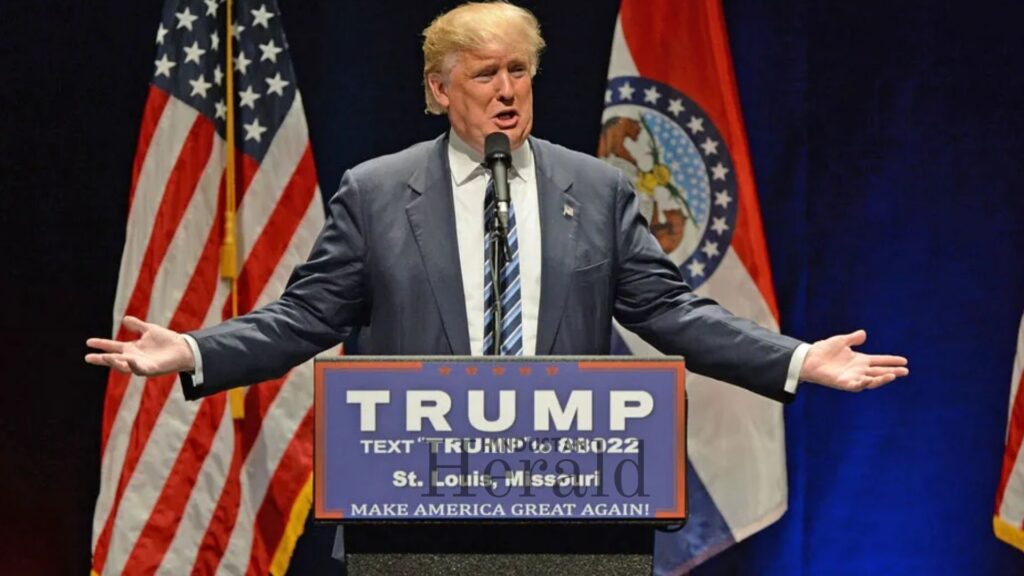
Within days, President Donald Trump directed USCIS to overhaul its entire approach to applicants from countries the administration considered high risk. According to the Erickson Immigration Group, which tracks US immigration law and policy closely, the policies that followed swept up individuals from across Africa, Asia, Latin America, and the Middle East.
The initial list of targeted countries stood at 19, as confirmed by CBS News. It was later expanded to 39 countries listed on the Trump administration’s travel ban.
And then USCIS did something that became the heart of Friday’s court ruling. Rather than looking at individual applications and making individual decisions, the agency stopped processing entirely. No green cards. No work permit renewals. No citizenship petitions. No asylum decisions. For nationals of those 39 countries who were already living legally in the United States, the system simply went quiet.
What Five Months of Silence Actually Did to People
The phrase “legal limbo” appears in so many immigration stories that it has almost lost its meaning. It is worth being specific about what it actually looked like in this case.
As NPR reported in a detailed investigation published on April 28, 2026, the Trump administration’s processing pause had thrown the lives of hundreds of thousands of people into genuine crisis. Five months in, NPR described the impact as catastrophic for many from the affected countries already living and working in the United States. These were students. Engineers. Doctors. Teachers. People who had built entire lives inside a system they had trusted to be at least somewhat predictable.
When your work permit expires and USCIS has frozen all renewals, your employer cannot legally keep you on the payroll. You lose your job. Not because you did anything wrong. Not because your case was reviewed and found lacking. Simply because a federal agency decided to stop opening its mail, metaphorically speaking. As Newsweek reported, Judge McConnell noted this exact reality in his ruling, writing about people who had been pushed out of employment they had held for years because of a blanket administrative decision that had nothing to do with them individually.
As reported by The Hill, McConnell wrote that the processing hold could not be attributed to anything those individuals had done wrong. It arose, in his words, solely by the happenstance of their birth. Read that again. The happenstance of their birth.
Families had been split apart. People who had been living legally in the United States for years had been left without status, without income, and without a clear answer about when any of it would be resolved. The administration’s position throughout the legal proceedings, as reported by NBC News, was that the courts had no business interfering in executive decisions about immigration, particularly where national security was cited as the justification. The judge had a different view.
The Trump Immigration Court Ruling: 135 Pages and Nothing Soft About It
According to Newsweek and confirmed by the Boston Globe, Rhode Island Current, and immigration law firm Reddy Neumann Brown PC, the Trump immigration court ruling delivered by Judge McConnell is the latest instance where a US court blocks Trump immigration policies, with four separate directives struck down in a single 135 page opinion.

The global asylum hold, which had stopped asylum decisions across the entire country. The benefits hold, which had frozen work permits, green cards, and naturalisation applications for nationals of all 39 countries. The comprehensive re-review policy, which had directed USCIS to go back and reopen cases that had already been approved under the previous administration. And the country specific directive, which had told immigration officers to treat an applicant’s nationality as an automatic negative in their decision, regardless of who that person actually was or what their individual case showed.
According to the Boston Globe and Rhode Island Current, McConnell wrote that USCIS had dressed up anti immigrant sentiment in the language of national security, and that the agency was legally forbidden from letting that sentiment drive its decisions. He wrote that the agency had violated the immigration laws Congress had charged it with administering. He wrote that it had relied on statutory authority it simply did not have. That is not a judge being careful. That is a judge being direct.
The People Behind the Case Nobody Expected to Win This Fast
Here is something worth noting. The lawsuit that produced this ruling was not brought by a large Washington lobby group or a well funded national civil liberties organisation with a floor of lawyers.
It was brought by two nonprofit organisations based in Providence, Rhode Island. The Dorcas International Institute of Rhode Island and the Refugee Dream Center led the case, joined by union groups and supported by legal organisations including Democracy Forward, as confirmed by Rhode Island Current and PBS NewsHour.
As quoted by PBS NewsHour, Skye Perryman, president and chief executive of Democracy Forward, said the ruling reaffirms something that should not need reaffirming but apparently does, which is that the federal government cannot simply shut down lawful immigration pathways or treat people differently based on where they were born.
According to NBC News, Jamal Abdi, president of the National Iranian American Council, called it a precedent confirming that the administration cannot ignore the law as laid down by Congress and cannot deny immigration benefits through executive fiat based on national origin.
According to Courthouse News Service, Jorge Loweree of the American Immigration Council described it as an enormous victory for people who had lost all clarity about whether they could stay in the country legally.
Still, nobody was popping champagne. The administration has appealed every significant immigration ruling that has gone against it. As Courthouse News Service reported, the case can go to the First Circuit Court of Appeals next, and the broader legal landscape has shifted in ways that create genuine uncertainty about how far courts can go in checking executive power.
In June 2025, the US Supreme Court ruled 6-3 in Trump v. CASA, Inc., as confirmed by SCOTUSblog and Sidley Austin, limiting courts from issuing orders that block administration policies nationwide rather than just for the specific people in front of the court. That ruling changed the math for immigration advocates considerably. Friday’s vacatur out of Rhode Island carries broader effect than a typical injunction, as Reddy Neumann Brown PC noted, but the administration will look for every avenue it has to push back.
This Was Not an Isolated Ruling. A Pattern Has Been Building.
Friday’s decision did not drop out of a clear sky. It is part of something that has been building through 2025 and into 2026, a steady accumulation of judicial pushback against the administration’s immigration agenda that has developed across courtrooms in multiple states.
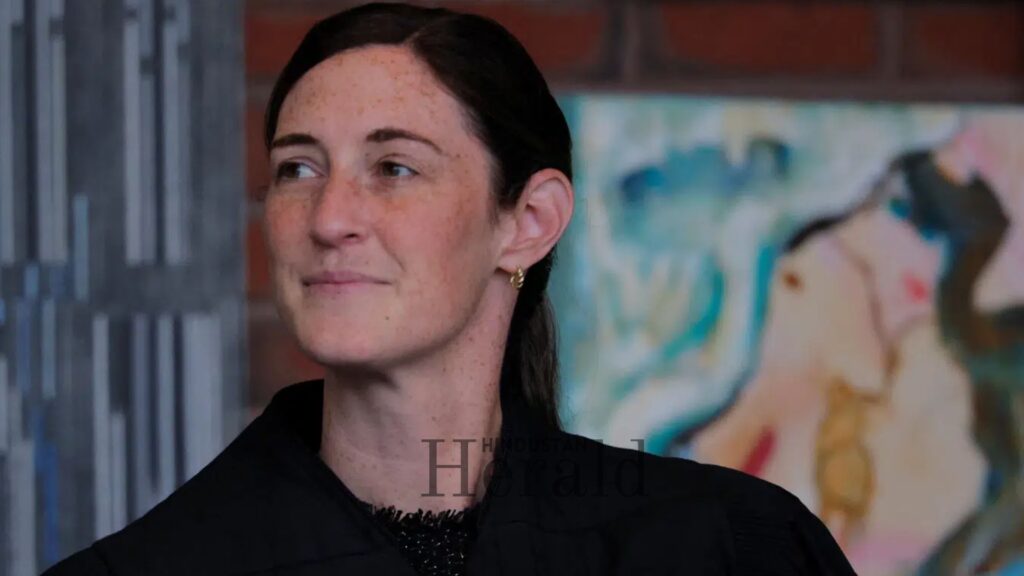
According to sources tracking US immigration litigation in 2026, US District Judge Julia Kobick had already issued a preliminary injunction earlier this year against a USCIS policy that had instructed officers to treat applicants from travel ban countries as a significant negative factor in every immigration decision they made. That policy touched asylum, green cards, work permits, and naturalisation. The judge found the challengers were likely to succeed on claims that the policy violated the Immigration and Nationality Act, which explicitly prohibits nationality based discrimination in immigration decisions.
According to Reuters, in March 2026, US District Judge Richard Stearns in Boston blocked the administration from detaining thousands of refugees who had been in the United States for more than a year but had not yet obtained green cards. Six refugees and two advocacy groups brought that case. The Department of Homeland Security had framed the detention policy as a national security and compliance measure. Judge Stearns disagreed.
Read these cases together and a picture forms. An administration that is moving fast and using every tool of executive and agency power it can find, and a federal judiciary that is, with unusual consistency, refusing to simply sign off.
Why Indian Readers Should Be Paying Close Attention
India is not on the list of 39 countries at the centre of Friday’s ruling. Indian nationals were not directly caught in the processing freeze that Judge McConnell struck down on Friday. That is worth saying plainly.
But anyone who thinks the Indian diaspora in the United States is watching all of this from a comfortable distance is not paying attention.
As reported by The Tribune, the Department of Homeland Security had separately announced, through an interim final rule, that it would no longer automatically extend work permits for foreign nationals. The people most directly in the line of fire for that change are thousands of Indian H-1B visa holders, H-4 dependent spouses, students on STEM OPT extensions, and green card applicants whose renewals are sitting in a queue that was already moving at the pace of cold tar. The DHS said exceptions would apply only to specific humanitarian categories like Temporary Protected Status holders. That exception helps almost no one in the mainstream Indian professional community.
According to NPR, the administration had also announced, in a move that surprised even experienced immigration lawyers, that foreign nationals seeking a green card would need to leave the United States and apply from their home country. This reversed a policy that had been standard practice for over half a century. For fifty years, you could complete the entire permanent residence process without ever having to board a plane home. That option is now gone.
For Indian professionals who may be looking at a wait of fifteen or twenty or even thirty years for a green card under the current backlog system, these changes are not minor administrative adjustments. They are decisions that ripple through every calculation a person makes about their career, their family, their future, their relationship with a country they may have lived in for a decade or more.
Friday’s court ruling offers something. It is evidence that the American legal system still has the capacity to push back on the most extreme exercises of executive power. For people watching from Bengaluru or Hyderabad or Mumbai or New Delhi, that is not nothing. But it is also not a solution. The uncertainty hanging over legal immigration to the United States is not going to be resolved by one ruling in Rhode Island.
The Question That Nobody Has Fully Answered Yet
Every single one of these court battles is really a fight about the same thing, even when it looks like it is about something specific. How much power does an American president actually have over immigration? Where does executive discretion end and the authority of Congress begin? At what point does invoking national security stop being a legal justification and start being a way to avoid having to explain yourself?
The Trump administration has a very clear answer to these questions. It believes the President’s power over immigration is broad, Congress has delegated enormous discretion to the executive, and courts should be reluctant to second guess decisions that touch on national security. That position is not invented out of thin air. There are real legal arguments behind it. The courts, repeatedly and with some consistency, have been finding those arguments insufficient.
As confirmed by Newsweek, RedState, and Rhode Island Current, Judge McConnell, nominated to the bench by President Barack Obama in 2011, found that USCIS had claimed statutory authority it did not actually possess, had made sweeping decisions without providing reasoned explanations for them, and had trampled over the expectations of hundreds of thousands of people who had been playing by the rules in good faith.
The administration will appeal. The First Circuit will hear the case. Depending on how that goes, this could eventually end up back at the Supreme Court, which already reshaped the rules on nationwide injunctions in Trump v. CASA and whose current composition makes predicting outcomes genuinely difficult.
Friday Was Not the End. But It Was Something Real.
USCIS has now been ordered to start processing again. As confirmed by Visaverge in its legal analysis of the ruling, affirmative asylum decisions are required to resume nationwide. Work permit renewals, green card applications, and naturalisation petitions from nationals of the 39 affected countries are required to move through ordinary processing again.
Whether the agency actually does that quickly, and in the spirit the court intended, is another question. As Courthouse News Service reported, DHS Secretary Markwayne Mullin had declined earlier in the week, during a Capitol Hill appearance, to clearly commit to following court orders that went against his department. That is the kind of statement that makes immigration lawyers very nervous.
For the hundreds of thousands of people who had been frozen out for five months, Friday was a moment of genuine relief. Not a guarantee, not a resolution, but a moment where someone in a position of authority looked at what had been done to them and said clearly: this was wrong, and it needs to stop.
For the millions of people around the world who came to the United States legally, built lives here, and are now trying to figure out whether the rules they planned around still apply, that matters more than any legal analysis can quite capture.
The fight continues. It will be in the First Circuit next, possibly the Supreme Court after that, and running underneath all of it will be the same question that has been at the centre of American immigration policy for years. What kind of country does America actually want to be? Friday did not answer that. But it moved the conversation forward in a way that counted.
Stay ahead with Hindustan Herald — bringing you trusted news, sharp analysis, and stories that matter across Politics, Business, Technology, Sports, Entertainment, Lifestyle, and more.
Connect with us on Facebook, Instagram, X (Twitter), LinkedIn, YouTube, and join our Telegram community @hindustanherald for real-time updates.

Tracking world politics, global markets, trade movements, policy decisions, and the changing balance of economic power.
- Shelesh Joshi

- Shelesh Joshi
- Shelesh Joshi
- Shelesh Joshi





Specializes in South Asian geopolitics and global diplomacy, bringing in-depth analysis on international relations.
- Rajiv Menon
- Rajiv Menon
- Rajiv Menon
- Rajiv Menon