 By Shelesh Joshi and Kavita Iyer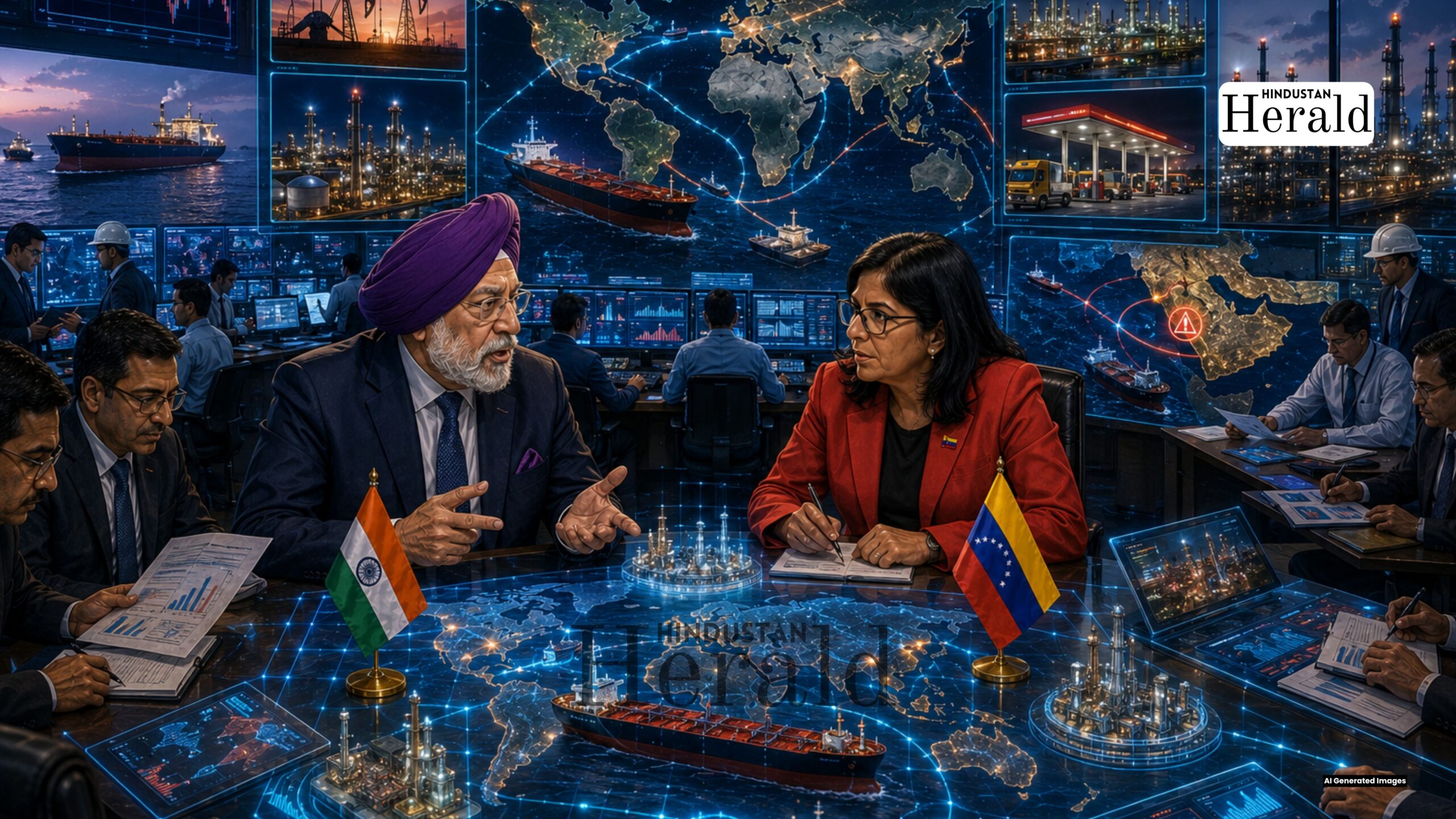
New Delhi, June 5: The India Venezuela energy partnership goes back a long way. Not always smoothly, but it goes back. There was a period when Venezuelan crude was showing up at Indian ports in serious volumes. Reliance was one of PDVSA’s biggest customers. ONGC Videsh had people working in the Orinoco Belt, equity stakes in fields, real skin in the game. It looked like the kind of energy partnership that could last decades.
Then US sanctions hit Venezuela’s state oil company. Payments stopped. Dividends that Indian companies were owed just kept accumulating, unpaid, year after year. Indian refiners quietly found other suppliers. The relationship did not end, but it went cold.
That is the context for what happened in New Delhi this week. Petroleum Minister Hardeep Singh Puri sat across from Venezuela’s Acting President Delcy Rodriguez on June 4. He had brought the Chairpersons of India’s state oil companies with him, which tells you something about the seriousness of the meeting. You do not pull the heads of IOC, ONGC, HPCL, and Oil India out of their offices for a conversation that is just about keeping the diplomatic lights on.
The Ministry of Petroleum and Natural Gas put out a formal press statement confirming the meeting. Rodriguez was in India from June 3 to June 6, a working visit that included talks with PM Modi at Hyderabad House, a meeting with External Affairs Minister Jaishankar, a trip to Reliance’s Jamnagar refinery in Gujarat, a visit to a Tata Motors facility, and a pharmaceutical laboratory in Delhi. According to the Ministry of External Affairs, this was her sixth visit to India and her first as acting president after Nicolas Maduro was removed in a US military operation in January this year.
Six visits over the years. Whatever went wrong between India and Venezuela at various points, the personal diplomatic relationship between the two countries kept surviving.
Quick Summary
- India’s average monthly crude imports from Venezuela jumped from 64,027 TMT in FY 2025-26 to 1,047,148 TMT in April-May of FY 2026-27, per the Ministry of Petroleum and Natural Gas press statement.
- India received 427,000 barrels per day of Venezuelan crude in May 2026, the second largest buyer globally after the United States, according to Reuters.
- Venezuelan crude arrivals in India reached about 283,000 barrels per day in April 2026, the highest since March 2020, per Kpler data.
- Venezuela’s total oil exports reached 1.25 million barrels per day in May 2026, their third straight monthly increase, per Reuters based on tanker movements and PDVSA records.
- Unpaid dues raised during the Modi Rodriguez talks include roughly USD 500 million owed to ONGC Videsh and at least USD 700 million owed to Indian pharmaceutical companies, as confirmed by MEA Secretary Rudrendra Tandon.
- The Strait of Hormuz, through which almost 40 percent of India’s crude oil imports previously flowed, has been effectively shut by the US-Israel war on Iran, according to Reuters.
Puri On the India Venezuela Energy Partnership: This Is Not a Man Keeping His Options Open
Hardeep Puri reaffirms support to Venezuela for energy reconstruction was the official line out of the Ministry of Petroleum and Natural Gas after the June 4 meeting. That framing was accurate. It was also, if you read what Puri actually wrote afterwards, considerably understating where his head was at. After the meeting, the Minister went on X. What he wrote did not sound like a politician still weighing his choices.
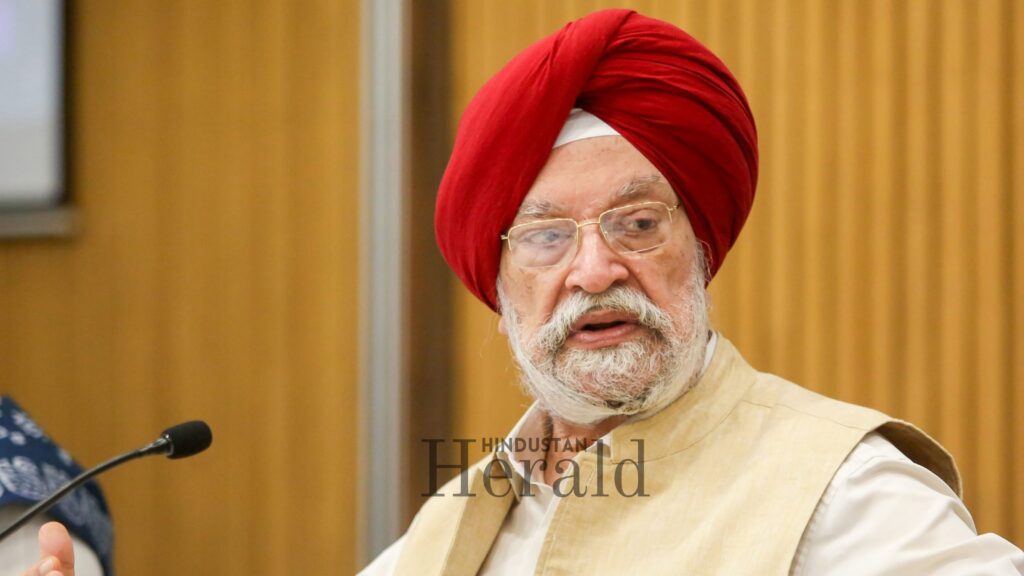
“Venezuela possesses the biggest proven reserves of oil in the world, while India not only possesses huge demand for energy but also has the technological expertise and manpower to refine Venezuelan crude in our refineries,” Puri posted, as reported by ANI.
He continued: “Indian companies already have existing investments in Venezuela and now look forward to building upon them, in addition to looking for newer opportunities for fruitful collaborations which will provide momentum to our quest towards energy security.” People who are still evaluating a relationship do not write like that. That is someone who has already decided where this is going.
At the press briefing after the Modi Rodriguez talks, MEA Secretary Rudrendra Tandon gave journalists a fairly frank picture of where the India Venezuela energy partnership actually stands today. Venezuela had already become India’s third largest crude supplier that month, he said, as reported by Asianet Newsable. “They see India as a stable demander for many years to come. Therefore, there exists a perfect complementarity for India and Venezuela to work in the energy sector, both upstream and downstream.”
But the line that stayed with me, reported by StratNews Global, was quieter than that. “The goal of a partnership would not just be buy sell.”
That sentence is doing a lot of work. India is not here for a few spot cargoes it can walk away from when something cheaper comes along from West Africa. It wants upstream equity, long term supply contracts, a structural position in Venezuelan production. The Wire confirmed no agreements were actually signed during the visit. But the direction New Delhi wants to move this partnership in is now stated clearly, and in public.
You Have to Understand What Happened to the Strait of Hormuz First
None of this diplomatic acceleration makes full sense without the Strait of Hormuz in the picture. India imports roughly 90 percent of the crude oil it uses, as the Associated Press has reported. Before things in the Gulf deteriorated, almost 40 percent of those imports passed through the Strait of Hormuz, per Reuters. Then the US-Israel war with Iran effectively shut it. India’s energy planners suddenly had a serious problem.
Saudi Arabia, which was India’s third largest crude supplier before all this, saw its deliveries to India nearly halve from 670,000 barrels per day in April to around 340,000 barrels per day in May 2026, as Al Jazeera reported. Iran had briefly resumed as a supplier in April, after a seven year gap, but that stopped again almost immediately when the US naval blockade of Iranian ports made the trade impossible.
Indian refiners needed to replace a lot of barrels, fast, from places that were not the Gulf. The Ministry eventually confirmed through All India Radio that around 70 percent of India’s crude imports were now coming from outside the Strait of Hormuz, with oil marketing companies sourcing from 40 different countries.
Russia helped. West Africa helped. But Venezuela was one of the more immediately viable alternatives, and the reason comes down to something specific about how Indian refineries are built.
Indian Refineries Can Handle What Most Cannot
Venezuelan crude is genuinely difficult oil. Heavy. High in sulphur. High in asphaltenes. Most refineries around the world cannot process it at commercial scale, which partly explains why Venezuela sitting on the planet’s largest proven reserves has always struggled to find enough buyers the moment its political relationships with Western markets turned difficult.
Indian refineries are a different story, and that industrial reality is one of the more underappreciated parts of this whole relationship.
B. Anand, former CEO of Nayara Energy, put it plainly to S&P Global. “For complex refining systems like India, Venezuelan heavy crude is not an incremental supply. It is optionality.” He added something that captures the current moment well: “Venezuelan production is stabilising precisely when refiners need alternatives to supply concentration and geopolitical overhang. Its reserves are well known. What matters here is the timing.”
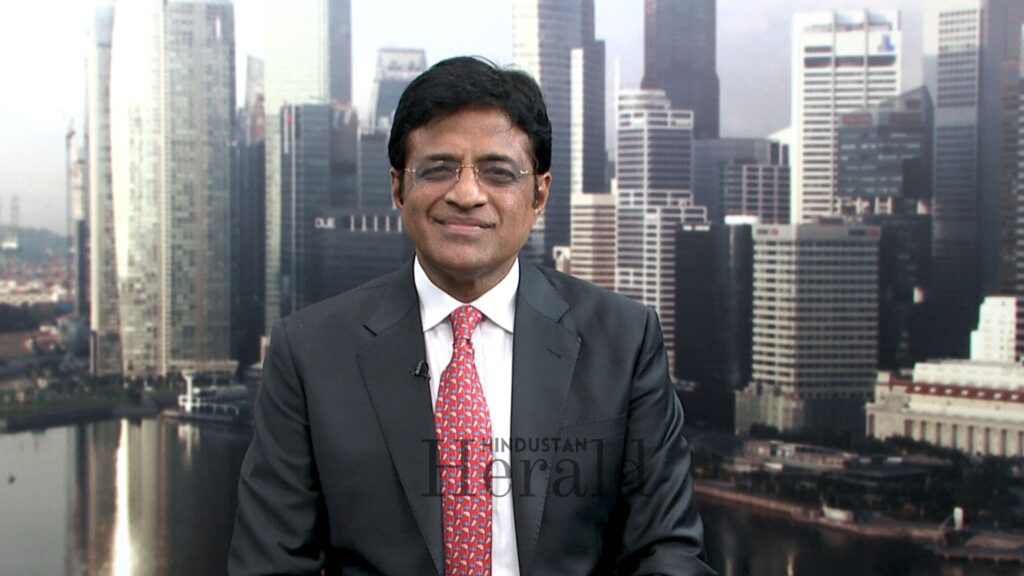
DLN Sastri, former director of refining at the Federation of Indian Petroleum Industry, was more commercial about it. He told S&P Global: “Venezuelan crude is a great opportunity for refiners like Reliance Industries Ltd. They have great blending facilities and complex operations, and they can yield good margins by processing those heavier grades.” State refiners including MRPL and IOC’s Paradip Refinery can handle Venezuelan grades too, he noted.
Tandon made the same point in policy language at the briefing, as StratNews Global reported: “Our refining industry has become so sophisticated that we are no longer tied to a particular type of crude oil.”
Reliance runs two refineries with a combined capacity of about 1.4 million barrels per day, per Reuters. The company signed a term supply agreement with PDVSA back in 2012 covering as much as 400,000 barrels per day, as Bloomberg reported. In 2015, when India’s Venezuelan crude purchases peaked at 441,000 barrels per day, Reliance alone accounted for 75 percent of that volume, according to Kpler data reported by Business Standard.
Rodriguez’s visit to Jamnagar during this trip was not window dressing. Standing inside the refinery that processes your country’s crude, at that scale and complexity, gives a commercial conversation a grounding that no amount of diplomatic language in Delhi can replicate.
The Buying Resumed. Here Is How It Happened.
In the current cycle, the resumption of Venezuelan crude purchases followed a particular order. Reliance moved first, winning a US licence to restart Venezuelan purchases, as Reuters reported. The company had been a regular buyer before being forced to stop in early 2025 when sanctions made it legally impossible. It has since become one of the three largest buyers of Venezuelan crude globally, per Reuters.
State refiners came back in February 2026. As Business Standard and PTI reported, Indian Oil Corporation and HPCL jointly bought 2 million barrels of Venezuelan Merey crude through trading firm Trafigura for April delivery. IOC took 1.5 million barrels for Paradip in Odisha. HPCL took 500,000 barrels for Visakhapatnam in Andhra Pradesh. Business Standard noted this was the second Venezuelan crude deal Indian refiners had struck since flows resumed, after Reliance’s earlier 2 million barrel purchase through Vitol.
India stopped buying Venezuelan crude in 2019-20. Briefly resumed in 2023-24. Stopped again when sanctions returned. Now buying again. Three restarts in six years that is what happens when a bilateral trade relationship is controlled not by the buyers and sellers themselves but by a third country’s foreign policy decisions.
The Import Numbers Tell a Story on Their Own
The trade data from the past two months looks unremarkable until you set it against where things were recently. India’s average monthly crude imports from Venezuela went from 64,027 TMT in FY 2025-26 to 1,047,148 TMT in April-May of FY 2026-27, per the Ministry of Petroleum and Natural Gas press statement. That is a near complete rebuild of a trade relationship in under sixty days.
Kpler data, reported by World Oil, put Venezuelan crude shipments to India at about 283,000 barrels per day in April 2026, the highest since March 2020. The firm estimated June arrivals could push toward 380,000 barrels per day.
Reuters reported India received 427,000 barrels per day from Venezuela in May 2026, making it the second largest buyer of Venezuelan crude in the world that month. Venezuela’s own total exports hit 1.25 million barrels per day in May, their third straight monthly increase, per tanker tracking and PDVSA records.
S&P Global Commodities at Sea data from April showed 12.4 million barrels of Venezuelan crude in transit to India’s port of Sikka, with another 5.7 million barrels already scheduled for May.
For perspective, S&P Global data showed India imported about 300,000 barrels per day from Venezuela in 2019. By 2024, the full year total had fallen to just 25 million barrels. Through all of 2025, five VLCCs arrived at Sikka one per month, with the last in May. Going from that to 427,000 barrels per day in a single month is not a recovery. It is almost a completely new start.
Five Hundred Million Dollars Does Not Go Away Because Nobody Mentions It
Rodriguez flew in with ministerial delegations and a five day itinerary packed with refinery visits and industry meetings. The meetings at Hyderabad House were warm. The language on both sides was constructive. None of that changed the fact that Venezuela owes India’s state companies a lot of money, and India was always going to bring it up.
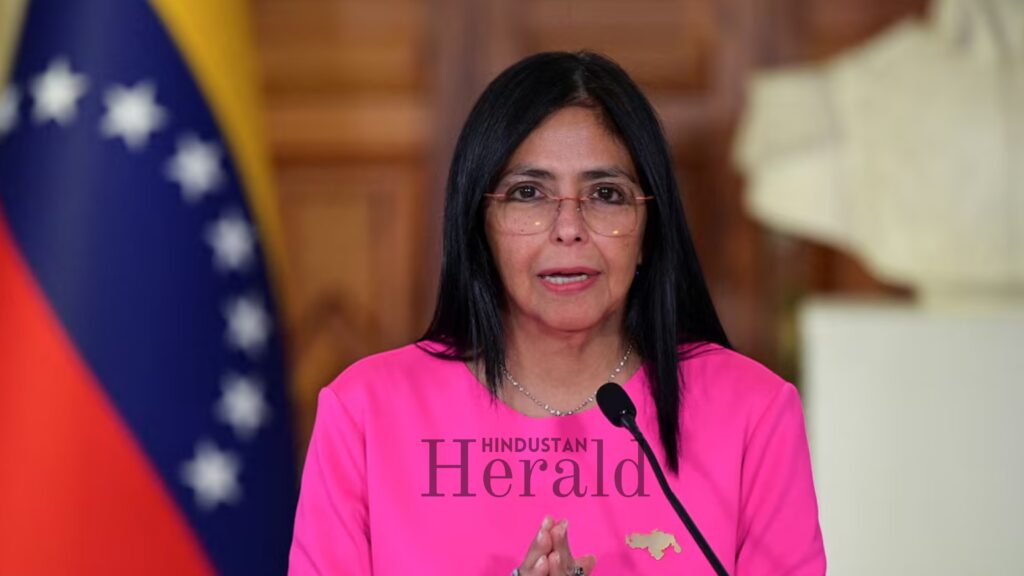
Tandon confirmed it to journalists after the talks, as The Print reported. Unpaid dues of roughly USD 500 million owed to ONGC Videsh and at least USD 700 million owed to Indian pharmaceutical companies were formally raised during the Modi Rodriguez talks. The Wire quoted Tandon: “It is an issue that is there on the table and they are very well sensitive to this issue.”
From The Print: “The dividend issue did come up several times. Venezuela is in transition. Its government is aware of all these issues.”
ONGC Videsh holds a 40 percent stake in the San Cristobal field in Venezuela’s Orinoco Heavy Oil belt, alongside PDVSA. It holds an 11 percent stake in the Carabobo 1 block, with IOC and Oil India each at 3.5 percent, as S&P Global reported. Indian PSUs have been in Venezuela since 2008. That is not a passive financial position. That is nearly two decades of deployed capital, technical expertise, and operational commitment with a dividend stream that stopped years ago.
The pharmaceutical companies have a different version of the same problem. They supplied drugs to Venezuela during the sanctions years. They are still owed somewhere between USD 700 million and USD 800 million, Tandon confirmed.
He was also careful, as The Print noted, to remind journalists that Indian companies buying Venezuelan crude would have to follow whatever payment arrangements are currently in place. Governments can push for resolution. They cannot force it. The money either moves or it does not.
How the new Venezuelan government responds to this, and how quickly, will say more about the future of this relationship than any of the diplomatic language from this week.
It Was Never Only About the Crude
The coverage led with oil, which is fair. But the actual conversations covered significantly more ground. As Business Standard reported, mining, critical minerals, and pharmaceuticals all featured in the discussions. Tandon elaborated, as quoted by Business Vibes of India: “Venezuela is a resource rich country. It’s not just about critical minerals; it has also gold, diamonds, and other materials. So, mining is very much there. In fact, there was a discussion on how to assess the potential reserves that they have, or whether we could cooperate in that area.”
On pharmaceuticals, the Venezuelan side was specific, The Wire reported. They listed supply of affordable generic drugs to Venezuela’s public health services as a priority. Modi apparently directed a visiting minister to be briefed on India’s Janaushadhi scheme.
The Associated Press confirmed automobiles also featured. Per bne IntelliNews, the Venezuelan delegation was due to visit Tata Group’s headquarters in Mumbai and hold discussions with the International Solar Alliance on clean energy.
Rodriguez’s delegation, as The Wire confirmed, included Venezuela’s Foreign Minister Yvan Gil and ministers covering economy and finance, science and technology, communication, and transportation. When a visiting delegation spans that many portfolios, the conversations are not really about crude pricing.
So What Happens Now
The visit ended without a signed agreement or a joint statement, The Wire confirmed. That is not a failure. Reset meetings at this scale rarely produce documents on the first sitting.
The technical delegation visit to Venezuela, announced by Puri on X and confirmed by ANI, is the real next step. Who goes, what upstream assets they actually assess, and whether conversations around Carabobo 1 and San Cristobal move toward licensing discussions will matter far more than anything said at Hyderabad House.
The dividend issue is the harder, more honest test. Tandon called it “our money” in front of journalists. He was not subtle about it. The new Venezuelan government knows what India expects. Whether it delivers is a different question, and the answer will eventually come through in numbers, not words.
The volume question will keep moving with the Hormuz situation. S&P Global’s analyst Benjamin Tang flagged that a US waiver for Russian oil could limit the upside for Venezuelan crude if Russian barrels stay competitive on delivery costs. India is not operating in a stable market that will wait patiently while it sorts out a long term strategy.
But step back from the individual moving parts for a moment. Six days. Multiple cities. A minister posting on X like someone who has made a decision. A visiting president touring refineries and car factories and pharmaceutical labs. Tandon telling journalists the partnership would not just be buy sell.
India has a complicated history with Venezuela. The frozen dividends, the sanctions uncertainty, the three restarts in six years. None of that was cleaned up this week. But India has clearly decided those complications are worth working through rather than around. That shift, quiet as it was, is the real story from New Delhi this week.
Stay ahead with Hindustan Herald — bringing you trusted news, sharp analysis, and stories that matter across Politics, Business, Technology, Sports, Entertainment, Lifestyle, and more.
Connect with us on Facebook, Instagram, X (Twitter), LinkedIn, YouTube, and join our Telegram community @hindustanherald for real-time updates.

Tracking world politics, global markets, trade movements, policy decisions, and the changing balance of economic power.
- Shelesh Joshi

- Shelesh Joshi
- Shelesh Joshi
- Shelesh Joshi




Former financial consultant turned journalist, reporting on markets, industry trends, and economic policy.
- Kavita Iyer
- Kavita Iyer
- Kavita Iyer
- Kavita Iyer