
 By Shelesh Joshi and Kavita Iyer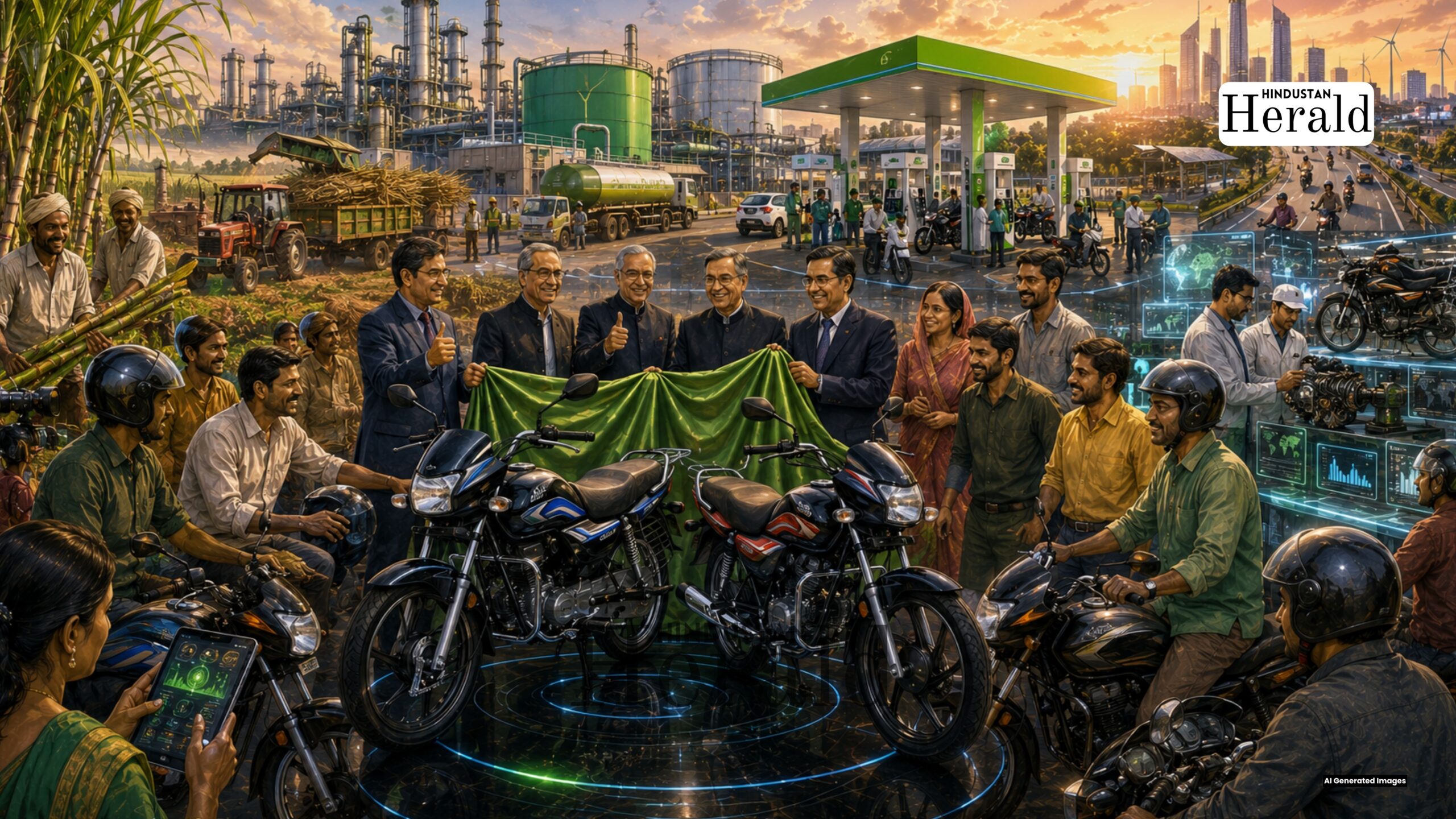
New Delhi, June 4: The Hero MotoCorp flex-fuel motorcycle is finally here and it costs almost nothing extra to own one. The Splendor+ and the HF Deluxe, two bikes that between them account for one in every three motorcycles on Indian roads, now run on up to 85 percent ethanol. The most affordable version starts at Rs 72,792.
Hero priced the upgrade at Rs 172 over the standard model. Not Rs 5,000. Not Rs 10,000. One hundred and seventy two rupees. Roughly the cost of a decent lunch in a mid range restaurant in any Indian city. That number is the whole story, really. Everything else is context.
Quick Summary
- Hero MotoCorp launched the Splendor+ Flex Fuel at Rs 82,710 and the HF Deluxe Flex Fuel at Rs 72,792, both ex showroom Delhi, on June 3, 2026, as confirmed by Autocar India and BikeAdvice.
- The HF Deluxe Flex Fuel carries a premium of just Rs 172 over its standard E20 variant, according to reporting by Business Connect India, making the green upgrade nearly cost neutral at the point of purchase.
- Both motorcycles run on any ethanol blend between E20 and E85, with the recalibrated 97.2cc engine delivering 7 percent more power and 3 percent more torque, as reported by BikeAdvice India.
- India imports 88.5 percent of its crude oil, a figure cited by Union Minister Hardeep Singh Puri at the launch event, as reported by ANI and The Tribune India.
- The national ethanol blending programme has saved Rs 1.84 lakh crore in foreign exchange since 2014, according to figures shared by Puri at the event and confirmed across ANI, The Tribune, and Asianet Newsable.
- Hero MotoCorp crossed 5.2 lakh domestic units in May 2026, a 5 percent year on year increase, as per industry data reported by Sahi.
The Hero MotoCorp Flex-Fuel Motorcycle Is Not an Exciting Bike. That Is Exactly the Point.
Nobody wakes up in the morning dreaming of owning a Splendor. That is not an insult. It is a description of what the Splendor is and what it has always been, which is the most trusted, most purchased, most quietly indispensable motorcycle this country has ever produced. And yet Hero new launch bike the flex-fuel Splendor+ is exactly the one that just changed what that motorcycle can do.
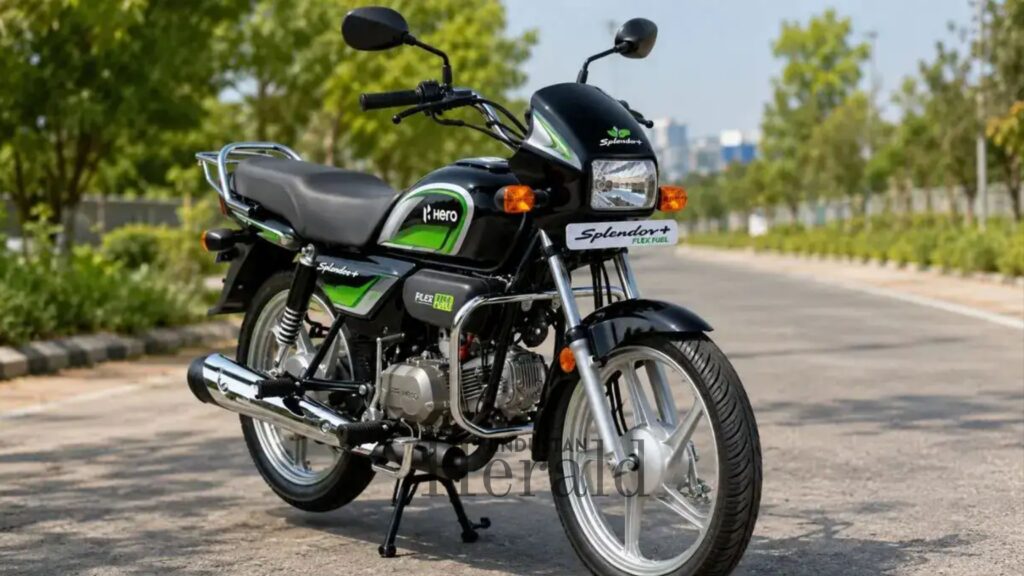
That is precisely why Hero MotoCorp’s first flex-fuel motorcycle launched on these two nameplates and not on anything shinier or more premium. The choice was deliberate, and it says everything about intent.
Go to any small town in Uttar Pradesh, any village road in Rajasthan, any industrial cluster in Gujarat. The Splendor is there. Not because it is aspirational. Because it starts every morning, does not break down, and does not ask for much. The HF Deluxe occupies the same emotional space, one rung lower on the price ladder, equally reliable, equally unremarkable in the best possible sense.
According to Autocar India, the Splendor and HF Deluxe families together account for roughly one in every three motorcycles currently on Indian roads. Think about that for a moment. Not one in ten. One in three.
So when Hero chose these two models, of all the motorcycles in its lineup, to carry flex-fuel technology to the Indian public, it was not playing it safe. It was playing it smart. The technology gets its most important distribution channel imaginable, and the product gets a capability upgrade without losing the identity that made it worth buying in the first place.
The Rs 172 Premium and What It Actually Means
The electric two wheeler industry has been trying to crack the mass market problem for years. Good products, genuine innovation, real world practicality in some cases, and yet the conversation always comes back to the same wall: the upfront cost is too high for the buyer who needs it most.
Hero has, with this one pricing decision on the HF Deluxe, effectively solved that problem for flex-fuel in a single move. Rs 172. That is the premium over the standard variant, as reported by Business Connect India. For a buyer already spending Rs 72,620 on the standard HF Deluxe, that gap is invisible. It will not come up in a conversation with a spouse, will not require an extra month of savings, will not be the reason someone walks out of the showroom with the cheaper option. It simply does not register as a barrier.
The Splendor+ Flex Fuel at Rs 82,710 carries a slightly larger gap over its standard counterpart, but it still sits comfortably within what a buyer at that price point would consider negligible. And it brings with it Hero’s i3S idle stop start system alongside the flex-fuel engineering, which means real fuel savings in city traffic on top of everything else, as confirmed by Autocar India’s technical coverage of the launch.
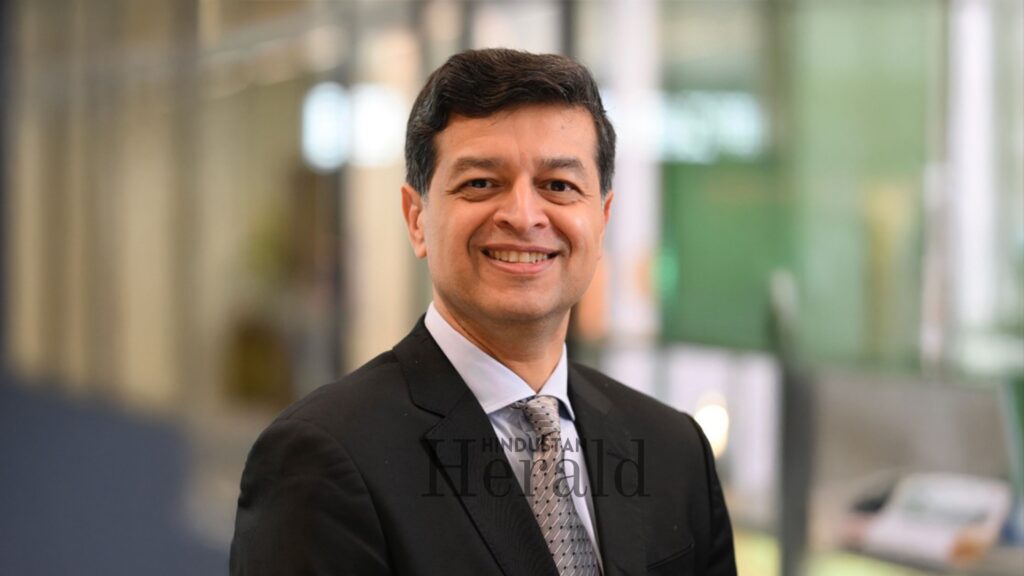
What made this pricing possible is the fact that Hero developed both bikes entirely at its own Centre for Innovation and Technology in Jaipur, with next to no imported components. CEO Harshavardhan Chitale confirmed this at the launch, as reported by iAmABiker, noting that the bikes carry minimal to no import content. The cost savings from domestic engineering went to the buyer, not the margin report. That is a choice, and it is the right one.
What the Engineers in Jaipur Actually Built
Running a motorcycle on E85 is not as simple as tweaking a setting and calling it done. Ethanol at that concentration behaves very differently from petrol. It corrodes certain materials. It pulls moisture from the air. Its energy density is lower, which means the engine needs more of it to do the same work. And it ignites differently, which means the calibration that works well on E20 will leave the engine running rough on E85 if nothing else changes.
Hero’s team addressed all of this. A new fuel pump went in, a secondary fuel filter was added, and the ECU was completely recalibrated, as detailed by BikeAdvice India and Autocar India in their post launch technical breakdowns. The system reads whatever blend is in the tank and adjusts fuel delivery and ignition timing automatically, in real time, without any input from the rider.
That last point deserves emphasis. The rider does nothing. There is no mode to switch, no dial to adjust, no procedure to follow when filling up from a different pump. The bike handles it. That kind of invisible, frictionless execution is harder to achieve than it sounds, and it matters enormously for a buyer who has never thought about ethanol percentages in his life.
The result, in numbers confirmed by Autocar India: the 97.2cc single cylinder engine produces 8.6 horsepower at 8,000 rpm and 8.3 Nm at 6,000 rpm on E85. Power is up 7 percent over the standard variant, torque up 3 percent, as reported by BikeAdvice India. For a 100cc commuter, those are real gains that a rider will feel on a loaded climb or a highway merge.
Both models also received a digi analogue instrument cluster, tubeless tyres, a side stand engine cut off, and a fresh Black and Lime Yellow colour scheme, per BikeAdvice India, that makes the flex-fuel variants visually distinct on the shop floor. Small details, but they matter when a buyer is standing at the counter deciding.
Two Ministers, One Motorcycle Launch, and a Very Large Point Being Made
Hardeep Singh Puri and Nitin Gadkari both showed up for this. Two cabinet ministers, one motorcycle launch. That does not happen unless something bigger is being signalled.
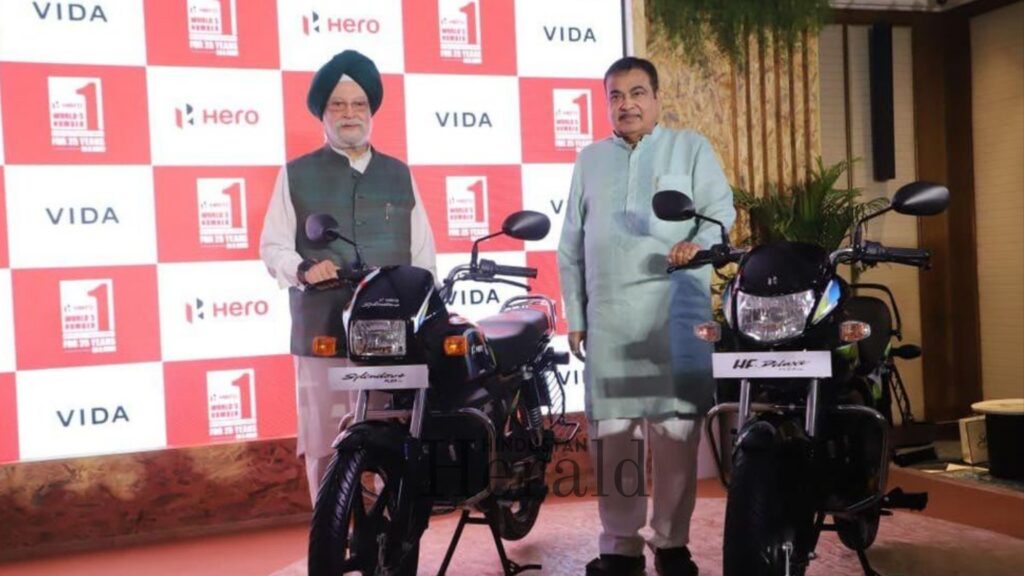
Puri used his time at the podium to lay out India’s energy situation with unusual directness. India imports 88.5 percent of its crude oil, a figure he stated at the event and which was confirmed across reporting by ANI, The Tribune India, and Asianet Newsable. Every geopolitical tremor somewhere in the world, every production decision made in a distant country, lands on India’s import bill. There is almost no insulation. The country has been living with that exposure for decades, and every rupee of foreign exchange that goes out to pay for crude is a rupee that does not stay in the domestic economy.
The ethanol blending programme has been one of the more successful government led energy interventions in recent memory. Blending stood at just 1.4 percent in 2014, crossed 10 percent ahead of the November 2022 target, and hit 20 percent six years before the originally stated 2030 deadline, all figures cited by Puri at the event as reported by ANI and The Tribune India.
The cumulative impact, per figures shared by Puri and confirmed by ANI: Rs 1.84 lakh crore in foreign exchange saved, 302 lakh metric tonnes of crude substituted, 909 lakh metric tonnes of CO2 emissions cut, and Rs 1.58 lakh crore paid directly to farmers as ethanol procurement income across that period.
Puri closed that section of his remarks with a line that landed well: “Our annadatas have become urjadatas.” The farmers who grew the sugarcane that became the ethanol that now powers these motorcycles are the same farmers the government has been trying to support through income diversification. The circle closes neatly.
Gadkari, as is his habit, kept the frame wide. As reported by Open The Magazine, he made the point that the government is not committed to any single alternative fuel, with ethanol, methanol, biodiesel, LNG, hydrogen, and electric mobility all simultaneously in play. The objective is not to pick a winner. It is to reduce dependence on imported crude through whatever combination of domestically available alternatives works at scale.
For investors parsing India’s green mobility policy environment, that plurality is actually reassuring. Flex-fuel is not a bet that competes with EV investment. It sits alongside it.
The Fuel Cost Argument, Honestly
Ethanol is not a perfect fuel. It should be said plainly because glossing over it does nobody any favours. Ethanol carries less energy per litre than petrol. On E85, a motorcycle will consume more fuel per kilometre than it would on E20. Anyone buying a flex-fuel bike expecting identical mileage at the pump will be disappointed, and they should be told this upfront rather than finding out six months into ownership.
That said, the maths still works, and it works clearly. Ethanol is currently priced at approximately Rs 63 per litre against petrol at Rs 100 or above in most Indian cities, as cited by Business Connect India. Even after accounting for the higher consumption rate on high ethanol blends, the cost per kilometre comes out meaningfully lower on E85.
For a commuter covering 30 to 40 km daily, annual fuel savings on E85 versus E20 are estimated between Rs 8,000 and Rs 12,000, as reported by Business Connect India. Against a Rs 172 upfront premium on the HF Deluxe, that is a payback measured in days rather than months. The economics are not close. They are not a matter of optimistic projection or best case assumptions. On realistic daily numbers, the flex-fuel version costs less to run from the first refuel.
The person this matters most to is not a tech curious urban buyer with a data plan and an opinion on battery chemistry. It is a delivery rider in Nashik who tracks his fuel spend to the rupee, or a daily commuter in Meerut who fills half a tank because that is what the week’s budget allows. For those buyers, a motorcycle that costs less to run is not a green product. It is a better product.
One Percent, and What It Unlocks
Puri shared a calculation at the launch, cited in reporting by The Tribune India, that did not get as much attention as it deserved. If just one percent of annual petrol vehicle sales shift to E85 in the upcoming ethanol supply year, the downstream impact would include over 4 crore litres of additional ethanol demand, Rs 266 crore in new payments to distilleries, Rs 195 crore in foreign exchange saved, 0.28 lakh metric tonnes fewer crude imports, 0.86 lakh metric tonnes of CO2 reduced, and Rs 160 crore flowing directly to farmers, all per Puri’s figures as confirmed by The Tribune India. Then Puri added: “And this, my friends, is just with 1 percent adoption.”
The Splendor and HF Deluxe together sell millions of units every year. Even a modest shift toward the flex-fuel variant over two or three replacement cycles would generate ethanol demand at a scale that moves national blending numbers. This is the only part of the story where the word “historic” actually earns its place, not because of what happened on Tuesday but because of what Tuesday makes possible at volume.
Hero Is Alone in This Room, for Now
Other manufacturers got here first, technically. Honda launched the CB300F Flex Fuel, Suzuki offers the Gixxer SF 250 Flex Fuel, TVS showcased a flex-fuel Raider 125, and Royal Enfield is reportedly running compatibility tests, as noted by Motoroids in its pre launch coverage.
None of them are playing in the same room as Hero right now. Every one of those products sits above the Rs 1 lakh mark, aimed at buyers with more disposable income and a higher tolerance for trying something new. The sub Rs 90,000 commuter segment, where the bulk of India actually buys its motorcycles, had no flex-fuel option until Tuesday.
Hero walked into that space alone, and it did so with the two models that carry the most trust in exactly the markets where flex-fuel makes the most financial sense: rural areas, semi urban towns, and the outer rings of large cities where buyers are most sensitive to running costs.
As reported by Motoroids, Maruti Suzuki was also preparing to launch an E100 ready vehicle just two days after Hero’s event. The convergence of alternative fuel announcements within such a narrow window is clearly not accidental. It points to coordinated timing between the industry and the government, building a single public awareness moment rather than letting individual launches scatter across a news cycle.
The One Variable That Could Slow This Down
None of the economics matter if the fuel is not at the pump. E20 is now widely available after years of infrastructure effort by oil marketing companies. E85 is not. Its retail footprint remains patchy outside major cities. The decision to begin commercial sales only in Delhi and parts of Maharashtra from July 2026, as confirmed by Autocar India and BikeAdvice, reflects that gap directly.
The nationwide rollout is not being held back by production capacity or consumer reluctance. It is waiting on fuel distribution. How quickly oil marketing companies invest in E85 blending and retail infrastructure will determine how fast adoption builds beyond the initial launch markets.
The ethanol blending programme has a strong track record of moving faster than its own timelines, as the 2022 and 2030 targets both showed. There is institutional momentum behind it. But this remains the single variable most worth watching as the story develops through the second half of 2026.
The Part That Does Not Get Said Enough
Hero MotoCorp holds 29 percent domestic market share and has been the global two wheeler volume leader for 25 consecutive years, both figures confirmed by ANI and The Tribune India from Puri’s address. The company reported 5.2 lakh domestic unit sales in May 2026 on 5 percent year on year growth, per Sahi’s industry data. It is simultaneously investing Rs 600 crore in Vida EV charging infrastructure, as reported by Sahi, which means it is building out both biofuel and electric platforms in parallel without treating either as a fallback option.
Q4 FY25 results showed margin expansion of 40 basis points on improved product mix and cost management, per Sahi’s industry data coverage. Introducing flex-fuel at a near zero consumer premium, built on a domestically engineered platform with minimal import content, is consistent with that margin discipline. This is not a product that will pressure profitability. It is a product that protects the Splendor’s volume base while the broader fuel landscape continues to shift underneath it.
This launch is not Hero pivoting because it is under pressure. It is Hero extending its dominance into a new fuel category using its two most powerful commercial assets before any competitor has figured out how to play in this segment at this price point.
The Part That Matters Most
The farmer in Uttar Pradesh who has owned three Splendors across twenty years is not thinking about India’s crude import bill. He is not thinking about carbon emissions, ethanol supply chains, or distillery procurement rates.
He is thinking about whether the next one costs him less at the pump. As it turns out, it does. By quite a bit. And the version that costs him less looks the same, works the same, and carries exactly the name he already trusts.
That is how energy transitions actually happen in countries like India. Not with a dramatic announcement. Not with a subsidy programme that phases out in three years. With a Rs 172 price difference on a motorcycle that one in three Indian riders already knows by name.
Stay ahead with Hindustan Herald — bringing you trusted news, sharp analysis, and stories that matter across Politics, Business, Technology, Sports, Entertainment, Lifestyle, and more.
Connect with us on Facebook, Instagram, X (Twitter), LinkedIn, YouTube, and join our Telegram community @hindustanherald for real-time updates.

Tracking world politics, global markets, trade movements, policy decisions, and the changing balance of economic power.
- Shelesh Joshi

- Shelesh Joshi
- Shelesh Joshi
- Shelesh Joshi





Former financial consultant turned journalist, reporting on markets, industry trends, and economic policy.
- Kavita Iyer
- Kavita Iyer
- Kavita Iyer
- Kavita Iyer