
 By Shelesh Joshi and Kavita Iyer
Mumbai, June 4: When Jane Fraser flew into Mumbai with 1,500 global investors in tow, the Modi Citi India Investment agenda was already set this was not diplomacy, it was a coordinated commercial signal, and Prime Minister Modi was ready with an answer on three fronts that global capital has been watching closely.
Fraser, the Chair and Chief Executive of Citigroup, did not fly to India to smile for a photograph. She came with 1,500 clients and investors (as per the official Citi press release) in tow, at a conference Citi built specifically to make the case for India as a destination for serious, long term capital.
The agenda covered three powerful priorities that, taken together, represent the most consequential commercial bets India is making right now building out a serious green energy economy, figuring out what sensible AI governance actually looks like, and actively supporting Indian companies expanding into global markets. The meeting with Modi was the centrepiece of that argument, and both sides knew exactly what they were doing.
Quick Summary
- Jane Fraser, Chair and CEO of Citigroup, met PM Modi in Mumbai at the Citi India Conference 2026, running June 3 to 5 at the Jio World Convention Centre (confirmed in the official Citi press release).
- The conference pulled in over 1,500 clients and investors representing 120 corporates with a combined market capitalisation of roughly USD 1.8 trillion (figures sourced from the Citi India Conference 2026 pre-event announcement carried by The Print and The Wire).
- India’s FDI inflows reached USD 35.2 billion in H1 FY26, up 18 percent year on year, with cumulative inflows since April 2000 now past USD 1.12 trillion (sourced from DPIIT data as reported by Drishti IAS).
- India’s National Green Hydrogen Mission carries a government outlay of INR 19,744 crore, targets 5 million metric tonnes of production per year by 2030, and could mobilise over INR 8 lakh crore in clean energy investment (figures from EY India’s green hydrogen sector investment report).
- Citigroup posted USD 24.6 billion in total revenues in Q1 2026, up 14 percent year on year, with 42 percent of its Markets revenues flowing from non G10 countries (sourced from Citigroup Q1 2026 earnings analysis via Alpha Sense).
- India’s AI Governance Guidelines, published in November 2025, take a deliberate “light touch” regulatory stance built on seven core principles (as reported by DD News and independently reviewed by legal analysts on Privacy World).
Nearly 125 Years In Why the Modi Citi India Investment Relationship Still Matters
Fraser was not alone in the room. K. Balasubramanian, the Chief Executive of Citi India, sat alongside her. That detail is easy to scroll past, but it should not be.
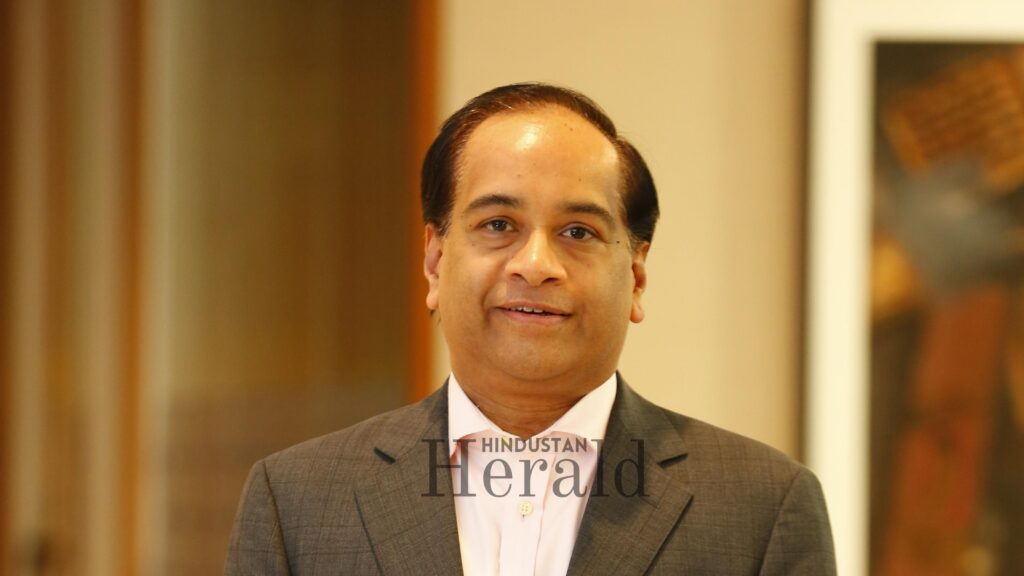
Balasubramanian is not a figurehead. He has spent years quietly and methodically rebuilding Citi’s institutional presence in India after the bank made the deliberate decision to sell its consumer banking portfolio to Axis Bank and exit retail altogether. That was a significant call to make. Citi had millions of credit card customers in India, a recognisable brand in branches and ATMs, the whole visible apparatus of a high street bank. Walking away from all of that to concentrate entirely on institutional and cross border banking was a strategic bet on where India’s real financial complexity was heading. So far, that bet looks like it is paying off.
Citi has been in India for nearly 125 years (as stated in the official Citi press release and corroborated by Citi’s India global presence page). That is not a marketing line. It is an institutional reality that quietly changes how Indian policymakers and corporates read the relationship. Foreign banks have come and gone in India some with considerable noise on the way in and very little on the way out. Citi’s continuity carries genuine credibility that a newer entrant simply cannot manufacture, no matter how large its balance sheet.
What makes this particular visit different from a standard relationship management trip is the scale of institutional firepower Citi brought with it. As reported by The Print and The Wire ahead of the conference, the Citi India Conference 2026 was designed to be the largest event on Citi’s annual India calendar convening more than 1,000 clients, 40 senior executives from major corporates, and 120 companies whose combined market capitalisation sits at approximately USD 1.8 trillion (pre-event announcement sourced from The Print via ANI).
Sessions across the three days covered the macroeconomic outlook, capital markets, digital infrastructure, emerging investment trends, and artificial intelligence.
Putting those two things together a private bilateral with the Prime Minister and a conference of 1,500 investors (official Citi press release) running simultaneously tells you something important. This was not a diplomatic visit with a conference attached to it. It was a coordinated commercial signal, executed at the highest possible level, built around three powerful priorities that India’s government and one of the world’s most globally networked banks have explicitly aligned on.
As reported by BusinessToday following Citi’s Investor Day in New York in May 2026, Fraser and her leadership team specifically called out India as a priority growth market not as an emerging opportunity on a wish list, but as an active contributor to the bank’s cross border institutional revenues.
The India business, they said, is increasingly aligned with Citi’s core global strategy. That same report noted that 42 percent of Citi’s Markets business revenues in 2025 came from non G10 countries (BusinessToday, Citi Investor Day coverage, May 2026), and that Asia Pacific contributed nearly 30 percent of global wealth revenues (same source) figures that place India’s growing contribution in sharp commercial context.
Modi’s Pitch and the FDI Foundation
Before getting to the three powerful priorities, it is worth understanding the economic foundation Modi laid out for Fraser in that room.
Viksit Bharat 2047 India as a fully developed economy by the hundredth year of its independence is the lens through which Modi now frames every significant conversation with global capital. It is not an abstract slogan. From semiconductor self reliance to green energy infrastructure, the government has been translating that vision into hard industrial policy, and the Semiconductor Mission 2.0 is one of the clearest examples of what that looks like in practice.
According to Citi’s official press release on the meeting, Modi laid out his vision for accelerating growth and economic momentum to achieve that objective. The clear implication, for anyone in the room who has been watching India’s policy trajectory, was that what is being offered to investors is not a short cycle play. It is a generational commitment with institutional depth behind it.

That framing works on a CEO like Fraser for a very specific reason. Citigroup is not a hedge fund. It does not make money from short duration volatility bets. It makes money from deep, sustained relationships with economies that are growing in scale and complexity relationships that generate transaction banking revenues, capital markets mandates, treasury management fees, and cross border financing over years and decades. India, structured the way Modi is describing it, is precisely the kind of economy Citi is built to serve over the long term.
The FDI data sitting underneath that pitch is not soft. According to DPIIT figures as reported by Drishti IAS, India pulled in USD 35.2 billion in FDI in the first half of FY26 alone an 18 percent increase over the USD 29.8 billion recorded in the same period the year before (both figures from DPIIT data via Drishti IAS).
Cumulative inflows from April 2000 through September 2025 crossed USD 1.12 trillion (same source). Full year FY25 total FDI equity inflows, reinvested earnings, and other capital combined reached USD 81.04 billion, the highest in three years (this figure sourced from Business Standard’s FDI inflows coverage). And in a single quarter, Q1 FY26, inflows from the United States nearly tripled to USD 5.61 billion (again from Business Standard’s reporting on DPIIT data).
These numbers do not need embellishment. They confirm, in the language that matters to institutional capital allocators, that India’s reform credentials are translating into bankable returns.
Powerful Priority 1: The Green Energy Financing Opportunity
Of the three powerful priorities discussed in that room, green energy carries the largest near term financing opportunity for a bank of Citi’s scale. It is also, reading between the lines of the Citi press release, where the most substantive commercial exchange of specifics took place.
The two sides spoke specifically about solar and green hydrogen (as stated in the official Citi press release). Not in the vague, everyone is excited about renewables way that fills conference panels and produces nothing. There was enough specificity in how Citi characterised the discussion to suggest that both sides were speaking commercially, not diplomatically.
India’s solar story is already well into execution. By early 2026, installed solar capacity crossed 150 GW (as reported in Drishti IAS’s editorial on accelerating India’s renewable energy transition). The 30 GW Khavda Hybrid Park in Gujarat one of the largest single renewable energy installations anywhere in the world anchors that number (same source). Costs have fallen dramatically over the past several years. Project pipelines are real and deep. Institutional lenders have enough historical performance data to model returns with reasonable confidence.
That part of the market is not a leap of faith anymore. It is increasingly a standard infrastructure asset class, the kind that long duration institutional capital is comfortable holding. Green hydrogen is the harder conversation, and both Modi and Fraser would know that.
India’s National Green Hydrogen Mission was launched in January 2023 with a government outlay of INR 19,744 crore (sourced from EY India’s joint report with FICCI on green hydrogen investment opportunities). The targets are ambitious to the point of being aggressive 5 million metric tonnes of green hydrogen production per year by 2030 (EY India report), with the expectation that the mission will mobilise INR 8 lakh crore in total green energy investments while creating 500,000 jobs, cutting fossil fuel imports by INR 1 lakh crore annually, and abating 50 million metric tonnes of carbon dioxide emissions (all figures from the same EY India report). The problem and it is a genuine, commercially significant problem is the cost gap.
Right now, producing green hydrogen in India costs between INR 397 and INR 560 per kg (as documented in Drishti IAS’s green hydrogen roadmap editorial). Grey hydrogen, made from natural gas the conventional way, comes in at INR 150 to 200 per kg (same source). That gap is the single most important variable determining whether green hydrogen moves from pilot projects to actual industrial deployment at scale.
The government and sector analysts broadly expect costs to fall to INR 260 to 310 per kg by 2030 (EY India green hydrogen sector report), driven by declining solar tariffs, domestic electrolyser manufacturing scaling up, and India’s naturally high solar irradiance and unified transmission grid.
The global export market adds a layer of strategic urgency. According to EY India’s sector analysis, the global green hydrogen market is projected to grow from USD 8.8 billion in 2024 to around USD 199 billion by 2034 (EY India report). The European Union, Japan, and South Korea are all positioned as major import destinations. India has the geography, the renewable resource base, and the policy intent. What it still needs is patient, long duration institutional capital the kind Citi, through its project finance and debt capital markets capabilities, can help arrange. Private sector actors are already moving fast.
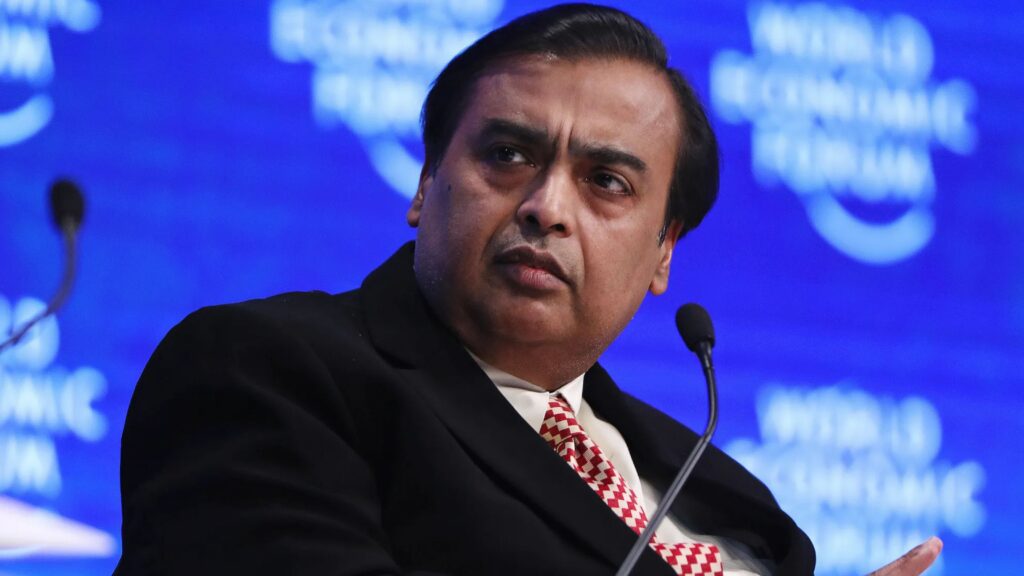
Reliance Industries, under Mukesh Ambani, is constructing an integrated new energy complex in Jamnagar, Gujarat, targeting 3 million tonnes of green hydrogen per year by 2032 and a production cost of USD 1 per kg by 2030 (sourced from Groww’s green hydrogen stocks analysis, April 2026). The company controls its entire value chain electrolyser manufacturing at 3 GW capacity, solar PV modules at 20 GW planned capacity, and battery manufacturing with 40 GWh coming online this year (same source). NTPC Green Energy crossed 10 GW of installed renewable capacity as of March 2026 and has a target of 60 GW by 2032 (Groww, April 2026).
In a development that signals real momentum in the green ammonia supply chain, SECI signed six agreements in March 2026 with manufacturers to supply green ammonia to fertiliser companies, covering 670,000 tonnes per annum of the 724,000 tpa allocated under its SIGHT scheme (as reported by Renewable Watch, June 2026). These are executed commercial agreements not government targets on paper, but contracted supply relationships. For institutional investors who need demand side certainty before committing capital on the production side, this is material progress.
Projects at that scale require structured financing project bonds, long tenor debt facilities, export credit support, cross border equity arrangements. Citi has the network to arrange all of it. That is not a coincidence. It is precisely why this conversation happened in the first place.
Powerful Priority 2: AI Governance That Invites Capital, Not Repels It
The artificial intelligence part of the discussion was, by its nature, the most forward looking of the three powerful priorities and for financial services executives, the most commercially urgent.
According to Citi’s official press release, the two sides talked about AI including the role of regulation and where the technology can genuinely serve economic growth. The framing itself was interesting it acknowledged that regulation and AI opportunity are not opposites, but that getting the balance wrong in either direction has real costs. Design it too loosely and the harms accumulate in ways that eventually provoke a sharp political correction. Design it too restrictively and the capital moves to friendlier jurisdictions before the regulatory architecture is even finalised. India has been trying to thread that needle deliberately.
The government released its AI Governance Guidelines in November 2025 through the Ministry of Electronics and Information Technology, under the broader IndiaAI Mission. As reported by DD News and independently reviewed by legal analysts on Privacy World, the framework makes a conscious choice not to replicate the EU’s AI Act model with its extensive risk classification system and heavy pre market compliance requirements. India’s approach rests on seven core principles accountability, safety, fairness, transparency, and related values (as documented in the DD News report) implemented through existing laws on data privacy, consumer protection, and competition law, rather than through a new dedicated AI statute.
The draft Digital India Act is still in public consultation as of mid 2026. A private member’s Artificial Intelligence Ethics and Accountability Bill was introduced in the Lok Sabha in December 2025, proposing mandatory ethical reviews for high risk AI systems and bias audits, with penalties proposed at up to INR 5 crore (as documented in legal analysis on Prashantmali.com, February 2026). Neither piece of legislation is enacted yet, but the direction of travel is clear light touch governance, innovation protected as a default, liability assigned through accountability mechanisms rather than pre-approval bureaucracy.
For Fraser, this is not abstract policy interest. Citigroup disclosed in its Q1 2026 earnings, as analysed by Alpha Sense, that AI is being deployed across the firm at genuine scale in revenue generation, process efficiency, client experience improvements, and in strengthening the bank’s defensive capabilities. The multi year transformation program that Fraser has been executing was described as 90 percent at or near target state (same earnings source), with AI integration as a structural element of what that transformation looks like in practice.
India’s Digital Public Infrastructure the Aadhaar, UPI, and interconnected government data platforms built over the past decade already constitutes one of the most sophisticated AI compatible financial data environments in the world. The combination of that infrastructure, a massive English fluent technically trained workforce, a regulatory environment that rewards responsible deployment over restriction, and a government publicly committed to making AI a driver of economic growth creates conditions that are genuinely difficult to replicate at comparable scale anywhere else on the planet.
That is a commercially meaningful statement for a bank building AI capability at speed and looking for markets where those capabilities can generate real returns.
Powerful Priority 3: Indian Companies Going Global
There is a dimension of the Modi Fraser meeting that tends to get quietly buried under the headline FDI numbers, and it deserves its own careful attention. It is the third powerful priority and in many ways the most historically significant shift of the three.
The two sides explicitly discussed how Citi can help Indian companies expand into global markets (as stated in the official Citi press release) not bring foreign money into India, but take Indian corporate ambition outward. That is a genuinely new conversation from the one India was having with international banks twenty years ago, and it signals something real about where the Indian corporate economy has arrived.
Indian companies are acquiring in Europe and North America. They are listing on international exchanges. They are managing multi currency balance sheets across a dozen jurisdictions simultaneously. Pharmaceuticals, IT services, infrastructure, and manufacturing conglomerates that were entirely domestic entities a generation ago are now operating with the organisational complexity and geographic footprint of established multinationals.
Serving those companies as they internationalise cross border M&A advisory, multi currency treasury management, capital markets access in New York and London, trade finance across supply chains spanning multiple continents requires an institutional banking partner with genuine, not nominal, global reach. Citi operates in over 160 countries (as stated in Citi’s official global profile) and services 90 percent of the Fortune 500 through its proprietary network, which includes direct membership to over 270 cash clearing centres (as disclosed in Citigroup’s Q1 2026 earnings materials via Alpha Sense).
For an Indian conglomerate trying to close a European acquisition or an IT company managing a complex multi currency hedging programme, Citi is one of a very short list of banks that can actually execute at that level. The fact that Modi and Fraser made this a formal agenda item rather than leaving it as an implicit benefit of the relationship signals that the Indian government now treats outbound corporate ambition as an active policy priority deserving of institutional support. That is new, and it matters considerably for how Indian companies approach their next phase of global expansion.
What Citi Looks Like Right Now
It is worth pausing to understand the institution Fraser is running as she sits across from the Prime Minister. Citigroup in Q1 2026 posted total revenues of USD 24.6 billion, up 14 percent year on year (Citigroup Q1 2026 earnings, Alpha Sense). Net income came in at USD 5.8 billion, with a return on tangible common equity of 13.1 percent (same source). These are not numbers that reflect a bank in distress or a leadership team losing its nerve. They reflect an institution that has been through a painful, expensive, multi year transformation and is beginning to see the returns on the other side of it.
The bank also advised on the three largest M&A deals announced globally so far in 2026 (same earnings source), which speaks to where Citi sits in the advisory market among the most significant transactions of the year.
In September 2025, as reported by Business Standard, Citi shifted approximately 1,000 technology jobs to India while simultaneously reducing its China based technology workforce. Operational decisions of that magnitude do not happen because of good optics. They happen because the economics are compelling, the talent pool is deep, and the long term strategic logic of building in India outweighs the short term cost of transition.
India’s growing weight inside Citi’s internal architecture has been visible to careful observers for several years. The Modi Fraser meeting simply made it visible publicly and at the highest diplomatic level.
What Comes After the Handshake
No cheques were signed on Wednesday. No memoranda of understanding, no headline commitment figures, no joint announcements. That is entirely how this works, and reading the absence of a press release number as a sign of limited substance would be a mistake.
Meetings between heads of state and global bank chiefs are not where capital gets committed. They are where the conditions for capital commitment get established. They are where the signal goes out to the 1,500 investors (official Citi press release) assembled in the conference centre downstairs and through them to investment committees in New York, Singapore, Tokyo, and London that the government and the bank are aligned on three powerful priorities, that the agenda is serious and specific, and that the risks worth taking on India are ones that institutional finance at the highest level is prepared to price and absorb.
The actual capital shows up later. In green energy project bonds. In AI infrastructure financing mandates. In cross border M&A advisory for Indian companies making their first major overseas acquisition. In decisions made by portfolio managers who flew to Mumbai this week and returned home with a sharper conviction about where India belongs in their allocation priorities.
As it turns out, that is precisely how India has been building its investment story year after year not through a single dramatic announcement that makes the front pages and then fades, but through the steady, patient accumulation of institutional confidence. Built meeting by meeting, deal by deal, reform by reform, until the aggregate becomes self sustaining. Wednesday was one more brick in that wall. A well placed one.
Stay ahead with Hindustan Herald — bringing you trusted news, sharp analysis, and stories that matter across Politics, Business, Technology, Sports, Entertainment, Lifestyle, and more.
Connect with us on Facebook, Instagram, X (Twitter), LinkedIn, YouTube, and join our Telegram community @hindustanherald for real-time updates.

Tracking world politics, global markets, trade movements, policy decisions, and the changing balance of economic power.
- Shelesh Joshi

- Shelesh Joshi
- Shelesh Joshi
- Shelesh Joshi





Former financial consultant turned journalist, reporting on markets, industry trends, and economic policy.
- Kavita Iyer
- Kavita Iyer
- Kavita Iyer
- Kavita Iyer