 By Shelesh Joshi and Rajiv Menon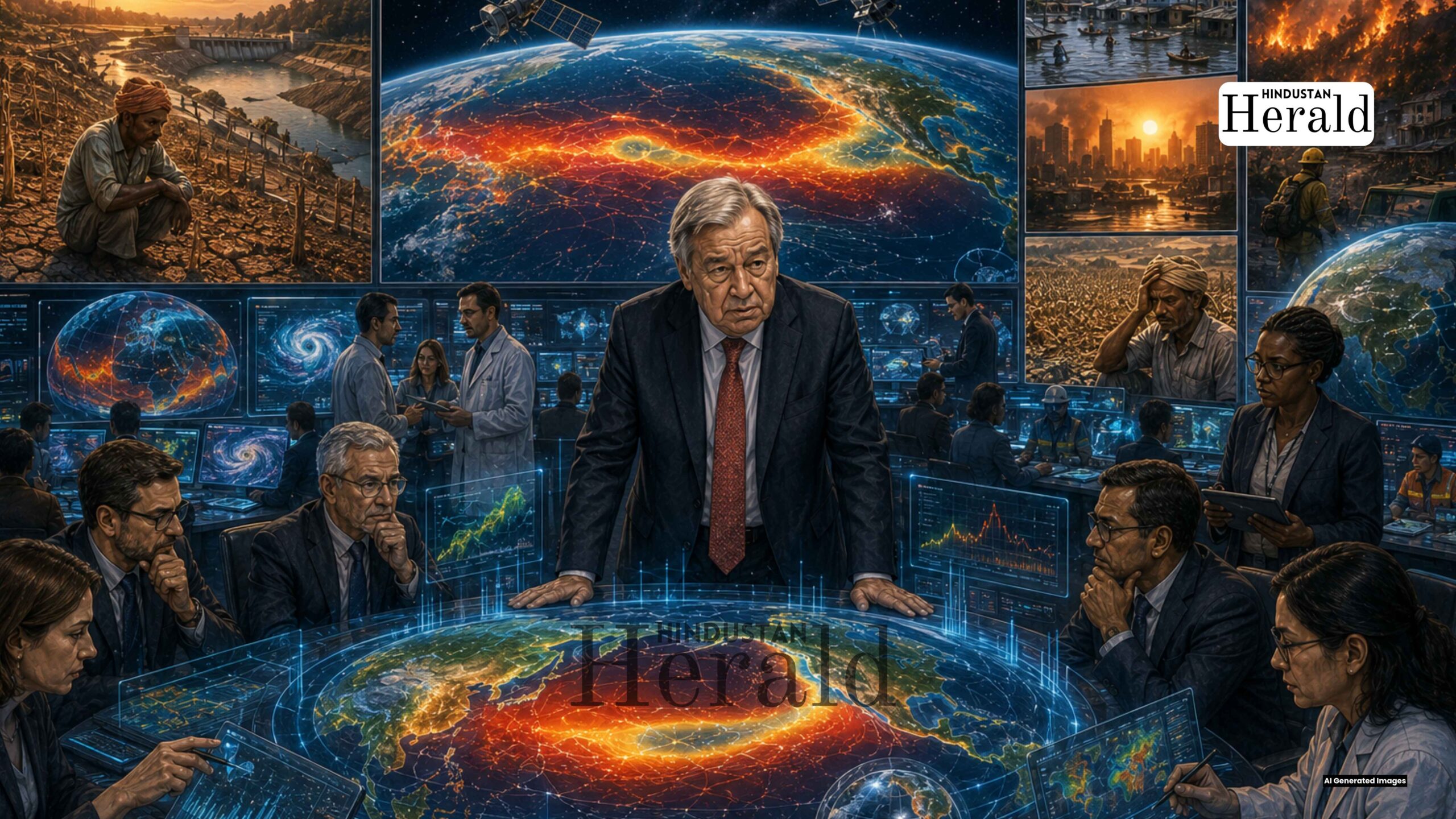
New Delhi, June 3: Some warnings you hear and move on. You note them, maybe share the headline, and get back to whatever you were doing. And then there are warnings that sit with you differently. The kind where you find yourself reading the same paragraph twice, not because it is confusing, but because you are hoping you misread it the first time.
The joint statement on El Nino 2026 from Antonio Guterres and the World Meteorological Organisation on June 2 was the second kind.
El Nino 2026 is coming. The UN Secretary-General said it plainly, on camera, without the usual diplomatic padding. 90 per cent certain. Treat it as the urgent climate warning it is. That was the message. Not a background note to science journalists. Not a footnote in a technical bulletin. A direct, named, numbered warning to every government on the planet.
Guterres has been doing this job for years. He has delivered versions of this speech before. But there was something in the tone this time, a kind of exhausted directness, that suggested he has stopped trying to find a softer way to say the same thing.
Quick Summary
- UN Secretary-General Antonio Guterres on June 2 declared El Nino is arriving with 90 per cent certainty, calling it an urgent climate warning demanding immediate government action.
- The World Meteorological Organisation places an 80 per cent probability on above average temperatures hitting nearly every part of the world between June and August 2026.
- India’s IMD has downgraded its 2026 monsoon forecast to 90 per cent of the Long Period Average, the first below normal projection in three years.
- The 2023-24 El Nino ranked among the five strongest ever recorded, pushing 2024 to become the hottest year in human history at 1.55 degrees Celsius above pre-industrial levels.
- Around 60 per cent of India’s farmers relying on monsoon rainfall for the kharif season face serious crop stress this season, as per Down to Earth reporting.
- Ecuador and West Africa, supplying 60 per cent of global cocoa, face potential crop losses, signalling food inflation from this El Nino will travel far beyond any single country.
What the El Nino 2026 Data Actually Shows
The WMO has been watching the tropical Pacific for months. What it found is not subtle. Water temperatures in certain zones beneath the ocean surface are running six degrees Celsius above average. The WMO called it a reservoir of heat. That description is accurate and also quietly terrifying if you understand what happens when that water rises.
It does not stay local. It reshapes how moisture and energy move through the atmosphere across the entire planet. Rainfall patterns shift. Temperature records break in places that have nothing geographically to do with the Pacific Ocean. Seasons behave strangely. Farmers plant on schedules that the weather no longer respects.
UN Chief warns of extreme weather risks — and this is exactly the data he was looking at when he did. On June 2, Antonio Guterres called El Nino 2026 an urgent climate signal that no government can afford to ignore. He did not use measured language. He used the language of someone who has run out of patience with measured language.
The models put an 80 per cent probability on above average temperatures covering almost the entire planet between June and August. By November, that figure hits 90 per cent. The event is expected to be at minimum moderate. Some researchers are already saying Super El Nino out loud. The WMO is not using that phrase in official statements yet, but the fact that it is being said openly by people looking at the same data tells you something the press releases are not quite capturing.
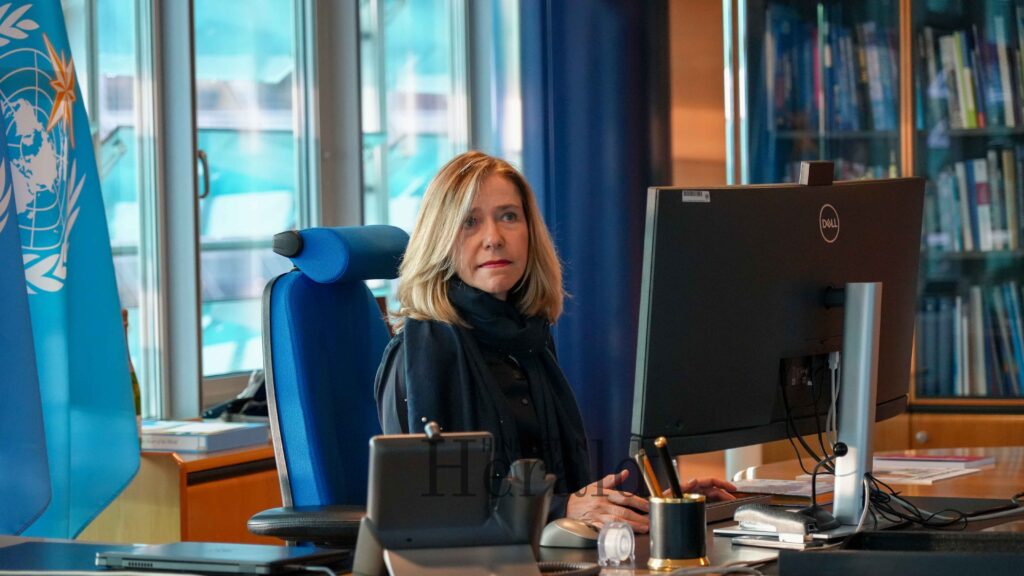
WMO Secretary-General Celeste Saulo described the reach of El Nino 2026 in terms that cut through the usual institutional language. It does not stay in the Pacific, she said. It gets into agriculture, energy, trade, water, supply chains, and the lives of people in landlocked countries who have never thought once about ocean circulation patterns. A farmer in Nanded and a herder in East Africa are about to have their years shaped by the same body of warm water sitting somewhere in the Pacific neither of them will ever see.
The UN Chief’s warning of extreme weather risks was not delivered in isolation either. It came backed by hard numbers, formal bulletins, and the kind of coordinated institutional messaging that only happens when the data has crossed a threshold that can no longer be softened into routine seasonal advisories.
She also said El Nino 2026 does not have to become a catastrophe. That is true. 128 countries have early warning systems now. The forecasting is genuinely better than it was ten years ago. But there is a long road between a warning issued in Geneva and a meaningful response in a vulnerable district in Marathwada, and most of the avoidable damage in El Nino years happens somewhere on that road.
It Is Not Just El Nino Anymore
Here is the part of this story that keeps getting underplayed. El Nino has been happening for centuries. Every two to seven years, sea surface temperatures in the equatorial Pacific warm unusually, global weather patterns reorganise themselves for nine to twelve months, and then the cycle eases. Some regions flood. Some dry out. It is a natural phenomenon that long predates human industrial activity.

The problem is that it is no longer arriving into the same world it used to. Piers Forster at the University of Leeds said it simply when talking to Reuters. The underlying climate change makes each El Nino more intense and more damaging than it would otherwise have been. You are not dealing with the event on its own terms. You are dealing with the event on top of a planet that has already been pushed significantly warmer, where the atmosphere holds more moisture and the oceans have been accumulating heat for decades.
The last major cycle, 2023-24, was among the five strongest on record. It pushed 2024 to become the hottest year in human history. Global temperatures that year sat at 1.55 degrees Celsius above the pre-industrial baseline. They dipped slightly in 2025, by about 0.10 degrees. Now they are climbing again. The WMO has warned that 2027 could be worse than 2024.
The worst year ever recorded was two years ago. The scientists are saying, carefully but clearly, that it may not hold the record for long.
India Is Not Watching From a Distance
Talk to a farmer in Vidarbha or Barmer about the monsoon and they will not give you percentages. They will tell you what they planted last year and what came up. They will tell you about the loan they took in April and the calculation they are running right now about whether they can repay it by November. They will tell you the borewell that used to hit water at 40 feet now needs to go past 180.
The numbers from the India Meteorological Department translate into exactly those kinds of conversations happening across the country right now.
The IMD opened this year projecting rainfall at 92 per cent of the Long Period Average. It has since moved that to 90 per cent, placing 2026 officially in the below normal category for the first time in three years. IMD Director General Mrutyunjay Mohapatra has been clear. El Nino will influence this monsoon. It will strengthen as the months go on. By September, conditions could be moderate to strong. September is the month that matters most and gets mentioned least in the coverage.
June is when farmers decide what to plant. July is when the early growth happens. September is when the season settles its accounts. A strengthening El Nino that peaks in September does not give anyone a chance to adjust. The crops are already in the ground. The money is already spent. The rain either comes or it does not.
Down to Earth reported, citing IMD modelling, that seasonal rainfall could fall to around 800 mm nationally. Around 60 per cent of India’s farmers dependent on kharif rains are looking at serious stress this year. That number does not describe a bad patch. It describes a majority of rain dependent cultivation across the country hitting difficulty at the same time.
The Indian Ocean Dipole may offer some partial relief. Positive IOD conditions and below normal snow cover could moderate El Nino’s suppressive effect on Indian rainfall, as Mohapatra and Ministry of Earth Sciences Secretary M Ravichandran noted in April. The IOD is real. It has helped before. But relying on it to cancel out a strengthening El Nino is, as most experienced monsoon scientists will tell you privately, more hope than plan.
What Can Be Done and What Cannot
Agriculture Minister Shivraj Singh Chouhan has asked states to prepare. The Centre has put together an additional 174,000 quintals of seeds beyond the standard kharif requirement, bringing total availability to 1.93 million tonnes. The logic is sound. If early crops fail, farmers need to be able to replant without waiting weeks for seed supplies to arrive.
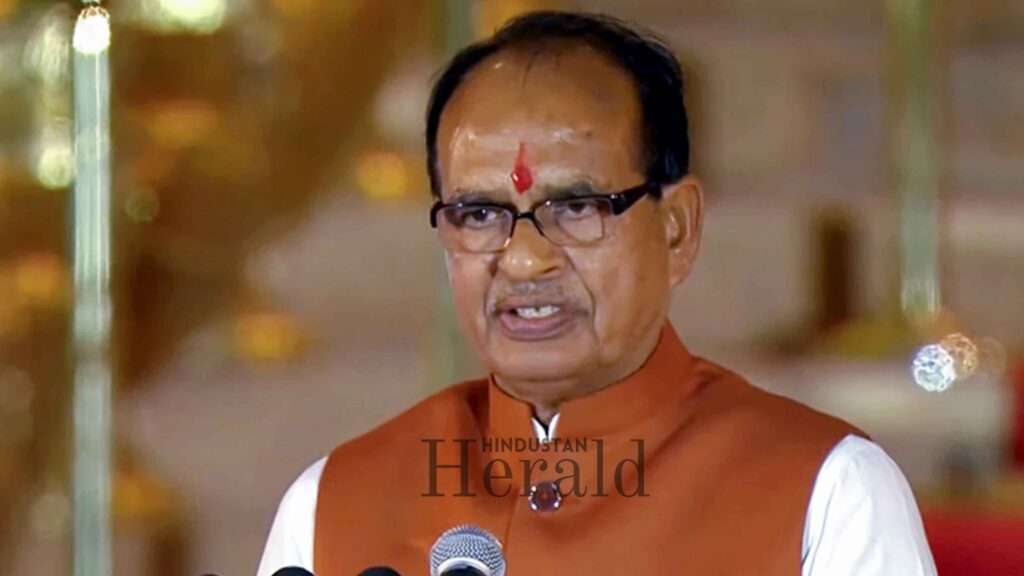
That preparation deserves acknowledgement. It reflects real learning from past El Nino years. But it covers one scenario. It does not cover the farmer in Osmanabad who cannot afford to plant twice regardless of seed availability because the first planting cleaned out every rupee he had access to. It does not address the borewells running dry across Bundelkhand. It does not staff up the primary health centres in Chhattisgarh and Jharkhand for what happens when a disrupted monsoon creates the standing water conditions that dengue and malaria thrive in, which they will, because that is what always happens.
The WMO specifically flagged the health dimension in its bulletin. El Nino intensifies heat illness. It spreads vector borne diseases into regions where they were previously uncommon. It hits food and water supplies simultaneously. For most of India’s district level health infrastructure, which is already stretched under normal conditions, that combination arriving at once is not a manageable scenario. It is a system pushed past what it was designed to handle.
The Ministry of Finance did not dress this up in its May 2026 monthly report. The monsoon will determine inflation, rural demand, and growth this year. El Nino interactions with other factors could push rainfall deficits beyond what the headline IMD forecast suggests. Retail inflation could approach 5 per cent in FY27. For the Reserve Bank of India, a food price surge coming from insufficient rainfall sits completely outside the reach of monetary tools. You cannot interest rate your way out of a bad monsoon.
The Rest of the World Is Already Feeling It
Barry Callebaut, one of the world’s biggest cocoa processors, has warned publicly about crop risk in Ecuador and West Africa, the regions supplying 60 per cent of global cocoa. El Nino disruptions do not stay where they originate. They travel through commodity markets and surface months later as price increases in grocery stores in cities that have no obvious connection to Pacific Ocean temperatures. That is simply how the global supply chain works.
Analysis from the Observer Research Foundation Middle East pointed out that this El Nino is landing precisely when conflict driven disruptions in the Middle East have already pushed transpacific container rates 40 per cent above pre-crisis levels and squeezed exports of urea and phosphorus fertilisers. A climate shock and a geopolitical shock arriving on global agricultural systems simultaneously is not a combination that standard contingency planning handles well.
Across southern Europe, the EU has deployed a record number of firefighters and aircraft across Cyprus, Greece, Italy, France, Spain, and Portugal. Researchers at Imperial College London and the World Weather Attribution network have specifically warned about what El Nino could do to this year’s wildfire season. Continental blocs do not spend that kind of money on preventive deployment without strong scientific justification.
Two years ago in Rio Grande do Sul, more than 180 people died and over 600,000 were displaced by El Nino linked flooding. In a country with serious emergency infrastructure. This cycle starts from a warmer baseline than that one did.
The Gap Between the Warning and the Response
There is something telling about how the language from climate institutions has shifted over the past few years. The WMO’s statements have become less hedged. The qualifications have shortened. The urgency has moved from the final paragraphs to the opening sentences. These are not dramatic institutions. When their language changes, it is because the data is changing.
Guterres has been issuing climate warnings for his entire tenure. He has watched emissions keep rising. He has watched commitment after commitment fall short of implementation. He has stopped sounding like a man who expects to be surprised by the political response. He sounds like a man who has accepted that he has to keep saying the same thing and hope that eventually the gap between the warning and the response narrows before the damage becomes permanent.
The UN has flagged an 86 per cent probability that coming years will break 2024’s heat record. The models that produced that figure have consistently been accurate, and have more often underestimated the pace of change than overstated it. The direction is not in dispute.
What is still in dispute, or at least still unresolved, is the pace of the practical response. Village level early warning systems that actually function. Crop insurance that pays claims before the next planting season. Water infrastructure designed for this decade’s rainfall patterns, not the last generation’s. None of these are radical proposals. All of them are moving slower than the evidence says they need to.
Out in the Fields
The farmers watching the sky over Vidarbha and Raichur this June are not reading WMO bulletins. They already know something has been shifting. They have watched the borewells go deeper each year. They have noticed the heat arriving earlier and the monsoon onset growing less predictable. They know what a bad September looks like from a March conversation with a moneylender.
They are making real decisions right now with borrowed money and incomplete information. The question underneath all the probability figures and institutional statements is a simple one. Is the preparation that exists around them actually deep enough, fast enough, and specific enough to protect them if this season becomes what the models suggest it might?
The season is barely started. The El Nino is still building. The answer is still being written, out in the fields, under a sky that has not yet decided what it is going to do.
Stay ahead with Hindustan Herald — bringing you trusted news, sharp analysis, and stories that matter across Politics, Business, Technology, Sports, Entertainment, Lifestyle, and more.
Connect with us on Facebook, Instagram, X (Twitter), LinkedIn, YouTube, and join our Telegram community @hindustanherald for real-time updates.

Tracking world politics, global markets, trade movements, policy decisions, and the changing balance of economic power.
- Shelesh Joshi

- Shelesh Joshi
- Shelesh Joshi
- Shelesh Joshi




Specializes in South Asian geopolitics and global diplomacy, bringing in-depth analysis on international relations.
- Rajiv Menon
- Rajiv Menon
- Rajiv Menon
- Rajiv Menon