 By Shelesh Joshi and Rajiv Menon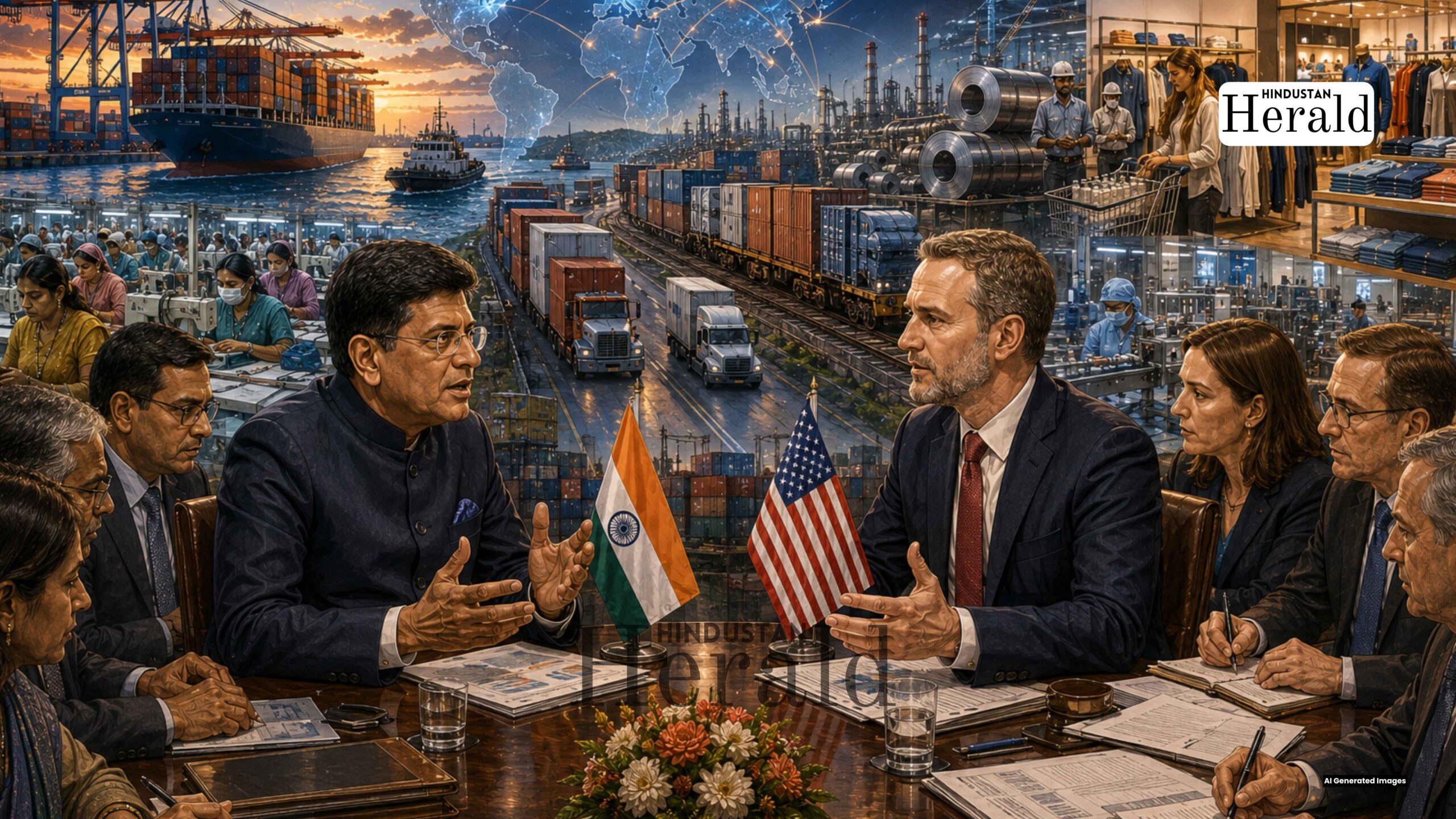
New Delhi, June 3: There is something quietly telling about the fact that India found out it was being treated like a trade offender in the same news cycle that its commerce ministry was preparing for another round of bilateral deal talks with Washington. That is the kind of irony that does not make it into press releases but shapes how diplomats actually feel in rooms.
On Tuesday, the US forced labour tariffs on India became real when the United States Trade Representative formally proposed additional duties on goods from 60 countries, on the grounds that these economies have failed to ban imports made with forced labour. India is being asked to absorb an additional 12.5 per cent duty on everything it exports to America. Not on specific goods. On everything.
The announcement landed without much warning, and for Indian exporters already navigating a complicated tariff environment, it landed hard.
Quick Summary
- The USTR proposed additional tariffs on goods from 60 economies under Section 301 of the Trade Act of 1974, citing failure to prohibit imports made with forced labour.
- India faces 12.5 per cent additional duty, placed in the harsher tier because it has no standalone forced labour import prohibition law on the books.
- The investigation was launched on March 12, 2026, just three weeks after the US Supreme Court invalidated Trump’s global tariffs on February 20, 2026.
- India posted a $42 billion trade surplus with the United States in 2025, with textiles, steel, petrochemicals, and solar modules carrying the most export risk.
- India’s Commerce Ministry called the allegations baseless in April 2026 and demanded the probe be shut down, with ongoing bilateral trade talks now expected to address Section 301 relief.
- India and the US had announced a framework for an interim trade agreement on February 6, 2026, just weeks before this investigation formally opened.
The US Forced Labour Tariffs on India Began With a Supreme Court Ruling
Start with the moment that actually set this in motion, because Tuesday’s tariff proposal did not come from nowhere. On February 20, 2026, the United States Supreme Court struck down a significant chunk of President Donald Trump’s globally applied tariffs. The court found they exceeded the legal authority of the executive branch. It was a major legal blow, and beyond the constitutional implications, it had a very concrete financial consequence: those tariffs had been pulling in roughly $170 billion a year. That revenue was suddenly in serious legal jeopardy. The administration’s response was to find another door into the same building.
Section 301 of the Trade Act of 1974 is that other door. It is a decades old law that gives the USTR considerable room to investigate foreign trade practices and impose tariffs when it finds those practices to be unfair, without needing Congress to approve anything. Previous administrations have used it. Trump’s first term used it heavily against China. What is different this time is the sheer number of countries being swept in at once and the speed at which the administration moved.
Within weeks of the Supreme Court ruling, USTR Jamieson Greer announced two back to back rounds of Section 301 investigations. One targeted industrial overcapacity across 16 economies. The other, announced on March 12, was the moment Washington formally decided to propose new tariffs for 60 countries, accusing each of them of failing to stop imports made with forced labour.
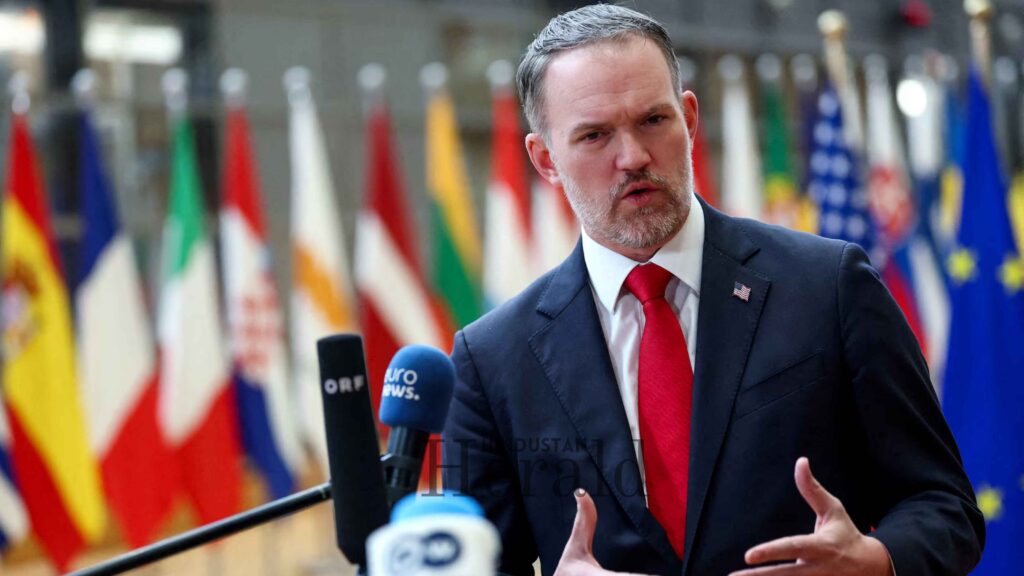
When the US proposes new tariffs of this scale under a single legal mechanism, trade lawyers take notice. They immediately pointed out the obvious. This looks less like a principled enforcement campaign and more like an administration scrambling to recreate the tariff architecture the court just dismantled. That reading is not unfair. The timing is too tight, and the list too wide, for this to be explained purely as a labour rights initiative.
Still, forced labour in global supply chains is not a manufactured problem. The Uyghur Forced Labor Prevention Act, passed under Biden, has actually resulted in shipments being stopped at American ports. The issue is real. Whether using it to justify US new tariffs on 60 countries like Norway and New Zealand is proportionate is a separate question entirely.
What is also worth noting is that this is not the first time the Trump administration has reached for Section 301 as its primary trade enforcement tool. During Trump’s first term, the law was used to pile tariffs on Chinese goods worth hundreds of billions of dollars. The Biden administration continued several of those investigations. The current wave is simply the broadest and fastest deployment of the same instrument, stretched well beyond anything its original architects in 1974 would have imagined.
Who Is on This List and Why That Matters
The full country list deserves a careful look, because it tells you something about how Washington is thinking, or perhaps not thinking carefully enough, about the diplomatic consequences of what it is doing.
The 60 economies named include Japan, Australia, Canada, the United Kingdom, the European Union, South Korea, Israel, Singapore, Switzerland, Taiwan, Brazil, Mexico, Vietnam, Bangladesh, Pakistan, Saudi Arabia, Qatar, Turkey, UAE, Sri Lanka, Norway, New Zealand, and dozens more. China is on it. Russia is on it. So is India. The USTR found that 54 of these 60 economies lack an effective prohibition on importing goods made with forced labour.
Countries that already have some kind of forced labour import ban, or have committed to implementing one through a formal agreement with Washington, face a 10 per cent additional tariff. Everyone else faces 12.5 per cent. India is in the 12.5 per cent group.
There is also a textile mechanism tucked into the proposal that would allow certain volumes of apparel imports from select countries to enter the US at a reduced rate. The details of which countries qualify for that concession are still being worked out, and that ambiguity is itself a source of anxiety for Indian garment exporters who are watching the situation closely.
What strikes you when you read through the list is how casually it collapses distinctions that matter enormously in diplomatic reality. Australia and China are not comparable situations. Norway and Venezuela are not comparable situations. Japan and Russia are not comparable situations. Grouping them all under the same legal finding produces a kind of flat, institutionally tone deaf outcome that countries on the receiving end are unlikely to accept without pushback. India certainly has not.
The broader diplomatic fallout from this list will take time to fully surface. Several of the named economies are currently in active trade negotiations or security partnerships with Washington. Being placed on a non compliance list alongside adversaries is not a neutral diplomatic event. It creates domestic political pressure in each of these countries and complicates the very negotiations Washington says it wants to advance.
Why India Got the Worse Number
The reason India ended up at 12.5 per cent rather than 10 per cent is, in legal terms, fairly straightforward. It does not have a standalone law prohibiting the import of goods made with forced labour.
That is not because India is indifferent to labour rights. It has constitutional provisions against bonded labour, broad labour regulations, and a long standing legal framework around worker protections. But it does not have the specific targeted import ban mechanism that Washington is now treating as the baseline standard, something functionally equivalent to the Uyghur Forced Labor Prevention Act.
Countries that committed to implementing such a mechanism through formal trade agreements with the US qualified for the lower tier. India’s interim trade agreement framework, signed in February 2026, covers tariff reductions across specific goods. It does not include an explicit forced labour import commitment. So India did not clear the threshold.
The result is an outcome that is legally explainable but diplomatically awkward. India has made real concessions to Washington in recent months. It agreed to stop buying Russian oil. It deepened defence cooperation. It opened politically sensitive agricultural markets to American goods. And it is still being slotted into the same non compliant category as countries it fundamentally does not see itself aligned with on the global stage. There is no version of that outcome that feels good to the people on the New Delhi side of the table.
What makes it more complicated is that building the legal framework Washington is demanding is not a simple administrative task. Drafting and passing a standalone forced labour import prohibition statute requires parliamentary action, regulatory infrastructure, and enforcement capacity that does not currently exist in India’s trade architecture. The USTR’s timeline and India’s legislative reality are not easily reconciled.
The Sectors That Will Actually Feel This
Forty-five million people work directly in India’s textiles and apparel industry. It is the second largest employer in the country after agriculture. The United States is by far the largest single buyer of Indian textiles, accounting for roughly 29 per cent of India’s total textile export earnings.
India’s textiles and apparel exports, including handicrafts, came in at $32.63 billion in FY2025-26. Ready made garments alone were worth $14.53 billion. These are not small numbers, and they are attached to real places.
Tiruppur in Tamil Nadu. Surat in Gujarat. Ludhiana in Punjab. These are cities built substantially around the ability to get competitively priced goods onto American shelves. A 12.5 per cent additional tariff does not just trim margins for factory owners. It creates real pricing disadvantages in a market where buyers switch suppliers without much sentimentality.
The underlying competitive picture was already troubling well before this week. India’s garment exports to the US were worth roughly $14.5 billion in 2023-24, essentially unchanged from a decade earlier. In that same period, Vietnam grew its garment exports to $33.4 billion and Bangladesh reached $43.8 billion. India has been slowly, quietly losing ground in a market it simply cannot afford to lose any further ground in.
A fresh tariff disadvantage will not reverse that trend. It will push it further in the wrong direction, and it will do so at exactly the moment when India needs competitive momentum in the American market to meet its own export growth targets.
Beyond textiles, petrochemicals, steel, pharmaceuticals, and solar modules all sit squarely in the exposed zone. India’s total exports at risk across these sectors add up to roughly $32.5 billion annually, nearly 38 per cent of everything it sends to the American market each year.
Pharmaceutical exports had largely been shielded in previous tariff rounds, and there was an assumption in the industry that they would continue to receive some degree of protection. Section 301 duties apply across all goods from the targeted economy unless specific exclusions are carved out through negotiation. That automatic protection is no longer guaranteed, and the industry knows it.
The steel and petrochemical sectors face a slightly different problem. These are industries where India has invested heavily in capacity expansion over the past several years, partly in anticipation of growing export demand. A significant new tariff on American bound steel and chemicals does not just affect current export volumes. It affects the investment calculus for future capacity additions, which has longer term consequences for industrial employment and growth.
How India Has Responded So Far
The Commerce Ministry was not particularly diplomatic about it. In mid April 2026, it formally rejected the USTR’s allegations, called them baseless, and said the investigations should be dropped entirely. The Ministry’s position was that trade disputes belong in bilateral negotiations, not in unilateral legal actions brought under a domestic American statute.
That is a principled argument and also a practical one. India’s leverage in the bilateral trade relationship is real and should not be underestimated. The two countries have set a target of $500 billion in bilateral trade by 2030, up from roughly $191 billion today. Escalating tariff friction makes that target significantly harder to reach and makes both sides look bad in front of an international audience that is watching this relationship closely.
As per government sources cited earlier this week, Commerce Minister Piyush Goyal is expected to meet USTR Jamieson Greer once there is greater clarity on the remaining issues in the trade negotiations. The forced labour tariff is now reportedly one of India’s primary asks for relief in any finalised deal.
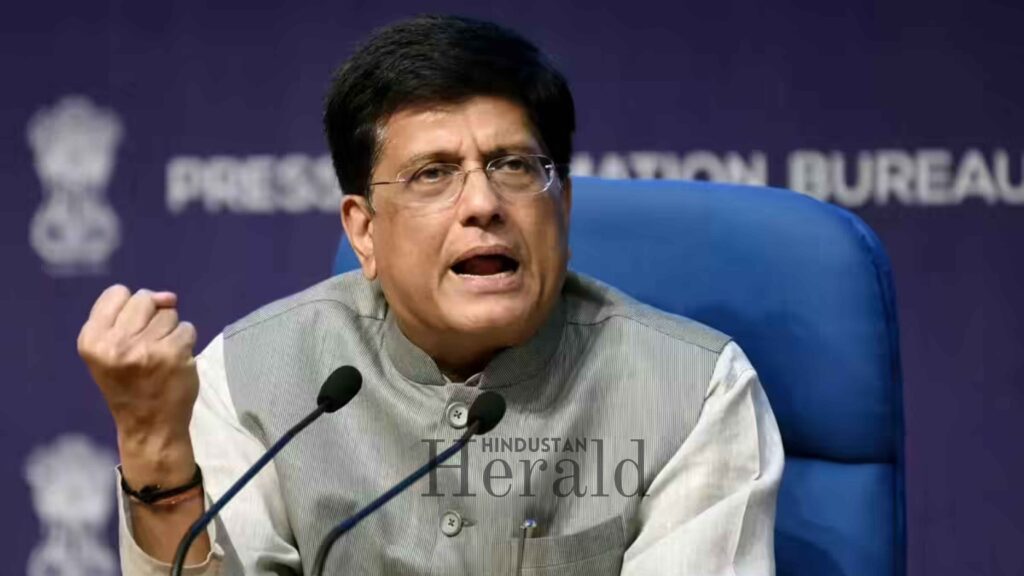
That changes what the trade agreement actually is. It started as a market access negotiation, focused on tariff schedules, agricultural goods, and industrial products. It has become, in part, a compliance negotiation, with India being asked to build a legal framework it does not currently have, in exchange for tariff relief it urgently needs. Those are two very different kinds of conversations, and combining them in a single negotiating track adds considerable complexity to an already difficult process.
The February Agreement and the Irony of Where Things Stand
Four months ago the bilateral mood was genuinely warm. On February 6, 2026, Trump signed an order removing the additional 25 per cent tariff on Indian goods that had been imposed as a penalty for India buying Russian oil and military equipment. The same day, both governments announced a framework for an interim trade deal. India agreed to lower tariffs on American industrial and agricultural goods. Washington agreed to a reciprocal tariff of 18 per cent on a defined set of Indian exports including textiles, apparel, and leather.
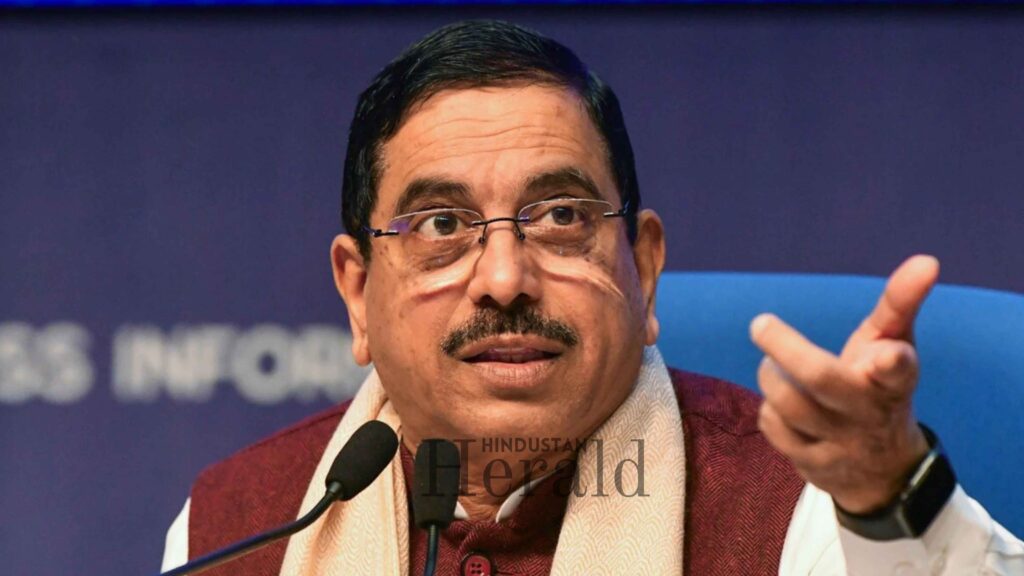
Union Minister Pralhad Joshi called it a milestone. Access to the $113.76 billion American textiles market, he said, would open a new chapter for Indian manufacturers. That was four months ago.
The interim agreement did not include a forced labour import commitment, which means India received no automatic protection from the harsher tariff tier when the USTR made its final determination. The goodwill of February did not translate into legal cover in June. That gap between diplomatic warmth and legal protection is precisely the kind of gap that experienced trade negotiators spend careers trying to close.
There is a pathway out through the broader bilateral trade agreement currently being finalised. If India can include a credible forced labour import enforcement commitment in the final text, it would likely qualify for the 10 per cent tier instead of 12.5. That is a meaningful difference, even if 10 per cent is still a new tariff burden sitting on top of everything else Indian exporters are already managing.
Whether New Delhi can actually legislate or regulate that commitment on a timeline short enough to matter is genuinely unclear. The political will may exist. The administrative machinery to deliver it quickly may not.
The 2021 Precedent Offers a Template
India has survived a Section 301 confrontation before, and it is worth remembering how. In 2021, the USTR found that India’s Equalisation Levy, essentially a digital services tax on foreign technology companies operating in India, was discriminatory against American businesses. A proposal for 25 per cent retaliatory tariffs on a range of Indian goods was formally put on the table.
Those tariffs never actually arrived. India moved the dispute into multilateral negotiations at the OECD, eventually scrapped the Equalisation Levy entirely, and the Section 301 threat dissolved without ever materialising into real economic damage for Indian exporters.
The current situation carries some of the same DNA. Both then and now, the two sides have considerably more to gain from a negotiated exit than from an escalating tariff confrontation. Both then and now, India holds enough strategic and economic leverage that Washington cannot simply ignore New Delhi’s objections and move on.
The difference this time is scale and complexity. In 2021, India only needed to repeal one specific tax. What Washington is asking for now touches something considerably broader: a new legal infrastructure around supply chain oversight and import enforcement that spans multiple industries and requires sustained institutional capacity to implement and maintain.
The 2021 template is useful. It demonstrated that diplomatic resolution is possible and that neither side ultimately wants the relationship defined by a tariff war. But the template needs to be significantly adapted for a problem that is structurally more demanding and legislatively more complex than abolishing a single levy.
What Happens Next
Tuesday’s announcement is not a final order. It opens a formal public comment and review period, during which governments, industry groups, and individual companies can submit written arguments to the USTR. Public hearings will follow before any final determination is made. The US forced labour tariffs on India, as proposed, are not yet law.
India’s most effective response runs on several tracks simultaneously. Ministerial level talks with Greer’s office need to happen quickly and directly, with the forced labour compliance question addressed head on rather than deferred to a later stage. Industry associations in textiles, pharmaceuticals, and steel need to file detailed submissions making the economic case for relief and demonstrating the consequences of the proposed tariffs on sectors that employ millions of workers. And the bilateral trade agreement needs to move fast enough to include forced labour enforcement language before the tariff proposal gets formally converted into standing law.
Goyal has said publicly that the bilateral deal is coming very soon. That timeline is carrying considerably more weight this week than it was last week, and the people watching it most anxiously are not trade lawyers or ministry officials.
They are the garment workers in Tiruppur who are not following trade policy debates but whose wages depend entirely on the outcomes of those debates. They are the small factory owners in Surat calculating whether their American orders will survive a 12.5 per cent cost increase. They are the steel plant workers in states whose livelihoods sit inside the $32.5 billion of exports that Washington has now put in its legal crosshairs.
For all of them, the procedural details of Section 301 comment periods and bilateral trade negotiating tracks do not matter. One question does: will Indian goods still be competitive on American shelves six months from now.
The answer to that depends entirely on whether the people in the negotiating rooms can move faster than the legal process grinding along in Washington. They had better.
Stay ahead with Hindustan Herald — bringing you trusted news, sharp analysis, and stories that matter across Politics, Business, Technology, Sports, Entertainment, Lifestyle, and more.
Connect with us on Facebook, Instagram, X (Twitter), LinkedIn, YouTube, and join our Telegram community @hindustanherald for real-time updates.

Tracking world politics, global markets, trade movements, policy decisions, and the changing balance of economic power.
- Shelesh Joshi

- Shelesh Joshi
- Shelesh Joshi
- Shelesh Joshi




Specializes in South Asian geopolitics and global diplomacy, bringing in-depth analysis on international relations.
- Rajiv Menon
- Rajiv Menon
- Rajiv Menon
- Rajiv Menon