
 By Sandeep Verma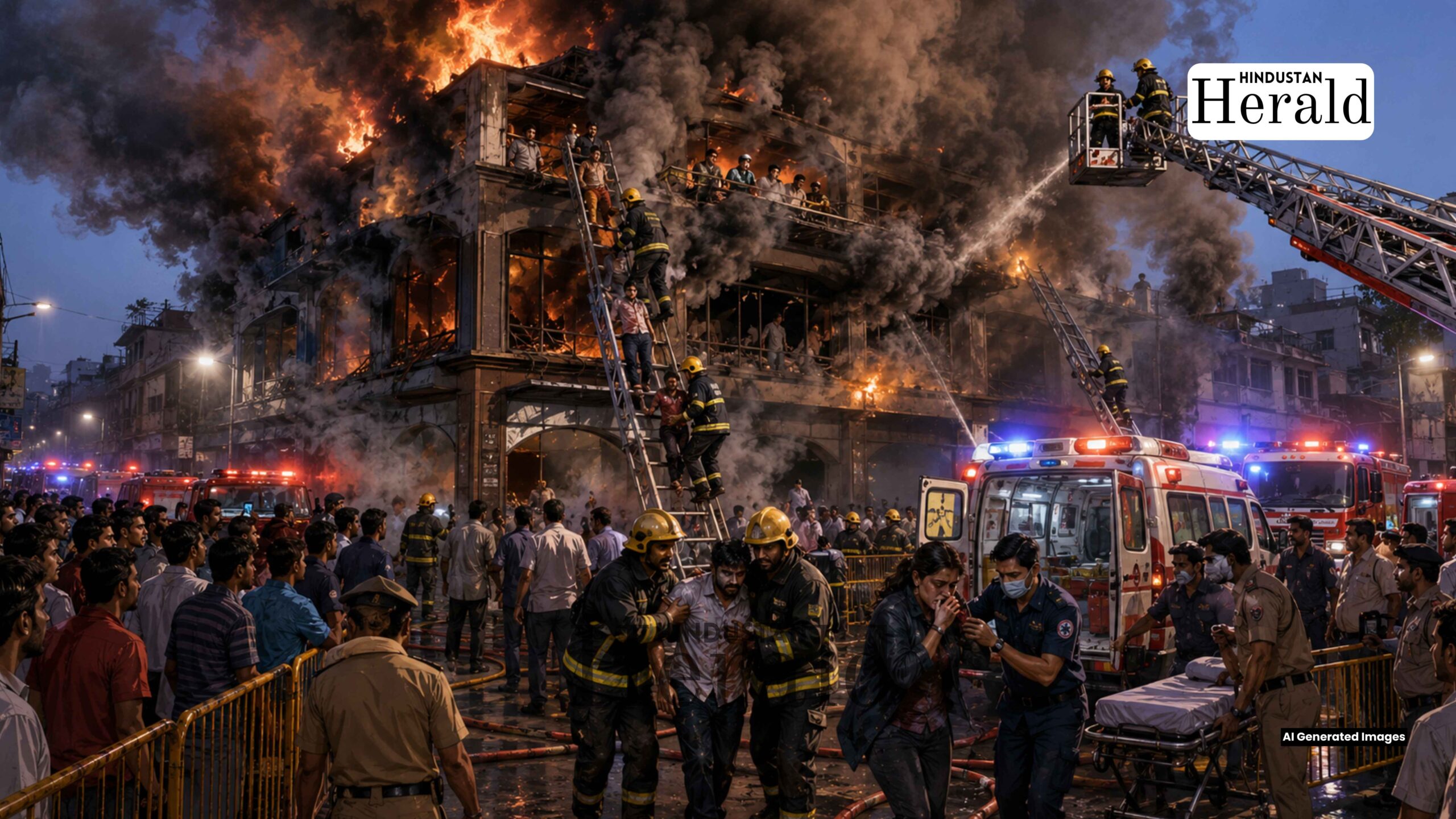
New Delhi, June 3: Twenty-one dead. Thirty-seven rescued. A building in South Delhi that is now a crime scene, a grief site, and a political flashpoint all at once. And a city that has been through this exact thing before, more times than it should ever have allowed.
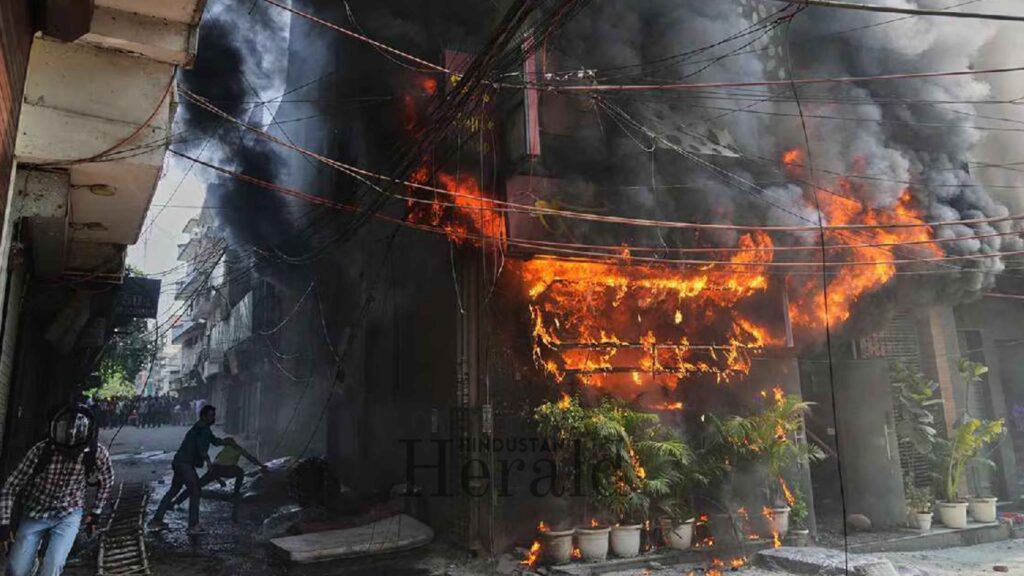
Lemon Green Restaurant is a multi-storey establishment in Hauz Rani, a neighbourhood most Delhiites know only as the area you pass through getting somewhere else. It sits close to Malviya Nagar, mixed in with the usual South Delhi density of shops, eateries, residential buildings doing double duty as commercial ones, and streets that were never really meant to handle what they now carry. The fire broke out Wednesday morning, reportedly around 8:30. The Delhi Fire Service received the call at 9:45. Do that arithmetic and sit with it for a second.
How the Lemon Green Restaurant Fire Started and Spread
A kitchen short circuit is what early accounts are pointing to, though the official investigation has not confirmed a cause yet. What is confirmed is that the fire started from the basement level, which anyone who has ever stood in a smoke-filled stairwell can tell you is the worst possible geography for a blaze. Smoke from a basement does not have a clean upward path. It finds the staircases. It fills them. It cuts off the exits before the exits are even registered as gone, and by the time people understand what is happening, the options have already narrowed to almost nothing.
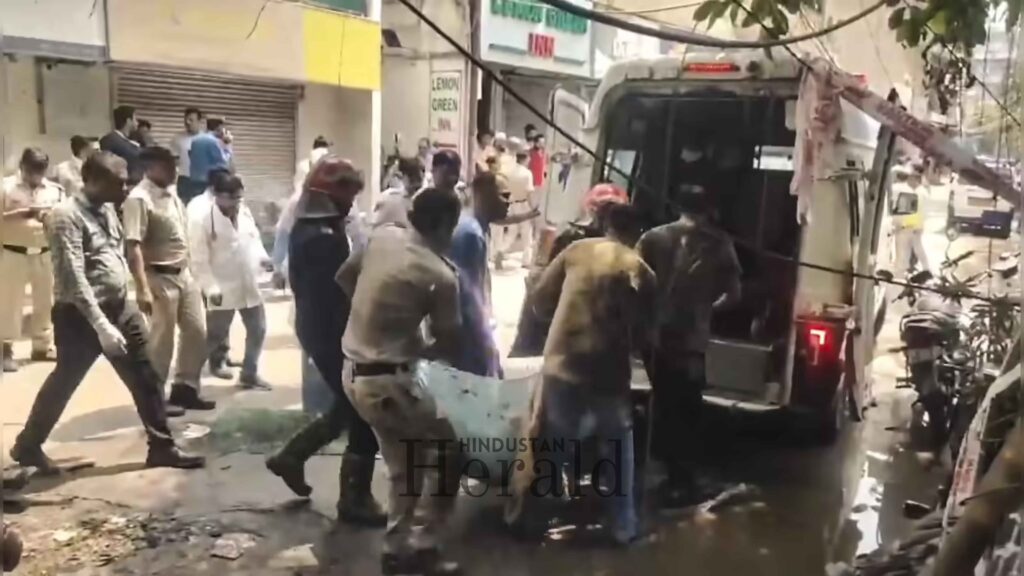
People jumped. From a multi-storey building. That is the detail that keeps surfacing in early eyewitness accounts and it is the one that deserves more than a passing mention in a bullet point. When people jump from buildings, it means the fire had already beaten every other choice they had.
Ten fire engines were deployed. Divisional Officer Ravinder of the Nehru Place fire station was on the ground managing rescue operations. In the initial push, teams pulled three people from the basement and moved them by CATS ambulance to hospital. After that came the slower, harder part. Floor by floor. Room by room. Working through a building that was still hot and still dark in parts, looking for anyone the smoke had not yet finished with.
Thirty-seven were found alive. Twenty-one were not.
Search operations ran through most of the afternoon, teams double-checking spaces to make sure nobody had been missed in a corner somewhere.
Then Came the Detail Nobody Expected
Somnath Bharti, the AAP MLA for the area, posted early in the day that the victims were “majorly South African nationals.” He gave no further details. Authorities have not officially confirmed nationalities yet. Identification is still in process, and that process in a fire this severe takes time, takes forensics, takes paperwork moving between countries.
But if Bharti’s account holds up, it recasts this story entirely. These were not local regulars or neighbourhood workers who had spent their lives a few streets away. They were people who came from somewhere else, possibly tourists, possibly members of the African diaspora community that has a visible presence in parts of South Delhi. Either way, there are people outside India right now who may not yet know they have lost someone.
That is not a detail you find in the official government statements. It lives in the gap between the press release and the actual human cost.
What the Government Said
Prime Minister Narendra Modi’s office put out a statement. Grief expressed, condolences offered, speedy recovery wished for the injured. The Prime Minister’s National Relief Fund will pay Rs 2 lakh to the families of each person killed, Rs 50,000 to those who survived with injuries.
Lieutenant Governor Vinai Kumar Saxena said he was deeply distressed. He directed officials to ensure medical assistance and a thorough investigation. Chief Minister Rekha Gupta said the Delhi government is with the families and monitoring the situation closely.
These statements were issued, and they were sincere, and they were also, it has to be said, entirely familiar. Not a word in any of them that has not been said after a Delhi fire before. Not a commitment that has not been made before. That is not a criticism of the individuals who made them so much as it is an observation about the situation they keep finding themselves in, offering comfort for disasters that keep arriving on schedule.
What the Lemon Green Restaurant Fire Revealed About Delhi’s Safety Failures
This is where the story shifts from tragedy to something closer to negligence.
The restaurant reportedly had far more people inside than the building was designed for. Its basement-level configuration, which initial reports point to as the origin point of the blaze, is the kind of setup that fire safety rules exist precisely to regulate and, in many cases, prohibit. Whether Lemon Green held a valid No Objection Certificate from the Delhi Fire Service is something investigators are now digging into. Whether functional firefighting equipment was present. Whether the occupancy was within legal limits.
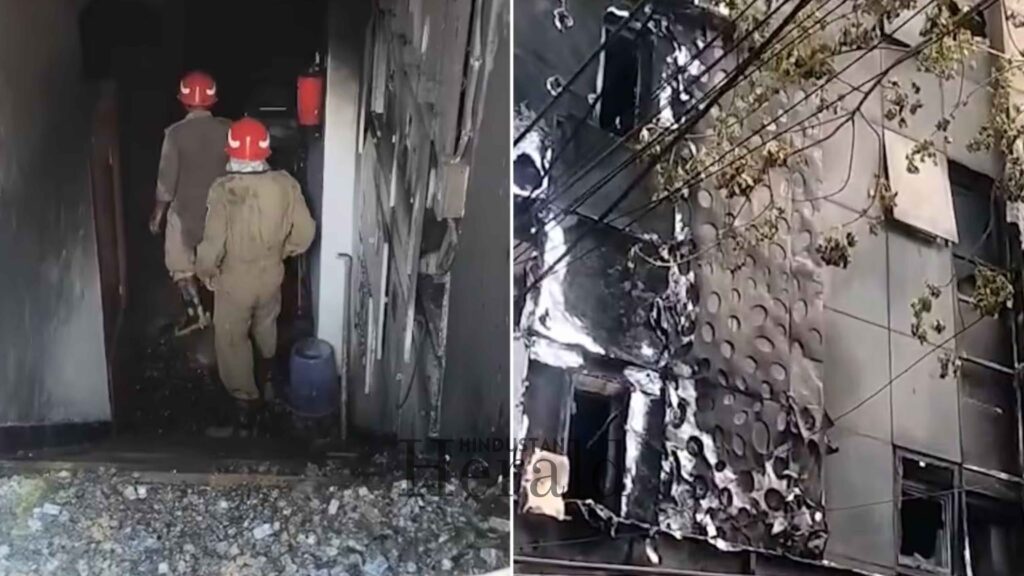
Here is the thing though. These questions are not surprising. They are the same questions Delhi asks after every restaurant fire. And the answers, historically, are almost always some version of the same story: the paperwork was missing, the inspections had not happened, the violations were known or knowable, and nothing was done about them until somebody died.
Delhi’s fire safety situation in its restaurants and commercial buildings has been openly problematic for years. A large portion of establishments in residential colonies operate without valid fire NOCs. The workaround is not even subtle. You claim a seating capacity just below the threshold that triggers mandatory certification. You pack in more than that. You put the kitchen in the basement. You let the gas lines and the wiring share walls. You assume nothing will happen because nothing has happened yet. And then one Wednesday morning at 8:30, something does.
The Day That Came Before This One
It is worth noting, even if only briefly, that the day before this fire, ten people were injured in Mukundpur when a suspected LPG cylinder explosion brought a building down. One day earlier. Same city. A different kind of structural failure, the same category of preventable disaster.
And before Mukundpur, there was Mundka in 2022. Twenty-seven dead in a commercial building fire. Before that, Karol Bagh in 2019. Seventeen people killed overnight in a hotel. Before that, seven newborns in a Vivek Vihar hospital fire that made the whole country stop for a moment and then, gradually, move on.
Each time there is a response. Arrests, sometimes. Task forces, occasionally. Promises of inspections and enforcement drives that run for a few weeks, generate some news coverage, and then quietly wind down because the political pressure eases and the bureaucratic attention shifts elsewhere. The buildings stay as they were. The basements stay full of kitchens. The exits stay narrow. The NOCs stay missing.
Delhi does not have a fire safety problem because nobody has explained what fire safety is. It has one because the explanation has never been followed by the kind of sustained enforcement that actually changes how buildings operate.
What Comes of the Investigation
Delhi Police and fire department officials will examine the ownership, the licensing, the occupancy records, the physical condition of the building’s fire systems. If the findings show that the people responsible for this restaurant operated it with deliberate disregard for safety norms that they knew or should have known, the law allows for a charge of culpable homicide not amounting to murder. That is a heavy charge and it is the appropriate one when negligence causes death at this scale.
Whether it leads anywhere is the harder question. Indian courts move slowly. High-profile cases get complicated. Witnesses become difficult. Charges get reduced in plea arrangements. The families, meanwhile, wait.
What cannot wait is the broader question this fire raises about every other restaurant in Delhi running on the same model. The same absent documentation. The same overcrowded basement kitchen. The same building that has never once had a fire inspector walk through the door.
Hauz Rani, After
The neighbourhood will carry this for a long time. These things settle into places. The building will be sealed, there will be yellow tape and officials with clipboards, and eventually the legal proceedings will begin and drag. The street will go back to looking mostly like itself. But the people who live close enough to have smelled the smoke this morning will not forget what Wednesday felt like.
Twenty-one people are dead. Some of them, if the early reports are right, were a very long way from home when it happened. Thirty-seven others are in hospitals across Delhi with injuries that some will recover from fully and some will not. And the families, here and possibly abroad, are doing what families do after something like this: trying to understand how a morning that started normally ended the way it did.
The answer to that question is not complicated. It is just very uncomfortable, because it points not at some freak accident but at a system that has known about this risk for years and kept making the same choice about how seriously to treat it.
Lemon Green is gone. The building will be examined and debated and eventually decided upon. But there are hundreds of buildings in this city that look exactly like it, running exactly the same way, waiting for the same kind of morning.
That is the story underneath this story. And it does not end when the fire does.
Stay ahead with Hindustan Herald — bringing you trusted news, sharp analysis, and stories that matter across Politics, Business, Technology, Sports, Entertainment, Lifestyle, and more.
Connect with us on Facebook, Instagram, X (Twitter), LinkedIn, YouTube, and join our Telegram community @hindustanherald for real-time updates.

Regional journalist bringing grassroots perspectives and stories from towns and cities across India.
- Sandeep Verma

- Sandeep Verma
- Sandeep Verma
- Sandeep Verma