
 By Ananya Sharma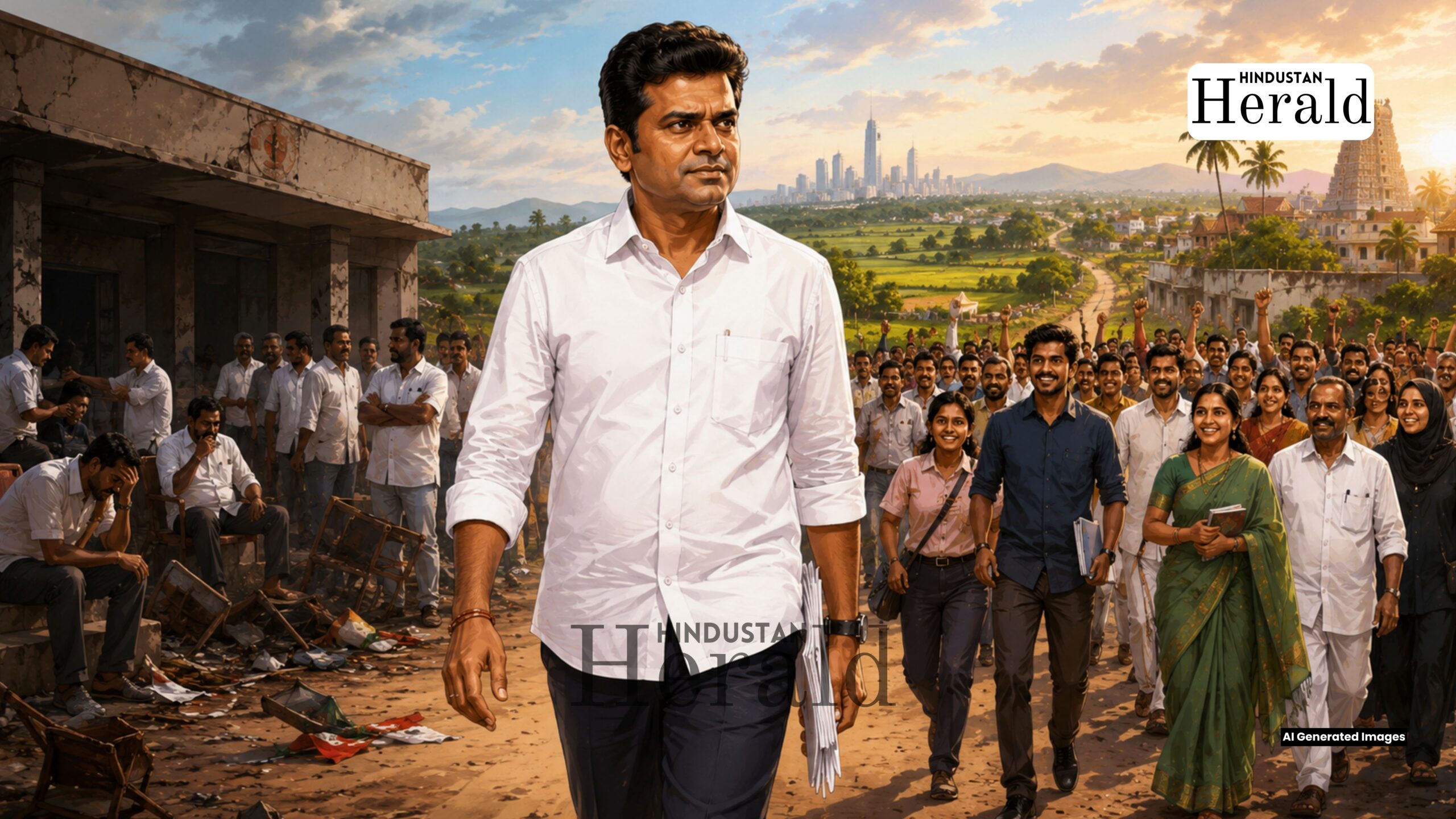
Chennai, June 5: Some political exits feel like they have been coming for years. This one did. K. Annamalai turned 42 today. He spent part of it confirming what most people in Tamil Nadu’s political circles had already accepted as inevitable that he was done with the BJP, and that whatever comes next will be something he builds himself, on his own terms, in his own state.
The resignation letter went in on June 2. The BJP confirmed acceptance on June 5. Six years, one party, and an ending that was quiet on paper but loud in everything it meant.
The Rise Nobody Quite Saw Coming
Go back to 2020 for a moment. Annamalai was 36, a former Karnataka-cadre IPS officer who had walked away from a genuinely distinguished police career Deputy Commissioner of Police in Bengaluru to return to Karur and work with farmers. Not the most obvious starting point for a political career.
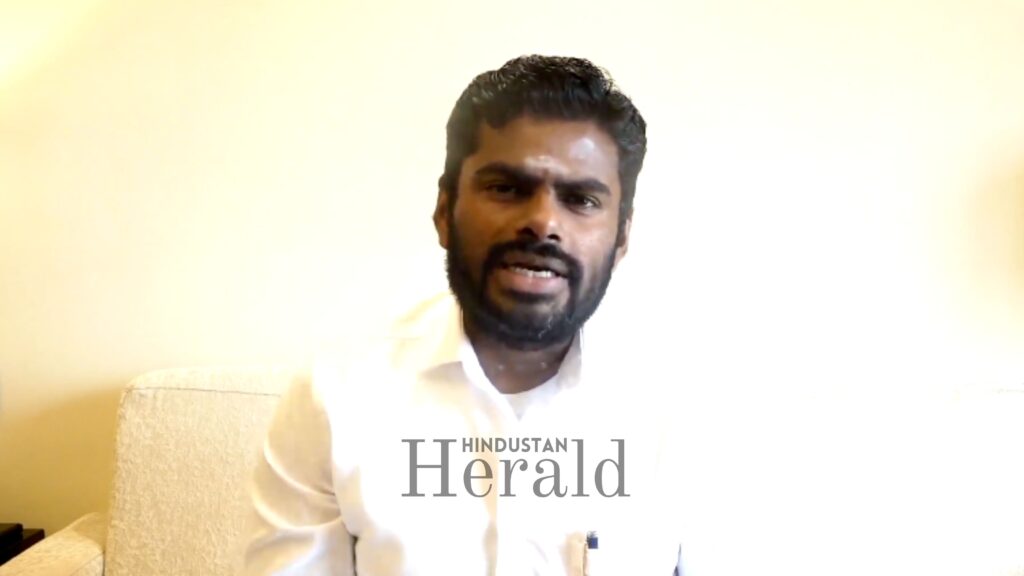
He joined the BJP in August that year. Eleven months later, they made him Tamil Nadu state president. That kind of acceleration inside a national party does not happen by accident. He had something a directness, a willingness to go after the Dravidian establishment in language it had never quite heard from a BJP leader, a physical energy that translated well on the road and even better on social media.
The En Mann, En Makkal yatra covered all 234 assembly constituencies. He stood in village squares in districts where the BJP had been functionally invisible for decades and made the case that the saffron party deserved a serious hearing. Whether people agreed or not, they listened. The party’s vote share in Tamil Nadu climbed to roughly 11 per cent by the 2024 Lok Sabha elections, up from near nothing.
Still. Eleven per cent and zero seats is, at the end of the day, still zero seats. And that gap between energy and electoral outcome, between visibility and actual votes was the gap that would eventually swallow everything.
One Disagreement That Never Got Resolved
The AIADMK question was always the fault line.
Annamalai believed, and said so publicly and repeatedly, that the BJP’s future in Tamil Nadu lay in building independent strength. No alliances with Dravidian parties. No shortcuts. Take the slow road, build real roots, and eventually the state would come around. It was a coherent argument. It was just an argument that the party’s central leadership was never fully willing to accept.
His public criticism of AIADMK icons comments touching on C N Annadurai and J Jayalalithaa made things worse. The AIADMK walked out of the NDA in 2023, and Edappadi K. Palaniswami was straightforward about where he placed the blame. For the next year and a half, the BJP’s high command tried to balance Annamalai’s usefulness against the cost of keeping him where he was.
In April 2025, they stopped trying to balance it.
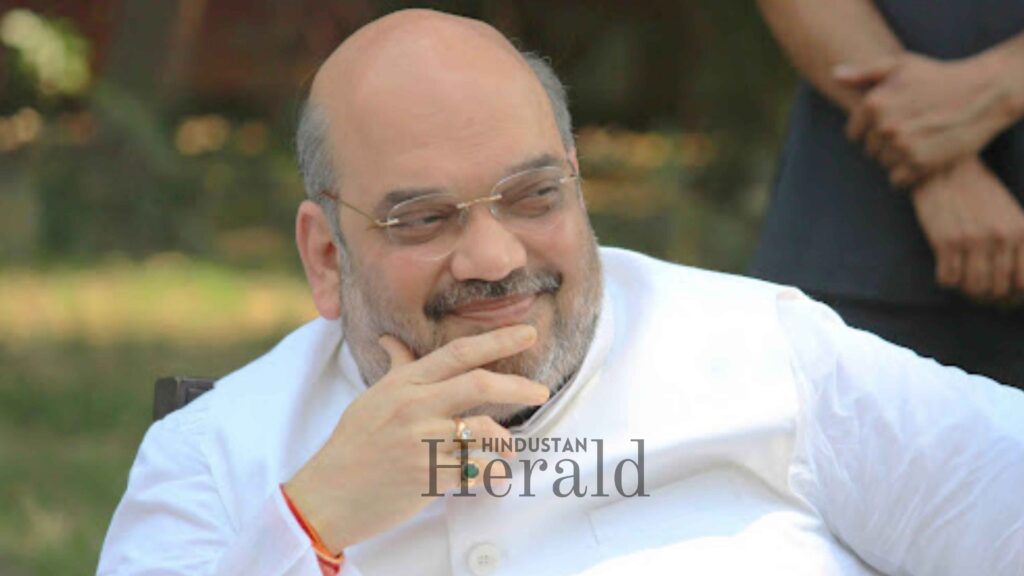
Amit Shah flew to Chennai, stood next to Palaniswami, and announced the BJP-AIADMK alliance for the 2026 elections. The same afternoon, Annamalai stepped down as state president. Nainar Nagendran, 64 years old, from Tirunelveli, with decades in the Dravidian ecosystem, took the post. The BJP’s leadership told the press that Annamalai’s talents would be used within the party’s national framework.
That phrase. National framework. It is the kind of language political organisations use when they want someone to feel they still matter without actually giving them anything to do.
The Election He Was Not Part Of
The 2026 Tamil Nadu Assembly elections were held on April 23. The BJP contested 27 seats under the AIADMK-led NDA banner. The candidate list had Dr. L. Murugan, Dr. Tamilisai Soundarrajan, state chief Nainar Nagendran. Annamalai’s name was not there.
The man who had spent six years moving through every corner of this state, arguing that the BJP belonged here, that Tamil Nadu needed a non-Dravidian alternative, that the work was worth doing he watched the election from outside it.
Results came in on May 4. They were historic, just not for anyone the NDA had hoped. Actor Vijay’s Tamilaga Vettri Kazhagam won 108 seats on its debut, and Vijay took oath as Tamil Nadu’s 13th Chief Minister. The AIADMK-BJP combine was routed. Tamilisai Soundarrajan lost. Tamil Sotherarajan lost. Nainar Nagendran lost. The party’s vote share reportedly fell back toward the 2 per cent range a collapse from the 11 per cent high Annamalai had spent years building toward.
Six years. One election cycle. Most of it gone.
What Happened in Delhi
In the weeks after the results, Annamalai went to Delhi. Supporters back in Coimbatore put up posters. Social media started filling with the phrase “new party.” Everyone could see where this was going, more or less.
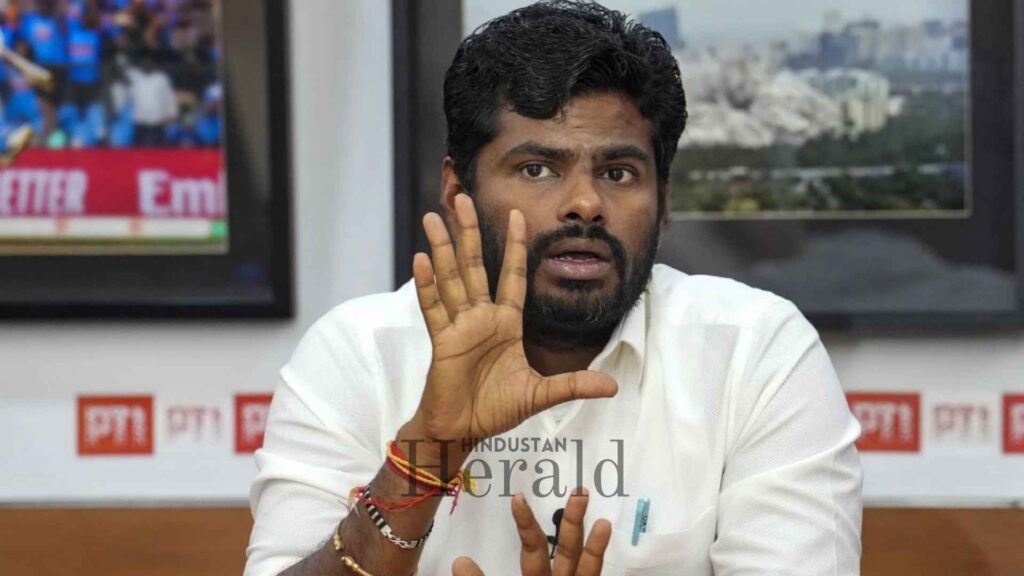
He met party president Nitin Nabin. He met organisation secretary B.L. Santhosh. He met Amit Shah. Reports from The News Minute and other outlets said the leadership urged him to slow down, not to act in haste, to wait a little longer. There were suggestions that a ministerial position might materialise, that things could still be worked out.
He handed in the letter anyway. Five pages, according to sources. In it quoted by ANI he wrote that he did not want to burden the top leadership any further with his ongoing thoughts on the way forward for a growth-oriented and culturally rooted politics in Tamil Nadu.
Polished language. Polite language. The kind of language you use when you have already made your peace with the decision and you just want the formalities finished.
On his birthday, Arun Singh the BJP’s national spokesperson confirmed in a statement that party president Nitin Nabin had accepted the resignation from primary membership. Then Annamalai released a video. And the careful, formal language disappeared completely.
What He Said, and What He Meant
He said the BJP had not listened. That he had tried, for six years, to help the party understand how Tamil people think, what they respond to, what kind of political language reaches them. That national parties, as a rule, do not speak in a way that Tamil Nadu actually understands. That he had partially succeeded in bridging that gap, but only partially, and that six years inside the BJP had not produced what the state deserved.
He talked about the past 18 months of disagreement, about December 4 of last year when he had first publicly signalled his intent to leave, and about eventually arriving at a point where there was nothing left to negotiate.
He also brought up Rajinikanth, unprompted. Said that the day before he joined the BJP in 2020, the superstar had called him with an invitation to join his then-nascent political movement. He said he refused, for three reasons he did not fully spell out. He had made his choice then. Now he was making another one.
The movement is called Namma Movement. The website is wetheleader.org. The guiding phrase translates, roughly, to Switch, Let’s Change. The plan, as he described it, is to start with a broad-based, non-religious, Tamil Nadu-centric platform built around young people, bring capable people in from outside conventional politics, and eventually convert that into a party that contests elections.
Within hours, reportedly more than 50,000 people had signed up on the platform.
A Different Tamil Nadu Now
The state Annamalai is trying to enter looks nothing like the one he was working in six years ago.
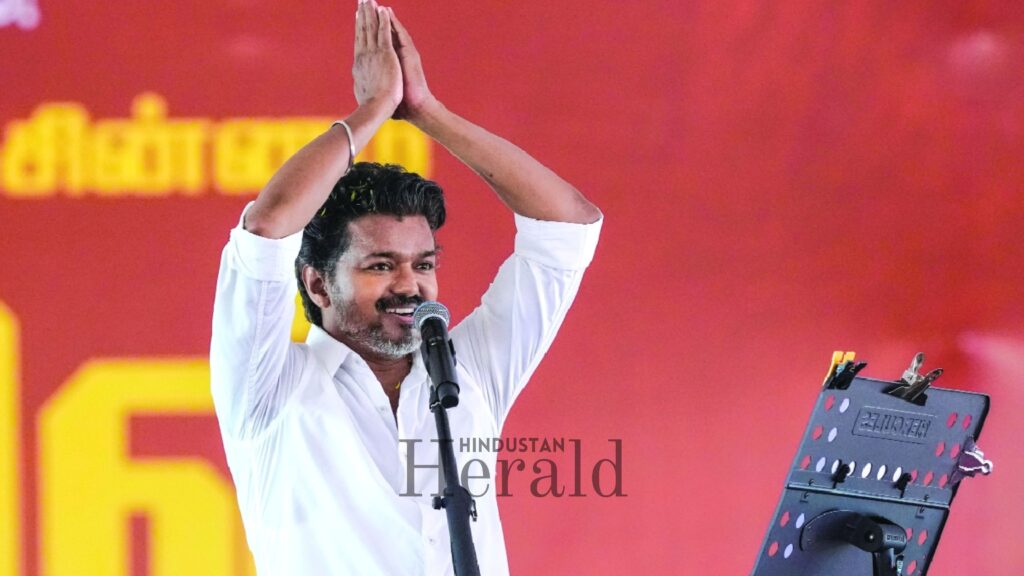
Vijay is Chief Minister. The DMK is in opposition for the first time since 2011. The AIADMK, which has not won a single election since Jayalalithaa died in 2016, is trying to figure out what it actually is now. The BJP is reorganising after a disaster. And sitting somewhere in that wreckage is a question: is there space for yet another new force, so soon after Vijay’s TVK proved that Tamil Nadu’s voters are not as fixed in their loyalties as everyone once assumed?
The honest answer is: maybe.
Vijay’s win showed something real and important. Young Tamil voters, a third or more of the electorate, will move if something feels genuine and urgent and different. They moved for Vijay. The cultural pull helped enormously, yes nobody should pretend that a superstar’s face on a ballot does not matter. But the TVK also built a real organisation, did real grassroots work, and ran on issues that resonated. It was not purely a personality cult, even if the personality was central.
Annamalai does not have Vijay’s star power. That is just a fact. What he has is a different kind of credibility the kind that comes from having actually walked away from a comfortable life twice now, once from the IPS and once from the BJP, both times for stated reasons that at least sounded principled. His network from the yatra years is real. His name recognition across the state is genuine. His ability to generate attention and provoke conversation is, if anything, better than it ever was.
What he does not have yet is a demonstrated capacity to hold a movement together once the launch energy fades. Tamil Nadu has watched many political experiments begin with packed rooms and end with empty ones. The graveyard of third-force attempts in this state is long and well-populated.
What Comes Next
For now, Annamalai is asking people to sign up, to believe that something new is possible, to trust that the political grammar of Tamil Nadu can actually change. More than 50,000 have said yes, at least for today. The harder test comes later when organisation is needed, when money is needed, when candidates are needed, when a party built on the idea of being different from everyone else has to actually be different from everyone else in practical, unglamorous, day-to-day ways.
Tamil Nadu gives new entrants a look. It gave Vijay a look. It gave Rajinikanth a look before he decided not to use it. It is willing, in principle, to consider something fresh.
But it also has a memory. It has seen enough arrivals to know that the announcement is the easy part. What Annamalai does in the two or three years between now and the next election that is what will actually answer the question he raised today on his birthday, in his home state, with 50,000 strangers watching him start over.
Stay ahead with Hindustan Herald — bringing you trusted news, sharp analysis, and stories that matter across Politics, Business, Technology, Sports, Entertainment, Lifestyle, and more.
Connect with us on Facebook, Instagram, X (Twitter), LinkedIn, YouTube, and join our Telegram community @hindustanherald for real-time updates.

Covers Indian politics, governance, and policy developments with over a decade of experience in political reporting.
- Ananya Sharma

- Ananya Sharma
- Ananya Sharma
- Ananya Sharma

 Sandeep Verma