
 By Ayesha Khan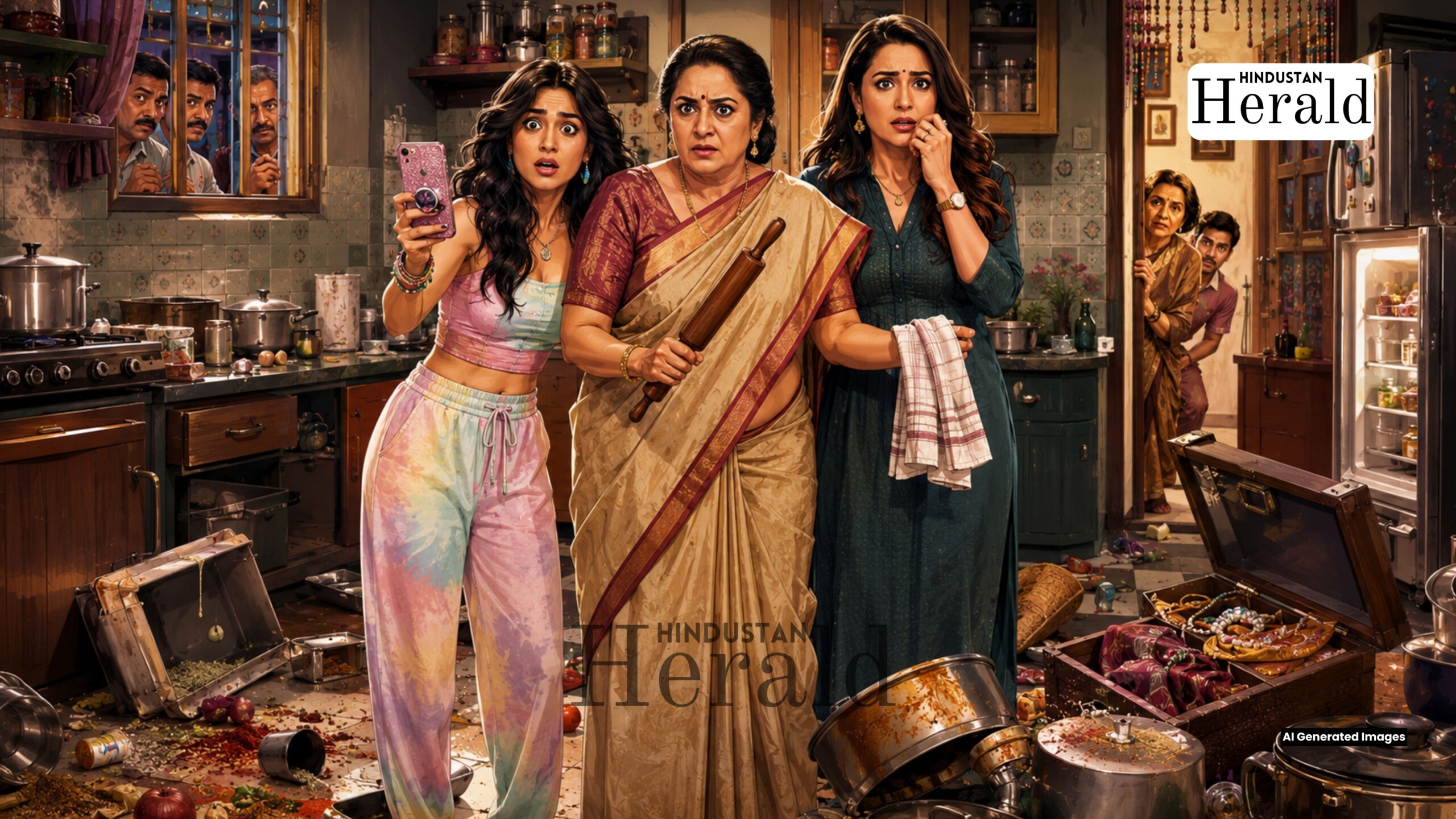
Mumbai, June 4: There is a dead body in the kitchen, and honestly, that is the least of anyone’s problems. Rekha does not know what she did last night. Her daughters have not spoken to each other in months. The neighbours are already circling. And somewhere in the middle of all this, a Netflix film quietly became one of the more entertaining things you will watch this year.
Maa Behen released today and it is the kind of film that sneaks up on you. The trailer suggested a loud, broad comedy. What you actually get is something warmer and a little stranger than that. A black comedy about three women hiding a body while also, reluctantly, discovering they still need each other. Directed by Suresh Triveni and written by Pooja Tolani, it has the bones of a very good film. Whether those bones are fully fleshed out is a different question entirely.
The Setup Is Deceptively Simple
Rekha is a widow. She lives alone in a cramped middle-class North Indian neighbourhood where everybody knows everybody’s business, and everybody knows Rekha’s business most of all. She wears sleeveless blouses. She runs money-making schemes nobody can quite pin down. She is the woman the colony whispers about over morning tea and then openly stares at by afternoon. Her neighbour Charitra Gupta, a pious and deeply self-righteous man played with magnificent smugness by Ravi Kishan, has made a minor career out of disapproving of her.

Then Gupta ji turns up dead. In Rekha’s house. In the kitchen, specifically.
Rekha does the only sensible thing a woman in this situation can do. She calls her daughters.
Jaya, played by Triptii Dimri, is the elder one. Married to a man named Manas who is exactly the kind of husband you do not want to be married to. She has spent years doing what was expected of her and is clearly running low on patience for it. Sushma, played by debutante Dharna Durga, is the younger one. A social media influencer. Not currently on speaking terms with the family after some earlier kaand whose details the film wisely keeps vague for a while.
Neither daughter wants to be there. Both come anyway. And then things get properly chaotic.
What follows is a whodunit wrapped inside a family drama wrapped inside a very funny, occasionally sharp-toothed comedy about what Indian society expects from women and what happens when those women simply stop complying. Triveni has always been more comfortable in this territory. His 2017 film Tumhari Sulu had a similar warmth, a similar fondness for ordinary people doing slightly extraordinary things. Maa Behen has more edge to it. More teeth. And for the most part, he handles that well.
Madhuri Dixit, Finally Given Room to Breathe
Let us be clear about something. Madhuri Dixit has not always been well-served by the material she has been handed in recent years. There have been projects that understood what she could do and deployed her brilliantly. There have been others that treated her as a decorative presence and wasted the gift entirely.

Rekha is the first Madhuri character in a while that feels genuinely written for a human being rather than a film star.
She is loud and unapologetic and not particularly organised about her schemes. She confuses undercover with underwear without blinking. She cannot always remember what chaos she has caused, which is either alarming or hilarious depending on which scene you are in. She does not explain herself to the neighbours. She does not apologise to her daughters. She has been doing things her way for long enough that she has stopped wondering what anyone else thinks, and that total self-assurance, played completely straight by Madhuri, is where most of the comedy lives.
What makes the performance work is that she never tips into caricature. Rekha could easily have become a broad, winking creation. Instead she is specific. Particular. You believe this woman has lived in this neighbourhood for years, has accumulated exactly this reputation, has made exactly these enemies. Madhuri strips away the usual polish and what is left underneath is warmer and stranger and more real than most of the roles she has been given lately. It is a genuinely good performance from someone who deserved better material than she was getting.
Triptii Dimri Is Doing Something Quietly Extraordinary
Jaya is the complicated one. She is the daughter who followed every rule and arrived at a life she does not particularly want. Good marriage, proper household, round rotis. The whole arrangement. And somewhere along the way, the patience ran out.
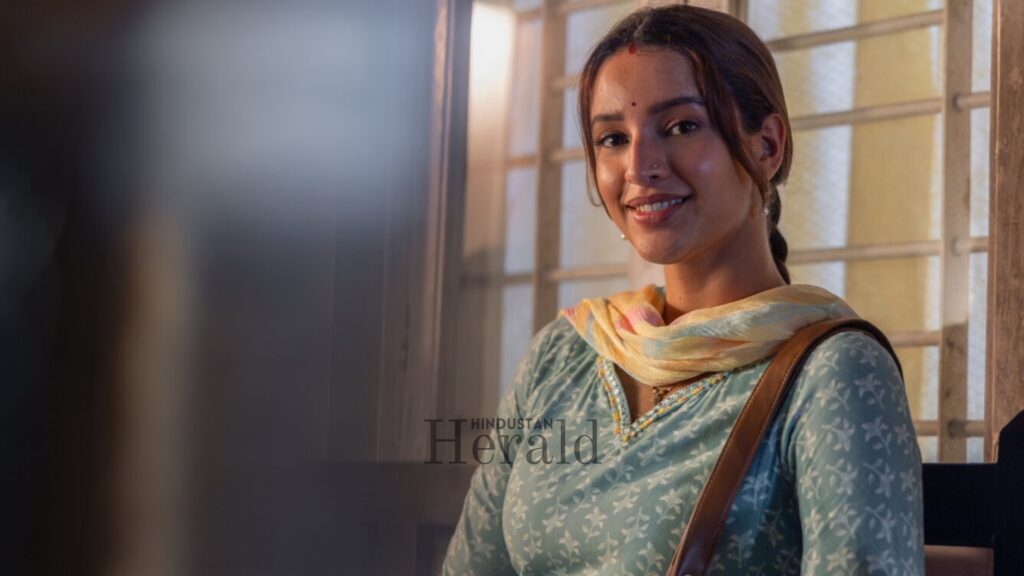
Triptii Dimri plays this without ever announcing it. She does not give you speeches about being trapped or unhappy. She gives you the way Jaya holds herself in her husband’s presence. The fraction of a second before she answers a question. The thing that crosses her face when Manas, played with casual cruelty by Shardul Bhardwaj, says something dismissive and entirely comfortable about it.
From there she moves through comedy and genuine emotional weight and scenes that require her to carry the whole dramatic burden of the film, and she does it without a false note anywhere. She is also the funniest she has ever been, which is easy to miss because the comedy comes from character rather than performance. You laugh because Jaya would do that, not because the actress is trying to be funny.
After a strong year that already included Vishal Bhardwaj’s O Romeo, this is Triptii Dimri confirming what has been building for a while now. She is working at a level that very few of her contemporaries can currently match. The awards conversation around this performance will be loud, and it should be.
The Debutante Who Does Not Flinch
Dharna Durga walks into Maa Behen with a specific problem. She is making her acting debut in a film anchored by two of the most watchable women in Hindi cinema, and nearly every scene asks her to hold her own against both of them.
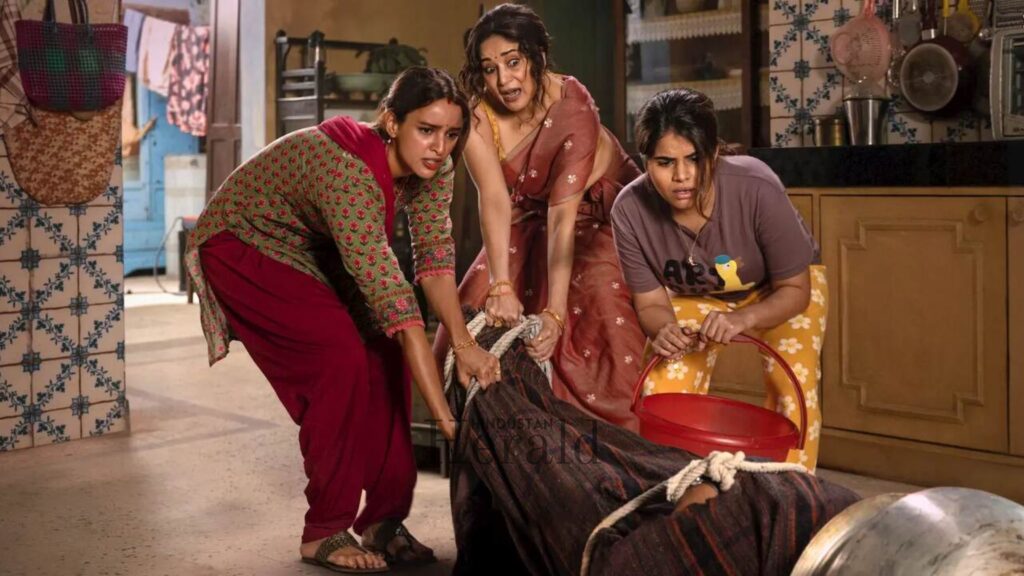
She does this more often than you would expect.
Sushma is the daughter who is basically a younger version of Rekha without the self-awareness about it yet. Impulsive, loud, chaotic, permanently filming something. Dharna brings a jangly energy to the role that the film genuinely needs. The comedy in scenes involving Sushma almost always lands. The three women together feel like a real family, which is not something you can fake easily and which speaks well of everyone involved.
The fair criticism, and it is a reasonable one, is that Sushma as written does not ask much of her beyond what audiences have already seen from Dharna’s online presence. The character fits her natural persona a little too neatly. She is confident and funny and very watchable, but you cannot quite tell yet what range she has because the film never seriously tests it. That is a question for her next project to answer.
A Supporting Cast Worth Talking About
Ravi Kishan’s Gupta ji has limited screen time, again for obvious reasons involving the plot, but his first act presence is essential. He sets up the world the film lives in. The colony morality, the specific brand of neighbourhood judgment, the performance of righteousness that certain men in certain communities have absolutely perfected. Kishan plays it with total commitment and a gleeful pomposity that makes you dislike Gupta ji immediately while also finding him enormously entertaining. Good work.
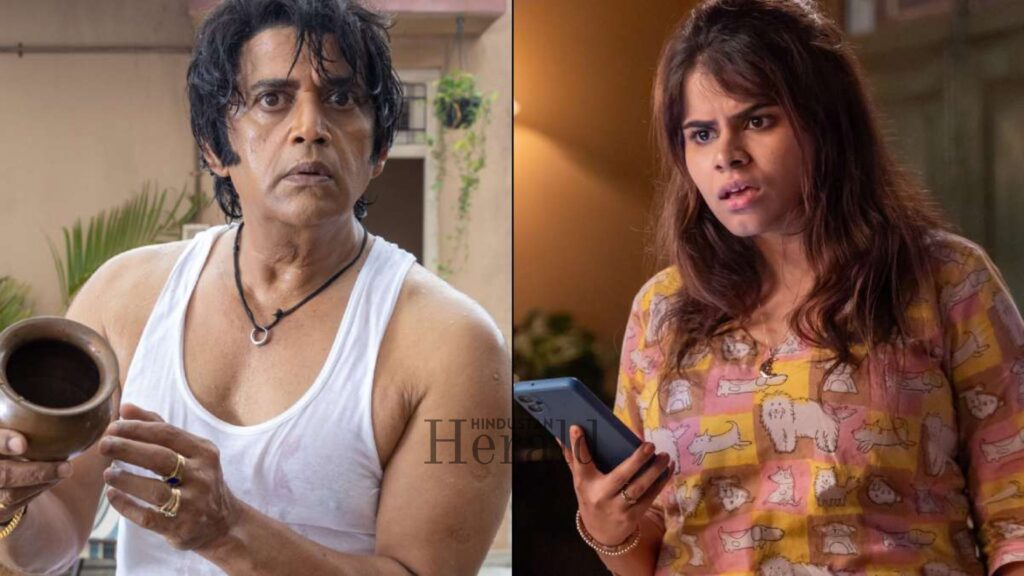
Geetanjali Kulkarni as Gupta Aunty is one of those performances you cannot stop watching even when the film is asking you to watch someone else. She barely needs to do anything. She shows up and something shifts in the scene. She is quietly devastating in a role that could have been background decoration, and she turns it into one of the most memorable things in the film.
Arunoday Singh as Sub-Inspector Maheshwari brings real menace to the investigation subplot without ever becoming a stock villain. He gives Maheshwari enough specificity that the threat he poses feels genuine rather than mechanical.
And there is a Paresh Rawal cameo. That is all that can be said about that without ruining something. Watch for it.
Where the Script Loses Its Grip
The first hour of Maa Behen is very close to excellent. Everything is established cleanly. The characters have weight. The comedy flows from the situation rather than being inserted into it. You are invested, genuinely, in both the body problem and the family underneath it.
Then the second half arrives and things begin to drift.

The screenplay reaches for complications it does not need. Certain plot mechanics that were previously invisible suddenly become very visible and very convenient. A couple of twists arrive with enough telegraphing that you have already worked them out by the time the film reveals them. Some scenes push the absurdity further than the film can comfortably carry without the whole thing starting to feel strained.
None of this ruins Maa Behen. The performances are strong enough to carry you through the rougher passages, and the final act does recover its footing. But there is a version of this film that runs fifteen minutes tighter and trusts its own instincts a little more, and that version would have been something close to exceptional. What exists is very good. The gap between very good and exceptional is, in this case, mostly a writing problem.
Pooja Tolani’s screenplay, credited alongside Triveni on the story, does real work in the first half. The dialogue is sharp. The characters feel lived-in. The social commentary about how women are judged at every turn comes through without being hammered. But the second half asks the script to do too much, to sustain too many threads at once, and some of them start to fray.
What the Film Gets Right That Most Do Not
The thing about Maa Behen that lingers after the credits is not the crime comedy plot. It is the three women.
Rekha does not spend the film apologising for existing in the way she exists. Jaya does not wait for anyone’s permission to start living differently. Sushma does not need to be rescued or reformed. None of them are punished for misbehaving, which is rarer in Hindi cinema than it should be. The film is feminist in the most practical sense of the word. Not in the sense of speeches and declarations, but in the sense of three specific women at the centre of a story that never once makes them secondary to the men around them.
There is also a real tenderness in how Triveni captures the world these women inhabit. The cramped houses, the shared walls, the neighbours who know too much and say more than they should. That is a specific kind of Indian life, and the film renders it with affection without ever tipping into nostalgia or mockery.
The Verdict
Maa Behen is an imperfect film that is also, most of the time, a genuinely great watch. The writing lets it down in the second half when it should be building to something, and that is a real frustration when the first hour promises so much. But the performances, all three leads and most of the supporting cast too, are strong enough to carry the weaker material without making it feel like a burden.
Madhuri Dixit is fully alive in this in a way that has not always been true recently. Triptii Dimri is extraordinary. Dharna Durga is a confident debut that leaves you curious about what comes next for her. And Geetanjali Kulkarni once again proves that some actors make every single project better simply by showing up.
Watch it. The body in the kitchen is just the beginning.
Stay ahead with Hindustan Herald — bringing you trusted news, sharp analysis, and stories that matter across Politics, Business, Technology, Sports, Entertainment, Lifestyle, and more.
Connect with us on Facebook, Instagram, X (Twitter), LinkedIn, YouTube, and join our Telegram community @hindustanherald for real-time updates.

Covers films, television, streaming, and celebrity culture with a focus on storytelling trends.
- Ayesha Khan

- Ayesha Khan
- Ayesha Khan
- Ayesha Khan




 Arun Upadhayay