
 By Ananya Sharma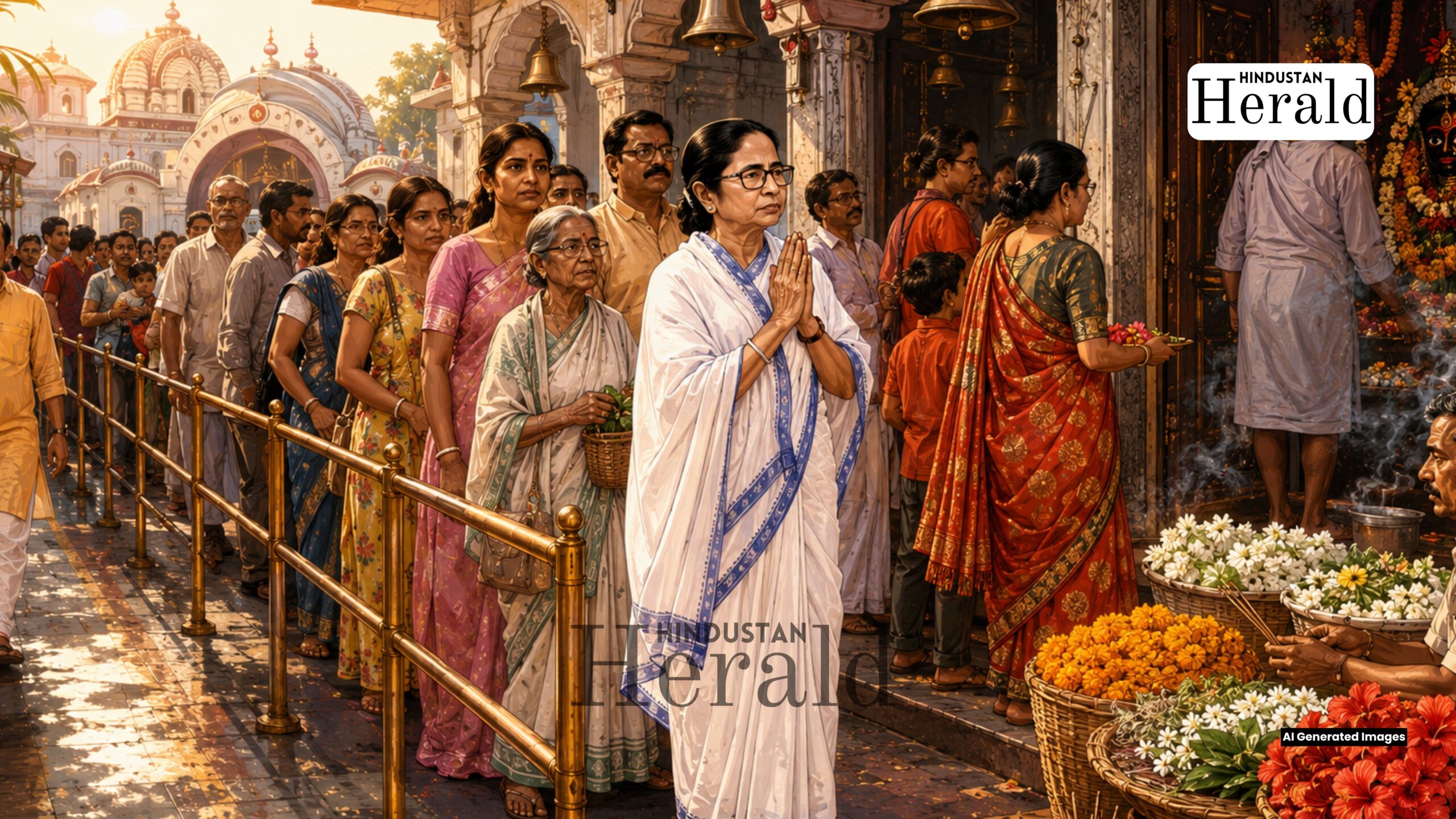
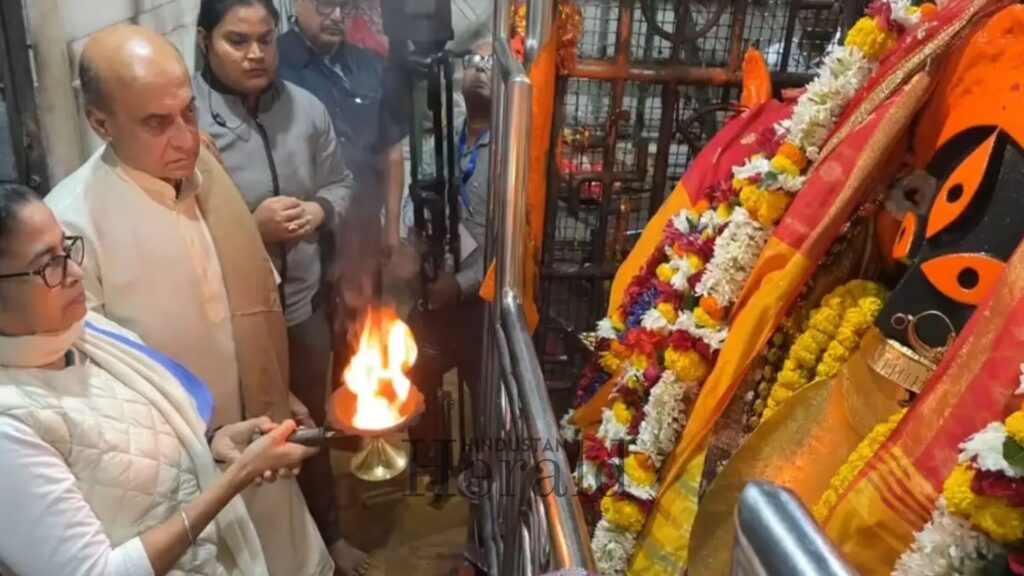
Kolkata, June 5: She stood in line like everyone else. No red beacon lights clearing the path. No police cordon pushing back the crowd. No aides bellowing at ordinary devotees to step aside for the VVIP. On June 4, Mamata Banerjee walked up the crowded steps of the Kalighat temple in south Kolkata, her childhood neighborhood, and waited her turn to offer prayers to Maa Kali, the goddess she has worshipped her entire life. The aides around her reportedly asked for a little space, but the crowd just kept moving, the way it always does at one of Hinduism’s most sacred sites.
A small moment. But in Indian politics, small moments carry enormous weight, especially when they come wrapped in the silence that follows a fall from power.
Just a month before this temple visit, West Bengal’s political map was redrawn in ways that would have seemed impossible even a year ago. The Bharatiya Janata Party swept the state’s assembly elections, winning 207 of the 293 seats declared, while Mamata Banerjee’s Trinamool Congress was reduced to a mere 80 seats. The scale of that defeat ended what had been a 15-year uninterrupted reign. It also ended something more personal. Banerjee herself lost her Bhabanipur seat to Suvendu Adhikari by over 15,000 votes, the same man who had once been one of her most trusted lieutenants, the same man she had defeated in a different seat battle years before.
Bhabanipur was not just a constituency to her. It was her political home ground, the seat she had fought to win in a bypoll to stay on as Chief Minister, the seat her supporters called her fortress. Losing it to Adhikari, in what BJP supporters treated as a symbolic moment of reckoning, was the kind of defeat that cuts deeper than numbers ever can.
From Nabanna to Nowhere in Particular
For 15 years, Mamata Banerjee was West Bengal. That is not an exaggeration. She ran the state with a level of personal dominance that made Trinamool Congress and her government almost indistinguishable. She was “Didi” to millions, a fighter who had taken on the Left Front’s three-decade stranglehold on the state and broken it through sheer will. After that 2011 victory, she became the kind of political personality around whom an entire ecosystem grows: the loyal foot soldiers, the bureaucrats who calibrate their careers by her moods, the ministers who know better than to speak until she speaks, and the crowds that gather at every rally not for a party but for a presence.
All of that changed on the evening of May 4, 2026.
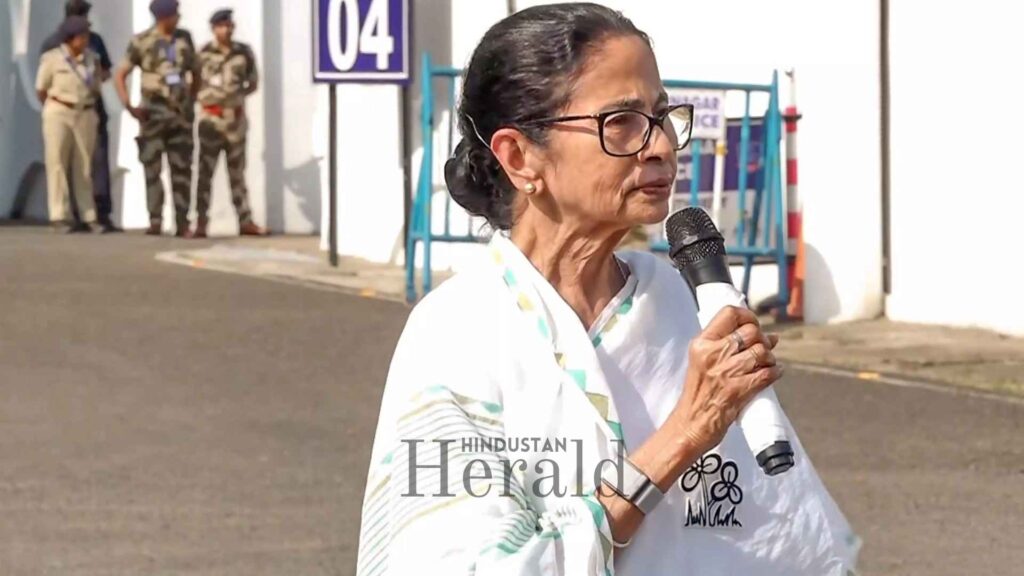
When results came in and the BJP’s numbers climbed past the majority mark, then past 180, then toward 207, something shifted in the air across Bengal. The celebrations in Bhabanipur that night, with saffron flags being waved at the Exide crossing and chants filling streets that Mamata had called her own, told a story that was unmistakable. A 15-year era was over.
Still, the nature of a political era does not end neatly. It frays. And what has followed Mamata Banerjee’s electoral loss has been a fraying that is as dramatic as any moment in her long career.
Didi’s House, But Without the Crowd That Counts
The image that circulated on social media in the days after the results was striking in its mundaneness. A meeting of newly elected TMC legislators was called at Mamata Banerjee’s Kalighat residence. In the old days, that would have meant a room packed with MLAs jostling for proximity to power, angling for cabinet positions, performing deference. Only 20 of the party’s 80 MLAs showed up at the TMC meeting, signalling high discontent within the party in the wake of its loss to the BJP in the 2026 Assembly elections.
That is a telling number. When 60 of your 80 remaining legislators decide they have better things to do than show up to the party chief’s residence, you are no longer running a party the way you used to.
A group of 58 MLAs subsequently submitted a letter to the Speaker electing Ritabrata Banerjee as leader of the legislature party and nominating a new leadership team, effectively depriving Mamata Banerjee of control over a majority of her remaining legislators. Political observers watching from the outside noted quietly that Banerjee was now confronting something she had never really faced in three decades of public life: the possibility of being politically irrelevant.
That is the backdrop against which her temple visit on June 4 lands.
The Temple That Was Always There
Kalighat is not a new destination for Mamata Banerjee. She has visited the temple countless times, beginning long before she entered politics, and continued visiting it through her years as a union minister, as an opposition leader, and as Chief Minister. It is located in her own neighborhood. The Kalighat Kali temple is one of the 51 Shakti Peeths of Hindu tradition, a site of immense religious and cultural significance in Bengal. For the millions of devotees who visit it every year, it is not a political location. It is sacred ground.
But politicians do not get to leave their politics outside the temple gate, not when they are being watched. And Mamata Banerjee, even as a private citizen now, is always being watched.
What made June 4 different from every other temple visit she has made was precisely the absence of what used to surround her. The VIP corridors, the cleared pathways, the layers of security personnel ensuring that the Chief Minister’s passage through public space was smooth and unimpeded none of that exists anymore. She is not the Chief Minister. She is not an MLA. She holds no elected office.
So she stood on the steps. The crowd moved around her. Aides asked for space, as per reports, and the crowd kept doing what crowds at Kalighat always do: it moved at its own pace, for its own reasons.
What Posters Said, What Supporters Felt
The moment did not pass without commentary. In a political culture where image management is a full-time occupation, the contrast was too sharp to ignore. On one side, posters and posts that compared this scene to the years when entire streets would be cleared for her motorcade, when devotees at this very temple would be held back to allow the Chief Minister her moment of privacy with the goddess. On the other side, video clips shared by supporters showing local residents still calling out to her warmly, still using that word Didi with the kind of familiarity that no electoral result can simply delete.
Both things are true at the same time. That is what makes this moment worth sitting with.
Power changes everything around a person, including how they move through physical space. The VIP treatment that powerful politicians receive is not just about security it is also about the constant, visible reinforcement that they matter more than ordinary people in that moment. When it goes away, what remains is the person themselves. And the crowd that once parted for her was on June 4 simply a crowd of devotees, indifferent to her changed status in the way that genuinely sacred spaces have always been indifferent to worldly rank.
The regulars at Kalighat come for the goddess. They always have.
A Career That Has Seen Worse
Those who write off Mamata Banerjee based on one election have not been paying attention. Her political biography is full of reversals that looked permanent until they weren’t. She spent years in the political wilderness after breaking from the Congress in the 1990s, was mocked when she founded Trinamool Congress in 1998 against the full weight of the Left Front machinery, and bounced back through persistence that her critics consistently underestimated.
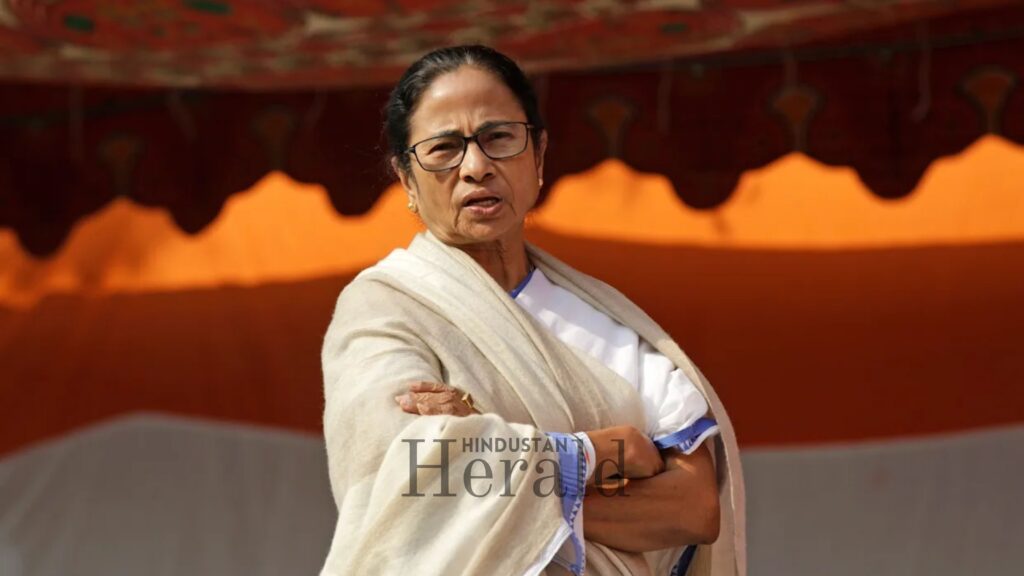
The scale of the 2026 defeat is different in kind. Losing her own seat, losing control of the party’s legislative wing, watching 15 years of accumulated political authority dissolve in a single counting day this is not comparable to earlier setbacks. Political observers noted that Banerjee now confronts a challenge unlike any she has faced in nearly three decades of public life.
That said, the woman who spent years surviving and ultimately defeating a Left government that had ruled Bengal since 1977 is not someone whose political obituary should be written quickly. What happens to TMC over the coming months, who aligns with whom, whether the dissidents consolidate or fracture all of that remains genuinely open.
For now, though, she is standing in line at the temple. Same white sari. Same neighborhood she has called home for decades. The goddess is the same. The crowd is the same. What has changed is everything that used to surround her when she arrived.
And perhaps that, in some quiet way, is the most honest version of the moment. Power borrows from the sacred to give itself gravity. When the power goes, the sacred remains exactly as it was. The steps at Kalighat do not clear for anyone.
Not even Didi.
Stay ahead with Hindustan Herald — bringing you trusted news, sharp analysis, and stories that matter across Politics, Business, Technology, Sports, Entertainment, Lifestyle, and more.
Connect with us on Facebook, Instagram, X (Twitter), LinkedIn, YouTube, and join our Telegram community @hindustanherald for real-time updates.

Covers Indian politics, governance, and policy developments with over a decade of experience in political reporting.
- Ananya Sharma

- Ananya Sharma
- Ananya Sharma
- Ananya Sharma




 Sandeep Verma