 By Ananya Sharma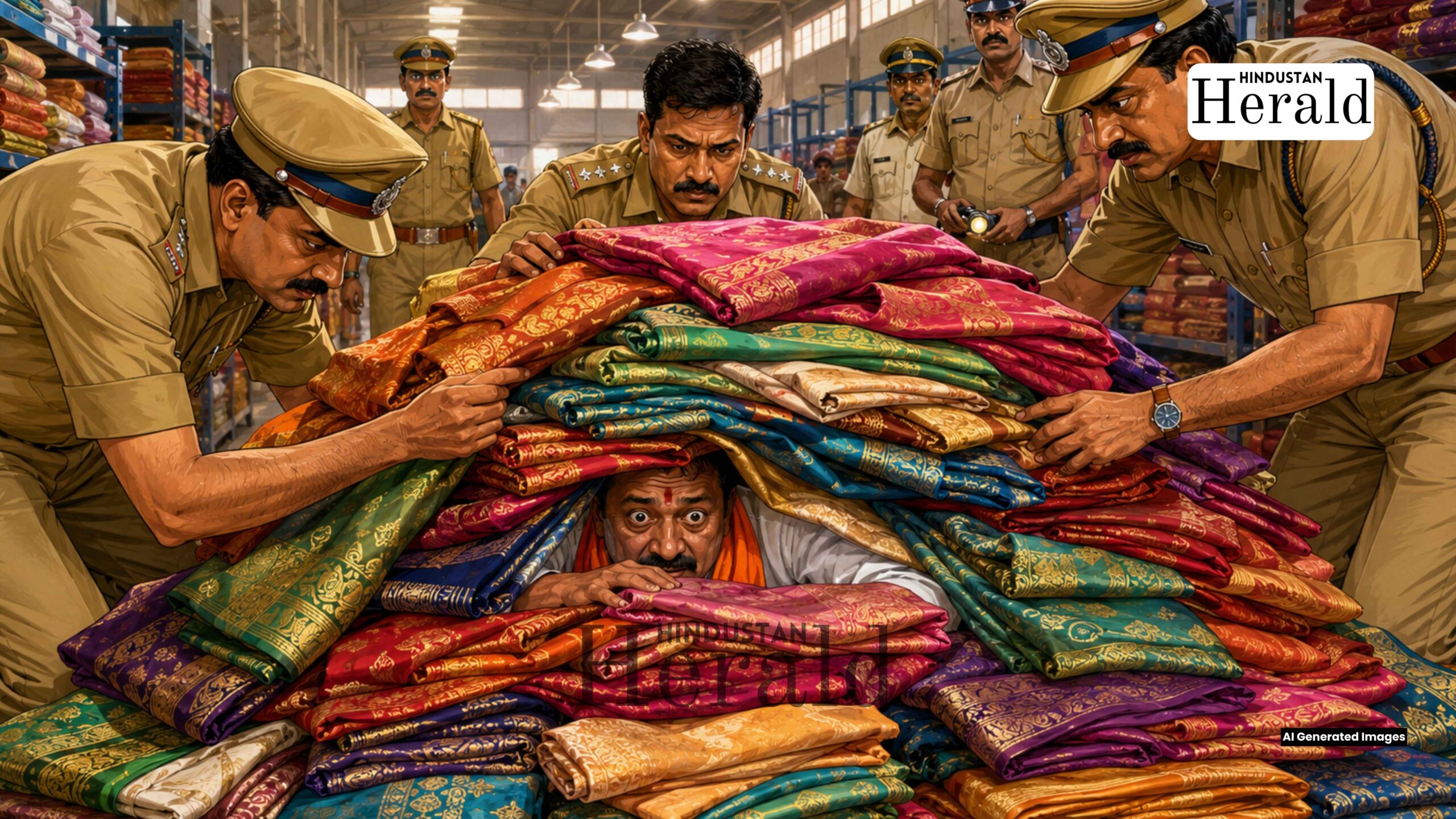
Howrah, June 7: A pile of sarees inside a government textile factory. That was the best plan Brahmananda Chakraborty could come up with.
The Trinamool Congress worker from Udayanarayanpur in Howrah district had been on the run for a while. His name had come up in cases tied to the 2021 post-poll violence in West Bengal, the kind of cases that had been sitting in files for years but were suddenly very much alive again. Police were moving. Arrests were happening across the state. And Chakraborty, it seems, had run out of places to go.
So he picked a government saree factory.
The Idea That Almost Worked
The Tantujar textile unit, a state-run facility, has the kind of interior that belongs to another era. Large floor space. Fabric everywhere. Rows and stacks of sarees piled in sections, the inventory of a working government mill. For someone desperate and out of options, it probably looked like a reasonable bet.
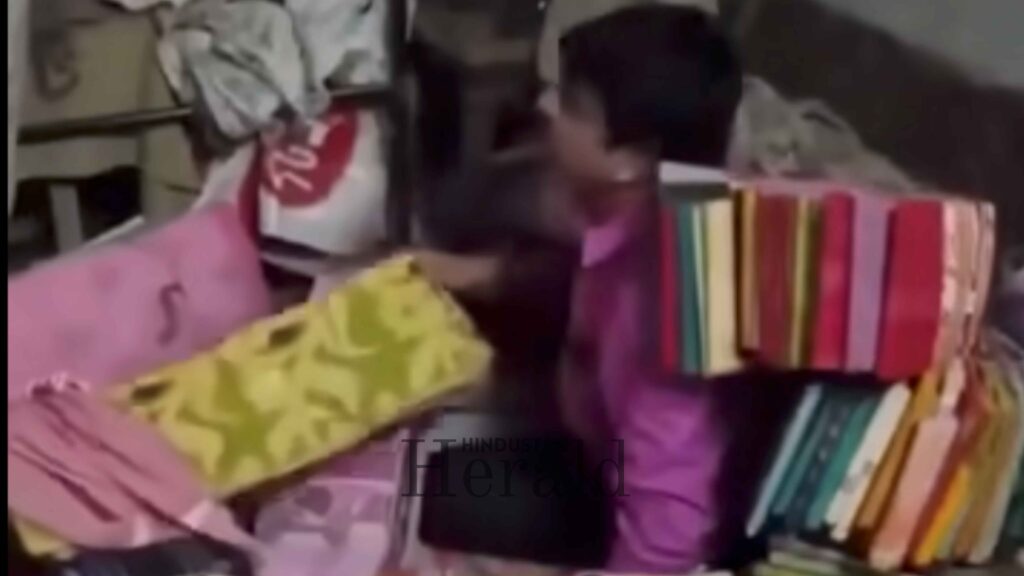
Chakraborty got in, found a section where sarees were stacked high, and buried himself underneath them. He even pulled one over his head, pressing the knot down on top of himself to flatten the pile and make it look like just another stack of fabric. Then he lay completely still and waited.
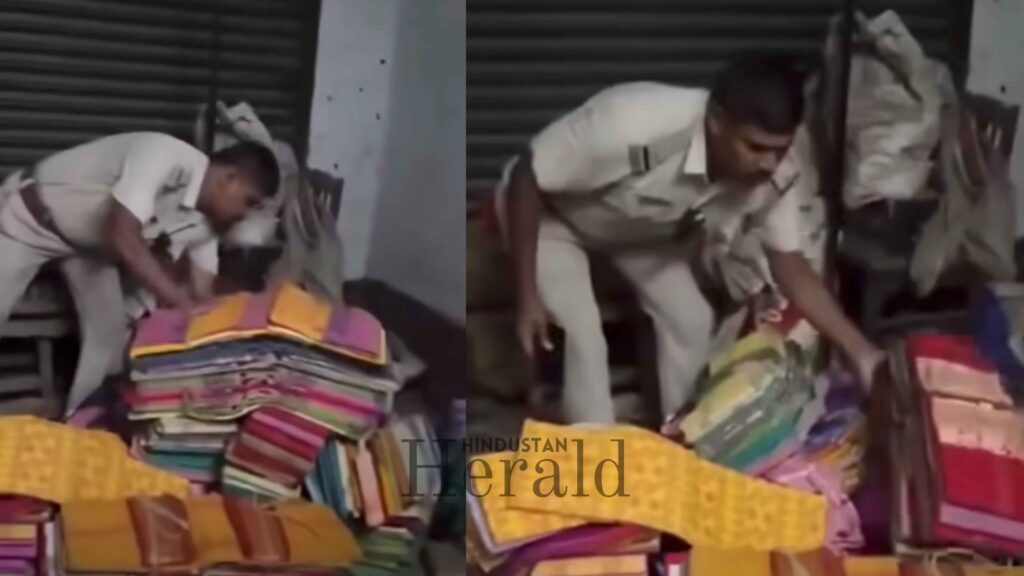
Officers from Amata police station arrived on Saturday evening. They had been tracking him for some time, running down leads, checking his usual locations, coming up short. A tip eventually brought them to the Tantujar factory. When they entered, they did what trained officers do: they moved through the space carefully, checking everything.
Most of the factory looked exactly as it should. Fabric here, equipment there, nothing obviously out of place. Then one stack of sarees caught someone’s attention. It is not entirely clear what gave it away. Could have been the arrangement. Could have been instinct. Either way, a policeman stopped, leaned down, and started removing sarees one by one.
Chakraborty was underneath.
He had pressed himself as flat and tight as a person can manage, lying rigid under layers of fabric in a government factory, hoping very hard that no one would look too carefully. They did. He was pulled out from the pile, taken into custody on the spot, and later handed over to Penro police station under the Udayanarayanpur assembly jurisdiction, which holds primary charge over his case.
Why the Police Were There at All
This needs some context because the arrest did not come out of nowhere.
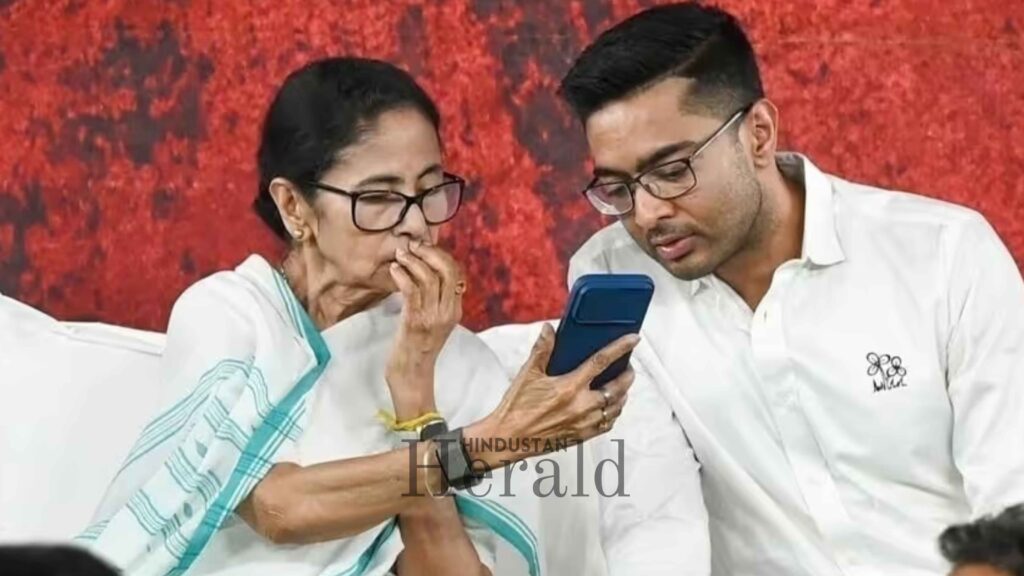
After the 2021 West Bengal Assembly elections, the state saw a significant wave of political violence. Workers from rival parties clashed in multiple districts. Properties were damaged. People were hurt. Cases were filed, some by victims of alleged Trinamool Congress violence, others pointing in different directions. For the most part, those cases moved slowly.
That changed when the political situation in the state shifted. Chief Minister Suvendu Adhikari made it a stated priority: those accused in post-poll violence cases would be arrested. The administration backed that up with actual police action, pushing stations across West Bengal to pursue pending cases and clear outstanding names from their lists.
Amata police station was working one of those lists. Chakraborty’s name was on it. Whether he believed the cases would eventually fade or whether he simply ran out of time to make any other plan is not known. What is known is that by Saturday evening, he was lying under sarees in a textile factory hoping police would walk past.
They did not.
The Part Everyone Is Talking About
Here is the thing about this arrest. On paper, it is one of dozens happening across Howrah, Birbhum, and other districts right now. A name on a list, a raid, a custody transfer. Standard procedure.
But the image of it is something else entirely.
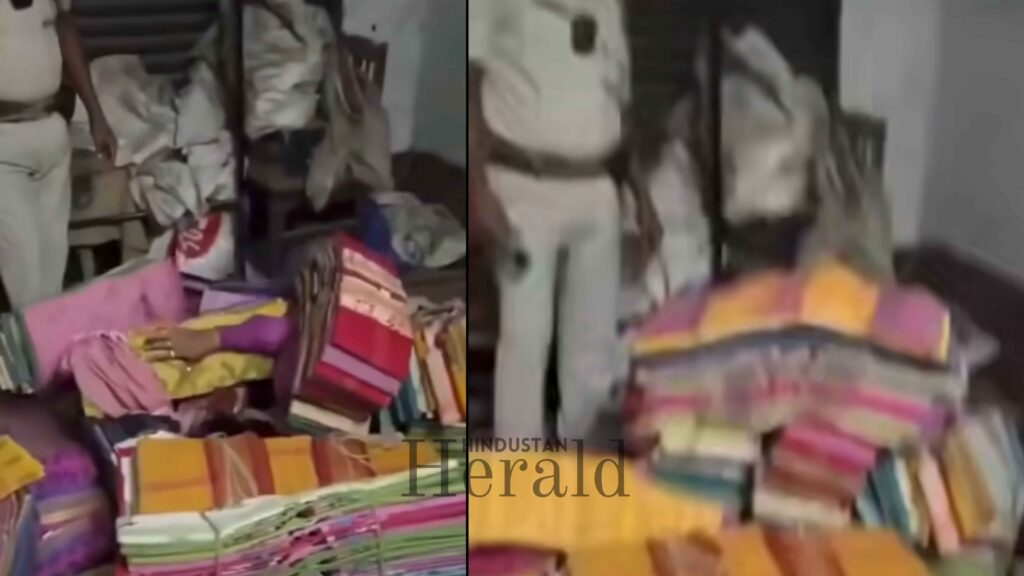
A grown man, a known political worker, lying flat on the floor of a government saree factory with fabric piled over his head and a knot pressed down on top of him to complete the disguise. It sounds like something out of a comedy film. And yet here it is, in a police report.
By the time Saturday night wound down, the story had already moved through Udayanarayanpur at speed. Tea stalls, neighbourhoods, people calling each other to describe what had happened. Some laughed. Some shook their heads. The general mood in the area, by most accounts, mixed genuine disbelief with loud amusement.
That said, there is a harder layer underneath all of this. The 2021 post-poll violence cases are not abstract. Families in West Bengal have spent years waiting for some form of accountability. The cases involve serious allegations. Chakraborty’s arrest, however absurd its circumstances, is part of a process that matters to real people in very real ways.
Still, the saree factory story has the kind of specificity that sticks. People remember details like these. The knot pressed down on top of the pile. The officer removing sarees one by one. The moment the fabric came away and there was a person underneath.
What Comes Next
Chakraborty is now with Penro police station and will be produced before a court in the coming days. The charges from the 2021 violence cases will be formally laid out, and the court will decide on custody or bail from there.
For now, the raiding party from Amata police station has one more name off its list. And the Tantujar government textile factory in Howrah, a facility that probably never expected to feature in any kind of news, has become the unlikely setting of one of the stranger arrest stories this year.
In trying to disappear completely, Brahmananda Chakraborty managed to become very visible indeed.
Stay ahead with Hindustan Herald — bringing you trusted news, sharp analysis, and stories that matter across Politics, Business, Technology, Sports, Entertainment, Lifestyle, and more.
Connect with us on Facebook, Instagram, X (Twitter), LinkedIn, YouTube, and join our Telegram community @hindustanherald for real-time updates.

Covers Indian politics, governance, and policy developments with over a decade of experience in political reporting.
- Ananya Sharma

- Ananya Sharma
- Ananya Sharma
- Ananya Sharma