 By Ananya Sharma
Chennai, June 7: MK Stalin was never going to be a quiet opposition leader. Anyone who expected that did not know the man.
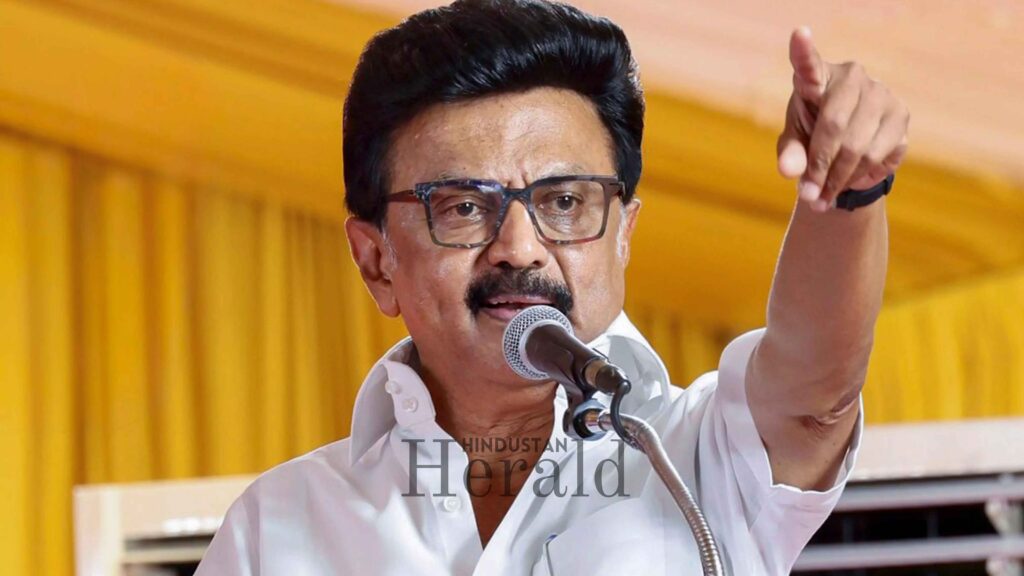
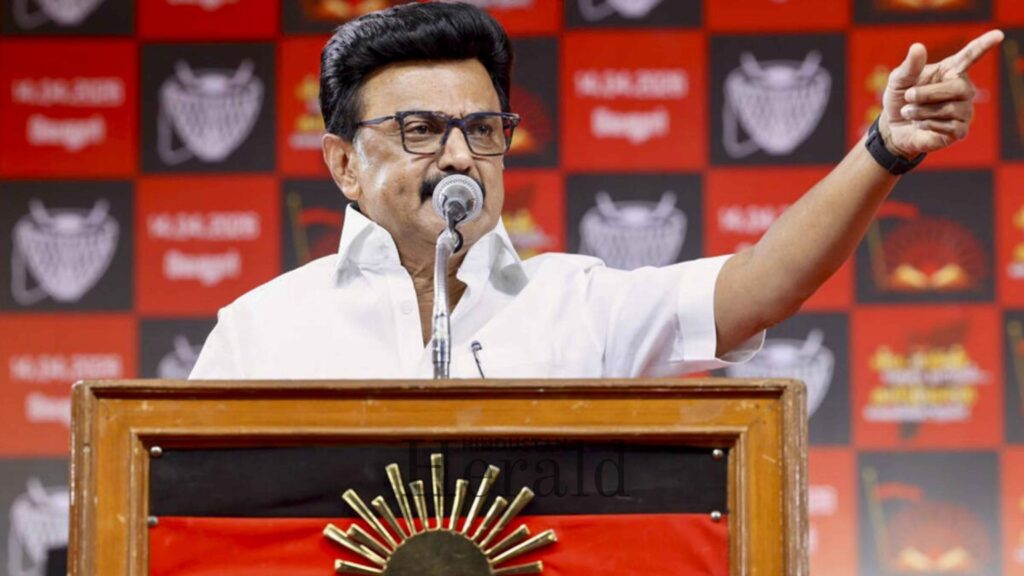
But even by his standards, Sunday was sharp. Standing before DMK workers, the former chief minister looked straight at the camera and asked whether the Tamilaga Vettri Kazhagam government under Joseph Vijay could survive even three months. Not whether it would complete its term. Not whether it would face trouble by year two. Three months. That was the number he put out there, and he said it like a man who had already made up his mind about the answer.
The discussions were already happening in public, he said. He was right. He was also, to put it plainly, doing a fair bit to keep those discussions alive.
The Second Attack in as Many Weeks
This is not Stalin testing the waters. It is the second significant broadside he has fired at the TVK government since Vijay was sworn in as chief minister last month, and the two together paint a picture of an opposition that has no intention of giving the new government any honeymoon period at all.
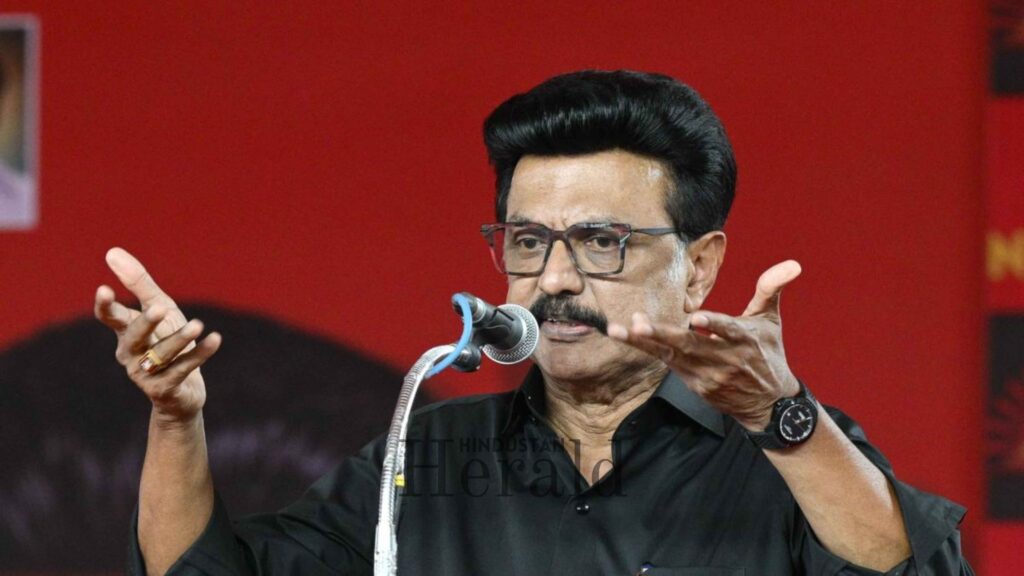
The first came in May, and it was equally pointed. Stalin said TVK had no real organisational structure to speak of. That the party had built its political presence largely through Instagram and social media, not through the slow, difficult, unglamorous work of meeting people in their homes, appointing booth agents, running party drives. He said it like it was damning. For a Dravidian party man, it probably is.
What makes these criticisms land with a certain weight is that they are not entirely wrong. TVK is a young party. It fought its first election. It won in ways that even its own leadership might not have fully predicted.
The Part That Still Stings
To really understand why Stalin sounds the way he does right now, you have to sit with what the DMK actually did before this election and what happened anyway.
After the 2024 Lok Sabha results, the party got to work immediately. Booth committees were formed. Booth-level agents were put in place across constituencies. The “Ondrinaivom Vaa” campaign enrolled new members. Youth Wing conferences were held region by region. Constituency in-charges were named, briefed, and deployed. This was not a casual effort. This was a machine being wound up and pointed at a target.
They still lost.
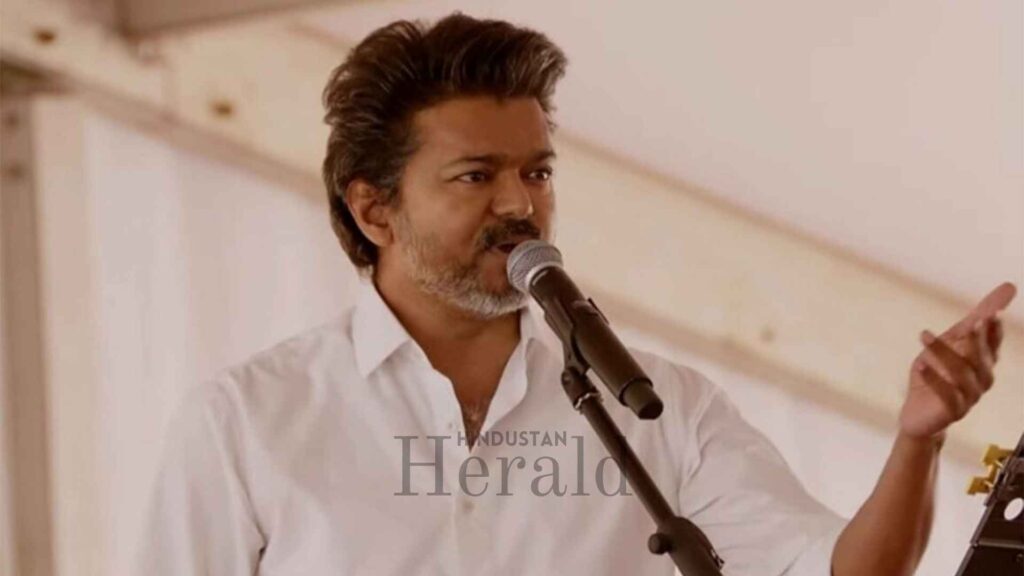
“We carried out all this groundwork. Yet we could not come to power. They did not meet voters, appoint booth agents, or even counting agents in many places. Still, they won and formed the government,” Stalin said on Sunday, pointedly not naming TVK by name. He did not have to.
There is genuine bewilderment in that statement, not just political posturing. The DMK has spent decades building the kind of party machinery that is supposed to make the difference in close elections. It did not make the difference here. And Stalin himself lost Kolathur, a seat he had held since 2011, to TVK’s V.S. Babu by close to 9,000 votes. That is not a number you shake off easily. It follows you into every speech you give afterward.
So What Does “Three Months” Actually Mean
The arithmetic in the Tamil Nadu assembly does not really support a three-month collapse scenario, at least not right now. TVK holds 107 seats on its own. The Congress, VCK, and IUML that came in with the ruling alliance add five more. Then there is outside support from AIADMK’s splinter faction and Left parties offering confidence and supply from the benches, pushing the effective count to around 146 in a 234-seat House.
That is not a fragile majority. That is a government that, on paper, has room to breathe.
Stalin knows this. He is not making a mathematical argument when he says three months. He is making a psychological one.
At the June 6 event in Chennai, where a batch of AIADMK members formally joined the DMK, he framed the entire TVK government as a product of borrowed support. His own alliance partners, he said, chose to back Vijay’s government not because they believed in TVK but because the alternative was President’s Rule, and President’s Rule would have meant the BJP getting a foot in the door in Tamil Nadu. The TVK did not win its majority so much as the situation handed it one.
“Let us pledge at this event to put an end to this government that exists only through our alliance support,” he told the crowd.
That line was not written for newspapers. It was written for the room. And it worked.
The Congress Problem Nobody Is Fully Talking About
Running alongside all of this is a wound the DMK has not been quiet about, even if the national conversation has not quite caught up with it.
The Congress chose to support the TVK government after the results. From where the DMK sits, that is a betrayal with a specific shape. Udhayanidhi Stalin, who heads the party’s Youth Wing, said it without softening the edges. The Congress won seats in this election because of DMK support. Stalin’s leadership, the alliance structure, the votes that came with it. And then, when it mattered, the Congress walked away and threw its weight behind TVK.
He said the DMK would not trust the Congress again. The word he used was never. That is not the kind of language parties use when they expect to patch things up after a season or two. Whether the alliance can be rebuilt before 2031 is a real question, and the answer right now looks uncertain at best.
A Concession Buried in the Attack
Here is the thing about Stalin’s post-election posture that does not quite fit the aggressive surface. Alongside the attacks, he has acknowledged something that must have been difficult to say out loud.
TVK beat the DMK on social media. Flat out. Stalin told his own cadres they needed to get serious about digital platforms, that the political arguments that used to happen over tea now had to happen on social media handles. He formed a 36-member internal committee to study what went wrong. He took public responsibility for the loss.
A party in denial does not do that. A party that is genuinely recalibrating does.
The DMK is clearly in the second camp. It is just doing its recalibrating loudly, in public, with one eye always on the government it is trying to destabilise.
Paniyur Babu, and a Different Kind of Moment
Not everything on Sunday was a broadside. Tucked inside the combative event was something quieter.
Paniyur Babu, a former legislator, joined the DMK. And Stalin, who had spent most of the event in attack mode, stopped and said something genuinely warm about the man.
“Over the last five years, I have closely observed Paniyur Babu in the Assembly. He would come quietly and leave quietly, but whenever he spoke, he raised constructive issues and strongly voiced the concerns of his constituency,” Stalin said.
He had read Babu’s statement before the switch, he added, and was struck by the fact that it explained the decision clearly, without going after anyone. “There was not a single word in it that could hurt anyone. Paniyur Babu is a committed worker who stands firm by his principles.”
Small moment. But it mattered. Every person who crosses into the DMK right now carries a message: the party still has gravitational pull. Losing an election does not automatically mean losing your ability to attract people. The DMK is counting on that.
What This Actually Adds Up To
Look at the full sweep of what Stalin has done in the past few weeks and a pattern is visible. He is questioning the TVK government’s legitimacy, not just its competence. He is absorbing leaders from other parties and giving each arrival political weight. He is keeping the instability narrative alive in newsrooms and tea stalls alike. He is pressuring the coalition partners propping up Vijay’s government, sending a quiet signal that their window to reconsider is open.
None of this guarantees the TVK government falls in three months. Or three years. A first-time chief minister with a workable majority and the kind of public goodwill that comes with being Tamil cinema’s most beloved star is not an easy thing to knock over.
But Tamil Nadu has surprised everyone before. The DMK knows that better than most. And MK Stalin, whatever else you say about him, is not someone who sits on the opposition benches and waits for things to happen on their own.
Stay ahead with Hindustan Herald — bringing you trusted news, sharp analysis, and stories that matter across Politics, Business, Technology, Sports, Entertainment, Lifestyle, and more.
Connect with us on Facebook, Instagram, X (Twitter), LinkedIn, YouTube, and join our Telegram community @hindustanherald for real-time updates.

Covers Indian politics, governance, and policy developments with over a decade of experience in political reporting.
- Ananya Sharma

- Ananya Sharma
- Ananya Sharma
- Ananya Sharma