
 By Shelesh Joshi and Rajiv Menon
New Delhi, June 11: The Canada Social Media Ban moved a step closer to reality on Wednesday as the government tabled legislation that would bar children under 16 from holding social media accounts, require AI chatbot companies to act when users signal intent to self-harm, and hand a new federal regulator the power to fine non-compliant platforms up to 3% of their global revenue, according to the Government of Canada’s official press release dated June 10, 2026.
Quick Summary
- Bill C-34, the Safe Social Media Act, was introduced in Parliament on June 10, 2026, by Minister of Canadian Identity and Culture Marc Miller, according to the Government of Canada’s official Canadian Heritage press release.
- Under the bill, platforms must meet a minimum age of 16 for social media accounts. Those wanting an exemption carry the burden of proving to the regulator that their safeguards are good enough not parents, as stated in the official Bill C-34 backgrounder on Canada.ca.
- Child sexual exploitation content and non-consensual intimate images deepfakes included must be taken down within 24 hours of being flagged, per the official Canada.ca legislation page.
- Platforms that ignore these rules face fines of 3% of global revenue or C$10 million (approximately USD 7.2 million), whichever hits harder, according to the Government of Canada’s official legislation page.
- A new Digital Safety Commission of Canada gets the job of auditing platforms, fielding complaints, and issuing compliance orders, as set out in the Digital Safety Commission of Canada Act embedded within Bill C-34, per Canada.ca.
- Australia moved first. Its Online Safety Amendment (Social Media Minimum Age) Act 2024 took effect on December 10, 2025 within a month, platforms had pulled down the accounts of nearly 5 million teenagers, as confirmed by Australia’s eSafety Commissioner, the Office of the Australian Information Commissioner, and Al Jazeera’s June 10, 2026 report.
- France, Denmark, Poland, and Greece are heading the same way, as reported by Al Jazeera on June 10, 2026.
- India’s Digital Personal Data Protection Act, 2023 in effect in phases from November 13, 2025 requires parental consent before platforms touch children’s data but stops well short of a platform-level access ban, as published in the Act by Parliament of India.
Canada Social Media Ban: Ottawa Tables Bill C-34, the Safe Social Media Act
The Canada Social Media Ban took legislative shape on June 10, 2026, when the government brought Bill C-34, the Safe Social Media Act, before Parliament. Introduced by the Honourable Marc Miller, Minister of Canadian Identity and Culture, the bill packages two new laws together: the Digital Safety Act and the Digital Safety Commission of Canada Act, according to Canada.ca, the official Government of Canada website.
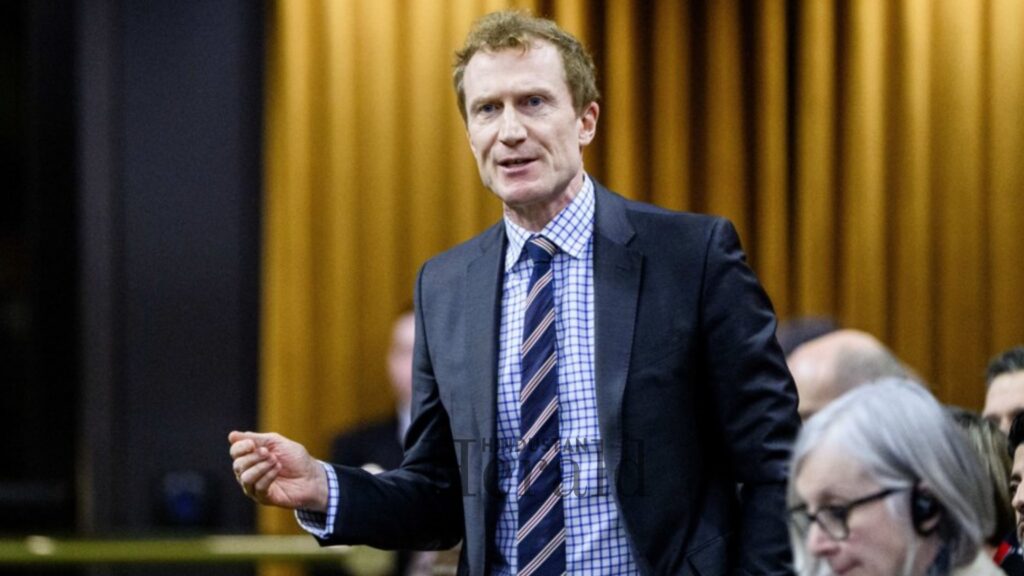
The government’s own press release puts the problem plainly: “While laws exist to respond once harm has happened, there is currently very little that requires online services to prevent harm in the first place. The Safe Social Media Act aims to change that by ensuring that social media services and artificial intelligence (AI) chatbots are responsible for addressing harm before it occurs.”
Marc Miller, Minister of Canadian Identity and Culture, said in the official Canadian Heritage press release: “We have seen the very serious consequences that online harms can have. As technologies evolve, we must ensure our laws keep pace, because parents cannot face these challenges alone. The safety of children cannot be an afterthought.”
Under the bill, children under 16 cannot open or maintain social media accounts. A platform that believes it has earned an exemption can apply but it has to convince the regulator, not rely on parental consent, as stated in the official Canada.ca legislation summary.
Why Now: The Numbers the Government Put on the Table
Canada did not arrive at this bill through instinct. The official Bill C-34 backgrounder on Canada.ca cites research that ministers used to make their case publicly and some of those numbers are hard to argue with.
In 2019, 1 in 4 young Canadians between the ages of 12 and 17 reported experiencing cyberbullying in the previous year, according to the Government of Canada’s official Canadian Heritage press release. That number has been sitting in government files for years. The law is only arriving now.
Police services across Canada reported 16,905 incidents of online child sexual exploitation in 2024 a 347% rise since 2014, according to the Government of Canada’s official Canadian Heritage press release. Those are not estimates. They are police-reported incidents.
The Canada.ca backgrounder also takes aim at how platforms are built, not just what ends up on them. Algorithmic feeds, autoplay, and endless scrolling are design decisions, the government argues ones that keep children stuck in content loops that can turn dangerous. AI chatbots add another layer: they can hold long, persistent conversations with young users and sometimes double down on harmful thinking rather than interrupt it.
Marc Miller, Minister of Canadian Identity and Culture, said in the official Canadian Heritage press release: “Social media platforms and AI chatbots are designed to capture attention. They do not support healthy childhood development and have become a source of anxiety, isolation, depression and a range of other mental health challenges for many young Canadians.”

The Honourable Marjorie Michel, Minister of Health, said in the official Canadian Heritage press release: “The healthy development of our children begins with their physical and mental well-being, which is grounded in strong and healthy social connections. This legislation will provide a safer environment for young Canadians and empower them to connect in-person, build friendships, focus in school, and learn real-world skills so they can thrive.”
The Honourable Evan Solomon, Minister of Artificial Intelligence and Digital Innovation, said in the official Canadian Heritage press release: “Canadians, especially children, deserve to be safe online. As social media, digital platforms and AI technologies play a growing role in how Canadians connect, learn and communicate, we need clear rules that protect children, build trust and hold companies accountable.”
Three Legal Duties Every Covered Platform Must Now Meet
The core of the Digital Safety Act is not a code of conduct or a voluntary commitment framework. It is three legally enforceable duties. Platforms that ignore them get penalised by the Digital Safety Commission, as confirmed by the official Bill C-34 legislation page on Canada.ca.
Duty 1 — Protect Children. Every platform in scope must design child safety into its service from the ground up. This applies to all regulated services, with no exceptions, as stated in the official Canada.ca Bill C-34 summary.
Duty 2 — Act Responsibly. Social media services, livestreaming platforms, and adult content services must actively work to limit users’ exposure to seven specific categories of harmful content. They must also flag AI-generated content with labels and give users genuinely usable tools report functions that work, block buttons that stick as confirmed on Canada.ca.
The seven harmful content categories listed in the official Bill C-34 backgrounder on Canada.ca are:
- Intimate content shared without consent
- Content that sexually victimizes a child or revictimizes a survivor
- Content pushing a child toward self-harm
- Content used to bully a child
- Content that foments hatred
- Content that incites violence
- Terrorism or violent extremism content
Duty 3 — Remove Certain Content Fast. Child sexual exploitation material and non-consensual intimate images sexually explicit deepfakes included must be gone within 24 hours of being flagged. Marc Miller, Minister of Canadian Identity and Culture, confirmed this in the official Canadian Heritage press release: “Social media services will have to remove within 24 hours content that sexually victimizes a child or shares intimate content without consent, including sexually explicit deepfakes.”
AI chatbot services get their own version of the Duty to Act Responsibly, built around chatbot-specific risks. Per the official Canada.ca Bill C-34 page, they must cut the risk of their chatbot generating harmful content, keep clear protocols for when users signal intent to hurt themselves or others, and block the chatbot from engaging in harmful behaviour outright.
Every covered service must also publish Digital Safety Plans not internal memos, but public documents showing exactly how they met their obligations, as confirmed by the official Bill C-34 backgrounder on Canada.ca.
The Digital Safety Commission: Canada’s New Tech Watchdog
The second law inside Bill C-34 the Digital Safety Commission of Canada Act creates the body that enforces all of it, as published on Canada.ca. The Commission has three jobs. It sets standards: studying what works in other countries, reviewing platforms’ Digital Safety Plans, and producing public guidance. It enforces rules: auditing companies, issuing compliance orders, and levying fines. And it handles user complaints: when a platform brushes off a report about child sexual exploitation content, the user can escalate to the Commission directly, per the official Government of Canada legislation page.
The penalty structure is the part platforms will notice. Companies face fines of 3% of global revenue or C$10 million (approximately USD 7.2 million), whichever is higher, as confirmed by both the official Canada.ca legislation page and Al Jazeera’s reporting of June 10, 2026. For a large multinational platform, 3% of global revenue is not a rounding error. It is a number that makes lawyers sit up.
As reported by Al Jazeera on June 10, 2026, officials told a technical briefing that getting the bill through Parliament could take a year, with the Commission taking another 18 months to be fully operational after that.
Canadian Doctors Backed the Bill Publicly
The government’s official Canadian Heritage press release carried formal statements from the country’s leading medical voices. Their presence at the launch was deliberate not incidental.
Dr. Bolu Ogunyemi, President of the Canadian Medical Association, said in the official Canadian Heritage press release: “Time’s up. It’s unacceptable for foreign-owned platforms to continue to get rich at the expense of our children’s mental health, privacy and personal safety. This legislation makes Canada a global leader in digital safety and ensures Canadians, especially young people, are protected online and out of harm’s way.”

Dr. Charlotte Moore Hepburn, Medical Director of the SickKids Child Health Policy Accelerator and Faculty Paediatrician at The Hospital for Sick Children, said in the official Canadian Heritage press release: “Paediatricians at SickKids and across Canada are witnessing the consequences of an unregulated digital environment every day: rising rates of anxiety, depression, self-harm and disordered eating, linked not only to harmful content but to platform features deliberately engineered to maximize engagement. The introduction of this legislation is a critical and welcome step forward.” These are not generic endorsements. These are clinicians describing what they see in their wards.
The ChatGPT Lawsuit That Pushed AI Rules Up the Agenda
The AI provisions in Bill C-34 carry weight beyond the policy text. As reported by Al Jazeera on June 10, 2026, the bill was introduced weeks after families affected by one of Canada’s worst mass shootings sued OpenAI. Their allegation: the company detected during ChatGPT conversations that the shooter was planning violence, banned the account in June last year, and said nothing to police.
Canada’s legislature responded by writing the obligation into law. Chatbot companies must now have transparent protocols for crisis situations and follow them per the official Canada.ca Bill C-34 page. Whether that would have changed anything in that specific case is unanswerable. But the rule now exists.
A Previous Bill That Collapsed in Parliament
Bill C-34 did not come out of nowhere. An earlier version Bill C-63, the Online Harms Act collapsed when former Prime Minister Justin Trudeau prorogued Parliament in early 2025, as reported by CBC News on June 10, 2026. Bill C-63 was criticised, including by the Conservative opposition, for Criminal Code provisions they said would damage free speech. The criticism had enough force that the government acknowledged it.
Marc Miller, Minister of Canadian Identity and Culture, said, as reported by CBC News on June 10, 2026: “There were, in my mind, legitimate criticisms about inserting criminal repercussions into the previous legislation.” Bill C-34 drops the criminal provisions entirely. The focus now sits on what companies build, how they operate, and whether a regulator can hold them to account. Whether that is enough or whether it removed too much is a debate Parliament will have.
Australia Ran This Experiment First
Canada is not improvising. Australia has already done this. The Online Safety Amendment (Social Media Minimum Age) Act 2024 passed the Australian Parliament on November 29, 2024, and enforcement began on December 10, 2025, as confirmed by Australia’s eSafety Commissioner and the Office of the Australian Information Commissioner in their official regulatory guidance.
Australia’s law requires social media platforms to take “reasonable steps” to stop Australians under 16 from creating or keeping accounts. Parents cannot override the restriction with consent. The eSafety Commissioner confirmed Facebook, Instagram, Snapchat, Threads, and YouTube are all in scope.
The results came fast. Within a month of enforcement beginning, platforms had deactivated the accounts of nearly 5 million teenagers, as reported by Al Jazeera on June 10, 2026. That is a real number, not a projected outcome.
The Global Picture: Who Else Is Moving
As reported by Al Jazeera on June 10, 2026, France, Denmark, and Poland are working toward tighter restrictions on children’s social media use. Greece went further in April 2026, it announced a ban for users under 15, coming into force in January 2027.
These countries are not doing this because it is easy. Age verification at scale is technically complicated. Enforcement against platforms based overseas is legally messy. But governments are doing it anyway, because waiting for platforms to act voluntarily has not worked.
What This Means for India
Canada’s bill lands at a moment when India is asking the same questions just arriving at different answers, for now. India’s Digital Personal Data Protection Act, 2023 was passed by Parliament of India on August 9, 2023. It came into effect in phases from November 13, 2025, when the Data Protection Board of India was set up, as published in the official text of the Act. Under the law, platforms must get verifiable parental consent before processing data from anyone under 18, and cannot run behavioural targeting or monitoring on children.
The Digital Personal Data Protection Rules, 2025, notified by the Ministry of Electronics and Information Technology, extend these protections further, requiring verified guardian consent for specific categories of children’s data processing, as stated in the official rules text published by MeitY. But here is where the two countries diverge. India’s framework asks: did a parent give consent? Canada’s framework asks: is the child under 16? One puts responsibility on families. The other puts it on platforms.
That distinction is not trivial in the Indian context. India has hundreds of millions of first-generation internet users across dozens of languages and widely varying levels of awareness about digital rights. Whether a consent-based framework is strong enough in that environment when the platforms themselves are designing features to keep children scrolling is a question India’s policymakers are still working through.
India’s DPDP Act is serious legislation, among the more substantial data protection laws in Asia. Its phased rollout, with remaining provisions taking effect through May 2027, gives companies time to build compliance systems, as stated in the official Act text. The architecture is sound. The open question which Canada’s bill now makes harder to avoid is whether requiring consent is equivalent to requiring safety.
Key Provisions at a Glance
| Element | Detail |
|---|---|
| Bill Name | Bill C-34 Safe Social Media Act |
| Acts Created | Digital Safety Act; Digital Safety Commission of Canada Act |
| Minimum Age | 16 years for social media accounts |
| Platforms Covered | Social media, livestreaming, adult content services, AI chatbots |
| Harmful Content Categories | 7 — child sexual exploitation, cyberbullying, non-consensual intimate images, incitement to violence, hate content, terrorism content, self-harm induction |
| Content Removal Deadline | 24 hours for child sexual exploitation material and non-consensual intimate images including deepfakes |
| AI Chatbot Obligations | Harm risk mitigation; crisis protocols when users signal intent to hurt themselves or others; prohibition on harmful chatbot behaviour |
| Transparency Requirement | Mandatory Digital Safety Plans published publicly |
| Penalties | 3% of global revenue or C$10 million (approx. USD 7.2 million), whichever is higher |
| Regulator | Digital Safety Commission of Canada |
| Exemptions | Platforms that prove sufficient child safety safeguards to the Commission |
| Current Status | Tabled in Parliament June 10, 2026. Must pass before becoming law |
What Comes Next
Bill C-34 has to get through Parliament before it becomes law. That is not guaranteed, and it will not be fast. As reported by Al Jazeera on June 10, 2026, officials told a technical briefing the bill could take a year to pass, with the Digital Safety Commission needing another 18 months to become operational after that.
According to the official Canada.ca page, the bill reflects consultations held between March and May 2026 through a reconvened Expert Advisory Group on Online Safety, alongside input from survivors, civil society groups, Indigenous partners, and industry. The government has committed to publishing summaries of those sessions.
The Honourable Anna Gainey, Secretary of State (Children and Youth), said in the official Canadian Heritage press release: “The evidence is clear: online harms are putting our children especially at risk. The Safe Social Media Act will hold platforms accountable and help make the internet safer. That’s how your government is taking action to protect our kids online.”
For India, what happens next in Ottawa matters. If Canada’s mandatory age restriction backed by a funded, independent regulator demonstrably reduces harm, the consent-based approach starts to look like a floor rather than a ceiling. Indian policymakers will be tracking that. So will the platforms, who would rather negotiate with parents than answer to a regulator.
Stay ahead with Hindustan Herald — bringing you trusted news, sharp analysis, and stories that matter across Politics, Business, Technology, Sports, Entertainment, Lifestyle, and more.
Connect with us on Facebook, Instagram, X (Twitter), LinkedIn, YouTube, and join our Telegram community @hindustanherald for real-time updates.

Tracking world politics, global markets, trade movements, policy decisions, and the changing balance of economic power.
- Shelesh Joshi

- Shelesh Joshi
- Shelesh Joshi
- Shelesh Joshi





Specializes in South Asian geopolitics and global diplomacy, bringing in-depth analysis on international relations.
- Rajiv Menon
- Rajiv Menon
- Rajiv Menon
- Rajiv Menon