
 By Neeraj Kapoor
New Delhi, June 10: There is a certain kind of frustration that Instagram creators have lived with quietly for years. Not the algorithm frustration, not the reach frustration, those are louder complaints with louder communities behind them. This one was more personal. More visual. You post something on a bad day, or in the wrong sequence, or simply before you knew what your feed was supposed to look like, and there it sits. Right there on your grid. Forever. The only escape was deleting it, swallowing the loss of every like and comment attached to it, and hoping the repost would land as well the second time around. It almost never did.
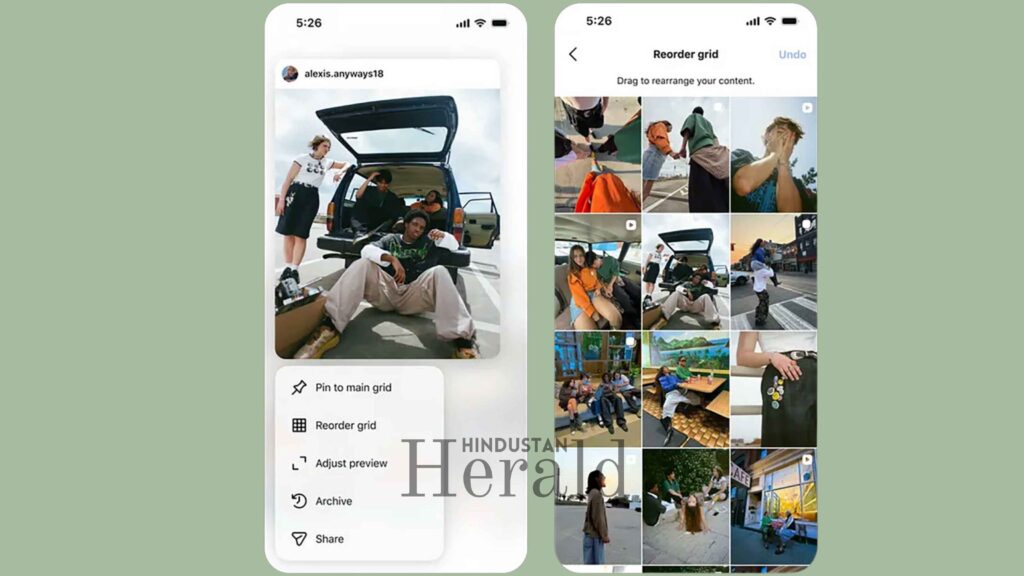
That particular headache ended on June 8, 2026, when Instagram quietly pushed out a feature called “Reorder Grid.” No fanfare. No lengthy announcement campaign. Just a long-overdue fix that lets users rearrange posts on their profile grid by simply pressing, holding, and dragging them wherever they want.
The response from creators was immediate, and it had the specific energy of relief rather than excitement. Like a problem you had stopped mentioning because you assumed it would never get fixed, suddenly getting fixed.
What You Actually Do to Use It
It is genuinely simple, which after years of workarounds feels almost suspicious. Open your profile, press and hold any post on the grid, and a small menu appears. Tap “Reorder Grid.” The entire grid loosens up. Every post becomes draggable. Move things around, arrange them however makes sense to you, and when you let go, the changes save on their own. No confirmation screen, no extra steps. Done.
Whoever visits your profile after that sees the new arrangement. Not eventually. Immediately.
The original posting date on each photo stays exactly as it was. A picture you uploaded in January 2024 that you drag to the front of your grid in June 2026 still shows its original timestamp in the post itself. The engagement history, the caption, the tagged accounts, none of that moves. Only the position on the grid changes. Which is, genuinely, all anyone ever wanted.
Two things stay locked and cannot be moved. Pinned posts remain fixed at the top, which makes sense because that is the whole point of pinning something. Reels that appear on the main grid also stay in place. For standard photos and carousels though, the whole grid is yours to arrange however you like. The feature works on both iPhone and Android, and there is no limit on how many times you can rearrange. You could do it every morning if you wanted to.
The Problem This Actually Solves
To someone who uses Instagram casually, grid reordering might seem like a minor cosmetic update. And in one sense it is. But for anyone who has ever tried to build something deliberate on the platform, the old chronological lock was a genuine operational problem.
The grid is the first thing a new visitor sees when they land on your profile. Before they read a caption, before they check your follower count, before they tap a single post, they see the grid. For creators, that first visual impression determines whether someone follows or keeps scrolling. For brands using Instagram as a storefront, it determines whether a potential customer stays long enough to browse. For freelancers and artists, it is often the difference between a collaboration inquiry arriving or not.
The chronological structure made intentional curation extremely difficult. Posting something slightly off-brand because it felt timely, or uploading a sponsored post between two carefully aesthetic shots, could disrupt a visual narrative that took weeks to build. Creators developed workarounds that ranged from tedious to elaborate. Some planned their entire content calendars three months ahead just to ensure every post landed in the right visual position relative to the posts around it. Others maintained separate notes tracking the colour palette of upcoming posts to ensure the grid read cohesively at every angle.
Some simply gave up on the grid altogether and treated it as an archive while putting their real creative energy into Stories and Reels, where the chronological constraint was less visible.
Instagram clearly noticed. The Reorder Grid feature is a direct response to years of feedback from the exact people the platform depends on most.
What It Changes for Indian Creators Specifically
India is one of Instagram’s largest markets, and the creator economy here is not a niche category anymore. It is a legitimate profession. From Mumbai to Bengaluru to smaller cities where regional content creators have built audiences of hundreds of thousands, the platform is a workplace. Brand deals are negotiated based on profile aesthetics as much as numbers. A messy or inconsistent grid, even if individual posts perform well, can quietly cost a creator real income because potential brand partners form impressions quickly and rarely explain why they moved on.
The ability to reorder without losing post history is meaningful in that context. A creator who has been posting for three years and wants to surface their best work, or reorganise their feed around a new content direction, no longer has to choose between a clean grid and the engagement history they built. They can have both.
For small businesses using Instagram as their primary sales channel, the implications are practical too. A jewellery brand in Jaipur can now arrange product posts by category or season without deleting older content. A home chef in Hyderabad can bring their most popular recipe posts to the front of their profile when a new follower arrives, rather than hoping the algorithm serves those posts organically.
That kind of control, while it sounds small, adds up over time.
What Took So Long
That is actually the interesting question here, and Instagram has not answered it directly. The technical ask was not especially complex. Drag-and-drop grid reordering is not a groundbreaking engineering challenge. The feature was requested publicly, loudly, and repeatedly for years across creator forums, feedback threads, and social media posts directed at the platform’s own accounts.
The most likely explanation is that Meta, which owns Instagram, spent the better part of the last several years pushing creators toward Reels and away from the static grid entirely. From a platform strategy standpoint, Reels generate more watch time, more ad inventory, and more of the engagement signals that feed algorithmic distribution. Investing in the static grid may have seemed like the wrong direction to lean.
That calculus appears to have shifted. The Reorder Grid feature is a quiet but real signal that Meta wants the profile page to function as a meaningful destination again, not just as a byproduct of content that gets discovered through the feed or the Explore tab. As creators spread their presence across multiple platforms and the competition for their attention and output intensifies, giving them more control over how their Instagram profile looks seems like a deliberate retention move as much as a product improvement.
The Reaction Tells the Story
The specific tenor of the creator response to this update says something. It was not the breathless excitement that tends to greet splashy new features. It was quieter, more grounded. Comments and posts from creators who tried it read less like reviews and more like people exhaling. Years of workarounds, years of deleted posts, years of content calendars built around grid aesthetics rather than actual creative instinct, and now there is simply a drag-and-drop option sitting in a press-and-hold menu.
No subscription required. No creator account threshold. No staged rollout with half the user base locked out for weeks. It is just there, it works, and it does exactly what it says.
For a platform that has spent years adding complexity, this particular update went the other direction. It removed a constraint that should probably never have existed in the first place. And sometimes, the best product update is the one that quietly fixes something that was quietly broken for a very long time.
Stay ahead with Hindustan Herald — bringing you trusted news, sharp analysis, and stories that matter across Politics, Business, Technology, Sports, Entertainment, Lifestyle, and more.
Connect with us on Facebook, Instagram, X (Twitter), LinkedIn, YouTube, and join our Telegram community @hindustanherald for real-time updates.

Tech writer passionate about AI, startups, and the digital economy, blending industry insights with storytelling.
- Neeraj Kapoor

- Neeraj Kapoor
- Neeraj Kapoor
- Neeraj Kapoor