
 By Shelesh Joshi and Kavita Iyer
Mumbai, June 10: Six years ago Meta put $5.7 billion into a Gujarat telecom company. This week that bet became the Reliance AI Data Centre India a 168 MW AI campus on the same coastline, leased by Meta, built by Reliance, and cooled by the sea.
Meta published the announcement on its official Meta Newsroom on June 9, 2026. Both companies call it the next chapter in a relationship that goes back to 2020. That framing holds. This deal took six years, three separate agreements, and a level of mutual commercial dependence that most corporate partnerships never reach.
This is the story of how a telecom bet became a physical AI campus on the Gujarat coast, and what the numbers buried in this week’s announcement are actually telling the market.
Quick Summary
- Reliance will build a 168 MW AI-enabled data centre at Jamnagar, Gujarat, which Meta will lease, with options to expand capacity further. (Source: Meta Newsroom, June 9, 2026)
- The facility is Meta’s first AI-enabled data centre in India, powered entirely by renewable energy and cooled with desalinated seawater. (Source: Meta Newsroom, June 9, 2026)
- Meta has separately contracted nearly 1 gigawatt of new clean energy across India, through CleanMax (837 MW in Rajasthan and Karnataka) and Fourth Partner Energy (88 MW across Tamil Nadu, Karnataka, Maharashtra, and Uttar Pradesh). (Source: Meta Newsroom, June 9, 2026)
- The data centre deal is the third chapter in a partnership that began with Meta’s $5.7 billion investment in Jio Platforms in 2020. (Source: Meta Newsroom, June 9, 2026; Meta/Facebook Newsroom, April 2020)
- In August 2025, both companies announced a joint venture to deploy Meta’s open source Llama AI models for Indian enterprises across sales, marketing, IT, customer service, and finance. (Source: Meta Newsroom, August 29, 2025)
- The Jamnagar campus will be paired with Project Waterworth, described by Meta as the world’s longest subsea cable project spanning over 50,000 km across five continents. (Source: Meta Engineering Blog, February 14, 2025)
Where the Reliance AI Data Centre India Story Began: The 2020 Jio Bet
In 2020, Meta put $5.7 billion into Jio Platforms, Reliance’s digital subsidiary. That figure appears in both the official Meta/Facebook Newsroom announcement from April 2020 and the June 9, 2026 Meta Newsroom release. The stated reason was to accelerate connectivity and back small business growth across India.

The deal made Meta the largest minority shareholder in Jio Platforms, as the April 2020 Meta/Facebook Newsroom release confirms. Jio had already done the hard work. It brought hundreds of millions of Indians online through aggressively cheap data, and Facebook, WhatsApp, and Instagram were all running on the back of that wave. Backing Jio financially was an acknowledgment of a commercial relationship that already existed in practice and needed a formal anchor.
For Reliance, the money mattered. But the association mattered too. The group was working, at that point, to be seen as a technology company alongside its established energy and retail operations. A multi billion dollar investment from a globally recognised technology name helped make that shift legible to markets and analysts who were still mapping Reliance primarily against oil benchmarks.
What neither side said publicly was that this $5.7 billion Jio deal was the first building block of what would eventually become the Reliance AI Data Centre India programme. They did not need to say it. The way the relationship has moved since, through two further announcements of growing scale and ambition, makes the arc clear enough in hindsight. What looked like a strategic minority stake in 2020 has, six years later, become the connectivity backbone of a physical AI campus on the Gujarat coast.
That is not a planned outcome anyone would have put in a press release. It is the result of two organisations that kept finding reasons to go further.
The joint venture that did not get enough coverage
In August 2025, at Reliance’s 48th Annual General Meeting, both companies announced a joint venture to build enterprise AI solutions on Meta’s open source Llama models. The details come from the official Meta Newsroom release of August 29, 2025.
The pitch was practical. Indian businesses of every size would get access to a secure environment for deploying and customising generative AI tools. Target use cases covered sales, marketing, IT operations, customer service, and finance. Beyond the platform, the venture was also building pre-configured solutions for specific industries, rather than handing businesses a generic base they would have to build on themselves.
The cost efficiency argument in the official Meta Newsroom release is worth noting directly. By combining Meta’s Llama models with Reliance’s existing digital infrastructure, the joint venture aimed to run high performance AI at a fraction of what standalone deployment would cost. Jio’s connectivity network and Reliance’s AI data centres are identified in that release as the two variables that make the economics work, keeping inference costs low and response times tight.
Deployment flexibility was also written in from the start. Organisations could run solutions over the cloud, on their own servers, or across the joint venture’s own infrastructure, depending on what their cost structure and data requirements demanded.
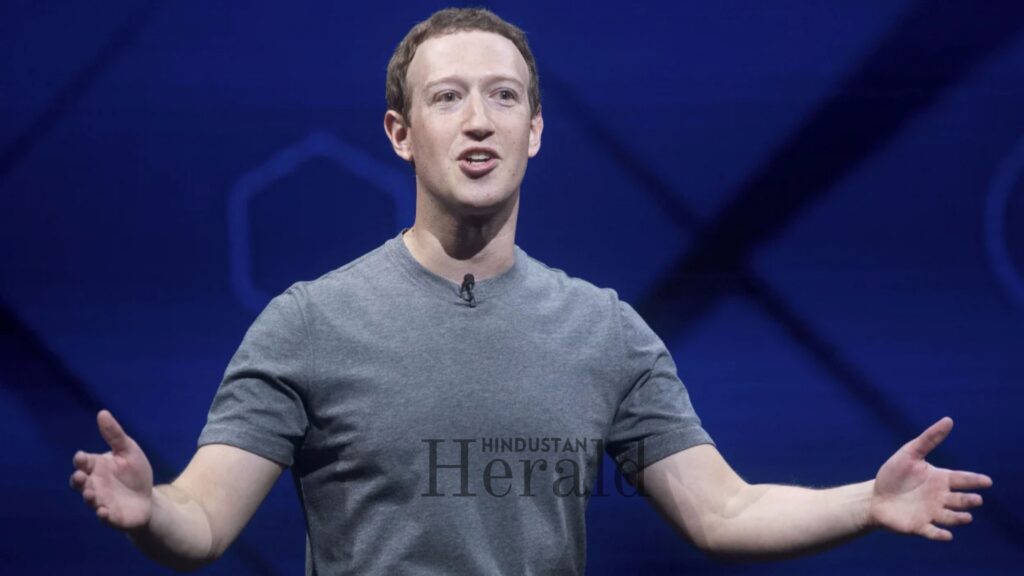
Mark Zuckerberg said at the August 2025 announcement: “We’re excited to deepen our partnership with Reliance to bring the power of open source AI to Indian developers and enterprises. Through this joint venture, we’re putting Meta’s Llama models into real world use, and I’m looking forward to Meta expanding its footprint in the enterprise space as we unlock new possibilities together.”
The honest gap in that August 2025 picture was this. A software joint venture for Indian enterprise AI sounds credible on paper. Delivering it at national scale, across industries, for businesses of every size, needs physical compute infrastructure sitting underneath the software. In August 2025, that physical layer was not yet confirmed. The June 2026 Jamnagar announcement is the confirmation. The joint venture made the promise. Jamnagar is what makes it deliverable.
Jamnagar: what the facility actually involves
The June 9, 2026 Meta Newsroom release sets out the arrangement plainly. Reliance builds a data centre at its Jamnagar campus in Gujarat. First phase capacity is 168 MW. Meta takes the lease. A written option to expand beyond 168 MW is in the agreement. Meta picks up the full tab for energy and water costs at the facility. Power source: renewable energy. Cooling method: desalinated seawater.
The cooling choice is worth a pause. Most large scale data centres draw from municipal water supply, rivers, or underground aquifers. Some use evaporative towers. Desalinated seawater is different. It costs more to process, it is harder to engineer at facility scale, and it only makes sense in a coastal location with enough infrastructure and volume to justify it. Jamnagar sits on the Gulf of Khambhat on the Gujarat coast. Reliance has the campus scale. Choosing desalinated seawater for a first phase facility signals that this campus was not designed as a short term installation.
The Meta Newsroom statement describes Jamnagar as a location where Reliance is building one of the largest data centre campuses in the world, with access to the energy supply required to run advanced AI infrastructure. In a market where reliable, large scale power has become the single biggest constraint on where AI infrastructure investment goes, having that energy secured is not a secondary advantage. It is the thing most locations are still trying to guarantee. Jamnagar has it.
Mark Zuckerberg said in the official statement: “We’re proud to be working with Reliance to build our first AI-enabled data center in India. This world class facility in Jamnagar will help us scale our AI infrastructure globally while deepening our long term investment in India’s economy.”

Mukesh D. Ambani, Chairman and Managing Director of Reliance Industries Limited, said: “This partnership with Meta marks a transformative moment for India’s digital infrastructure. Building India’s first built to suit AI data centre for a global technology leader of Meta’s scale demonstrates India’s readiness to be at the forefront of the global AI revolution. At Reliance, we are committed to building world class digital infrastructure that will power the next generation of AI innovation, not just for India, but for the world.”
Both statements are national in their framing. They are also public commitments with real audiences: policymakers, competing technology companies evaluating India as an infrastructure destination, and future tenants weighing whether the Jamnagar campus is worth anchoring to. These are not decorative words.
The cable running underneath all of this
A 168 MW campus in Gujarat is a serious piece of infrastructure on its own. What Meta is connecting it to changes the category it belongs to. The June 9, 2026 Meta Newsroom release confirms the Jamnagar facility will be paired with Project Waterworth. Per Meta’s own Engineering Blog published February 14, 2025, Project Waterworth spans over 50,000 km, longer than the Earth’s circumference, making it the world’s longest subsea cable project built with the highest capacity transmission technology currently available. It runs across five continents, with India, the United States, Brazil, and South Africa among the named connection points.
Think about what that means for Jamnagar in practice. A data centre without global connectivity is a local serving node. It processes requests from nearby users and its value is bounded by the population it can reach. A data centre at the end of a 50,000 km cable connecting five continents is something different. Workloads can be distributed globally. Latency can be managed across geographies. Capacity can be shared with other facilities in real time. The Jamnagar campus, once Project Waterworth is complete, is not a domestic facility with international ambitions. It is a node in a global AI network.
The June 9, 2026 Meta Newsroom statement says Meta aims to bring “industry leading connectivity to the region” through the combination of the Jamnagar campus and Project Waterworth. That language is grounded in infrastructure that is either operational or under active construction. It is a description of what the facility will be able to do, not a projection of what Meta hopes might eventually happen.
Meta’s stated case for India
The June 9, 2026 Meta Newsroom release is direct about India’s position in Meta’s global infrastructure thinking. India is described as one of Meta’s largest and fastest growing communities globally. The Jamnagar investment is framed around delivering what Meta explicitly calls personal superintelligence to that community.
The official statement describes the data centre agreement as deepening “our long standing strategic partnership with Reliance, one that spans connectivity, commerce, and AI innovation in one of the world’s most dynamic digital markets.”
That phrase maps directly onto the three deals. The 2020 Jio investment handled connectivity. The 2025 enterprise AI joint venture handled commerce and software. The 2026 Jamnagar data centre handles the compute infrastructure that both of the previous layers run on. Meta is not being subtle about the architecture it has assembled here. The official statement lays it out in a single sentence.
The clean energy numbers that are not getting enough attention
Alongside the data centre deal, Meta confirmed it has contracted nearly 1 gigawatt of new clean and renewable energy across India through two separate deals, as stated in the June 9, 2026 Meta Newsroom release.
The first contract is with CleanMax: 837 MW of new solar and wind projects in Rajasthan and Karnataka. The official Meta Newsroom release notes this takes the cumulative capacity announced with CleanMax to over 900 MW, which means a prior deal between the two was already in place before this week’s announcement.
The second contract is with Fourth Partner Energy: 88 MW of solar and wind across Tamil Nadu, Karnataka, Maharashtra, and Uttar Pradesh, as confirmed in the same release.
Together with Reliance’s own renewable arrangements for the Jamnagar campus, Meta says these contracts represent a meaningful commitment to India’s clean energy ecosystem. The official purpose in the Meta Newsroom release is to ensure Meta’s growing infrastructure in India runs on renewable power and to address value chain emissions in the region. Meta ties this to its global commitment to match all operations with 100 percent clean and renewable energy.
Now do the arithmetic. A 168 MW data centre does not require 837 MW from CleanMax and 88 MW from Fourth Partner Energy. That is nearly six times the power requirement of the announced facility, spread across five states and contracted through two separate providers, all in the same announcement. Either Meta is already running infrastructure in India at a scale it has not publicly confirmed, or it is pre-positioning energy supply for a buildout that is coming and has not yet been disclosed. The clean energy commitment is the most underreported number in this entire story, and it is the one that tells you most honestly about what Meta intends to build here.
What each side is getting
The structure is confirmed in the June 9, 2026 Meta Newsroom release. Reliance builds and owns the physical asset. Meta leases capacity and covers energy and water costs.
For Reliance, this is a commercially meaningful result after years of work. The development of the Jamnagar site, the secured energy supply in Gujarat, the build out of the coastal campus have produced something a counterparty of Meta’s scale is willing to put its name on. The fact that this is explicitly Meta’s first AI-enabled data centre in India, as the official Meta Newsroom release states, carries real weight. It tells other potential tenants that the site has passed an evaluation by one of the most demanding technology operators in the world. For a campus competing for hyperscale tenants, that matters.
For Meta, it is large scale compute access in India without the cost and timeline of building from scratch in a new regulatory environment. It gets a partner who has spent years making Jamnagar work. It gets renewable power already secured at scale. It gets Project Waterworth cable connectivity attached to the campus.
What neither company says explicitly, but what the six year timeline makes clear, is that this relationship has momentum that individual deal structures do not capture. The Jio investment was framed around WhatsApp and small businesses. It became the network layer of a national AI platform. The Llama joint venture was announced as a software product. It now has physical infrastructure to run on. Each agreement has made the next one larger. There is no obvious reason to expect that to stop with Jamnagar.
What this deal is actually telling the market
Put the three official Meta statements side by side: the April 2020 Jio investment, the August 2025 Llama joint venture, and the June 2026 Jamnagar data centre.The 2020 Jio investment built the network layer. Hundreds of millions of Indian users, connected through Jio infrastructure, reachable through Meta’s applications at low cost and high speed.
The 2025 Llama joint venture built the software layer on top of that. A platform for Indian enterprises to run AI in their own operations, on Meta’s open source models, distributed through Reliance’s reach into Indian business.
The 2026 Jamnagar data centre builds the compute layer underneath both. The physical infrastructure to run AI workloads, serve Meta’s consumer applications, and support the enterprise joint venture, all from a single campus in Gujarat, cooled by the sea and powered by renewable energy. Three layers. One partner throughout. Six years from first investment to physical campus.
The nearly 1 GW of clean energy contracted across five Indian states in a single announcement says something about the intended scale that no press release language captures as well. So does Project Waterworth at 50,000 km, connecting five continents. So does the option to scale beyond 168 MW written into the lease before the first phase is even operational.
India’s users are not a growth market for Meta in the way that phrase is usually used. They are, as the official Meta Newsroom statement puts it directly, one of Meta’s largest communities globally. The infrastructure going up at Jamnagar is not an experiment to see whether India is worth investing in. That question was settled in 2020. What is being built now is the infrastructure to serve a market Meta already has, at the scale that market demands.
Companies that are experimenting do not secure nearly 1 GW of renewable energy across five states. They do not build the world’s longest subsea cable and route it through the same campus. They do not write scale options into a lease for a facility that is not yet operational. They keep their commitment shallow until the returns are visible. Meta has done none of that. It has embedded itself into India’s digital infrastructure at the network layer, the software layer, and now the compute layer, with a single Indian partner across all three.
In Jamnagar, a coastal town in Gujarat that the world knew for its oil refineries, Meta has planted its first AI data centre in India. It is cooled by the sea. It runs on clean energy. It is tied to a cable running across five continents. Six years after a $5.7 billion bet on a telecom company, that is where the commitment lives now.
Stay ahead with Hindustan Herald — bringing you trusted news, sharp analysis, and stories that matter across Politics, Business, Technology, Sports, Entertainment, Lifestyle, and more.
Connect with us on Facebook, Instagram, X (Twitter), LinkedIn, YouTube, and join our Telegram community @hindustanherald for real-time updates.

Tracking world politics, global markets, trade movements, policy decisions, and the changing balance of economic power.
- Shelesh Joshi

- Shelesh Joshi
- Shelesh Joshi
- Shelesh Joshi





Former financial consultant turned journalist, reporting on markets, industry trends, and economic policy.
- Kavita Iyer
- Kavita Iyer
- Kavita Iyer
- Kavita Iyer