
 By Ananya Sharma and Rajiv Menon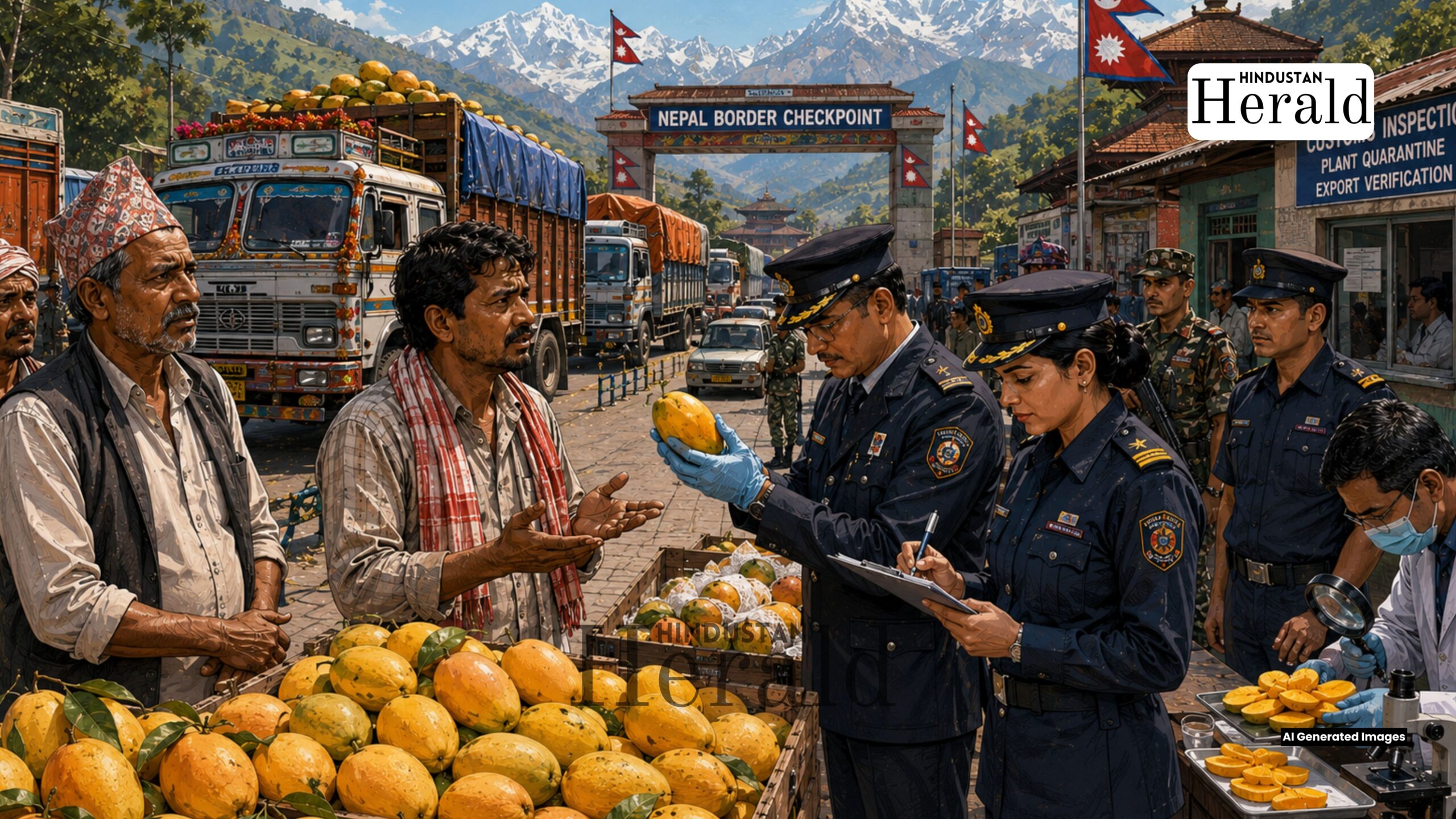
New Delhi, June 10: India’s king of fruits is no longer welcome at Nepal’s border. Just as summer hits its sharpest peak and mango demand soars across both countries, Nepal’s government has quietly put up a wall. Trucks carrying Indian mangoes are being turned back. Markets in Nepal’s commercial towns are running thin. And traders who have built their peak-season income around this trade are caught off guard, with no clear answer on what comes next. The official reason is pesticides and poor border infrastructure. But the fallout is already spreading well beyond those two explanations, and it is not just Nepal that is raising its hand against Indian mangoes this season.
A Ban That Hit At The Worst Possible Time
Nepal’s government has put a formal stop on the import of mangoes from India. Officials have cited the detection of pesticide residue above permissible limits in Indian consignments, alongside a lack of adequate quarantine facilities at border crossing points, as the two main grounds for the decision. The idea, as stated, is to protect consumers from chemical contamination and ensure only quality-checked produce enters Nepali markets.

That said, the decision has not arrived in a vacuum. Nepal and India have been navigating a period of visible tension, and this move, even if rooted in genuine food safety concerns, is being read in that larger context by traders, market observers, and the broader business community on both sides of the border. Whatever the government’s intent, the timing has loaded the decision with a significance that goes beyond mangoes.
Nepal’s Orchards Cannot Do This Alone
The central problem with the ban is straightforward: Nepal does not produce enough mangoes to sustain its own market through the summer months.
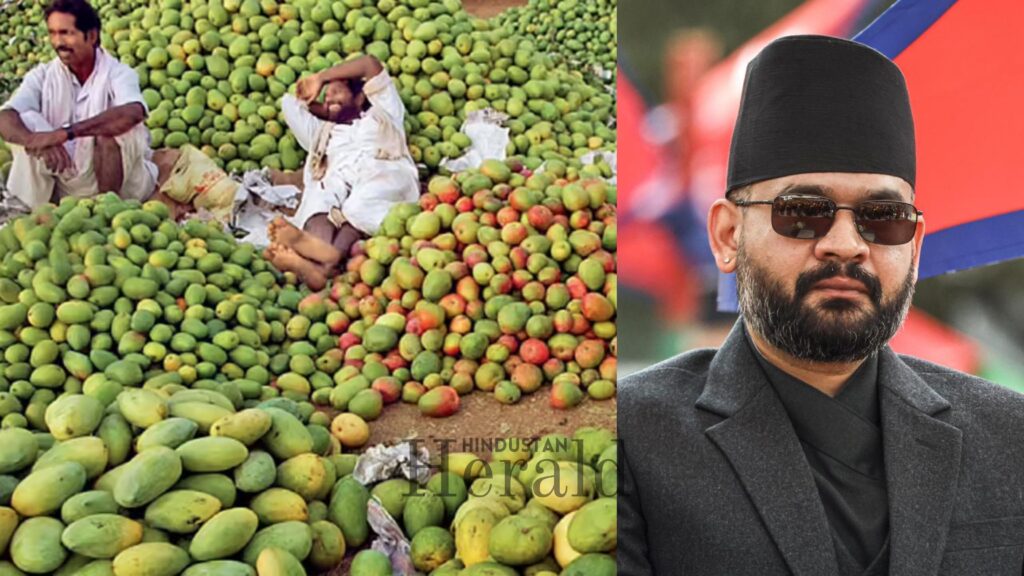
Nepali mango production runs for only about two months in a year. Once that window closes, domestic supply effectively dries up. For years, Indian imports have stepped into that gap, keeping markets stocked through the rest of the season when local farmers have nothing left to offer. Remove that pipeline abruptly, and the result is a demand that local orchards are simply not equipped to meet.
In Janakpurdham , one of Nepal’s key commercial hubs in the Madhesh region , the immediate impact is already playing out in the markets. Domestic mangoes are arriving from the districts of Saptari, Siraha, Mahottari, Dhanusha, and Sarlahi . Roughly 50 tonnes of fruit lands in the city’s markets every day from these sources. Traders acknowledge that this is a real and welcome volume. But they are equally clear that it is not enough to match what the market consumes during peak summer demand.
Traders Are Speaking Out
Bhuvneshwar Purbe , general secretary of the Fruit and Vegetable Traders Association of Janakpurdham , has not stayed quiet about any of this. He has said publicly that mango demand climbs sharply in summer, and that cutting off Indian supply without building a reliable alternative will push the market into a visible shortage. His concern is not about protecting Indian fruit over Nepali fruit. It is about protecting the people who run the trade and the consumers who rely on it.
His suggestion is also a practical one. Rather than a blanket ban, the government should invest in strengthening the quarantine system at border points and allow Indian consignments to enter after proper quality testing. That way, the pesticide concern, which is legitimate, gets addressed without wiping out the supply chain entirely.
Still, no such middle path has been offered by authorities so far. Traders are continuing to operate in uncertainty, managing reduced stock through the busiest weeks of the year.
The Banana Case Came First
For anyone who needed a preview of what a supply ban does to a market, the banana trade provided one earlier. Indian bananas , which are significantly cheaper than Nepali alternatives, were subjected to a supply ban before the mango situation. Prices went up, availability fell, and customers ended up absorbing the difference without any real alternative in sight.
Traders in the banana business have been vocal about the longer-term risk. Nepal’s winter months are periods when domestic banana production drops sharply, and markets rely almost entirely on Indian imports to stay stocked. Cutting that link without having a local production strategy to replace it does not protect consumers. It makes things harder for them.
The mango ban is following the same pattern. As the summer deepens and domestic mango production winds down, the gap between what local farms can provide and what consumers want will only grow wider. Without a swift and structured resolution, market shortages and price rises are not a possibility. They are a direction.
Japan Has Also Shut the Door
Nepal is not alone in raising concerns about Indian mangoes this season. Japan has moved to restrict imports as well, and its reasons are linked to export compliance standards that India has clearly not been meeting at scale.
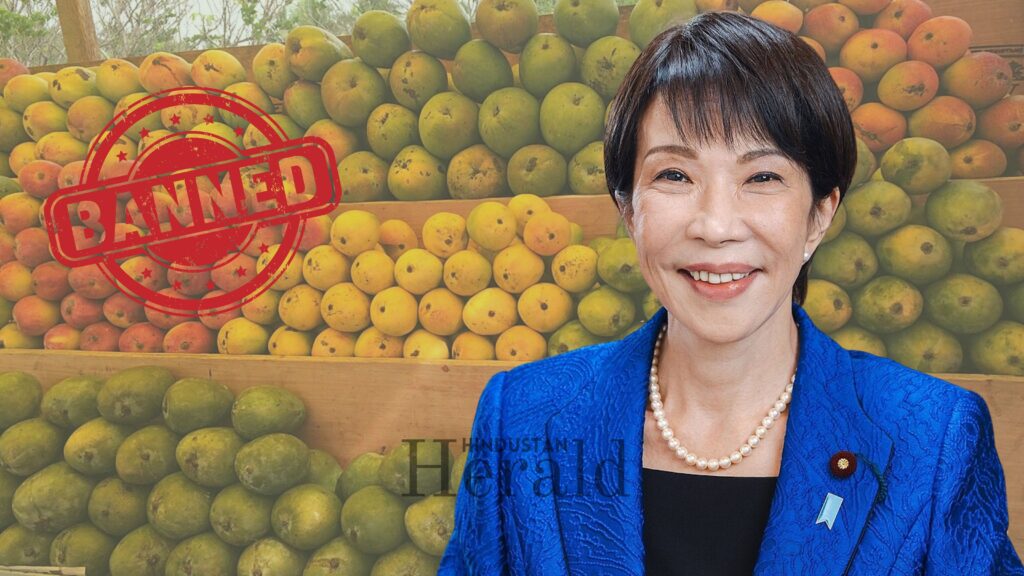
Japan’s government has prohibited mango consignments carrying certificates issued after March 25, 2026 , citing failures in pest control practices and non-compliance with Vapor Heat Treatment (VHT) standards, which are mandatory for fruit entering the Japanese market. This step is notable because Japan had not imposed restrictions of this nature for nearly two decades . The fact that it has done so now points to deteriorating confidence in the compliance infrastructure around Indian mango exports.
The stakes here are not small. Amroha district in Uttar Pradesh alone has mango orchards spread across roughly 12,000 hectares . From this belt and others like it, Indian mangoes are shipped annually to buyers in the Gulf countries, the United States, Japan, and across Europe . Local exporters in Amroha have described Japan’s move as a warning, and a serious one. The message, as they read it, is that international buyers expect consistent quality control, rigorous pest management, and packaging standards that hold up under scrutiny. India has not been delivering that consistently enough.
A Systemic Problem Behind The Seasonal Headline
Taken together, Nepal’s pesticide-based ban and Japan’s VHT compliance action point to something that stretches well beyond a single season’s export problem. There is a pattern here. Pesticide management at the farm level remains inconsistent across growing belts. Post-harvest handling, cold chain facilities, and treatment infrastructure, particularly at smaller export points and land border crossings, are underbuilt. And the certification systems meant to catch substandard consignments before they reach international buyers are not working reliably enough.
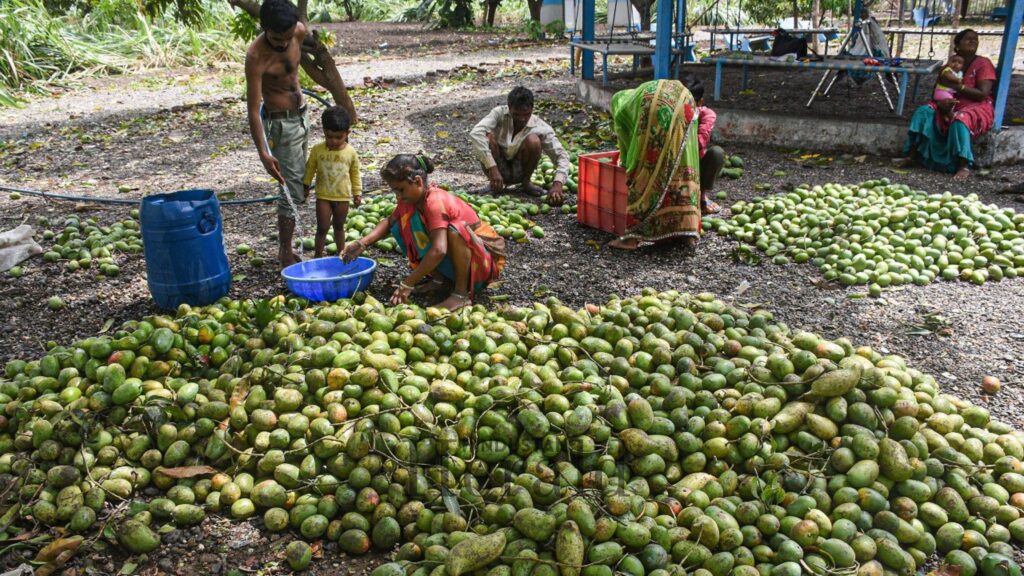
India holds a globally recognized position in mango cultivation. The volume produced, the variety of cultivars, and the sheer geographic spread of orchards represent an agricultural asset of real economic value. But that value cannot be realized in international markets if the backend systems, from the farm all the way to the certificate of compliance, cannot keep pace with what those markets require.
For the mango belt of Uttar Pradesh and other major producing states, the Japan ban in particular should be landing as a direct signal. Not a minor trade dispute, not a one-off rejection, but a call for a structural reset in how export-quality produce is handled from soil to shipment.
A Market Waiting For An Answer
For now, consumers in Nepal’s Madhesh markets are getting by on what domestic orchards can supply, and traders are managing with tighter margins and reduced volumes. But the summer is long, domestic production is short, and the ban shows no immediate sign of lifting.
As Bhuvneshwar Purbe and others in the trade have made clear, the government does have a workable option available. Build up the quarantine systems, test Indian consignments at the border, and allow quality-certified fruit to come through. That approach addresses the stated concern about pesticides without stripping the market of supply it cannot replace through local production alone.
India, meanwhile, carries its own responsibility in this situation. If Nepal and Japan are both raising the same underlying flags about standards, residue, and compliance within weeks of each other, the problem is not a coincidence. It is a signal. The mango season returns every year. The time to fix the infrastructure behind it is now, not after another season of avoidable bans and lost export revenue.
Stay ahead with Hindustan Herald — bringing you trusted news, sharp analysis, and stories that matter across Politics, Business, Technology, Sports, Entertainment, Lifestyle, and more.
Connect with us on Facebook, Instagram, X (Twitter), LinkedIn, YouTube, and join our Telegram community @hindustanherald for real-time updates.

Covers Indian politics, governance, and policy developments with over a decade of experience in political reporting.
- Ananya Sharma

- Ananya Sharma
- Ananya Sharma
- Ananya Sharma





Specializes in South Asian geopolitics and global diplomacy, bringing in-depth analysis on international relations.
- Rajiv Menon
- Rajiv Menon
- Rajiv Menon
- Rajiv Menon




 Sandeep Verma
  Shelesh Joshi and Rajiv Menon