
 By Ananya Sharma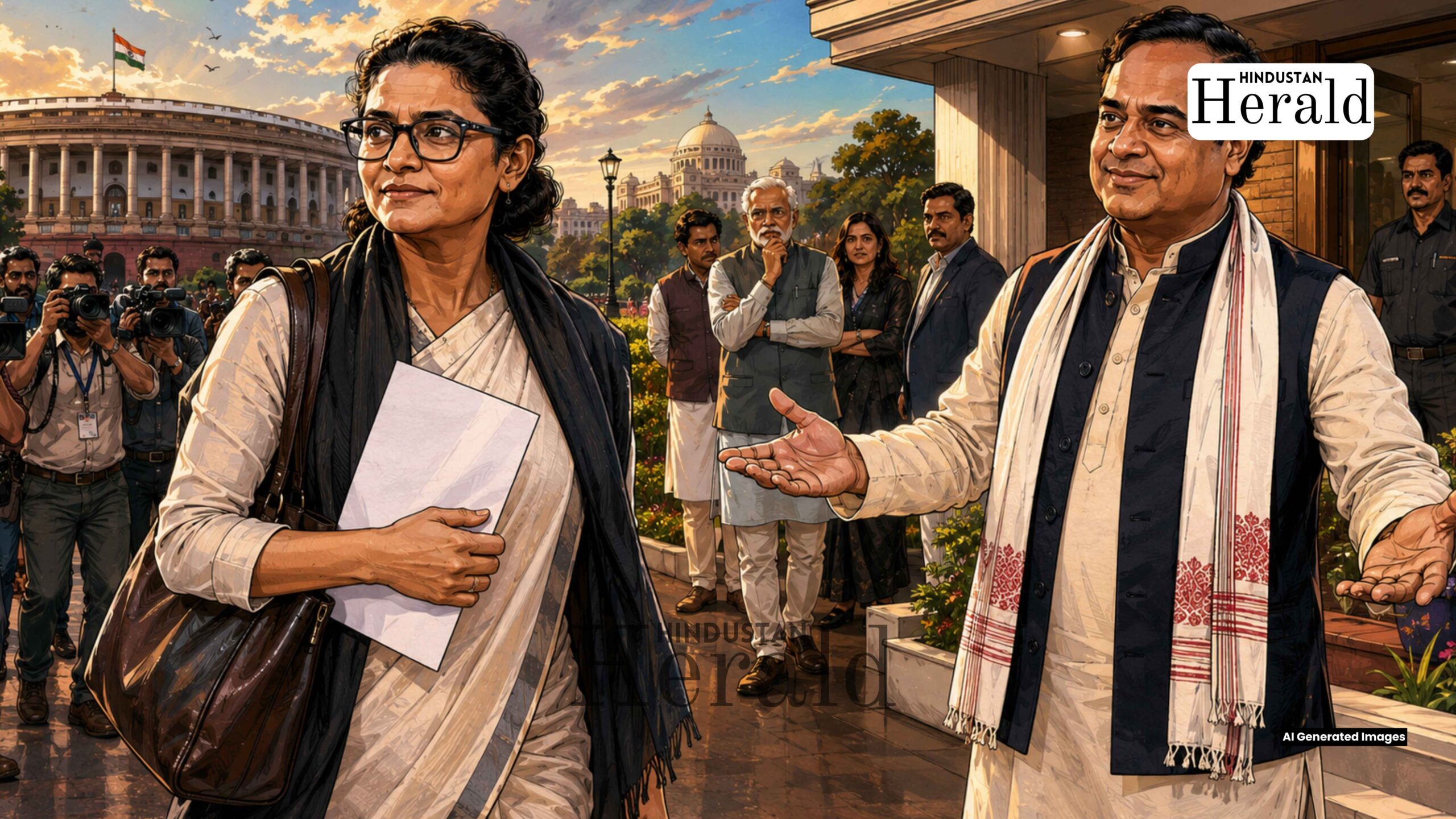
New Delhi, June 10: She did not hold a press conference. She did not issue a lengthy statement. Sushmita Dev walked out of the Rajya Sabha Secretariat on Wednesday morning, told reporters she was “an independent, free woman today,” and let a photograph do the rest of the talking.
That photograph Dev, visibly relaxed, seated beside Assam Chief Minister Himanta Biswa Sarma at his Delhi home was circulating online before most people had finished their morning tea. No explanation accompanied it. None came later either.
She Left Quietly, But Nothing About This Is Small
The resignation letter itself gives very little away. “I do hereby resign from the membership of Rajya Sabha, which may please be accepted with immediate effect.” Addressed to Chairman C.P. Radhakrishnan, signed off with a polite line of thanks toward the Secretariat. Formal, clean, final.
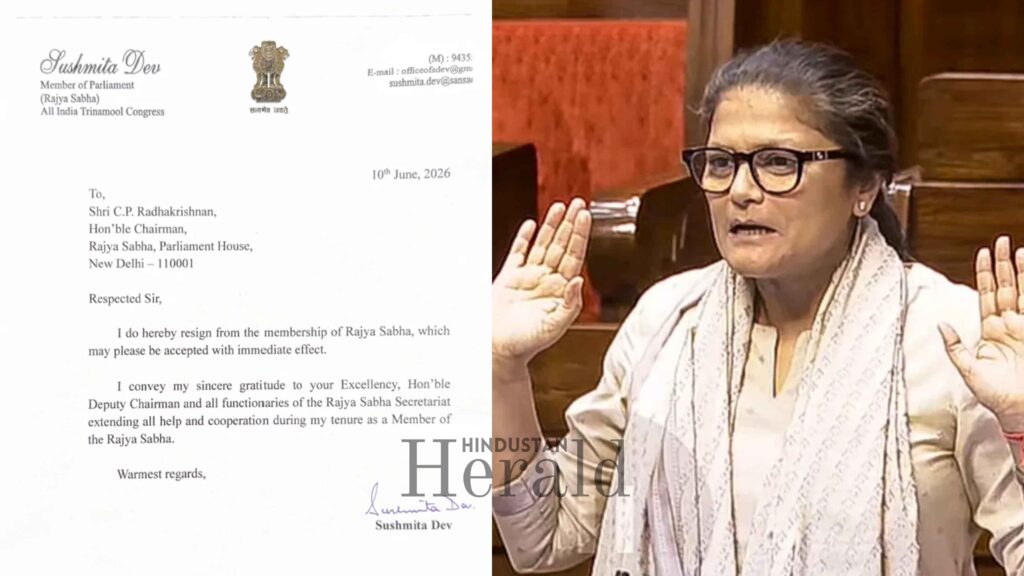
Reporters who caught her outside asked the obvious questions. Why now? What happened? She reportedly smiled and said it was “a long story” and that not everything needed to be explained publicly. Then she said something that landed with more weight than the casual delivery suggested: “I don’t want to be in two boats.”
Anyone watching the Trinamool Congress implode over the past few weeks would know exactly what she meant. Several party MPs have spent recent days quietly signalling closeness to the BJP while still sitting on TMC seats, playing both sides, buying time. Dev apparently was not interested in that particular performance. She resigned. Cleanly. Publicly. And then showed up at Himanta’s house.
Two Gone in One Week
This did not happen in isolation. On June 8, just two days before Dev’s exit, Sukhendu Sekhar Ray another senior TMC leader in the Rajya Sabha had already walked out. Ray had a tenure that was supposed to run until 2029. He gave it up anyway.
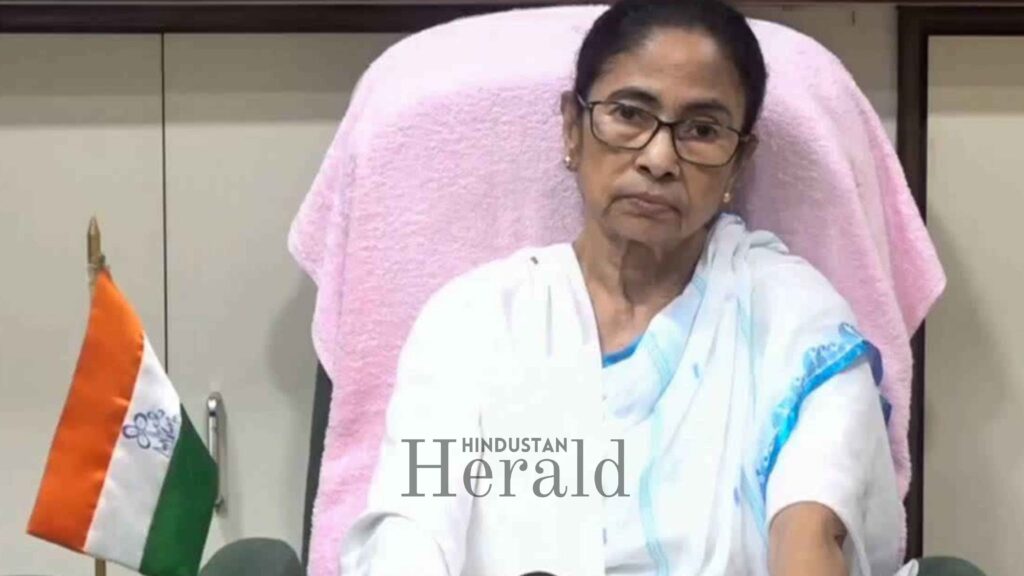
He was less guarded than Dev about his reasons. He told reporters he had informed Mamata Banerjee via WhatsApp and email before going public, which, depending on how you read it, is either a gesture of courtesy or a deliberate signal that he no longer owed her more than that. He spoke of rampant corruption inside the party, of governance that had become, in his description, anarchical. He used the phrase “in principle” to explain why staying was no longer possible the kind of language people use when they want to say everything is broken without listing every broken thing.
Two Rajya Sabha MPs in a single week. For a party that ran on the idea that Mamata Banerjee’s word was final and her organisation was watertight, this is a different category of problem.
Back in Bengal, the Floor Is Falling
Whatever is happening in Parliament is actually the quieter part of this crisis. In West Bengal itself, the scene since the 2026 assembly election loss has been something close to a controlled demolition except without the control.
The TMC lost the state after fifteen years in power. That result alone would have been a serious blow. What followed has been something else entirely. As per reports, around 58 of the party’s 80 MLAs signed a letter to the Assembly Speaker backing expelled legislator Ritabrata Banerjee as Leader of the Opposition directly ignoring Mamata Banerjee’s preferred candidate. The Speaker reportedly sided with the rebel group. The dissidents got control of the opposition benches.
At the parliamentary level, senior MP Kakoli Ghosh Dastidar has reportedly been herding close to 20 rebel MPs toward alignment with the National Democratic Alliance. Tuesday saw loyalist MPs Kalyan Banerjee and Kirti Azad hold what can only be described as a frustrated press conference, publicly daring any wavering member to make their move openly. “Fight under your own flag,” Kalyan Banerjee said. “Fight under the BJP symbol. But do not misuse the mandate that was earned under the Trinamool Congress.”
It is the kind of language that confirms the wound more than it addresses it.
The same week, West Bengal’s CID conducted searches at offices linked to both Mamata Banerjee’s Kalighat residence and an Abhishek Banerjee-linked office on Camac Street reportedly over a dispute about the original copy of the legislature party resolution. Whether that explanation covers the full picture or not, the searches added another strange layer to an already fractured situation.
This is a party that for fifteen years kept its members in line through a combination of political authority, state patronage, and Mamata Banerjee’s sheer force of personality. All three of those foundations are wobbling right now. Simultaneously.
Thirty Years in Congress, Five in TMC, and Then This
Understanding what Sushmita Dev’s departure actually costs the TMC requires understanding who she is not just her title, but how she got there.
Her father was Santosh Mohan Dev, a Congress leader from Assam’s Barak Valley with deep roots in the Bengali-speaking community there, a man who served as a Union Cabinet Minister during the UPA years. Her mother Bithika Dev was a legislator from Silchar. Politics ran through the household. Sushmita Dev stepped into it early and stayed for decades, building a career inside the Indian National Congress that eventually took her to the presidency of the All India Mahila Congress one of the more prominent roles available to a woman inside the party structure.
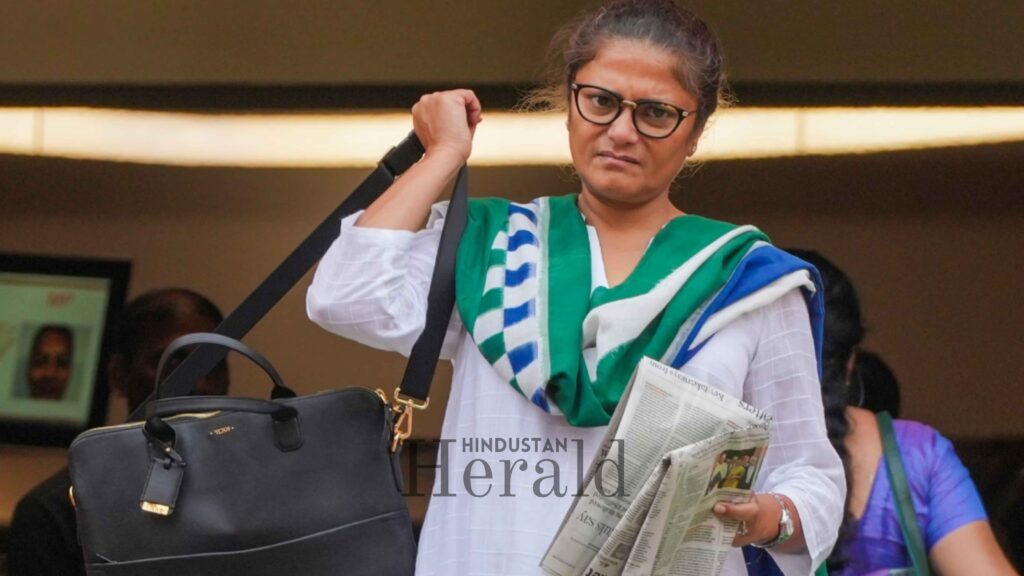
She won the Lok Sabha seat from Silchar and held it. She was a figure with genuine standing on women’s rights issues and a recognizable presence in northeastern political circles. Then 2019 arrived, and she lost Silchar to BJP candidate Rajdeep Roy. The defeat stung, and it compounded an existing frustration she had reportedly been unhappy with the Congress leadership’s decision to ally with the All India United Democratic Front in Assam, a call she opposed. She had nearly quit earlier that year before being persuaded to stay. In August 2021, that persuasion finally ran out.
She wrote to Sonia Gandhi about a “new chapter of public service” and walked away from thirty years without elaborating further. The TMC welcomed her the same day. Abhishek Banerjee and Derek O’Brien were photographed beside her. The party had clear strategic reasons to want her: Barak Valley roots, Mahila Congress credibility, Assam name recognition. The TMC had ambitions to expand into the northeast, into Assam and Tripura, where the BJP was already dominant. Dev was meant to help with that.
She became the party’s national spokesperson, went to the Rajya Sabha, and was re-nominated for a second term beginning April 2024.
On Wednesday morning she resigned, effective immediately.
The Himanta Detail Is Not Incidental
The meeting with Himanta Biswa Sarma is worth sitting with for a moment.
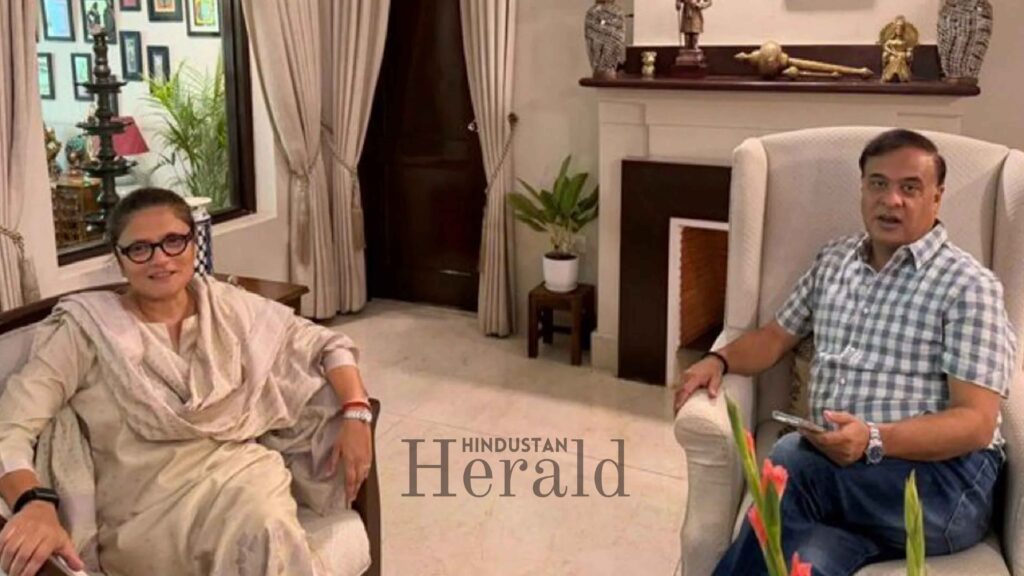
Sarma is not simply the Chief Minister of Assam. He spent his own years inside the Congress before crossing to the BJP, so he understands the arc of this kind of political journey from the inside. He has since become one of the more effective architects of BJP expansion across the northeast. He is not someone who hosts recently resigned MPs from Barak Valley out of casual hospitality.
Dev has not confirmed she is joining the BJP. Sarma has said nothing publicly. But the photograph, placed beside everything else the resignation, her background, her roots in a Bengali-speaking Assam constituency tells a reasonably clear story. If the move is confirmed, it brings back into the BJP’s orbit a familiar face from a region that carries genuine electoral weight. It would also close whatever door remained on the TMC’s northeastern strategy, which, admittedly, may have already closed the moment West Bengal was lost.
What It Means for Mamata Now
There is a tendency, when writing about Indian political defections, to frame each one as a standalone event one leader, one decision, individual reasons. That framing does not work here. What is happening to the TMC right now is not a series of individual decisions. It is a wave, and it is moving through every level of the organisation at roughly the same time.
Councillors. Municipal representatives. MLAs. Lok Sabha MPs. Now Rajya Sabha MPs. The exits are not concentrated in one faction or one region. They are dispersed, which makes them harder to contain and harder to explain away.
Mamata Banerjee has survived serious political crises before. She built this party from nothing in 1998 after her split from Congress. She spent years in opposition, came back, won in 2011, and then held power for fifteen years. Those earlier recoveries came from electoral defeat the problem was outside the organisation. This problem is inside it, and it is moving fast.
The loyalist camp is fighting back, as it should. But the fact that they are reduced to holding press conferences telling members to resign before jumping ship suggests the tools available to the leadership right now are mostly rhetorical. Real organisational control does not look like that.
For now, no official response from the TMC on Dev’s resignation. Nothing from Mamata Banerjee. Nothing more from Dev herself beyond what she already said.
Just a short letter, a smiling photograph, and five words that may end up being the most honest political statement anyone inside that party has made in weeks.
Stay ahead with Hindustan Herald — bringing you trusted news, sharp analysis, and stories that matter across Politics, Business, Technology, Sports, Entertainment, Lifestyle, and more.
Connect with us on Facebook, Instagram, X (Twitter), LinkedIn, YouTube, and join our Telegram community @hindustanherald for real-time updates.

Covers Indian politics, governance, and policy developments with over a decade of experience in political reporting.
- Ananya Sharma

- Ananya Sharma
- Ananya Sharma
- Ananya Sharma




 Sandeep Verma