
 By Arun Upadhayay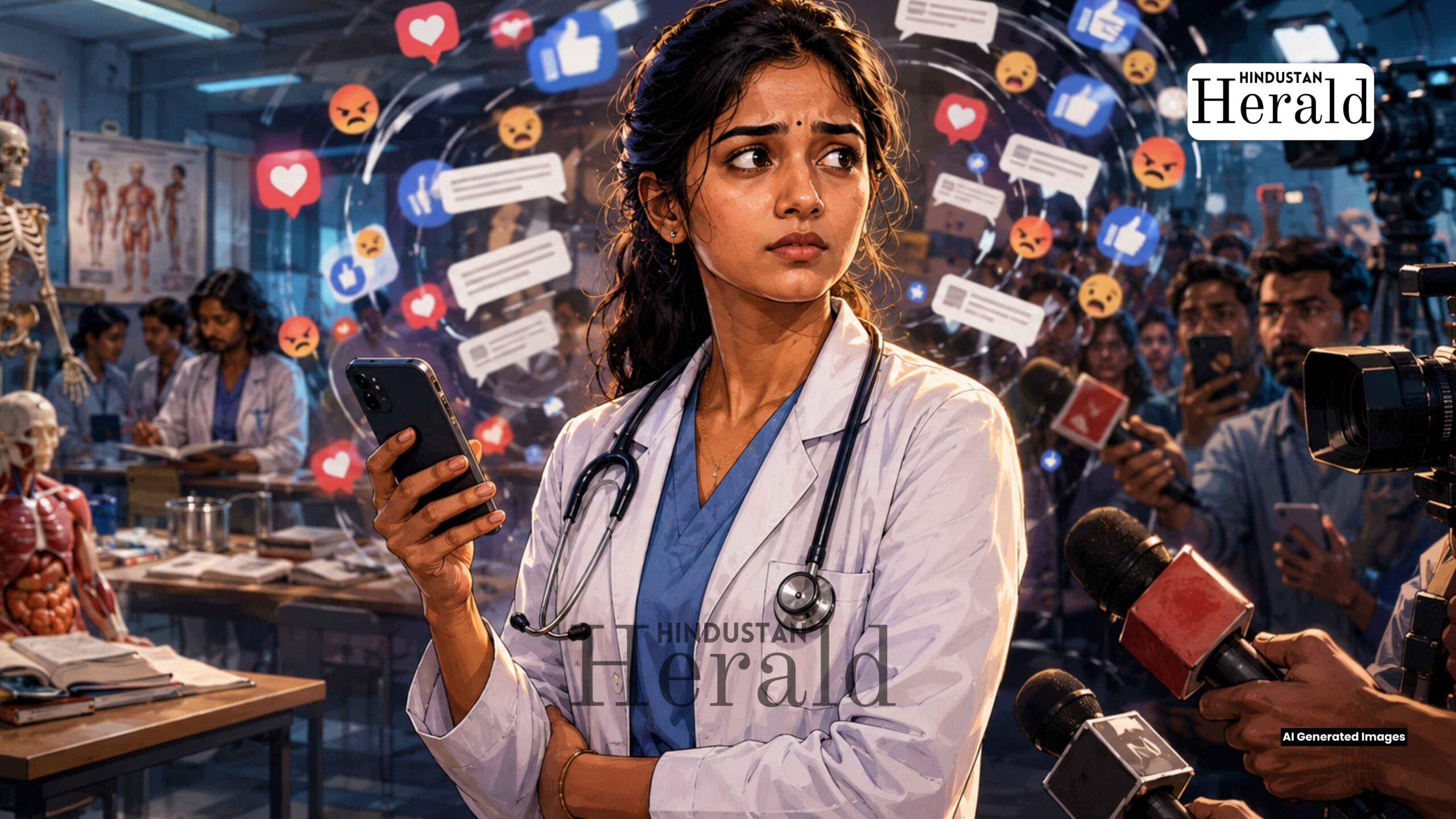
Mumbai, June 11: Three months ago, Dr. Sejal Pawar walked into a comedy show, got pulled into a crowd-work segment, said something she probably thought would get a laugh and move on, and went home. She had no way of knowing the internet would find that clip, sit on it, and then detonate it at the worst possible moment.
That is more or less what happened this week.
Pawar, a doctor currently posted at Mumbai’s KEM Hospital, is now dealing with a public backlash she almost certainly did not see coming when she first stepped into that show as an audience member. The clip in question is from comedian Pranit More’s stand-up show, recorded roughly three months back. In it, Pawar responds to More’s question about whether doctors crack jokes while working with dead bodies. Her answer, which got laughs in the room, described how she and her female colleagues in the anatomy lab would compare the sizes of male cadavers’ private parts during dissection sessions, deliberately leaving that portion of the body for last.
The audience laughed. The show moved on. And then, this week, the clip found new life.
It Did Not Go Viral Alone
Here is the thing about how this exploded. Dr. Pawar’s clip did not resurface on its own. It was pulled back into circulation in direct response to another controversy from the very same show.
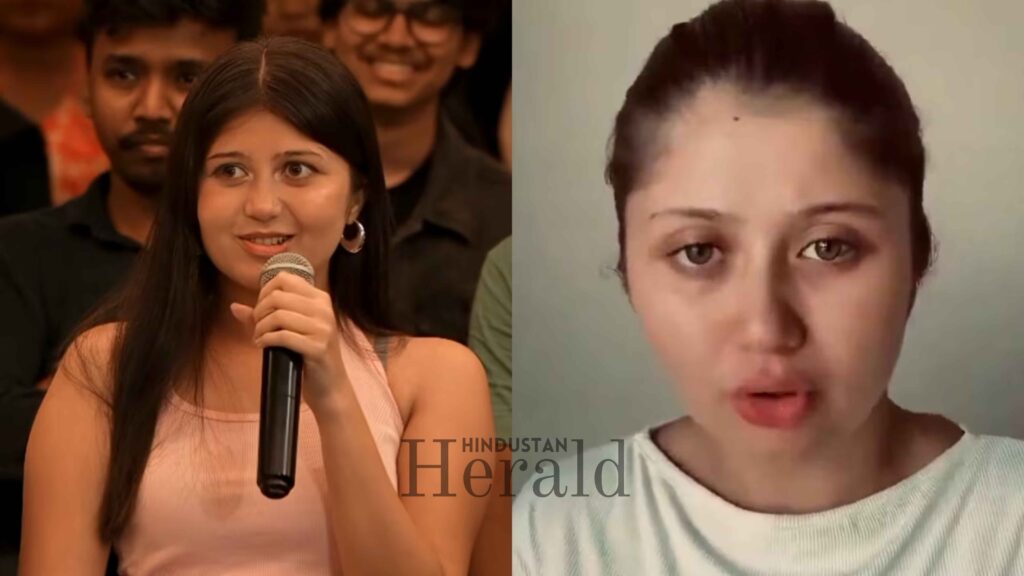
Days earlier, Himanshu Jangra, a man from Gurugram, had gone spectacularly viral for remarks he made during a separate audience interaction at Pranit More’s show. Jangra had said, on camera, that he had spent Rs 370 on biryani for a woman on a date and therefore expected something in return. The backlash was immediate and severe. He was publicly named, shamed, and fired from his job within days.
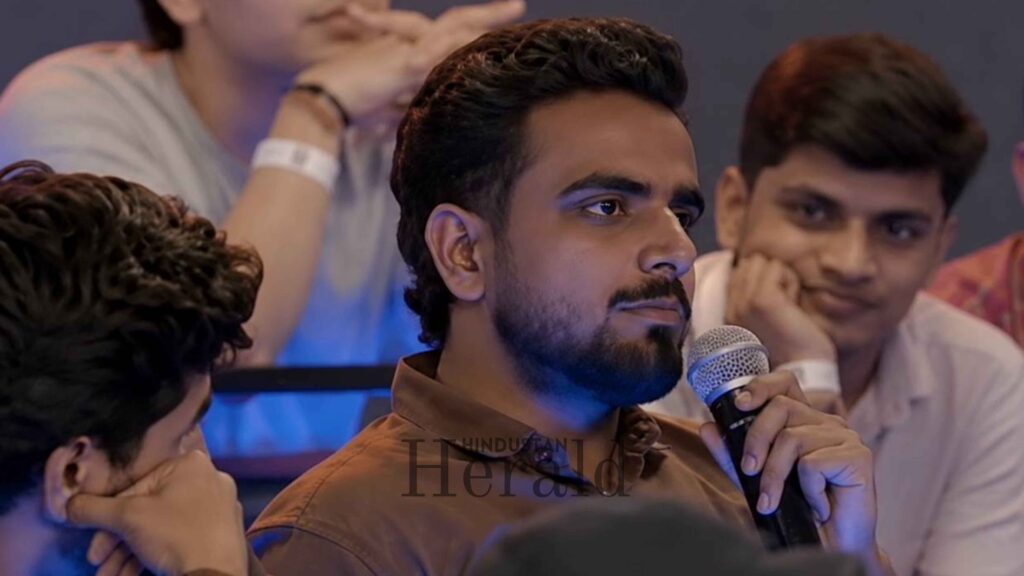
As that story was still trending, a section of social media began asking a question that, once asked, proved hard to ignore: if a man gets fired for a tasteless comment at this show, what happens when a woman says something arguably worse at the same show?
That is when Dr. Pawar’s clip surfaced again, this time not as a comedy moment but as evidence in a parallel argument about fairness and accountability. The internet, when it decides to make a point, tends to find exactly the material it needs.
Why The Cadaver Joke Hit Differently
Distasteful jokes are not rare on the internet. Most of them trend for a day, get dunked on, and disappear. This one stuck because of what it actually involves.
Cadavers used in medical education are not simply institutional property. In most cases, they are people who chose, or whose families chose, to donate their bodies to science. That is an act that demands a baseline of dignity in return. The understanding behind body donation is not complicated: your physical remains will be used to train future doctors, and those doctors will treat your body with the seriousness that a human life, even after death, deserves.
When a medical professional jokes publicly about using that donated body as material for size comparisons among friends, it punctures something real. One response that circulated widely made the point plainly: if families hear this kind of thing, fewer of them will donate. And if fewer bodies are available, it is medical students and eventually patients who pay the price.
That is not a hypothetical. It is a documented concern in Indian medical education, where body donation numbers have historically been lower than what institutions require. The conversation that Dr. Pawar’s clip triggered was not purely about social media outrage. For a number of people in the medical field, it touched on something they have been quietly worried about for years.
Her Apology, And What It Said
As criticism built up, Dr. Pawar first went quiet on Instagram, making her account private. Then, after some time, she brought it back public and posted an apology.
She did not make excuses. That much was clear. She wrote that she was not there to justify what she said or explain it away, that she took responsibility for it, and that looking back she could see how her words could be interpreted differently from what she meant. She called herself “very naive” and acknowledged it was her first time at a stand-up show.
It was, by most reasonable standards, a decent apology. She did not deflect, she did not blame the comedian for asking the question, and she did not hide behind the argument that it was all just humor. Whether people accepted it largely depended on what they had already decided about her before they read it. That tends to be how these things work.
Still, a few people noted what was missing. The apology addressed the optics, the way the words landed, the interpretation. What it did not do was directly acknowledge the specific ethical concern at the center of the backlash, which was not about how the comment sounded but about what it implied regarding how some medical professionals relate to the people whose bodies they work with. That gap did not go unnoticed.
The Double Standard Debate Running Underneath All Of This
Separate from the medical ethics conversation, a louder argument has been running through comment sections and group chats since the clip surfaced.
Himanshu Jangra lost his job. Dr. Sejal Pawar, as of this writing, has faced no professional consequences whatsoever. Her hospital, KEM, has not issued a statement. No medical body has come forward. The contrast is impossible to miss, and plenty of people have pointed it out without apology.
The counterargument, which also exists and deserves to be stated, is that the situations are different in important ways. Jangra’s comment was made in the context of a relationship and arguably reflected a transactional attitude toward women. Pawar’s was made in the context of medical training and can be understood, if generously, as dark professional humor that went public in the wrong setting. Whether those differences justify the gap in consequences is a debate that has no clean resolution, and probably should not have one.
What the comparison does expose, though, is the question of whether public outrage and institutional accountability follow consistent principles or whether they are shaped by factors that have nothing to do with the severity of what was actually said. That is not a comfortable question to sit with, but this week has made it unavoidable.
And Then There Is Pranit More
Somewhere in the middle of all of this, Pranit More deactivated his Instagram account.
He has not said anything publicly. There is no statement, no explanation, no farewell post. His account is simply gone. Given that two separate controversies from his show exploded within the same week, the silence is understandable even if it raises its own questions about the responsibilities that come with running a platform where audience members say things on camera that follow them for months.
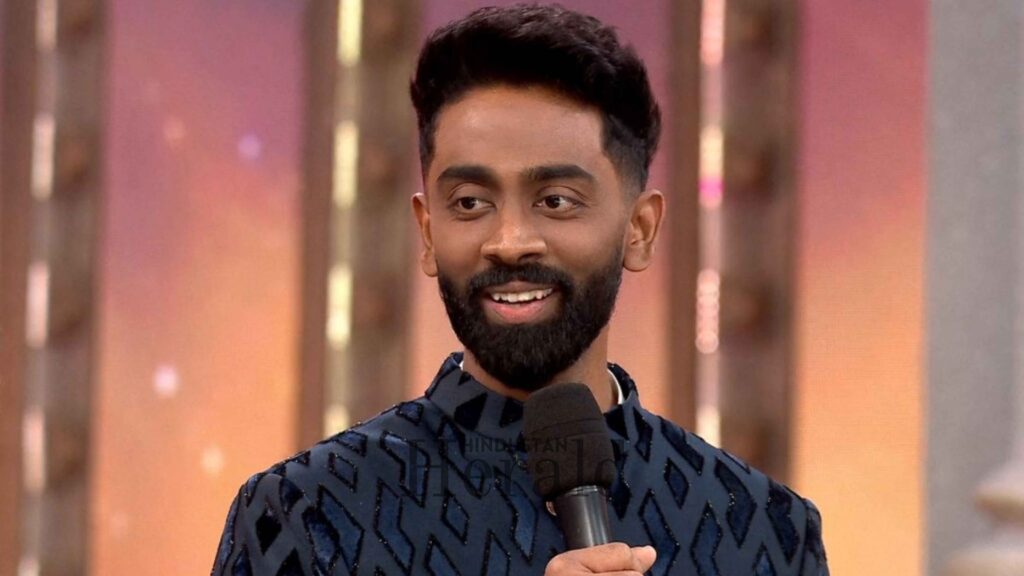
More built his following on crowd-work comedy, a style that depends entirely on what real people say in unscripted moments. It produces some of the most watchable content in Indian stand-up precisely because it is unpredictable. The problem is that unpredictability has a cost, and this week that cost became very visible. What happens in a comedy room at a ticketed show does not stay in that room anymore. It gets clipped, uploaded, stored, and retrieved whenever someone needs it to make a point.
That is the reality every comedian working in this format is now navigating, whether they acknowledge it openly or not.
The Part That Gets Lost In The Noise
In the rush to score points about gender, fairness, and cancel culture, the original concern at the center of this story deserves to not be buried.
Body donation in India is not something that happens automatically or easily. It requires a conscious decision, often made by a grieving family, to hand over a person they loved to a system they are trusting to treat that person with care. Medical colleges depend on that trust. The profession depends on it. When stories emerge, even anecdotally, that suggest otherwise, that trust erodes a little. Not dramatically, not all at once, but it erodes.
Dr. Pawar is a young doctor who made a misjudgment in an informal setting and has since apologized for it. That is the straightforward version of this story. The harder version is that her misjudgment was about something that actually matters, said in a format designed to make everything sound casual, recorded and uploaded for a public that was eventually going to find it.
For now, the internet has already moved on to the next thing. The debate over accountability and double standards will resurface the next time a similar situation presents itself, which, given the pace of crowd-work comedy content in India, probably will not take long.
Stay ahead with Hindustan Herald — bringing you trusted news, sharp analysis, and stories that matter across Politics, Business, Technology, Sports, Entertainment, Lifestyle, and more.
Connect with us on Facebook, Instagram, X (Twitter), LinkedIn, YouTube, and join our Telegram community @hindustanherald for real-time updates.

- Arun Upadhayay

- Arun Upadhayay
- Arun Upadhayay
- Arun Upadhayay




 Ananya Sharma and Rajiv Menon
  Ayesha Khan