
 By Shelesh Joshi and Rajiv Menon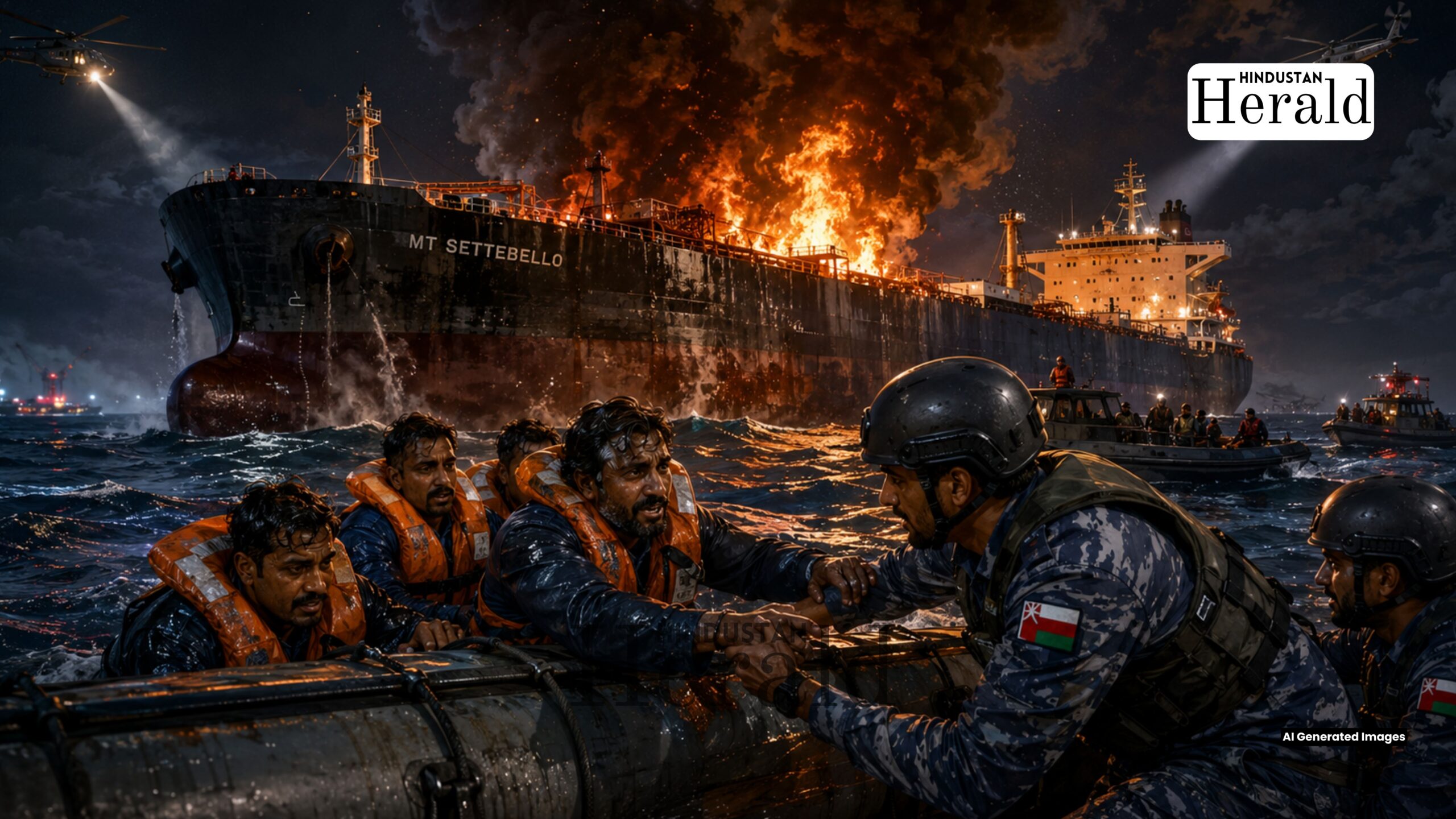
New Delhi, June 11: The MT Settebello, a commercial oil tanker, was struck by a US military aircraft in the Gulf of Oman on June 9 and three Indian sailors aboard it are now dead. India has done something it avoided doing throughout more than three months of a war it did not start: it formally summoned the United States’ top diplomat in New Delhi, handed him a diplomatic note of protest, and used the word “condemn” in a public statement directed at its most important strategic partner.
The men were not soldiers. Aditya Sharma was a deck cadet from Himachal Pradesh. Shivanand Chaurasiya was an engine fitter. Patnala Suresh was the Chief Engineer. Union Minister for Ports, Shipping and Waterways Sarbananda Sonowal confirmed their deaths on June 11 after two bodies were physically recovered. The third had been missing since the attack.
According to Sonowal’s official statement issued on June 11: “It is deeply unfortunate to learn of the tragic incident aboard the Palau flagged MT Settebello. Sadly, three Indian seafarers initially reported missing are now confirmed dead after bodies have been located and identified. This is a profound loss to our maritime family. The Modi Govt stands firmly with the bereaved during this difficult hour and is fully committed to supporting the next of kin. I have directed officials to ensure immediate repatriation of the rescued crew members and swift return of the mortal remains of the deceased for their final rites.”
The Forward Seamen’s Union of India (FSUI) had confirmed two deaths the previous night. FSUI General Secretary Manoj Yadav, speaking to ANI on June 11, confirmed the three sailors were from Himachal Pradesh, Deoria in Uttar Pradesh, and Andhra Pradesh and that the Chief Engineer had been the last to be located.
Yadav also raised a pointed question on the record. According to ANI, he told the news agency: “I absolutely refuse to believe that the US lacked information regarding the nationalities of the people on board those ships. That is simply not possible. I am 101% certain that US naval forces knew exactly how many Indians and foreign nationals were on those vessels. If the ships failed to heed their instructions, detaining them was a viable alternative.” The Settebello had 24 Indian crew members aboard. Twenty one were rescued by the Omani Navy. Three were not.
Quick Summary
- 3 Indian sailors confirmed dead Union Minister Sarbananda Sonowal confirmed on June 11 that all 3 missing crew from M/T Settebello have been found dead, with 2 bodies physically recovered. (Source: Ministry of Ports, Shipping and Waterways)
- 24 Indian nationals were aboard the Palau flagged tanker when a US aircraft struck its engine room at 11:14 p.m. on June 9, 2026 — 21 were rescued by the Omani Navy. (Source: India MEA official statement)
- India summoned Jason Meeks, the US Chargé d’Affaires, on June 10 MEA Additional Secretary (Americas) Nagaraj Naidu handed him a formal demarche, the first such protest directed at the US in this conflict. (Source: India MEA)
- This is CENTCOM’s 8th disabled vessel since the US naval blockade of Iran began on April 13, 2026; 134 ships have been redirected and 42 humanitarian vessels allowed to pass. (Source: US Central Command official release)
- India previously summoned Iran’s Ambassador Dr. Mohammad Fathali on April 18 after IRGC gunboats fired on 2 Indian flagged ships in the Strait of Hormuz making this New Delhi’s second formal envoy summons in the Gulf conflict. (Source: India MEA official statement, April 18, 2026)
- IMO Secretary General Arsenio Dominguez condemned the attack on June 10, saying any act that endangers seafarers is “simply unacceptable.” (Source: International Maritime Organization official statement)
What The Official Record Shows About The MT Settebello Strike
According to the official public release issued by US Central Command (CENTCOM) from Tampa, Florida on June 10, the MT Settebello was disabled in the following terms: “U.S. Central Command (CENTCOM) disabled Palau flagged M/T Settebello as it transited the Gulf of Oman. A U.S. aircraft fired precision munitions into the ship’s engine room after the crew repeatedly failed to comply with directions from American forces.”
CENTCOM stated the MT Settebello was attempting to transport oil from Iran in violation of its naval blockade, initiated on April 13, 2026. According to the same official release, US forces have redirected 134 ships that complied and allowed 42 humanitarian vessels to pass since the blockade began. The Settebello was the 8th vessel disabled under that regime and the second disabled in consecutive days.
The United Kingdom Maritime Trade Operations (UKMTO) agency separately reported a tanker engine room fire approximately 20 nautical miles northeast of Sohar, Oman. The UKMTO confirmed that Omani authorities were responding to the MT Settebello’s distress call and assisting with crew evacuation.
The MT Settebello was a Palau flagged chemical and oil products tanker carrying a total crew of 28 24 Indian nationals, two Pakistani nationals, one Ukrainian, and one Russian, according to reporting by The Week and National Herald India. All 24 Indian crew members were concentrated in a vessel that, according to CENTCOM, was struck for failing to comply with blockade enforcement directions.
The strike on the MT Settebello occurred at 11:14 p.m. on June 9, 2026. By the following morning, three Indian crew members were unaccounted for. By June 11, Union Minister Sarbananda Sonowal had confirmed all three were dead.
India’s Official Response: “We Condemn The Attack”
According to the Ministry of External Affairs (MEA) official statement issued on June 10, India offered no ambiguity. The statement read: “We condemn the attack on the commercial vessel Settebello off the coast of Oman, earlier today. Of the 24 Indian crew onboard, 21 Indians have been rescued thus far and 03 Indians are reportedly missing. Our Embassy in Oman is closely monitoring the situation and proactively coordinating with the Omani authorities in the ongoing Search and Rescue operation.”
The MEA went further, placing the attack in the context of the broader conflict: “The continuing incidents of attacks on shipping in the region are deeply worrisome and a direct result of the ongoing conflict in the region.”
India issued a formal demand. According to the same MEA statement: “The targeting of commercial shipping and civilian infrastructure in the region must end, and free and unimpeded navigation and commerce through the international waterways in the region in keeping with international law must be restored at the earliest.”
India also called for a negotiated end to the conflict: “We reiterate our call for immediate de-escalation of tensions, and the conclusion of ongoing negotiations for a diplomatic solution so that peace and stability can return to the region.”
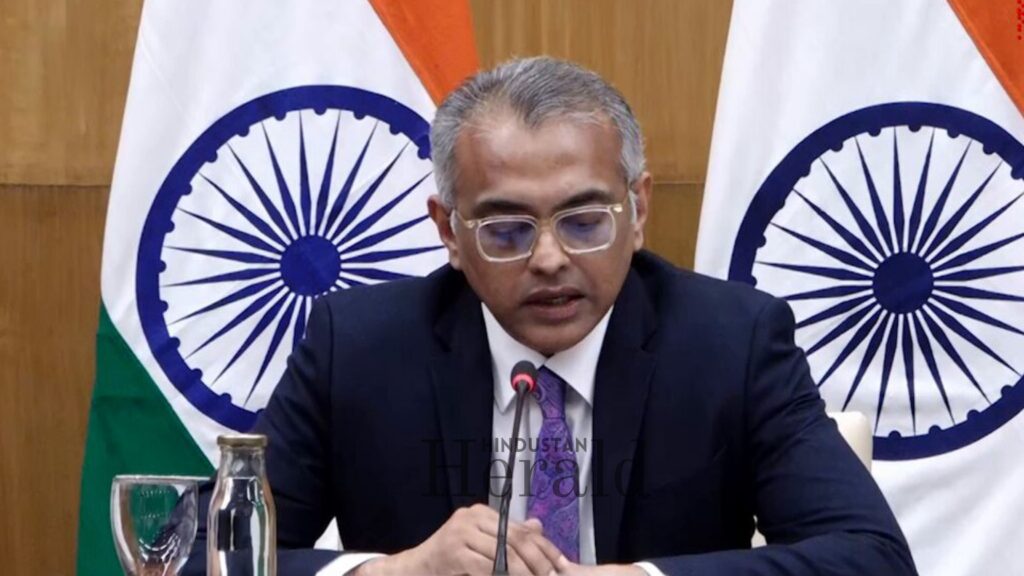
According to MEA sources, Additional Secretary (Americas) Nagaraj Naidu summoned Jason Meeks the US Embassy’s Deputy Chief of Mission, serving as Chargé d’Affaires while Ambassador Sergio Gor was travelling abroad and handed him a demarche, or official diplomatic note of protest, on behalf of the Government of India.
According to The Wire’s reporting on the demarche, India conveyed that the Settebello was a commercial vessel and pressed on the importance of safeguarding civilian seafarers. New Delhi’s position, as stated in the MEA’s public communication, was that the attacks on shipping must stop a demand addressed not to Iran, but to the United States.
This was the first time India had formally summoned a US diplomat over an attack in the current Gulf conflict. The significance of that step in the context of the India-US relationship should not be underestimated. India and the United States are defence partners, technology partners, and the world’s largest bilateral democratic relationship. New Delhi does not hand Washington a diplomatic protest note without deliberate intent.
The Marivex Strike Came First And India Said Almost Nothing
The Settebello was not the first Indian crewed vessel disabled by US forces that week. According to the official CENTCOM public release dated June 8: “U.S. forces disabled an unladen oil tanker in the Gulf of Oman, June 8, after the vessel violated the ongoing blockade against Iran by attempting to sail to an Iranian port. U.S. Central Command (CENTCOM) disabled Palau flagged M/T Marivex as it transited international waters in the Gulf of Oman toward Iran. An F/A-18 Super Hornet from USS Abraham Lincoln (CVN 72) fired a precision munition into the ship’s engineering and steering spaces after the crew failed to comply with directions from U.S. forces. Marivex is no longer sailing to Iran.”
All 24 Indian crew members aboard the Marivex were safely evacuated by the Omani Navy. India’s response to that strike was muted. According to The Wire’s reporting on June 9, the government largely echoed Washington’s description of the episode without directly identifying the United States as responsible. According to the MEA’s official statement on June 9, spokesperson Randhir Jaiswal said: “We are grateful to the Omani government for its excellent support in rescuing the crew and ensuring their safety. Our mission continues to be in touch with the seafarers.” He also confirmed there had been “some exchange of communication between the ship and the US Navy before the incident.”
No condemnation. No demarche. No formal summons. The difference between India’s response to the Marivex and its response to the Settebello is one word: fatalities. When all 24 survived, New Delhi expressed gratitude. When 3 died, it reached for its strongest diplomatic tools.
India Had Already Summoned Iran’s Ambassador In April
According to the MEA’s official statement dated April 18, 2026, Foreign Secretary Vikram Misri summoned Iran’s Ambassador to India, Dr. Mohammad Fathali, that evening. The statement confirmed the foreign secretary “conveyed India’s deep concern at the shooting incident earlier today involving two Indian flagged ships in the Strait of Hormuz.”

The incident had occurred earlier that day, when Iran’s IRGC Navy gunboats fired warning shots at two Indian flagged vessels in the Strait of Hormuz one of them a supertanker carrying nearly 2 million barrels of Iraqi oil, as reported by The Week. Iran had reimposed its closure of the strait at the time.
According to the MEA statement, Misri “noted the importance that India attached to the safety of merchant shipping and mariners and recalled that Iran had earlier facilitated the safe passage of several ships bound for India.” India was reminding Tehran of the goodwill it had extended and signalling that goodwill had limits. The statement confirmed that “the Ambassador of Iran undertook to convey these views to the Iranian authorities.” India has now formally protested both sides of this conflict. Iran’s envoy was summoned in April. The US Chargé d’Affaires was summoned in June. The pattern is not coincidence it is policy.
The IMO Spoke. It Did Not Name the United States.
According to the International Maritime Organization (IMO), its Secretary General Arsenio Dominguez issued an official statement on June 10, condemning the attack without naming the United States directly.
Dominguez said: “I strongly condemn any act from any party that endangers the lives of seafarers and the safety of international shipping. This is simply unacceptable. My thoughts are with the families of the three missing seafarers and with all those awaiting news of the crew members.” The IMO is the United Nations’ specialised agency for international shipping, headquartered in London. Its mandate covers the safety of seafarers under conventions including the International Convention for the Safety of Life at Sea (SOLAS).
Its condemnation, issued immediately after the MEA statement and the CENTCOM announcement, adds institutional weight to the diplomatic pressure India has directed at Washington.
Oman Rescued The Survivors. India’s Embassy Coordinated From Muscat.
According to the MEA’s June 10 statement, India’s Embassy in Oman was “closely monitoring the situation and proactively coordinating with the Omani authorities in the ongoing Search and Rescue operation.”
The Embassy of India in Oman also issued a separate official advisory, stating: “We have learnt of an incident involving a vessel off Shinas port of Oman, earlier today. We are closely monitoring the situation and coordinating with the local authorities for further details.”
In both the Marivex and Settebello incidents, it was the Omani Navy that conducted the physical rescues after receiving the vessels’ distress calls. Following the Marivex rescue, MEA spokesperson Randhir Jaiswal specifically thanked Oman, saying: “Our embassy, for the rescue purpose, contacted the Omani authorities, who swung into action. We are grateful to the Omani government for its excellent support in rescuing the crew and ensuring their safety.”
Oman’s port of Sohar located near the site of the Settebello strike served as the primary maritime emergency hub for both incidents. Oman is one of the Gulf’s most diplomatically neutral states, and its readiness to respond to distress calls from vessels caught in the US-Iran conflict has been one of the few consistent points of relief for India throughout this crisis.
The Blockade By The Numbers
According to CENTCOM’s official public statements, the US naval blockade of Iran was initiated on April 13, 2026. Under its enforcement regime, vessels transiting toward Iranian ports are intercepted and directed to change course. If the crew fails to comply, US forces fire precision munitions into the ship’s engine room to disable the vessel. According to the CENTCOM official release, the crew of the Settebello “repeatedly failed to comply with directions from American forces” before the munitions were fired.
As of June 10, CENTCOM’s cumulative official figures are: 8 non-compliant vessels disabled; 134 ships redirected; 42 humanitarian vessels allowed to pass. The Settebello was the 8th. The Marivex, struck the day before, was the 7th. Both carried entirely Indian crews.
The Indian Coast Guard’s Maritime Rescue Coordination Centre (MRCC) Mumbai played a role in both incidents. According to India’s Ministry of Defence statement on the Marivex, MRCC Mumbai received information about the June 8 attack and coordinated with Oman’s Maritime Search and Rescue Centre. All 24 Indian crew members from the Marivex were rescued by Omani Navy helicopters. The same coordination mechanism was activated for the Settebello the following day but this time, three men were not brought back alive.
Why This Moment Is Different And What It Reveals
The deaths of Aditya Sharma, Shivanand Chaurasiya, and Patnala Suresh are not simply a maritime incident. They are the point at which a distant, abstract conflict between the United States and Iran, fought in waters thousands of kilometres from Indian shores became a crisis with names, home states, and families waiting for bodies to be returned.
According to the MEA’s official statement, India demanded that “the targeting of commercial shipping and civilian infrastructure must end” and that navigation must be restored “in keeping with international law.” Every word in that statement was a diplomatic marker. The MEA does not use the word “condemn” casually. It has not used it about the United States at any point since this conflict began in February 2026.
India has now summoned ambassadors from both sides of this conflict. Iran’s envoy in April. The US Chargé d’Affaires in June. The symmetry is deliberate: New Delhi is signalling, clearly and on the record, that no alliance however strategically important overrides the safety of Indian nationals working on commercial ships.
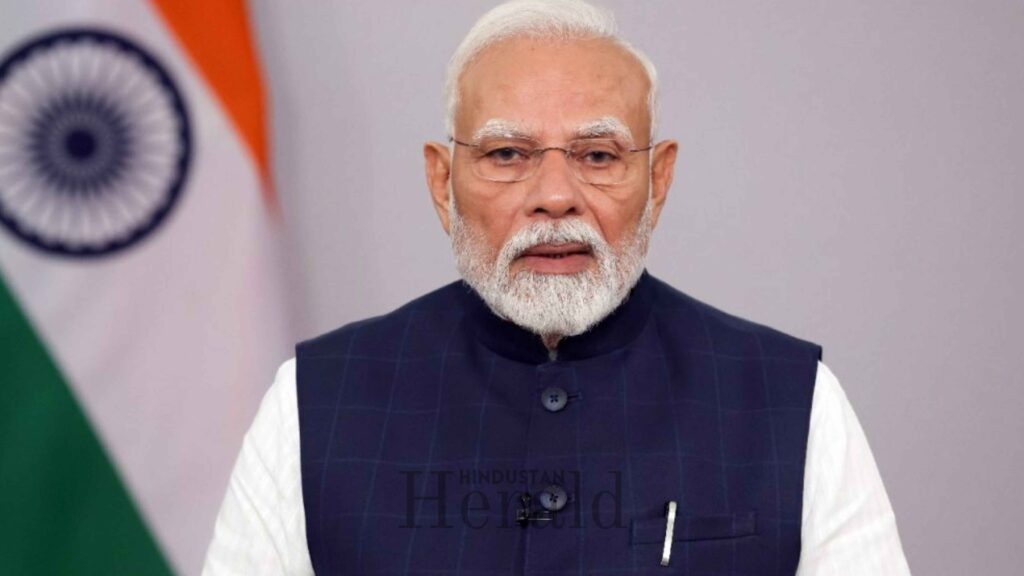
According to Prime Minister Modi, speaking at India Maritime Week 2025 in Mumbai in October 2025, the number of Indian seafarers has grown from 1.25 lakh to over 3 lakh in the past decade, and India today ranks among the top three countries globally in terms of seafarer numbers. Those men and women crew the world’s oil tankers, bulk carriers, and container ships working on vessels flagged in Palau, Panama, Marshall Islands, and dozens of other registries, far from the legal protections of any single state. Every time a commercial vessel is struck in a conflict zone, the probability that an Indian citizen is in that engine room is high. The Settebello made that probability a fact.
According to CENTCOM’s own official record, the Settebello was the 8th vessel disabled. There will be a 9th. The question of whether India’s formal protests produce any change in how blockade enforcement accounts for civilian crews or whether they are absorbed and forgotten is the story that continues beyond today’s news cycle. Three working men from Himachal Pradesh, Uttar Pradesh, and Andhra Pradesh did not come home. That is the fact that makes this story matter and the reason New Delhi’s response cannot simply be filed away.
Stay ahead with Hindustan Herald — bringing you trusted news, sharp analysis, and stories that matter across Politics, Business, Technology, Sports, Entertainment, Lifestyle, and more.
Connect with us on Facebook, Instagram, X (Twitter), LinkedIn, YouTube, and join our Telegram community @hindustanherald for real-time updates.

Tracking world politics, global markets, trade movements, policy decisions, and the changing balance of economic power.
- Shelesh Joshi

- Shelesh Joshi
- Shelesh Joshi
- Shelesh Joshi





Specializes in South Asian geopolitics and global diplomacy, bringing in-depth analysis on international relations.
- Rajiv Menon
- Rajiv Menon
- Rajiv Menon
- Rajiv Menon