 By Ayesha Khan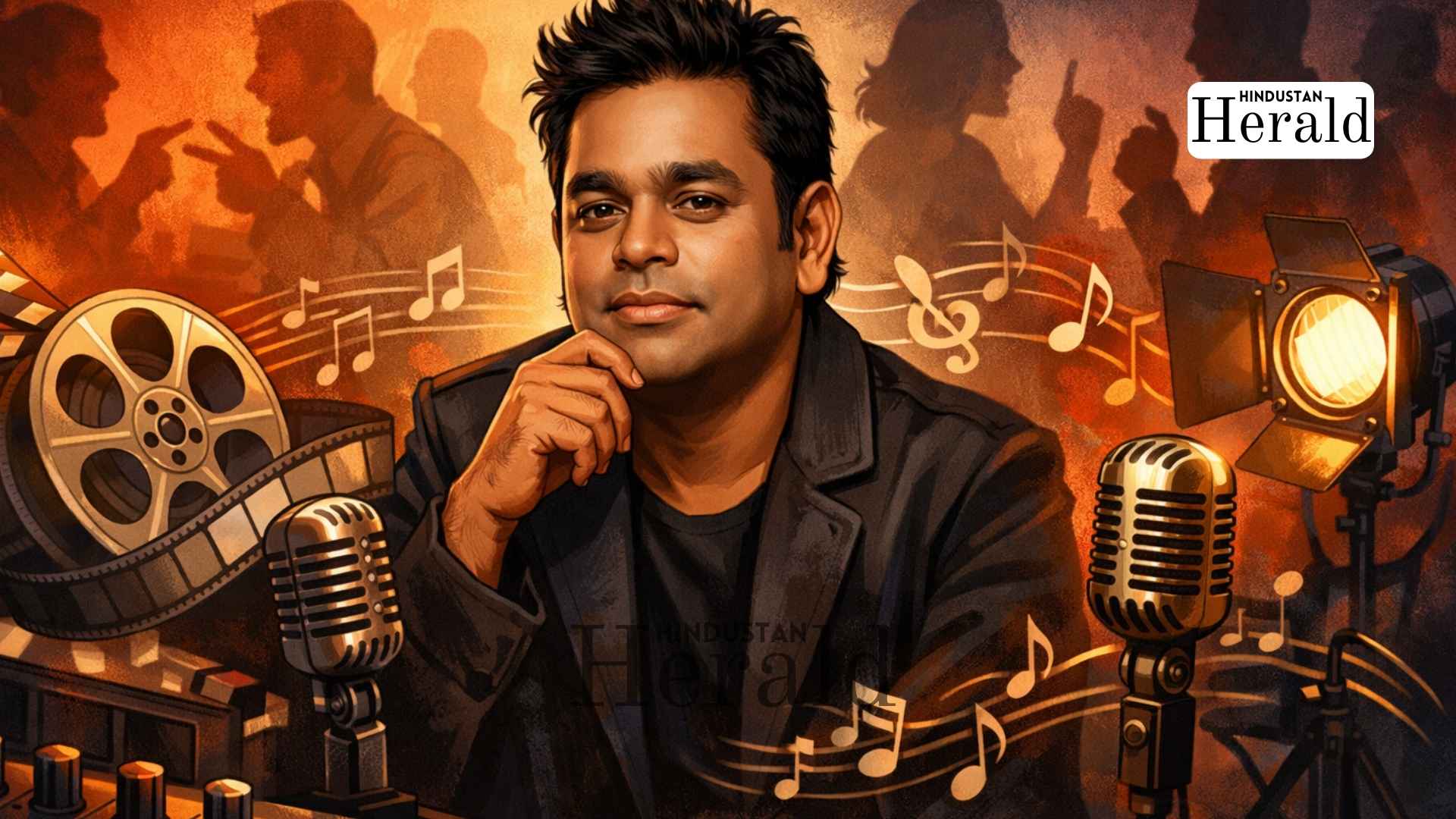
New Delhi, January 18: By Saturday afternoon, the silence had become louder than the controversy itself. Three days after his remarks triggered a political and cultural firestorm, A. R. Rahman finally spoke, choosing restraint over rebuttal.
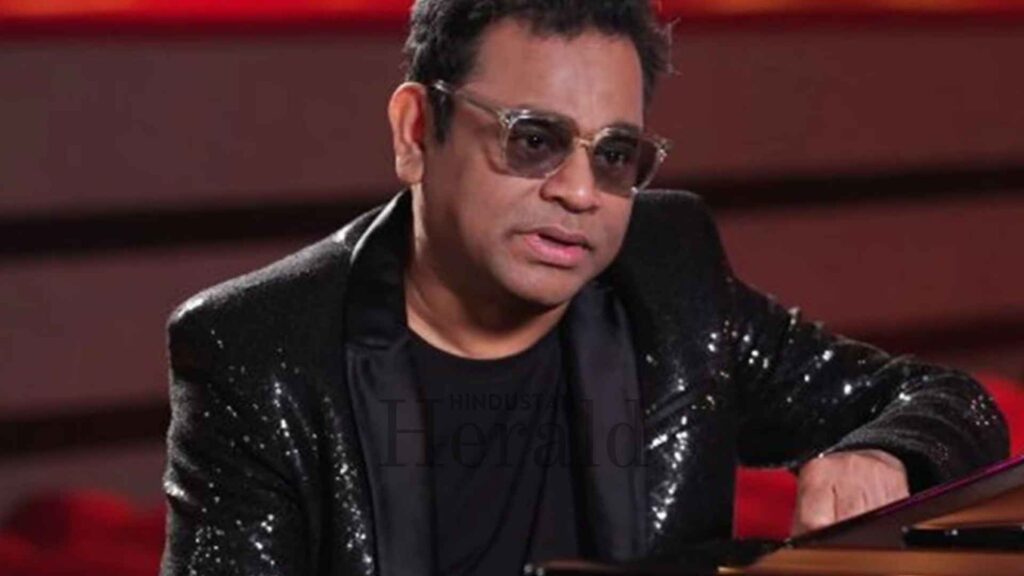
“India is my inspiration, teacher and guiding light,” the composer said in a brief public statement, an unmistakable attempt to draw a line under a controversy that had begun spiralling well beyond music, cinema, or even the comments that sparked it.
The backlash stemmed from Rahman’s interview with BBC Asian Network, where he reflected on his thinning presence in Bollywood over the last eight years. In the course of a wide-ranging conversation, he suggested that communal factors may have played a role and spoke of a “power shift” in which creative voices were no longer calling the shots.
Those words landed hard. In today’s climate, they always were going to.
What Rahman Tried To Clarify
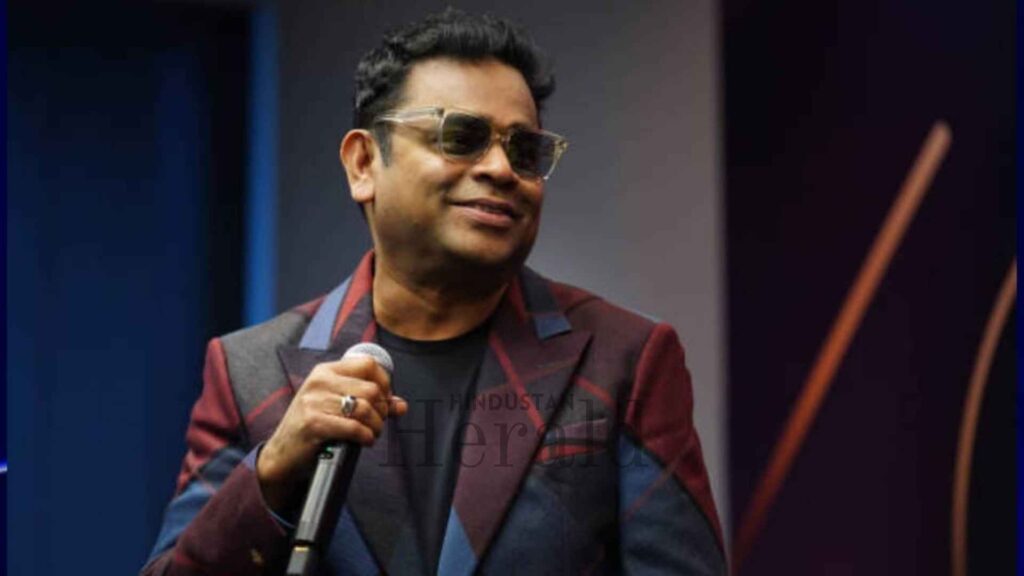
Rahman’s statement on Saturday did not deny his experience, but it softened its framing. He stressed that his comments were personal reflections, not accusations, and certainly not an indictment of India or its film industry as a whole.
Those who know Rahman’s career hardly need reminding that he has worked across languages, regions, and belief systems for over three decades. From Tamil devotional albums to global collaborations, his music has rarely fitted into neat ideological boxes.
Still, what unsettled many was not what he said outright, but what his words appeared to suggest. The mention of “communal reasons”, even tentatively, opened the door to interpretations he now seems keen to shut.
What he did not walk back, however, was his discomfort with how Bollywood functions today. According to people familiar with the interview, Rahman was speaking about decision-making power drifting away from creators, and toward those driven primarily by commerce and optics. It was a critique of structure, not faith.
But the nuance was quickly lost.
The Chhaava Comments That Lit The Fuse
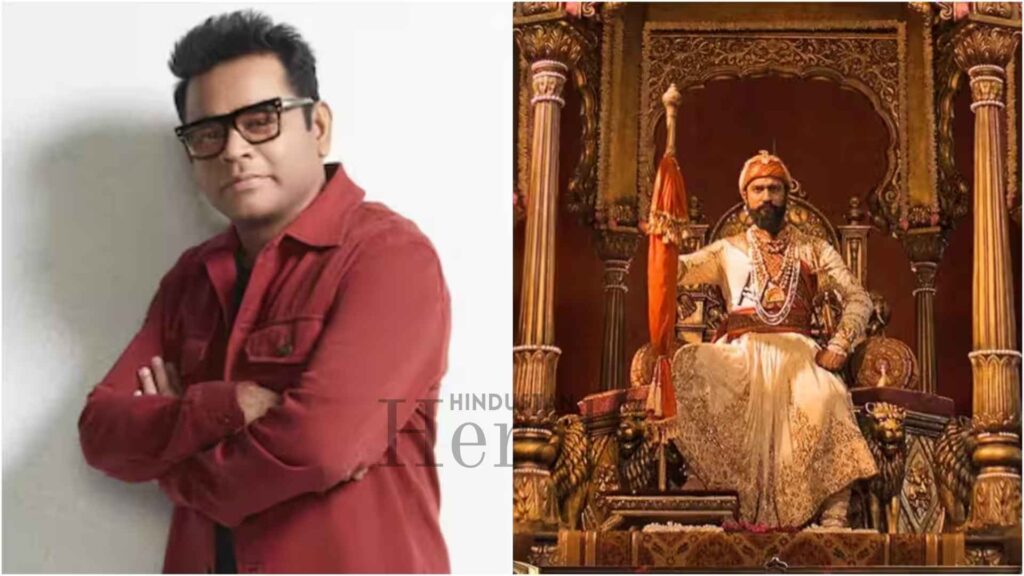
Much of the anger centred on Rahman’s discussion of Chhaava, the historical drama led by Vicky Kaushal.
In the interview, Rahman described the film as “divisive”, arguing that it appeared to lean into contemporary fault lines even while attempting to tell a story of courage and resistance. He acknowledged the intent to portray bravery, but questioned the ideological framing.
He also revealed that he had initially asked the director why he was being brought on board at all. According to Rahman, he only agreed after being assured that the music would add emotional depth rather than fuel polarisation.
Then came the remarks that drew the sharpest reaction. Rahman criticised the use of Islamic expressions such as “Subhanallah” and “Alhamdulillah” in moments of conflict, calling their placement “cliche” and even “cringe.”
To some, it sounded like an attack on religious expression. To others, it was a creative objection to lazy symbolism. Either way, the reaction was swift and unforgiving.
Industry Reacts, And Kangana Goes On The Offensive
Among the many voices that weighed in, none cut through louder than Kangana Ranaut.
On January 16, Kangana accused Rahman of being “prejudiced” and “hateful,” claiming that he had refused to meet her or collaborate on her directorial project Emergency. According to her, Rahman dismissed the film as “propaganda”.
The allegation added fuel to an already raging fire, though Rahman has chosen not to respond to her claims.
Others from the industry took a more measured tone. Lyricist Javed Akhtar warned against reading professional disagreements through a communal lens, calling such framing risky in an already polarised environment.
Singer Shaan echoed similar concerns, urging restraint and reminding audiences that creative differences are not ideological battles.
Writer Shobhaa De was blunter, describing Rahman’s comments as dangerous, arguing that words from figures of his stature carry consequences far beyond intent.
A Deeper Unease Beneath The Noise
Away from the outrage, a quieter conversation has also been unfolding. Many artists privately agree with Rahman’s broader unease about shrinking creative freedom, rising political sensitivity, and an industry increasingly driven by risk management rather than imagination.
They point out that Rahman has hardly been inactive. Over the past decade, his focus has shifted toward international collaborations, regional cinema, and independent projects, spaces where he arguably enjoys more artistic autonomy.
Still, critics counter that when someone as influential as Rahman speaks of “communal reasons”, even cautiously, it feeds a narrative that can deepen mistrust.
And that, perhaps, is why the reaction has been so fierce.
Why This Episode Refuses To Die Down
This controversy is not really about one interview or one film. It is about a film industry that finds itself trapped between politics, public sentiment, and artistic expression.
Bollywood is currently struggling with box office uncertainty, online backlash, and ideological scrutiny. In that environment, even an offhand remark can take on a life of its own.
Rahman’s clarification appears designed to steady the waters, not stir them further. Whether it will be enough is unclear.
For now, the composer has stepped back, leaving the industry and its audiences to argue among themselves.
What remains unresolved is the larger question he inadvertently raised:
How much honesty can artists afford in an age where every word is weighed, weaponised, and remembered?
Stay ahead with Hindustan Herald — bringing you trusted news, sharp analysis, and stories that matter across Politics, Business, Technology, Sports, Entertainment, Lifestyle, and more.
Connect with us on Facebook, Instagram, X (Twitter), LinkedIn, YouTube, and join our Telegram community @hindustanherald for real-time updates.

Covers films, television, streaming, and celebrity culture with a focus on storytelling trends.
- Ayesha Khan

- Ayesha Khan
- Ayesha Khan
- Ayesha Khan