
 By Ayesha Khan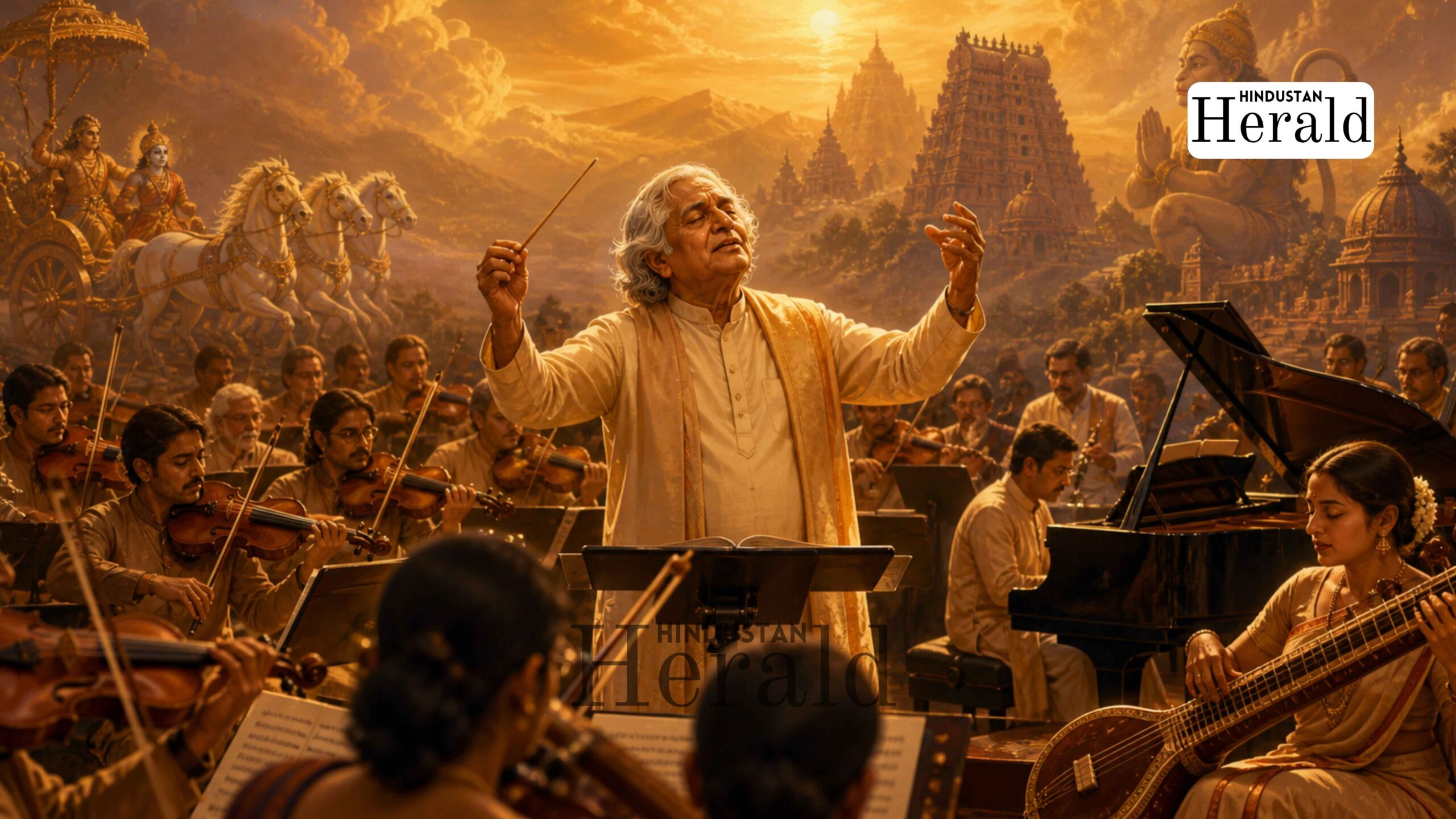
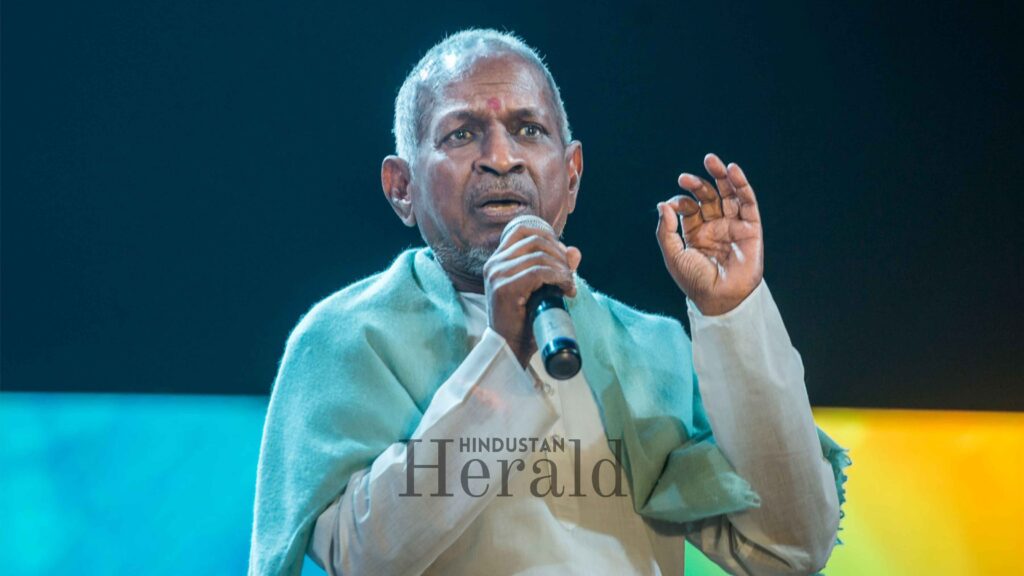
Chennai, May 1: Some composers write music for films. And then there is Ilaiyaraaja, who writes music for something larger than memory itself. This week, the legendary maestro has landed squarely back on the national conversation, trending across Google India for reasons that speak to both his present and his unshakeable past. Two major developments have collided in public attention: his confirmation as music composer for the ambitious Hindi epic Valmiki Ramayana, and a two-night orchestral celebration set for Chennai at the end of this month that is already building into one of the most anticipated live music events of 2026.
Taken together, they tell the story of a man who, at over 80 years of age and five decades into a career that has redefined Indian cinema’s relationship with sound, is not slowing down. He is accelerating.
A Maestro Steps Into an Epic
The formal announcement came on the occasion of Akshaya Tritiya, when the makers of Valmiki Ramayana unveiled a new poster for the film and confirmed that Ilaiyaraaja had signed on as its music composer. The news spread rapidly across social media, and film critic Taran Adarsh captured the mood best when he described the development on X as “a spiritual alignment,” adding that with Ilaiyaraaja’s involvement, the music had become “not just a soundtrack, but an offering in itself.”
The film itself is a project with considerable creative weight behind it. Directed by Bhavna Talwar, who made her debut with the critically celebrated Dharm in 2007, a film that won the Nargis Dutt Award for Best Feature Film on National Integration, Valmiki Ramayana draws directly from the original Sanskrit epic. The screenplay has been penned by Anand Neelakantan, the author known for retelling mythological epics through layered, humanistic narratives.
Dialogues and research come from Dr Chandraprakash Dwivedi, himself a veteran filmmaker and scholar of ancient Indian history. The camera will be operated by Binod Pradhan, one of the more reliable cinematographers in Indian cinema, and the sound design is in the hands of Resul Pookutty, the National Award and Oscar-winning sound designer.
As per reports in Telangana Today and Filmibeat, the film is slated for a theatrical release on October 2, Gandhi Jayanti, a date that carries its own symbolic weight and one that the production has been building toward since the project’s first look was revealed on Ram Navami in late March.
What makes Ilaiyaraaja’s entry into this project so loaded is the word the makers themselves chose to describe it: “musical invocation.” According to the Hollywood Reporter India, the music is being conceived as something that places sound at the very beginning of the cinematic experience, a form rooted not in commercial calculation but in devotion. That framing, unusual for a Bollywood production, fits Ilaiyaraaja’s sensibility more naturally than it might fit almost any other composer working in Indian cinema today.
Five Decades, One Voice
To understand why Ilaiyaraaja’s trending is never really just about the latest news item, you need to understand the scale of what this man has built.
He made his debut as a film music composer in the 1976 Tamil film Annakili, directed by Devaraj-Mohan. That film did more than launch a career. It reoriented an entire industry. Ilaiyaraaja fused Western orchestration, brass, strings, and woodwinds with Tamil folk rhythms and Carnatic sensibilities in a way that nobody had heard before, and by the time audiences processed what they were listening to, South Indian film music had fundamentally changed.
According to Festivaly.eu, across a career spanning more than four decades, Ilaiyaraaja has composed over 8,600 songs, provided film scores for roughly 1,523 feature films in nine languages, and performed in over 20,000 concerts. These are not numbers that fit neatly into the usual vocabulary of film industry achievement. They belong to a different category entirely.
He has worked across Tamil, Telugu, Malayalam, Kannada, and Hindi film industries. His compositions have been borrowed without credit more times than anyone can properly count. His influence on composers who came after him, including those who went on to win global recognition, is a matter of documented creative history, whatever the debates within fan communities.
Ilaiyaraaja was nominated to the Rajya Sabha as a Member of Parliament in July 2022, a recognition of his standing as a cultural figure of national importance. It was a role he approached with characteristic seriousness, even as he continued composing.
The Copyright Fight He Won
Before this latest wave of attention, Ilaiyaraaja was also in the news for a legal battle that said something important about how the Indian film industry treats creative ownership. As reported by the Hollywood Reporter India, the composer had been in a dispute with Mythri Movie Makers, one of South India’s larger production houses, over the unauthorised use of several tracks from his catalogue in two Tamil films, Good Bad Ugly, featuring Ajith Kumar, and Dude, starring Pradeep Ranganathan.
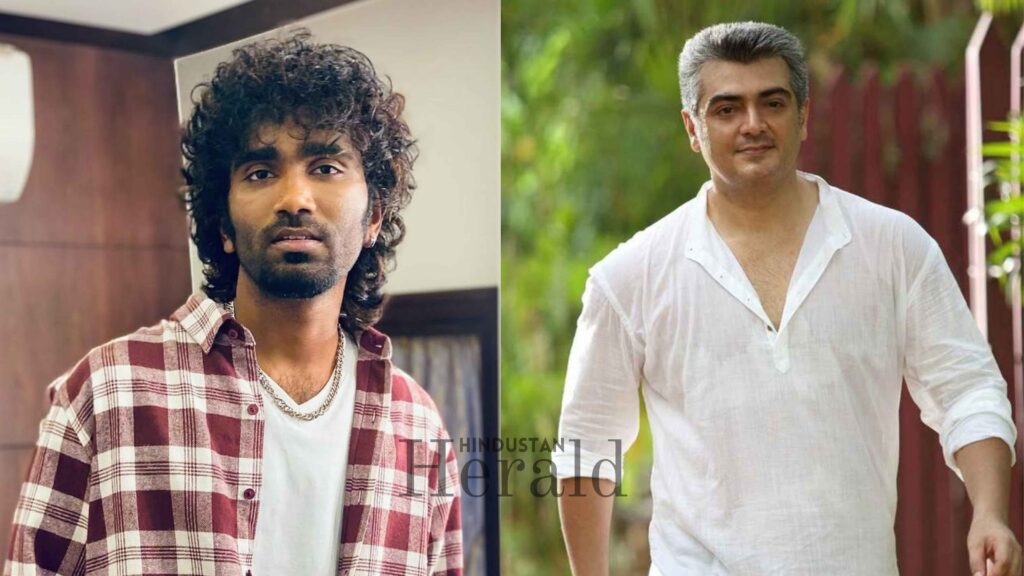
Five tracks in total were used without prior clearance. Three appeared in Good Bad Ugly, two in Dude. The Madras High Court took up the matter, and a joint memo was submitted in December last year confirming that Mythri Movie Makers had agreed to pay Ilaiyaraaja Rs 50 lakh in settlement.

The amount, in isolation, is modest relative to the sums changing hands in the Tamil film industry today. But the significance of the settlement was not financial. It was a public affirmation of something that Ilaiyaraaja has fought for consistently over his career: that a composer’s intellectual property belongs to the composer, not to the production house that once commissioned a song. In an industry where that principle is still not uniformly respected, winning that argument even in a settlement carries weight.
Chennai Awaits: The Valiant Symphony Returns Home
The other reason Ilaiyaraaja is trending this week is entirely celebratory. Coming to Chennai’s Jawaharlal Nehru Outdoor Stadium on May 30 and May 31 is a two-night live music event that has been in the works for months and is now weeks away from happening.
The first evening, titled Valiant Symphony No. 1, is described by organisers ACTC Events as a “rare full-scale orchestral experience” structured, formal, and rooted in Ilaiyaraaja’s symphonic compositions. The significance of this particular programme is heightened by the fact that it follows an international presentation of the same in London. That Chennai is now receiving what London got first is a point that will not be lost on the city’s music community, which has sometimes complained that Ilaiyaraaja’s most ambitious concert formats are developed for overseas audiences before making their way home.
The second evening is a more celebratory, crowd-oriented live concert with high energy, built around iconic hits and what the organisers describe as “deep nostalgia.” Two nights, two registers of the same man’s genius.
Tickets are available through the KYN mobile application, and early interest has been intense. The venue, Jawaharlal Nehru Outdoor Stadium, has a capacity suited to large-scale events, and given the pattern of previous Ilaiyaraaja concerts in the city, it is reasonable to expect that both evenings will fill up before the month is out.
This follows a year in which the composer has already performed in Hyderabad and, reportedly, in London. As reported by concert event platforms, the Hyderabad show in late March, titled “50 Years of Ilaiyaraaja,” was held at Gachibowli Stadium and featured a full live orchestra performing across languages, with tickets starting at Rs 1,499.
A Different Kind of Legacy
What the Valmiki Ramayana assignment reveals is that Ilaiyaraaja’s creative life is not in any kind of autumn. If anything, the projects now gravitating toward him are the ones carrying the most cultural and spiritual ambition. A straight retelling of the Ramayana, rooted in Valmiki’s original text, backed by a team of scholars and serious filmmakers, and looking at a Gandhi Jayanti release that will place it in direct conversation with Indian cultural identity, this is not a commercial assignment. It is a statement project, and Ilaiyaraaja is its musical architect.
Valmiki Ramayana will also find itself in a crowded Ramayana moment in Indian cinema. Later in 2026, Diwali will bring the Ranbir Kapoor and Sai Pallavi-starrer Ramayana to screens. Two Ramayana films in one year is not a coincidence. It reflects a broader moment in which Indian cinema is reaching back toward its foundational texts, and composers, directors, and writers are being chosen for these projects with unusual care.
That Bhavna Talwar reached for Ilaiyaraaja for her version says something about the kind of music she wants surrounding this story, not spectacle, not digital layering, not synthetic grandeur. She wants something that sounds like it comes from the earth.
For Ilaiyaraaja, a man who has spent fifty years proving that the most complex emotions have simple melodies, that assignment is a homecoming of a different kind.
Stay ahead with Hindustan Herald — bringing you trusted news, sharp analysis, and stories that matter across Politics, Business, Technology, Sports, Entertainment, Lifestyle, and more.
Connect with us on Facebook, Instagram, X (Twitter), LinkedIn, YouTube, and join our Telegram community @hindustanherald for real-time updates.

Covers films, television, streaming, and celebrity culture with a focus on storytelling trends.
- Ayesha Khan

- Ayesha Khan
- Ayesha Khan
- Ayesha Khan




 Arun Upadhayay