
 By Rajiv Menon
New Delhi, March 17: Somewhere over the Persian Gulf, at around 3 in the morning, a pilot got a message he was not expecting.
Turn around.
No explanation given over the radio. Just a rerouting instruction, a new set of coordinates, and a destination that was not on his original flight plan. Below him, the lights of Dubai were still on. But the airspace above it had just been sealed shut.
That is how Tuesday began for hundreds of flights, thousands of passengers, and millions of Indians who have skin in the game every time something goes wrong in the Gulf.
Nobody Saw This Coming at 3 AM
Most people in Dubai at that hour were either deep asleep or dragging luggage through terminal corridors, half-awake, staring at departure boards. Then quietly, with no press conference and no warning to the public, the UAE General Civil Aviation Authority sent out a notice.

All air traffic is suspended. Effective immediately.
The official reason was something called an “exceptional precautionary measure due to regional security developments.” Government-speak for: we cannot tell you everything right now, but it is serious enough to ground every single aircraft in our airspace.
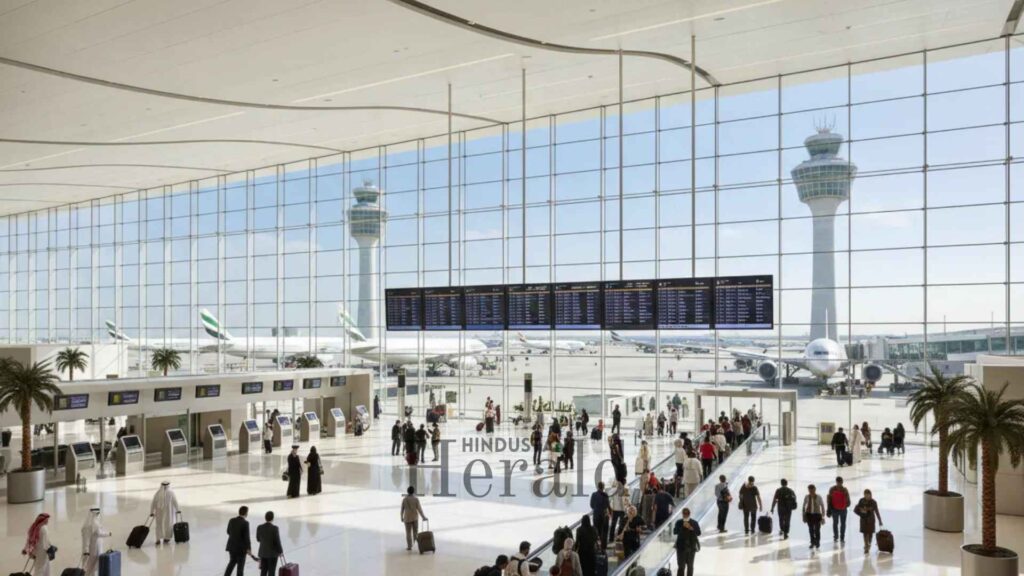
What was actually happening, based on reports coming out of regional security and aviation sources through the morning, was this. The UAE military was responding to active missile and drone threats from Iran. Not a drill. Not a diplomatic standoff happening in some conference room. Actual weapons, tracked, in the vicinity of Gulf airspace, with Dubai in the frame.
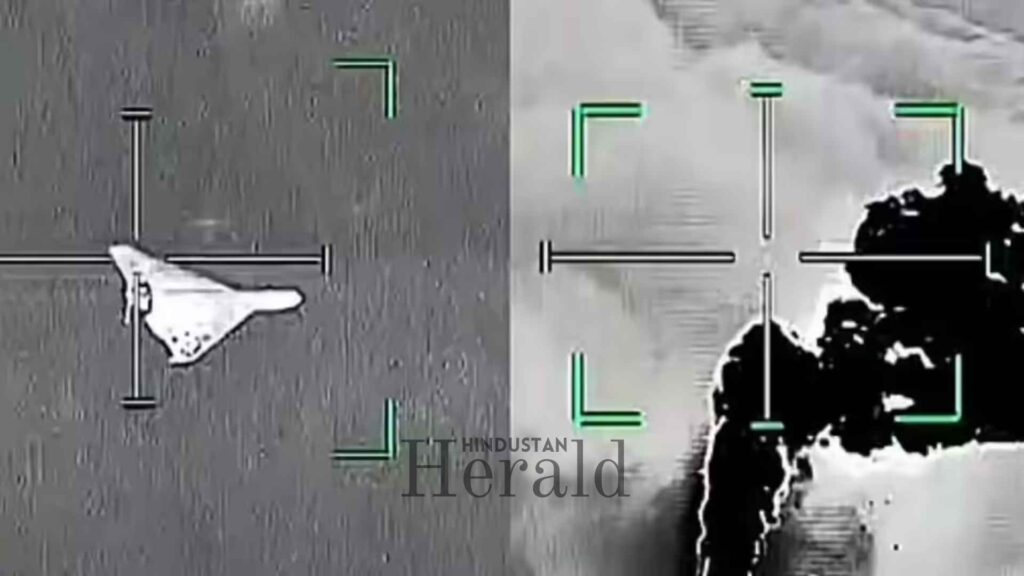
For two hours, from 3 to 5 in the morning, the entire country’s sky was closed.
The Day Before Was Already a Mess
People jumping straight to Tuesday are missing the setup.
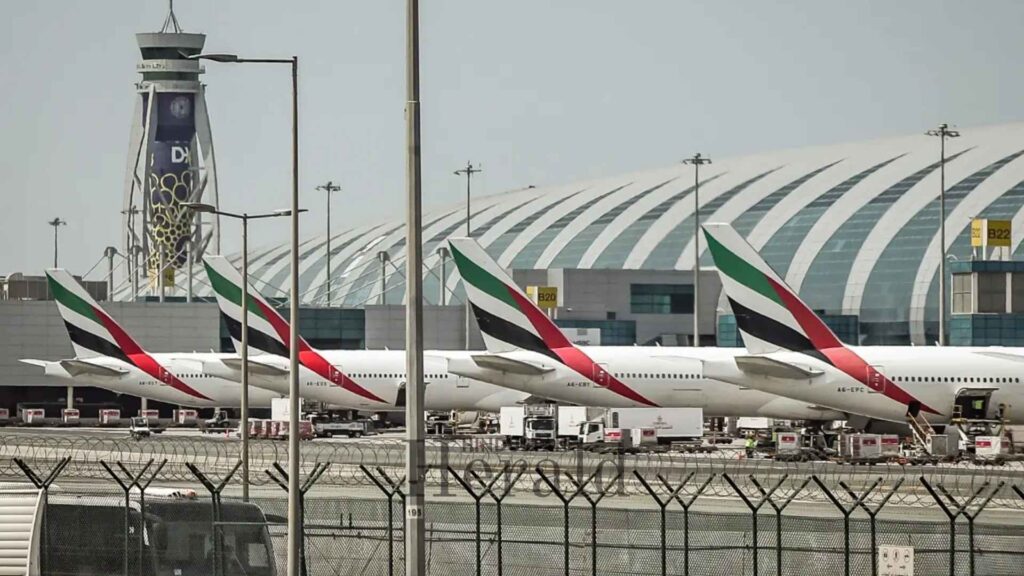
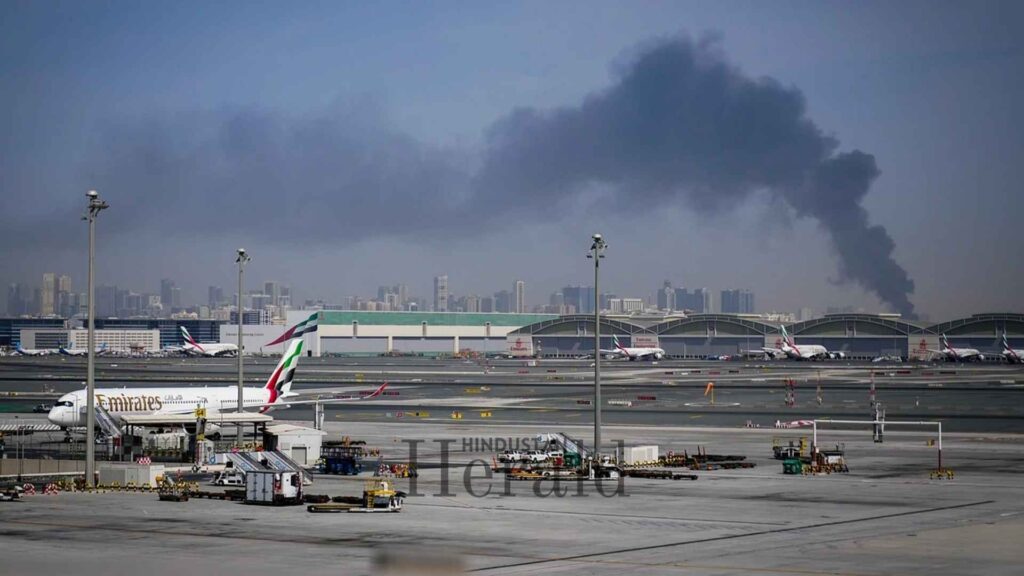
On Monday, March 16, a drone found its target. It hit a fuel facility sitting right beside Dubai International Airport. Not a remote military base. Not an empty stretch of desert. A fuel depot next to the airport that moves more international passengers than almost any other airport on the planet.
It burned. Flights were disrupted. The whole of Monday was already a scramble for airlines operating in and out of DXB. Ground crews were exhausted. Schedules were already broken. Passengers were already stranded.
And then the early hours of Tuesday arrived and made everything worse.
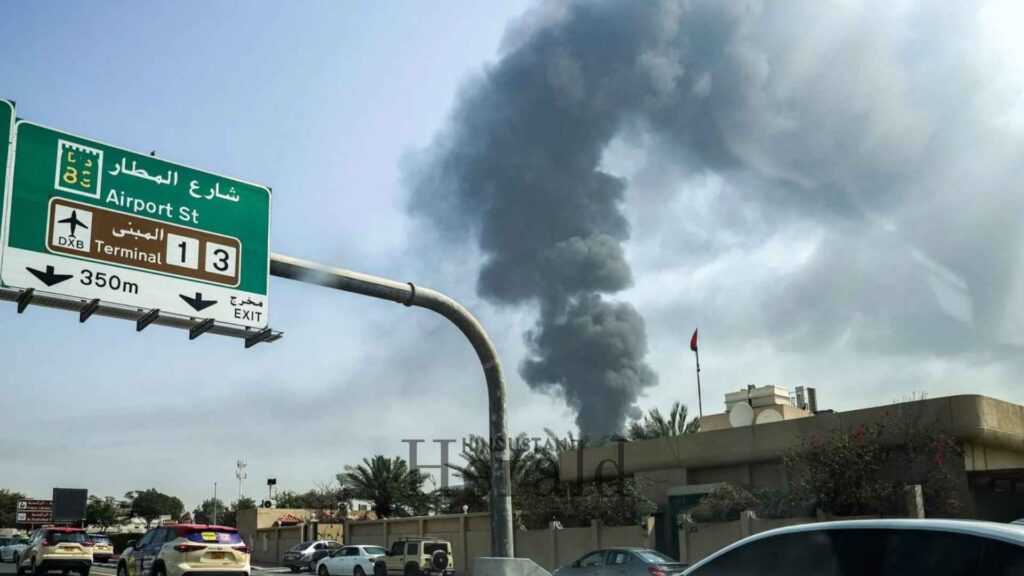
This is the part worth sitting with. When analysts say the Gulf is escalating, they are describing this exact sequence. A civilian infrastructure target was hit on Monday. An entire country’s airspace shut down on Tuesday morning because more is apparently incoming. That is not geopolitical language. That is just what happened, in order, within 24 hours.
What the Night Actually Looked Like for Real People
Close your eyes for a second and picture who was in the air at 3 am over the Gulf on a Tuesday.
A nurse from Thrissur, finishing a two-year contract in a Dubai hospital, is flying home to see her kids for the first time in eight months. A young man from a small town in Rajasthan, on his first trip to a construction job in Abu Dhabi, is not entirely sure what he signed up for. A family from Chennai catching an early morning connection to catch a long-haul flight to Melbourne to visit their daughter, who just had a baby.
All of them are suddenly on planes that have no runway to land on.
Some flights were pushed to Al Maktoum Airport, the quieter secondary hub in the Dubai suburbs. Others were sent to Abu Dhabi. The ones that had not taken off yet sat on tarmacs in Mumbai, Kochi, Hyderabad, Nairobi, London, engines running, cabin crew trying to answer questions they had no answers to.
Dubai Police sealed the roads to the airport. Airport Road. The Airport Tunnel. If you were in a cab on the way to catch that 4 am flight, you were not getting through. Full stop.
By late morning, the GCAA said operations had returned to normal. And in the technical sense, yes, planes were taking off again. But anyone who has watched an airport try to recover from a crisis knows the picture on the ground. Queues that do not end. Passengers slumped against walls with dead phones. Staff are making announcements that nobody can hear properly. Missed connections multiplying by the hour. That was DXB on Tuesday morning.
Emirates Called It a War Zone. Think About That.
At some point on Tuesday, Emirates put out a customer communication.
In that document, a phrase appeared that stopped a lot of people mid-scroll.
War zone waiver.
That is a legal and insurance classification. It is not marketing language. It is not a dramatic choice of words to get attention. It is a specific term that airlines use when the situation around their operations has crossed from disruption into something categorically different.
Emirates, the airline that built Dubai into a global aviation hub, the airline that carries more international passengers than almost any other carrier on earth, looked at what was happening around its home airport and called it a war zone. In writing. In a document sent to millions of customers.
Every passenger holding a ticket through March 31 was given the option to change their travel date or claim a complete refund with zero charges. No fine print. No call centre runaround. Just a straight acknowledgment that reasonable people might not want to fly through here right now.
Etihad from Abu Dhabi was quieter but the message was the same. Reduced schedule. Clear advisory: check your flight status before you leave home. Do not assume anything is running on time.
When two national carriers from the same country issue advisories like this within hours of each other, on the same morning, it is not a coincidence. They are both looking at the same intelligence picture and responding accordingly.
Why This Is Not Some Faraway Story for Indians
Here is the number that should make this personal.
3.5 million Indians are living and working in the UAE right now. Not visiting. Living. Working. Sending money home every month to families across Kerala, Tamil Nadu, Andhra Pradesh, Telangana, Punjab, Uttar Pradesh, Bihar, and virtually every other state.
That money, month after month, adds up to more than 12 billion dollars a year. It pays for school fees, medical bills, house loans, and groceries for families who have someone in the Gulf. It is not an abstraction. It is cash in hand, in villages and towns all across India, because someone took a flight to Dubai years ago and never stopped working.
Tuesday’s disruption hit the routes that carry most of those people hardest. Kochi. Chennai. Mangaluru. Thiruvananthapuram. Airlines were pulling back on these corridors specifically because the flight paths cross through zones that were now being assessed differently from a safety standpoint.
For the worker who saved up three months of salary to buy a ticket home for his daughter’s wedding, a cancelled flight is not an inconvenience. It is a collapse of something he planned for a very long time.
What Is Going On Between Iran and Everyone Else
Strip out all the diplomatic language and here is what is actually happening.
Iran and the Arab Gulf states have been in a cold war for decades. It is about religion, it is about oil, it is about who controls influence in a region that sits on top of the world’s largest energy reserves. For years, the Cold War expressed itself through proxy groups fighting other people’s battles in other countries.
The Houthis in Yemen are the clearest example. Armed and backed by Iran, they spent most of 2024 firing missiles and drones at cargo ships in the Red Sea. That campaign alone pushed up shipping costs globally because companies had to reroute their vessels all the way around Africa to avoid the attacks. Indian importers paid more for goods because of it.
What appears to be changing now is the geography of the conflict. It is moving from the sea into the land. Hitting a fuel depot next to Dubai Airport is not a military operation in any traditional sense. It is a message sent to a civilian economy. It says we can reach your infrastructure, your airports, your fuel supply, and your daily life.
Why Iran is pushing this hard right now is genuinely contested. Some analysts say it is negotiating pressure around nuclear talks and sanctions. Others say Iran itself has been under enormous military and economic pressure and is hitting back in the ways it can. What is not contested is that ordinary people, many of them Indian, are absorbing the cost of that calculation.
India Is Watching and Staying Quiet, for Now
New Delhi has spent a long time building a foreign policy position that lets it stay friends with everyone in a region where everyone hates each other.
It buys oil from Saudi Arabia and the UAE. It kept buying oil from Iran when it could, before sanctions made that complicated. It built the Chabahar Port on Iran’s coast as a trade gateway into Central Asia, a project that took years of diplomatic capital to put together. It has defence and economic partnerships with Israel and trade relationships with Qatar.
That position works as long as the conflicts in the region stay contained and manageable. It becomes uncomfortable when fuel depots are burning next to civilian airports and entire countries are closing their airspace at 3 in the morning.
The Ministry of External Affairs put out no formal statement on Tuesday about any of this. That is standard practice. India goes quiet during Gulf flare-ups and works the phones behind the scenes, with consular staff tracking down affected nationals and keeping lines open with host governments. It is careful, professional diplomacy.
Whether it is sufficient diplomacy for what is unfolding is a question that is running out of road.
The Practical Bit, If You Are Flying Soon
If you have a flight to or through the UAE coming up, here is what to actually do.
Check your flight status on your airline’s own app. Not a travel booking site. The airline’s own platform. Do it before you leave home. Do it again before you get in the car.
If you are booked on Emirates, you are eligible for the war-zone waiver through March 31. That means a free date change or a full refund, your choice, no fees.
If you are on Etihad, call before heading out. Their schedule is reduced and they are being upfront about it.
If you are connecting through Dubai to a third destination, check your connection separately. When airports recover from disruption, transit passengers are usually the last to get sorted. Do not assume your onward flight is fine just because your first leg is showing as scheduled.
If you have family working in the UAE, the picture as of Tuesday afternoon is that the immediate threat appears to have passed. Airspace is open. No further strikes on UAE territory were reported through the afternoon. But the situation in the broader region is still live and that is not going to change overnight.
The Sky Is Open. The Problem Is Not Gone.
Two hours.
That is how long the closure lasted. In the context of everything happening in the world right now, two hours sounds small. A minor disruption. A blip.
Tell that to the passenger who missed the only connection available that week to get home for a funeral. Tell that to the freight company whose time-sensitive medical shipment sat on a grounded aircraft while the clock ran out. Tell that to the family that booked their tickets six months ago for a reunion that is now rescheduled, if it happens at all.
The two hours were caused by something that did not begin on Tuesday and will not end on Wednesday. The Houthi campaign in the Red Sea ran for over a year and rewrote shipping economics globally. If missile and drone attacks on Gulf infrastructure become a sustained pattern, aviation will face a version of the same reckoning. Routes will be reassessed. Insurance premiums will climb. Ticket prices will follow.
India sits right in the middle of all of it. Our workers are there. Our money flows through there. Our oil comes from there. Our foreign policy is wrapped around it.
The flight from Kochi to Dubai is not just a route on a map. For millions of Indian families, it is a lifeline. And right now, that lifeline runs through airspace that a major airline just officially classified as a war zone.
The sky over Dubai is open tonight.
Ask anyone awake at 3 this morning how long that is guaranteed to last.
Stay ahead with Hindustan Herald — bringing you trusted news, sharp analysis, and stories that matter across Politics, Business, Technology, Sports, Entertainment, Lifestyle, and more.
Connect with us on Facebook, Instagram, X (Twitter), LinkedIn, YouTube, and join our Telegram community @hindustanherald for real-time updates.

Specializes in South Asian geopolitics and global diplomacy, bringing in-depth analysis on international relations.
- Rajiv Menon

- Rajiv Menon
- Rajiv Menon
- Rajiv Menon




 Neeraj Kapoor