
 By Ananya Sharma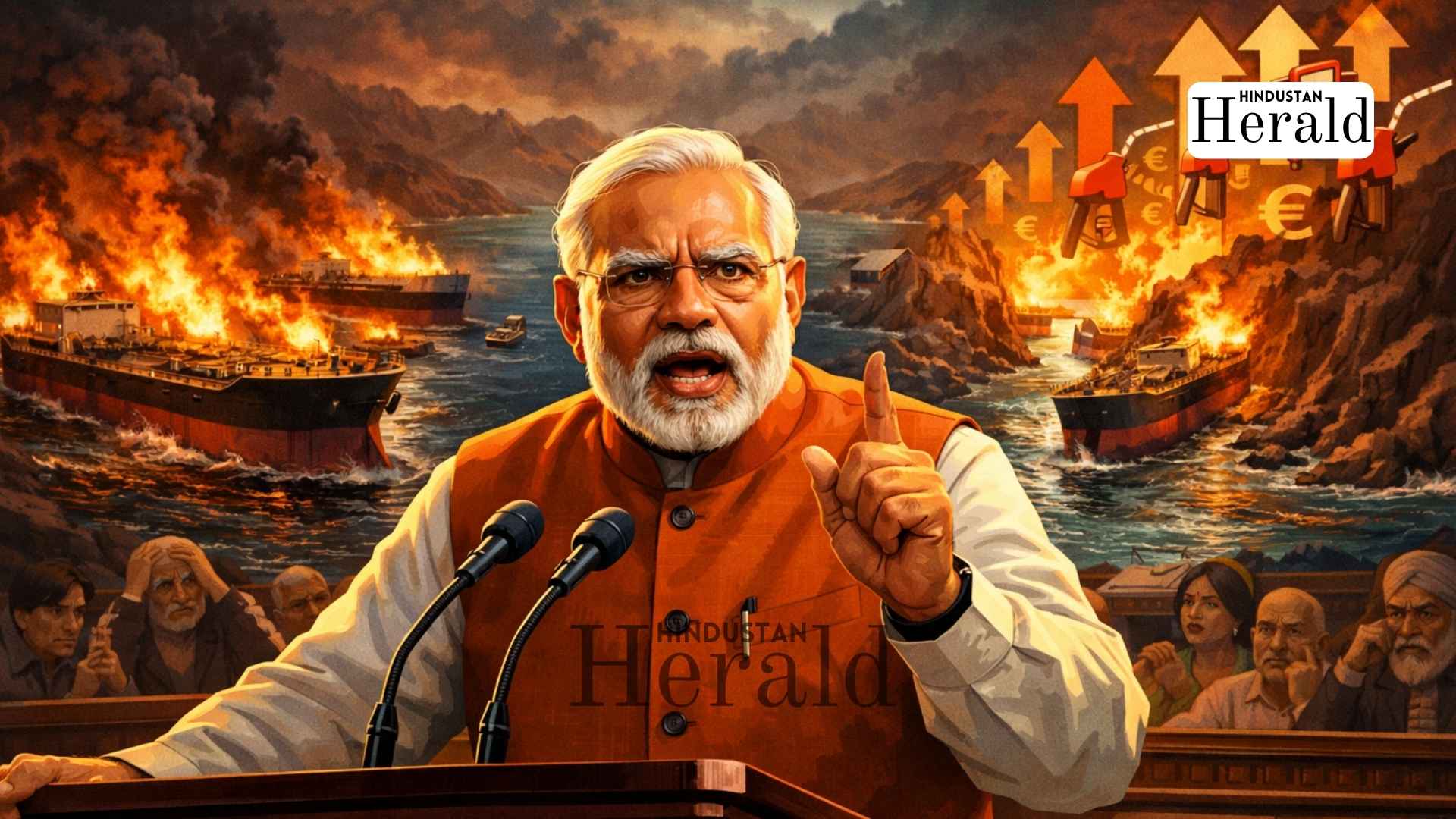
New Delhi, March 24: Prime Minister Narendra Modi addressed both Houses of Parliament over Monday and Tuesday to warn that the ongoing West Asia war, now in its 25th day, has created a “serious energy crisis” for India, as fresh economic data confirmed the conflict is already dragging down domestic output growth to its lowest level in more than three years.
The Crisis in Numbers
The warning from the top of government arrived alongside hard evidence from the markets.
The HSBC Flash India Composite PMI, compiled by S&P Global and released on Tuesday, slid to 56.5 in March from 58.9 in February, its lowest reading since October 2022 and below the Reuters poll median of 59.0.
Output growth eased across both manufacturing and services sectors as the energy shock from West Asia tensions unfolded. Input costs rose at their fastest rate in 45 months, while selling charges climbed at the steepest pace in seven months.
Companies surveyed cited the Middle East war, unstable market conditions, and inflationary pressures as direct causes dampening growth. Firms absorbed a large part of the additional cost burden by squeezing margins rather than passing the full increase on to consumers.
As reported by CNBC, HSBC’s Chief India Economist Pranjul Bhandari noted that softer domestic demand weighed on new orders, which rose at their slowest pace in more than three years, even as export orders hit a record high, a divergence that points to a domestic confidence problem rooted squarely in energy costs.
Modi Addresses Parliament
Prime Minister Modi made his first parliamentary statement on the conflict on Monday in the Lok Sabha, then returned to the Rajya Sabha on Tuesday to address the crisis in greater detail. The consecutive appearances in both Houses during the same Budget Session represent an unusual show of urgency for a government that has otherwise maintained a measured public posture.
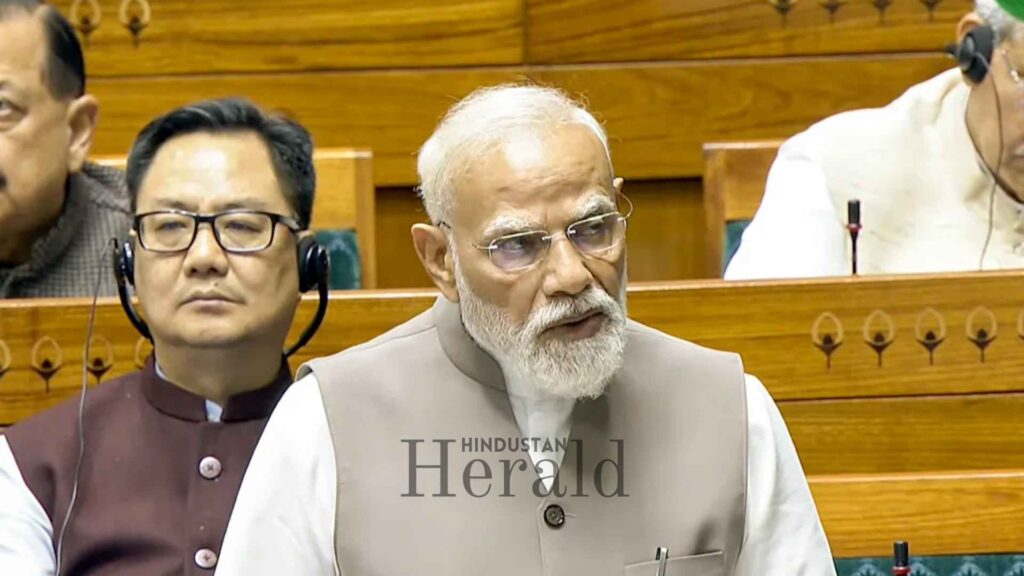
Addressing the Lok Sabha, Modi said the crisis had created a negative impact on the world economy and set “unprecedented challenges” for India, spanning economic, national security, and humanitarian dimensions. He noted that India has extensive trade relations with countries at war and those affected by the conflict, and that the region where the war is taking place is a critical route for India’s trade with the wider world.
The Prime Minister compared the scale of national resolve required to the Covid pandemic. “With patience, restraint, and calmness, we must face every challenge, that is our identity, that is our strength,” he said, adding that India’s strong economic fundamentals have helped the country navigate the current pressure.
He pointed to India’s deep stakes in the Gulf, noting that nearly one crore Indians live and work in Gulf countries and that a large number of Indian crew members serve aboard commercial vessels in those waters. He called on Parliament to send “a unanimous and united voice” to the world on the crisis.
On Tuesday, Modi told the Rajya Sabha directly that the ongoing West Asia war has created a serious energy crisis.
What Is at Stake
The conflict, which began on February 28 when joint US-Israeli airstrikes killed Iranian Supreme Leader Ayatollah Ali Khamenei, has effectively shut down normal commercial traffic through the Strait of Hormuz, the narrow waterway between Iran and Oman through which roughly 20 per cent of the world’s oil and liquefied natural gas ordinarily moves.
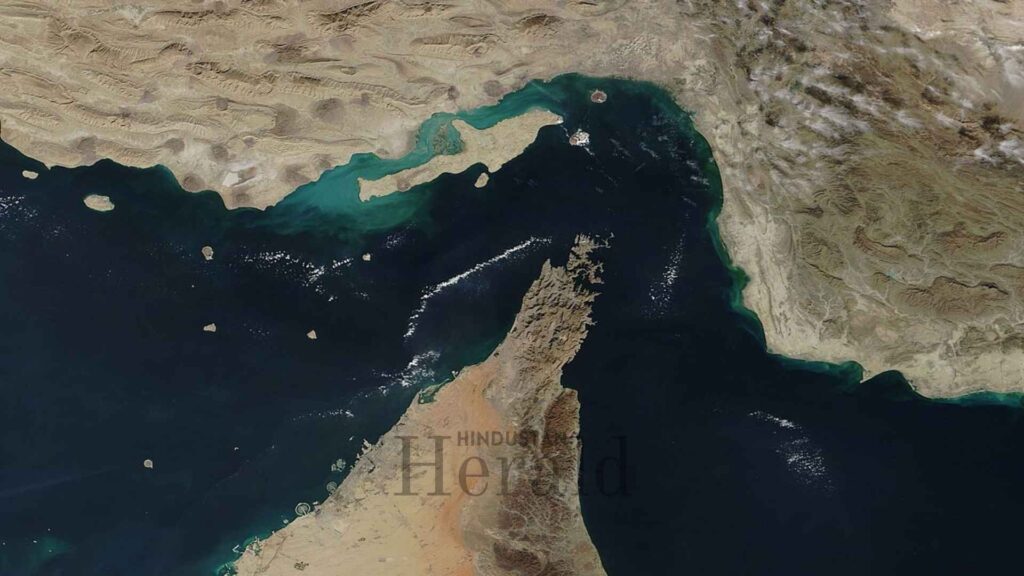
For India, the exposure is acute. The country imports roughly 88 per cent of its crude oil requirements, with a large share sourced from Gulf producers including Saudi Arabia, Iraq, and the UAE, all of whose shipments transit the Strait. LNG and LPG shipments from Gulf countries supply between 60 and 80 per cent of India’s gas needs, and those shipments are now arriving only in limited quantities, causing disruptions in households, restaurants, and small businesses.
Crude oil prices surged from USD 64 a barrel when the war began to between USD 100 and USD 120, creating what Congress MP Shashi Tharoor described as a situation of “petrol inflation” with a knock-on effect on the cost of everything transported by road.
Crude prices did pull back sharply on Tuesday after US President Donald Trump announced a five-day pause on planned strikes against Iranian energy infrastructure, citing what he called “very good and productive” negotiations with Tehran. The 10 per cent price reversal offered brief relief, but analysts cautioned it changes nothing structurally while the Strait remains constrained.
Tharoor’s Warning, The Government’s Response
Senior Congress leader and Parliamentary Standing Committee on External Affairs Chairman Shashi Tharoor had framed the issue most bluntly in a March 20 interview with ANI. He said India is “caught over a barrel” like many other countries, with no easy options if the conflict persists much longer, and urged the government to diversify energy import sources and negotiate more Free Trade Agreements to buffer against future regional shocks.
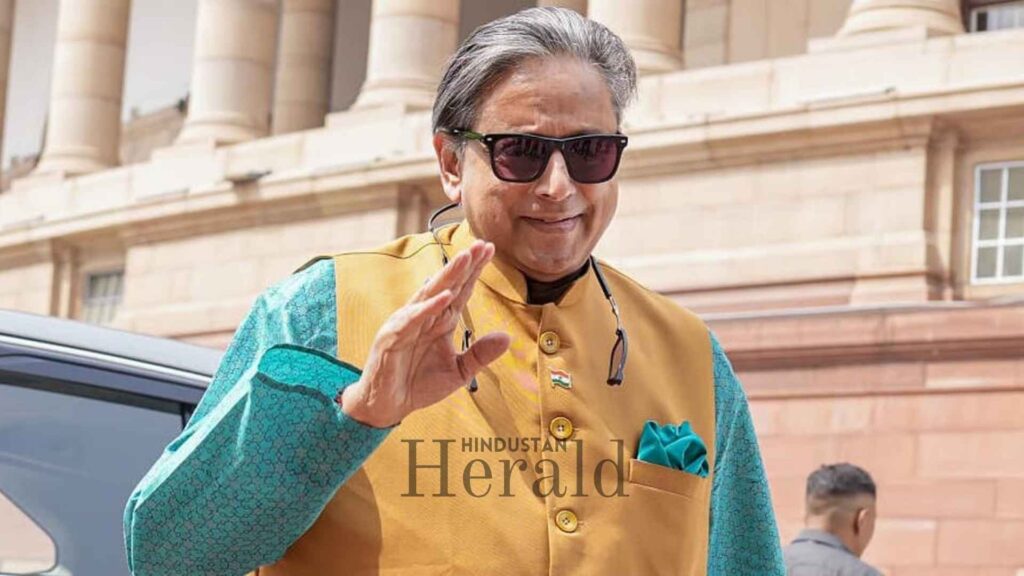
That said, Tharoor also defended India’s diplomatic restraint in an article for The Indian Express, describing it as “responsible statecraft” rather than moral surrender. He argued that publicly condemning the US-Israel strikes would jeopardise remittances that sustain millions of Indian households, energy supplies that fuel the economy, and trade ties that underpin growth.
The government’s defence of its record rests substantially on the energy diversification programme it has pursued over the past decade. Modi informed the Lok Sabha that India has expanded its energy import sources from 27 countries to 41 countries over the past 11 years, and that this strategy has proven its relevance in the current crisis.
On domestic energy self-sufficiency, Modi highlighted that ethanol blending in petrol has reached 20 per cent, reducing crude import requirements by approximately 45 million barrels annually, while railway electrification, electric bus deployment, and metro expansion have further reduced fossil fuel dependence in transport.
Strategic Reserves: The Buffer and Its Limits
Parliament received a sobering update on the state of India’s emergency oil buffer this week. Minister of State for Petroleum and Natural Gas Suresh Gopi disclosed in a written reply to the Rajya Sabha that the Indian Strategic Petroleum Reserve Limited currently holds approximately 3.372 million metric tonnes of crude oil across its three underground facilities in Andhra Pradesh and Karnataka, representing around 64 per cent of their total storage capacity of 5.33 million metric tonnes.

At full capacity, those reserves can sustain India for approximately 9.5 days of crude oil requirements. With one-third of storage capacity lying vacant during the crisis, the country’s near-term buffer is not at peak strength precisely when it is most needed.
Modi told Parliament that work is underway to raise strategic reserves to exceed 65 lakh metric tonnes, in addition to separate inventories maintained by oil marketing companies. The expansion plan includes two new facilities at Chandikhol in Odisha and Padur in Karnataka, with construction at Padur formally awarded on October 1, 2025. Those facilities will take years to complete.
India’s total national storage capacity, including commercial stocks held by oil marketing companies, stands at 74 days, below the 90-day benchmark recommended by the International Energy Agency. India is an Associate Member of the IEA and is not legally obligated to meet that benchmark, but the gap has drawn attention in the current context.
Ships Getting Through, Slowly
Amid the pressure, two pieces of operational progress arrived this week from the Strait itself.
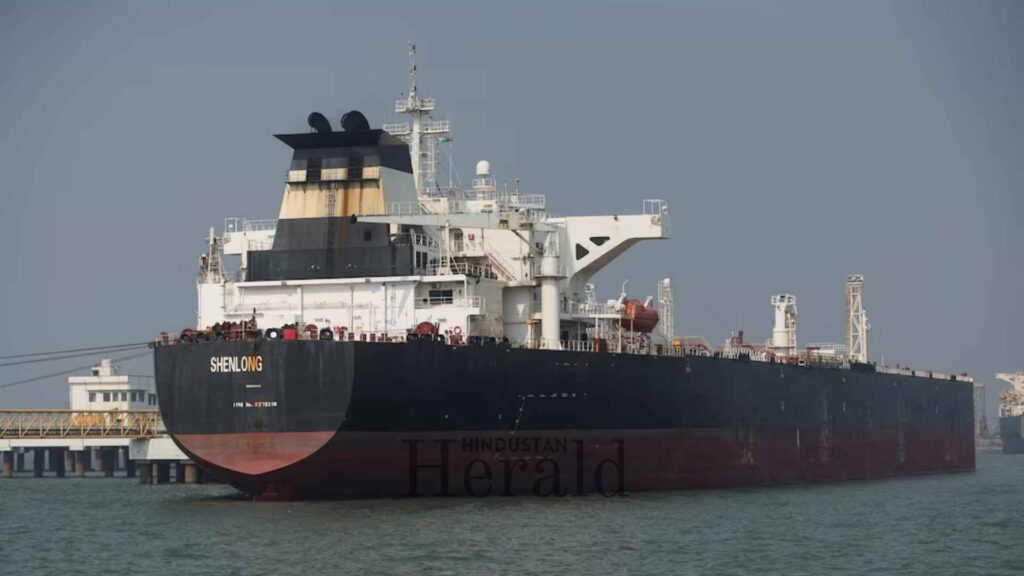
The Ministry of Ports, Shipping and Waterways confirmed on Monday that two Indian-flagged LPG carriers, Jag Vasant and Pine Gas, carrying a combined 92,612.59 metric tonnes of LPG, transited the Strait of Hormuz. The vessels, with 33 and 27 Indian seafarers onboard respectively, are expected to reach Indian ports between March 26 and 28.
Ship-tracking data showed the tankers navigated through the Qeshm-Larak channel, a longer route running through Iranian territorial waters. Both vessels altered their onboard identification signals to highlight their Indian origin as they transited, indicating possible prior clearance from Iranian authorities.
Their combined cargo is equivalent to roughly one day of India’s domestic cooking gas requirement, a thin margin, but each successful transit adds incrementally to depleted supply lines.
Overall Hormuz traffic, however, remains severely constrained. Shipbroker Clarksons noted on Monday that traffic through the strait is down approximately 95 per cent from pre-war levels, with Iranian-linked vessels continuing to move while most other commercial ships remain stranded inside the Gulf. Around 22 Indian-flagged vessels, with approximately 600 seafarers onboard, continue to be held up in the western sector.
The Political Dimension
The West Asia crisis has sharpened political lines in Parliament. The government’s handling of the LPG shortage and its communication strategy have drawn Opposition criticism even as Tharoor’s relatively measured stance has been cited by BJP leaders as a welcome departure from the party’s more confrontational voices.
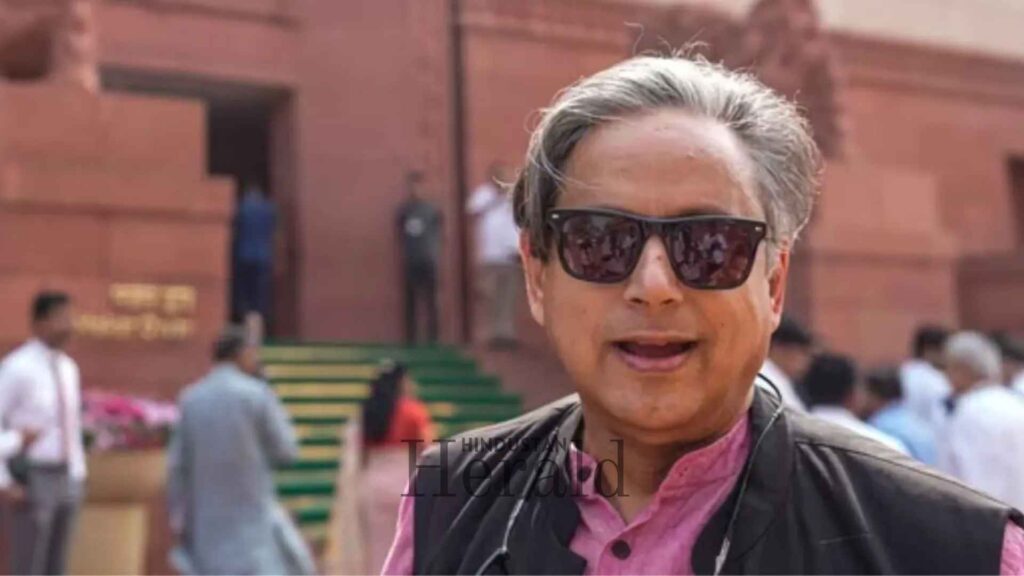
Tharoor had called publicly for India to take a lead in demanding an end to the conflict, arguing that both sides have largely achieved their stated objectives. “The Americans have said they have hit all the targets they wanted. The Iranians, at the same time, have succeeded in preserving their regime,” he told ANI.
The government’s position is more cautious. Modi held two rounds of calls with the heads of state of most West Asian countries since the conflict began, receiving assurances on the safety of Indian nationals. India voted in favour of UN Security Council Resolution 2817 (2026), passed 13 votes to two, which condemned the widening of the conflict. External Affairs Minister S. Jaishankar has maintained active diplomatic channels with all sides.
For now, the five-day diplomatic window opened by Trump’s pause on Iranian infrastructure strikes represents the nearest available off-ramp. Whether it leads to a durable ceasefire or simply delays further escalation will determine how quickly this national news story moves from Parliament’s session papers to ordinary Indians’ gas cylinders and fuel bills.
Stay ahead with Hindustan Herald — bringing you trusted news, sharp analysis, and stories that matter across Politics, Business, Technology, Sports, Entertainment, Lifestyle, and more.
Connect with us on Facebook, Instagram, X (Twitter), LinkedIn, YouTube, and join our Telegram community @hindustanherald for real-time updates.

Covers Indian politics, governance, and policy developments with over a decade of experience in political reporting.
- Ananya Sharma

- Ananya Sharma
- Ananya Sharma
- Ananya Sharma



 Sandeep Verma