
 By Arun Upadhayay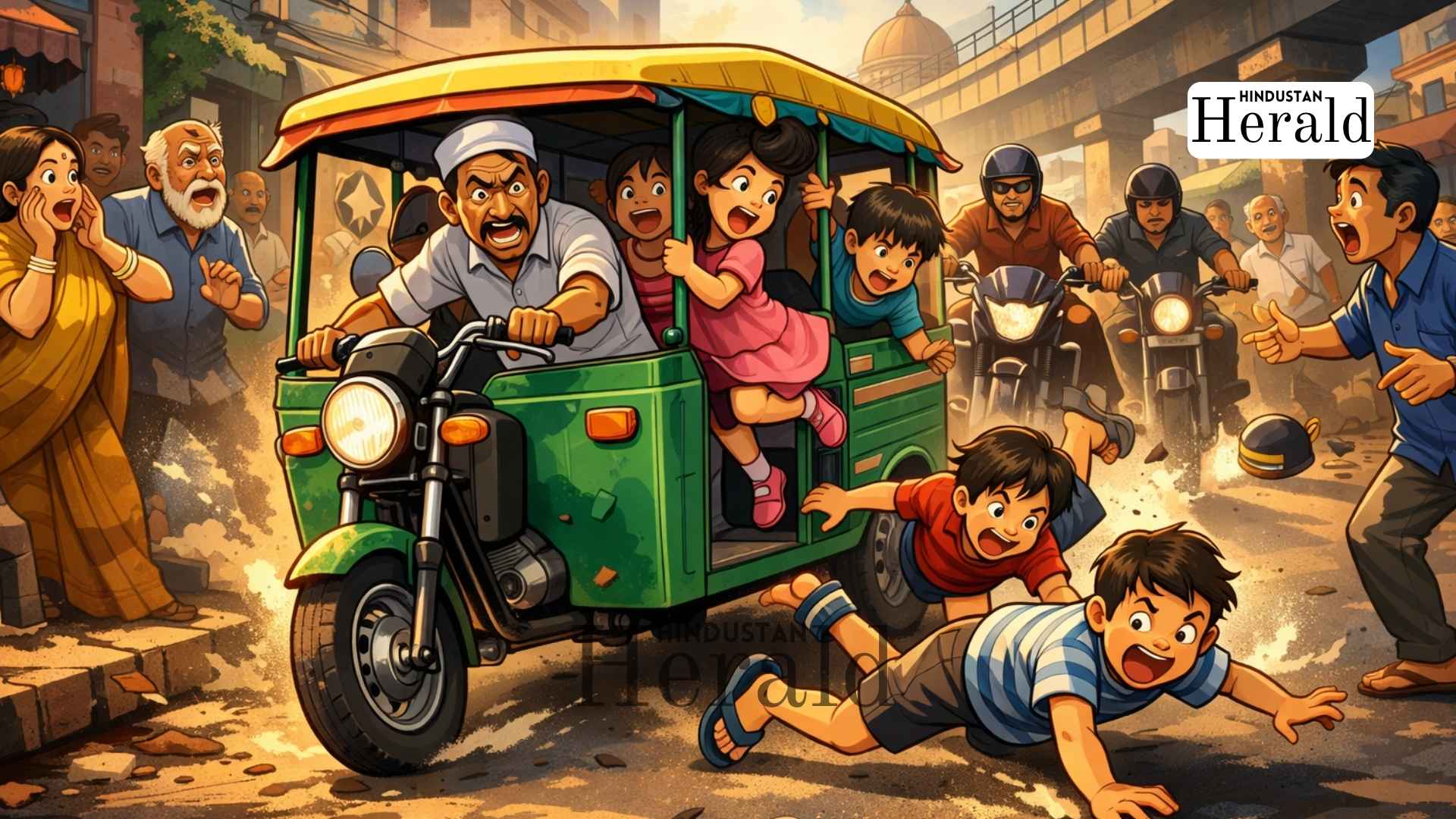
New Delhi, March 25: Picture this. You are scrolling through Instagram on a regular Tuesday evening. Suddenly a viral video pops up. Kids in an e-rickshaw. Men on bikes chasing it down. The driver trying to run. Children tumbling off onto the road. Your heart drops. Comments below the video are already on fire. People are calling the biker guys heroes. Someone writes “this is why we need to stay alert.” Someone else says “hang him.” Within hours, the clip has been shared thousands of times. Everyone has already decided what happened.
Except, as it turned out, nothing about those conclusions was right.
A Video That Shook People Within Minutes
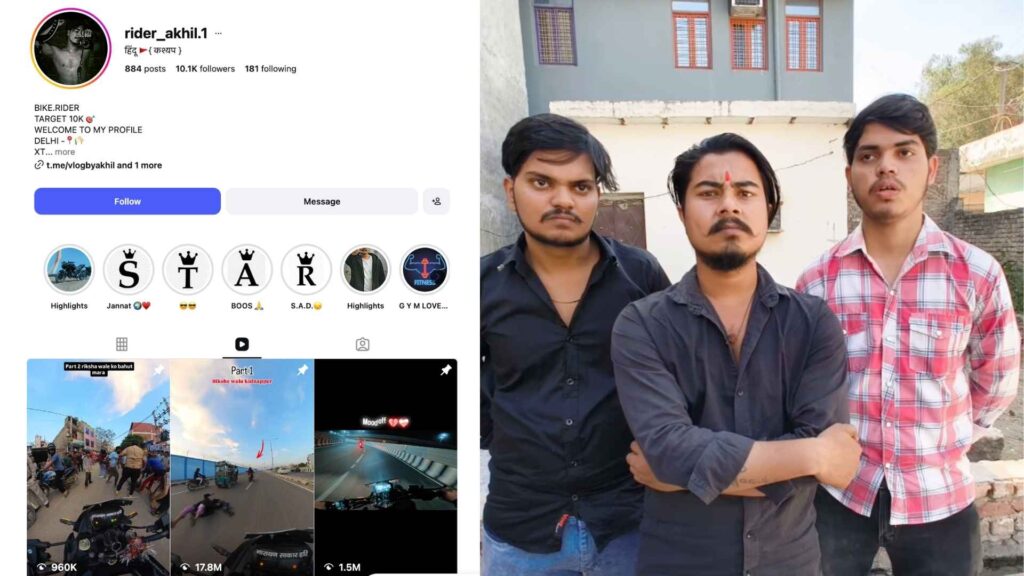
The clip was first posted by Instagram user @rider_akhil.1 and it hit people hard, fast. What it showed, or what it appeared to show, was a genuinely terrifying scene. Small children were sitting in an e-rickshaw somewhere on the streets of Delhi. A group of bike riders had spotted something that did not sit right with them. They gave chase. The driver, instead of stopping, tried to speed away.
What followed was ugly. The chase got reckless. The kids, caught in the middle of all this, fell off the moving vehicle and onto the road. Thankfully they were not seriously hurt, reportedly. The riders eventually caught up with the driver and stopped him. Bystanders joined in. The man was handed over to whoever was around to receive him.
The internet read this as a kidnapping caught in real time. The bike riders were being called brave. Commenters were furious at the driver. The post was being shared with captions warning parents to be careful in the city. People were tagging friends. Every share added more weight to a story that had not been fact-checked by a single person before it went stratospheric.
Then Came the Post That Changed Everything
Here is the part that most people who saw the original video probably missed.
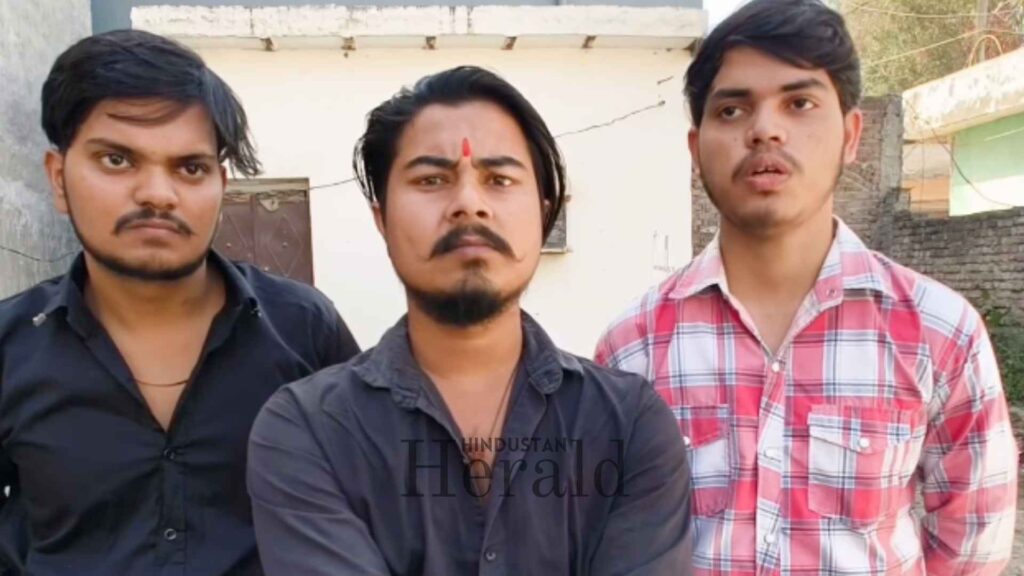
@rider_akhil.1, the same person who posted the original clip, later put up another post clarifying the situation. The message was simple and direct. The e-rickshaw driver was not a kidnapper. That was it. The whole premise on which thousands of people had built their outrage simply fell apart.
The full details of what actually happened, who those children were, what connection they had to the driver, why he panicked and fled when the bikes came after him, none of that has been laid out in full, at least not in what has been made publicly available so far. But the correction itself is impossible to read any other way. The man who was chased down, physically stopped by a group, and handed over to authorities was not doing what the viral video said he was doing.
That one post, the correction, got a fraction of the attention the original got. That is almost always how it goes.
This Is Not the First Time Delhi Has Seen This
Anyone who has followed news out of India’s capital over the last several years will recognise this pattern immediately.
A scary-looking clip surfaces. It spreads. People react. A mob, physical or digital or both, forms around whoever is in the frame. And somewhere down the line, days later or sometimes even hours later, the story comes apart. But by then the person at the centre of it has already been named, shamed, chased, beaten, or worse.
Delhi is not unique in this. Across India, there have been documented cases where rumours about child kidnappers, circulating on WhatsApp and Instagram, led to innocent people being attacked by mobs. In several incidents across different states, labourers, sadhus, and ordinary travellers were beaten to death by crowds who had received a forwarded message and acted on it without stopping to ask a single question. These were not isolated incidents. They happened with a frequency that eventually prompted the government and courts to take note.
The e-rickshaw driver in this latest episode was fortunate, reportedly, in that he does not appear to have been severely harmed. But that is almost beside the point. He was chased by a group of strangers at high speed. Children on his vehicle fell off the road because of that chase. He was physically intercepted and handed over to people who believed he was a criminal. All of that happened to a man who, according to the very person who posted the video, had done nothing wrong.
The Riders Meant Well. That Is Not Enough.
This is the hard part to say, and it needs to be said plainly.
The bike riders in this video were almost certainly acting out of genuine concern. Seeing children in what looked like a suspicious situation, and deciding to step in, is not a villainous instinct. Plenty of real crimes have been stopped by exactly this kind of bystander action. The intention was good.
But intention does not determine outcome. A man was chased down based on an assumption. Kids fell off a vehicle because of a high-speed chase that did not need to happen. If the driver had been seriously injured, or if one of those children had hit the road harder, good intentions would have offered cold comfort.
There is also a legal angle here that tends to get buried in these conversations. Taking the law into your own hands, even when you genuinely believe a crime is happening, carries serious legal risk for the person doing it. If someone is wrongly identified and harmed during a citizen chase, the people who initiated that chase can face consequences under Indian law. This is not a technicality. It is a protection built into the legal system precisely because human judgment in high-stress situations is unreliable.
The safest and the legally correct thing to do, when you see something suspicious involving children, is to call 112, which is India’s national emergency helpline, and report it immediately. Follow the vehicle if you must, keep your distance, keep calling, but do not turn it into a physical confrontation based on what a ten-second visual seems to be showing you.
The Man Nobody Is Talking About
There is an e-rickshaw driver somewhere in Delhi right now who had the worst kind of day a working person can have.
His name has not been widely reported. His side of the story has not been told. Whether he was detained formally, what happened after he was handed over, whether he lost a day’s income or something worse, none of that is known from the available information.
What is known is that he was the villain in a story that turned out not to be true. And while the person who originally posted the video did the right thing by correcting themselves, that correction will never fully undo what the original post set in motion. The internet does not run retractions with the same energy it runs accusations. That is just how it works.
What Parents and Citizens Should Actually Do
Child safety in Delhi is a real and serious issue. Nobody is arguing otherwise. The city has genuine cases of children being followed, lured, or worse. Parents have every reason to be watchful.
Still, watchfulness and snap judgment are two very different things. A child sitting in an e-rickshaw on a Delhi road is an ordinary sight. Without clear, direct evidence that something is wrong, no one has the right to convert a suspicion into a chase. And even with direct evidence, the protocol is to call the police, not to become one.
Teach children to shout for help, to move toward crowded areas, to know their home address and at least one phone number. Equip them. But do not let a viral video become the thing that teaches you what a kidnapping looks like, because as this week showed, viral videos can be very wrong.
For Now
The clip has done its damage and the correction has done its quiet, limited work. The bike riders will probably never know the full picture. The thousands of people who shared the video and condemned the driver will move on to the next thing. And the e-rickshaw driver, a working man who became the face of a crime he did not commit, will go back to the roads, carrying passengers in a city that briefly thought the worst of him.
The next time a terrifying video shows up on your feed, take ten seconds before you share it. That ten-second pause is the only fact-check most of these stories ever get.
Stay ahead with Hindustan Herald — bringing you trusted news, sharp analysis, and stories that matter across Politics, Business, Technology, Sports, Entertainment, Lifestyle, and more.
Connect with us on Facebook, Instagram, X (Twitter), LinkedIn, YouTube, and join our Telegram community @hindustanherald for real-time updates.

- Arun Upadhayay

- Arun Upadhayay
- Arun Upadhayay
- Arun Upadhayay




 Sandeep Verma