
 By Ananya Sharma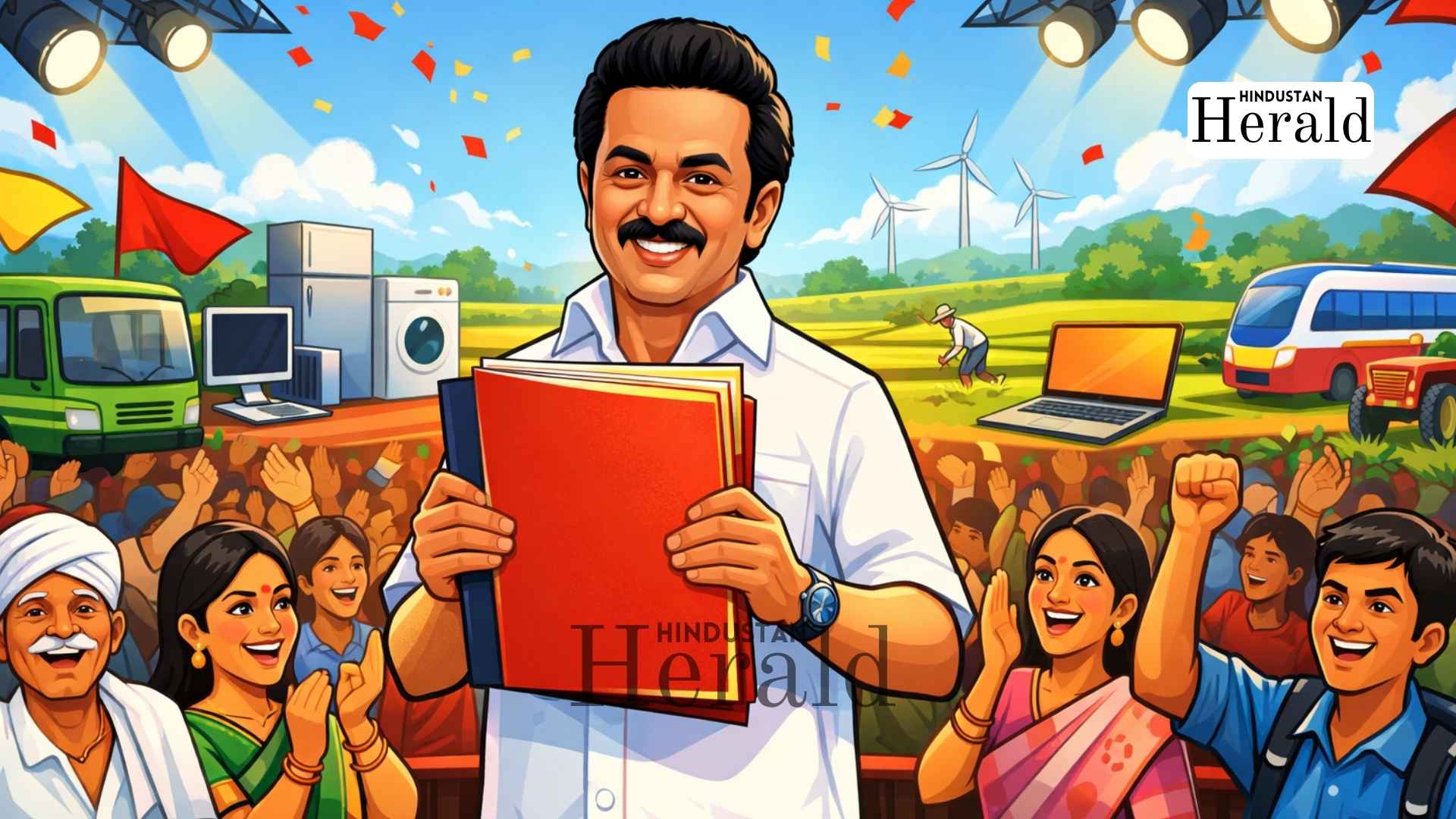
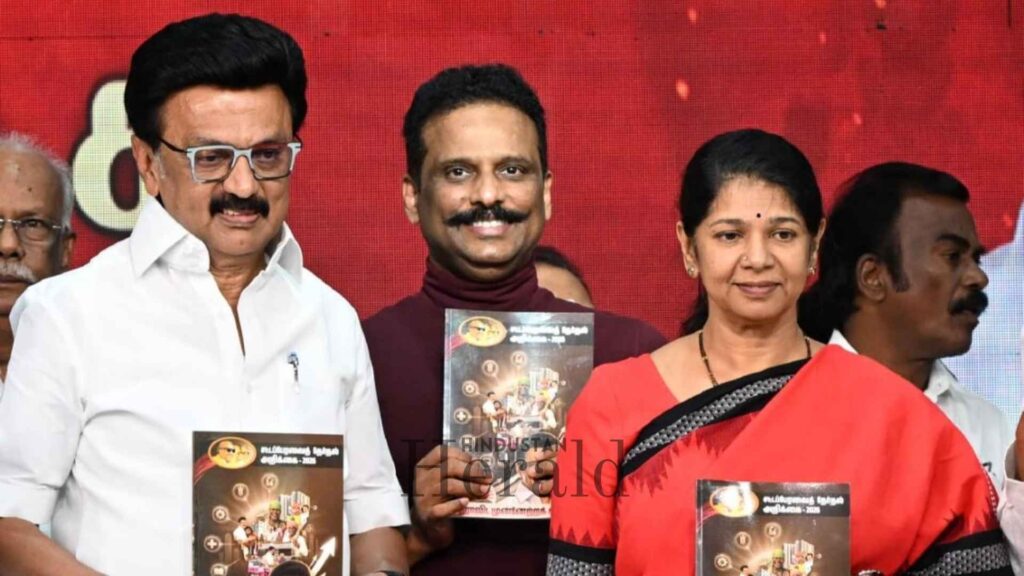
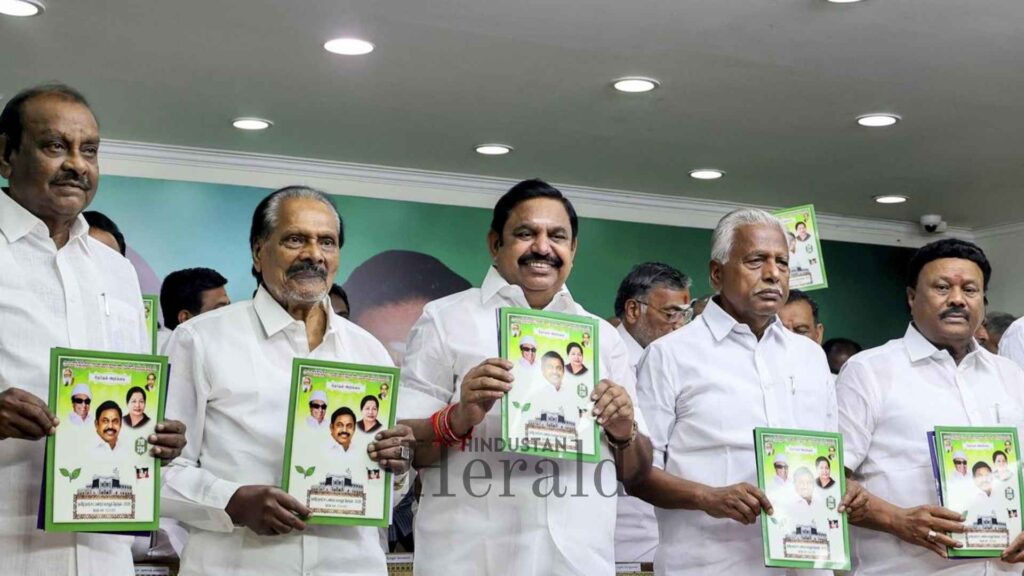
Chennai, March 29: Tamil Nadu Chief Minister and Dravida Munnetra Kazhagam president M.K. Stalin on Sunday released his party’s election manifesto for the 2026 Tamil Nadu Assembly elections, promising 525 welfare and development commitments across 50 themes. The document, unveiled at Anna Arivalayam in Chennai, centres on women’s empowerment, agricultural support, and youth employment, and positions the DMK as the incumbent force seeking a seventh consecutive mandate under the Dravidian governance model before the April 23 vote.
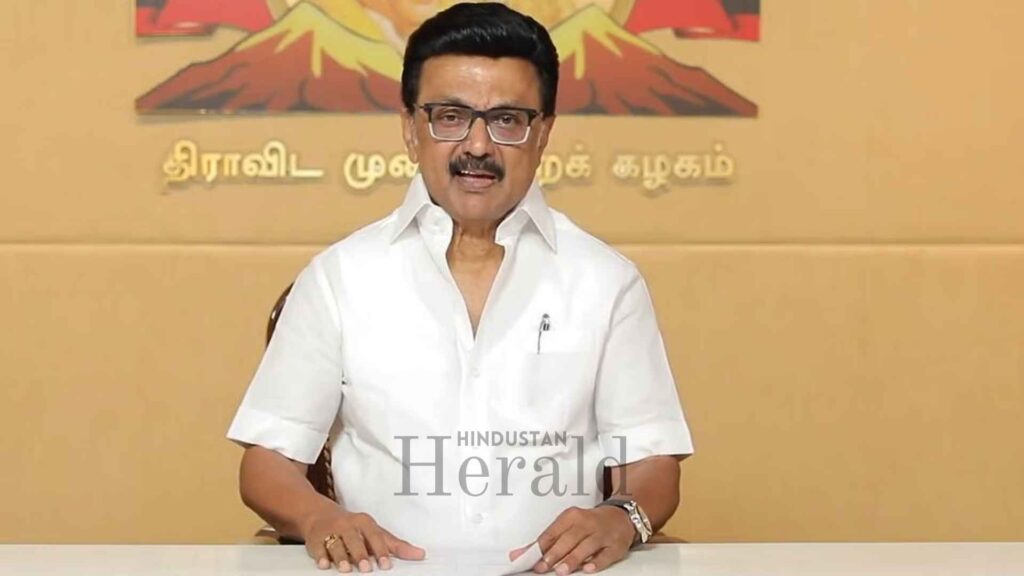
Addressing the unveiling event, Stalin described the manifesto as a “superstar,” saying “DMK election manifesto has always been a ‘hero,’ but this time, it is a ‘superstar,'” framing it as a document of deeper impact and broader reach
The Headline Scheme: Illathu Arasi
The manifesto’s centrepiece is the Illathu Arasi (Queen of the House) scheme. Under it, women from families outside the income tax bracket will receive a one-time coupon worth Rs 8,000 to purchase or replace household appliances, including televisions, refrigerators, washing machines, mixers, microwave ovens, and induction stoves.
The DMK has deliberately chosen coupons over direct cash. Stalin explained: “If we give money, they might spend it on other things. Coupons ensure the benefit reaches its intended purpose, easing the burden on homemakers.” Coupons will be redeemable at neighbourhood shops, keeping the economic benefit within local retail circuits.
Stalin framed this as part of a broader philosophy of “choice-based governance,” with the manifesto prioritising “smart economic multipliers” designed to support local economies, small businesses, skill development, and long-term growth.
Cash Transfers and Pensions
The DMK is significantly scaling up its existing direct benefit transfer programmes. The Kalaignar Magalir Urimai Thogai, which currently pays Rs 1,000 monthly to women heads of households, will be doubled to Rs 2,000 per month, with new beneficiaries added each year. Free bus travel for women under the Vidiyal Payanam scheme will continue.
Social security pensions for senior citizens, widows, and unmarried women above 50 will rise to Rs 2,000 per month. Persons with disabilities will receive Rs 2,500 monthly, with maintenance allowance for the severely affected raised to Rs 4,000, as reported by ANI.
Stalin also aimed at the Centre, saying the BJP attempted to obstruct the Kalaignar Magalir Urimai Thogai programme, but that despite those challenges, the scheme has benefited around 1 crore 30 lakh families. The reference signals how the DMK intends to frame this election: partly as a contest over state autonomy and federalism.
Education, Health, and Youth
The Chief Minister’s Breakfast Scheme, currently limited to primary school students, will be extended to Class 8. Health insurance coverage under the CM Health Insurance Scheme will be raised to Rs 10 lakh, with the annual household income ceiling increased to Rs 5 lakh.
Monthly financial assistance for college students under the Pudhumai Penn and Tamil Pudhalvan schemes will increase to Rs 1,500. The manifesto also promises 35 lakh free laptops, skill training for five lakh youth under the Naan Mudhalvan scheme with a Rs 1,500 monthly stipend, a target of attracting Rs 18 lakh crore in investment, and the creation of 50 lakh jobs over five years.
Agriculture and Infrastructure
Over 20 lakh farmers currently receiving free electricity will be provided free modern electric pump sets without meters. Paddy procurement price is set at Rs 3,500 per quintal and sugarcane at Rs 4,500 per tonne.
On infrastructure, the manifesto commits Rs 10,000 crore for rural roads, plans four global cities, and proposes 50 Semmozhi Poongas across municipal bodies. Ten lakh concrete houses are promised under various schemes over five years.
How the Manifesto Was Built
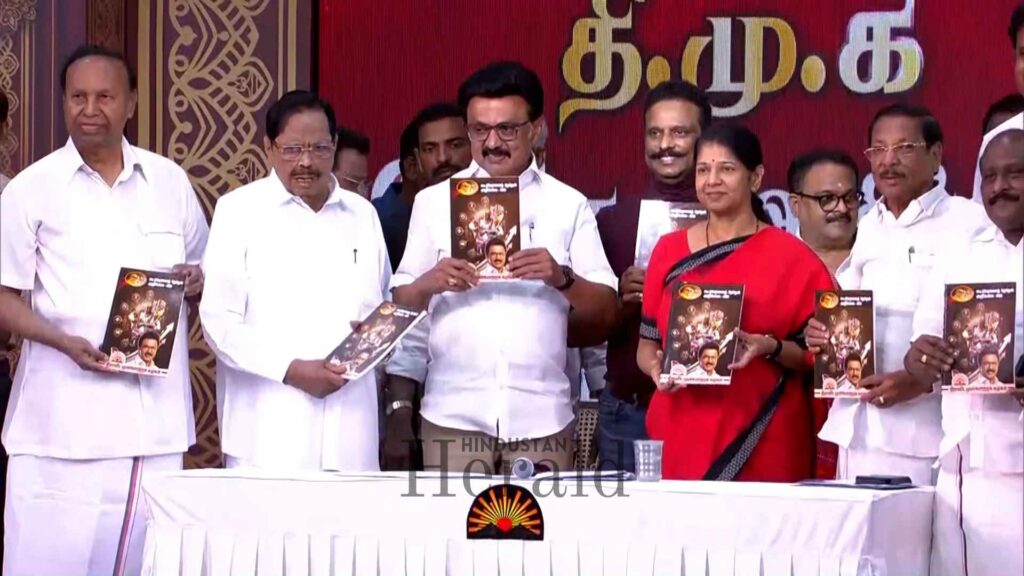
A 12-member drafting committee led by DMK Deputy General Secretary and MP Kanimozhi toured Tamil Nadu to gather public feedback before finalising the 525 promises. The committee submitted the draft to Stalin, who approved the final document.
Kanimozhi said the party had consulted subject-matter experts across sectors and stressed that only feasible and implementable promises had been included. That framing is a direct counter to opposition claims of empty populism.
The Manifesto War: Coupons vs Refrigerators
This launch is a calculated response to the AIADMK’s own manifesto, released five days earlier on March 24. AIADMK General Secretary Edappadi K. Palaniswami’s 297-point document promised free refrigerators to all rice ration card-holding families, a one-time Rs 10,000 special assistance per household, and Rs 2,000 monthly under the Kulam Vilakku Scheme to the female head of every ration card-holding family.
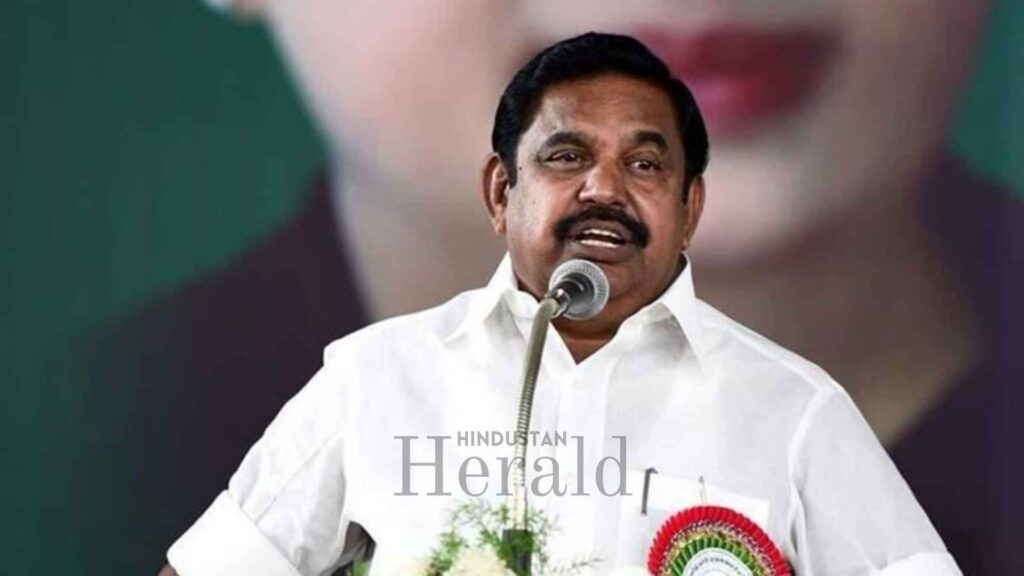
Both parties are targeting the same voter: the woman heading a non-income-tax-paying household. The AIADMK’s refrigerator promise is tangible and visually striking. The DMK’s coupon offer prioritises flexibility over specificity. Political observers note that the coupon approach gives homemakers the freedom to choose what they actually need, while the AIADMK’s fridge promise is more symbolic and visible.
Stalin addressed the comparison directly. He argued that with Rs 8,000, a homemaker could only buy a small refrigerator anyway, and that the DMK’s scheme was superior because it gave families the freedom to choose the appliance they most needed.
It is also worth noting that neither the DMK nor the AIADMK manifesto makes any reference to liquor prohibition, a conspicuous omission given that a total ban on alcohol has historically been a high-profile campaign demand, particularly in DMK circles.
Historical Context: Welfare as Electoral Strategy
Tamil Nadu’s competitive welfare politics has deep roots. The DMK’s own political template traces back to former party president M. Karunanidhi’s promise of free colour television sets in the 2006 elections, which helped sweep the party to power and became a model for welfare-led campaigns across India.
Two decades on, the Illathu Arasi coupon is that promise scaled up and reframed. Stalin is not defending it as a freebie. He is defending it as a demand-side economic intervention that puts money into neighbourhood shops and stimulates local retail. Whether Tamil Nadu’s voters accept that framing is one of the central questions the April 23 vote will answer.
Three-Cornered Context
A new variable complicates this election beyond the traditional DMK vs AIADMK binary. Actor-politician Vijay’s Tamilaga Vettri Kazhagam (TVK) is fielding candidates independently, drawing younger and first-time voters away from both establishment parties. The TVK factor does not yet have polling data strong enough to predict seat impact, but it adds genuine unpredictability to a contest that has historically been decided by alliance arithmetic alone.
Stalin has said he expects the DMK to win over 200 of the 234 seats on offer. The AIADMK-led NDA alliance will contest over 170 constituencies under its seat-sharing arrangement, with the BJP fielding candidates in 27 seats, the Pattali Makkal Katchi in 18, and the AMMK in 11.
Votes will be counted on May 4. For now, both major parties have placed their bets on welfare, with women voters as the prize and the kitchen as the battleground.
Stay ahead with Hindustan Herald — bringing you trusted news, sharp analysis, and stories that matter across Politics, Business, Technology, Sports, Entertainment, Lifestyle, and more.
Connect with us on Facebook, Instagram, X (Twitter), LinkedIn, YouTube, and join our Telegram community @hindustanherald for real-time updates.

Covers Indian politics, governance, and policy developments with over a decade of experience in political reporting.
- Ananya Sharma

- Ananya Sharma
- Ananya Sharma
- Ananya Sharma



 Sandeep Verma