
 By Ananya Sharma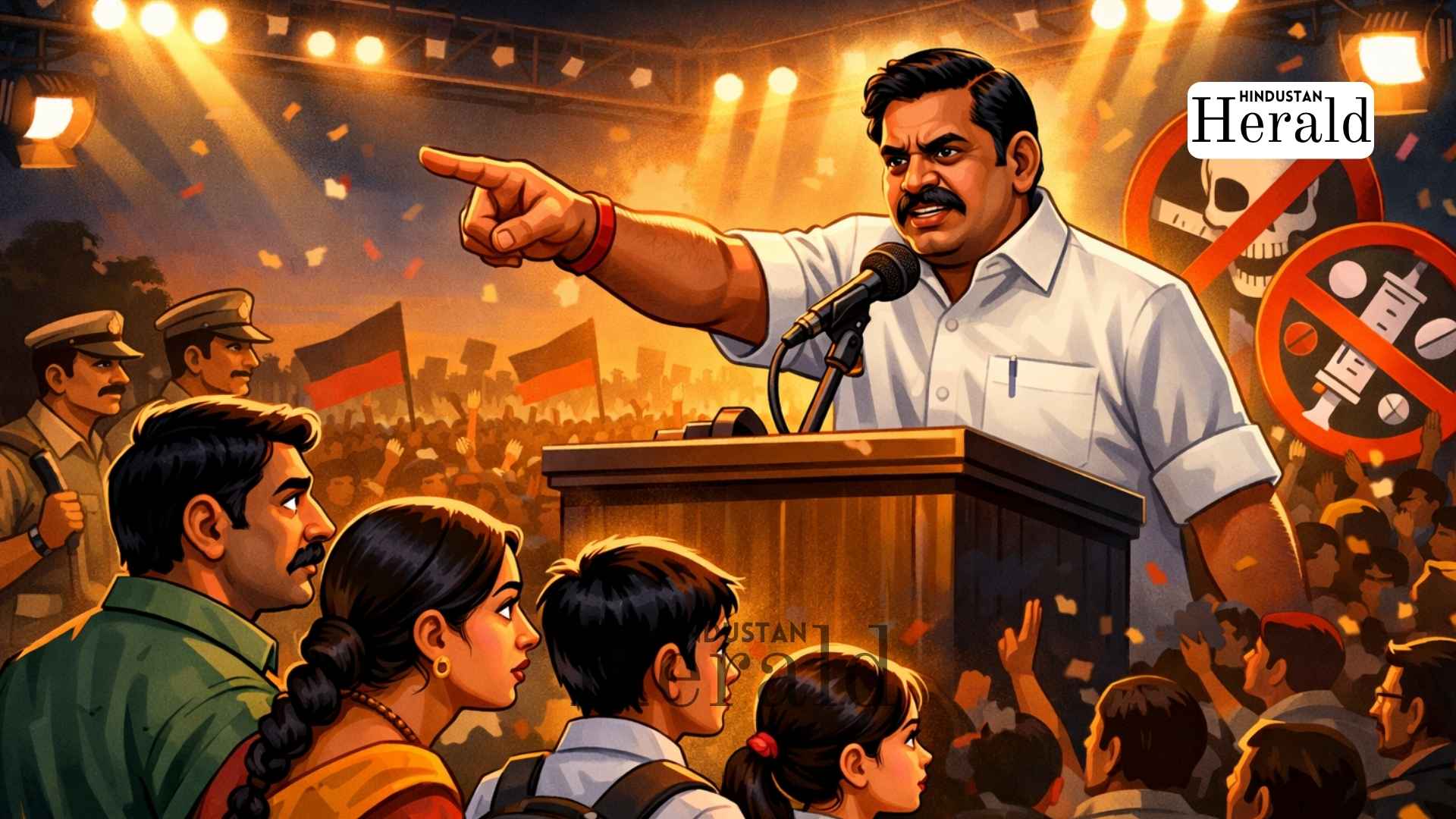
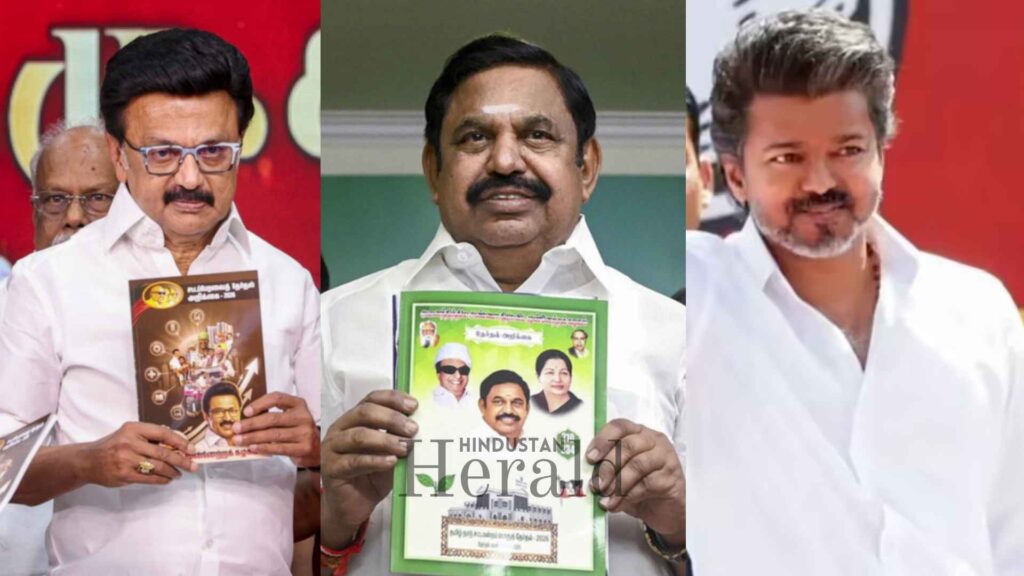
Chennai, April 10: With Tamil Nadu heading to the polls in less than two weeks, Edappadi K. Palaniswami (EPS) has done something unusual for a seasoned political operator: he has built his entire homestretch campaign around a single, stark promise. At rally after rally, the AIADMK General Secretary and former Chief Minister has looked directly into crowds of parents and students and told them that if his party returns to power on April 23, the ganja menace will be gone within three months.
That is the headline. The question the state is now wrestling with is whether it is a credible governance commitment or the kind of election-season pledge that sounds bulletproof on a stage and dissolves on contact with reality.
The Promise and What It Covers
The three-month timeline has been EPS’s loudest applause line across Sivakasi, Sivaganga, and several other constituencies in the campaign’s final stretch. He has spelled out, with unusual specificity, what concerns him most. Ganja, he has pointed out, is now available in different forms including chocolates, tablets, and liquid, and the lives of school and college students addicted to it are being ruined. The argument is not just about law enforcement; it is fundamentally a generational anxiety pitch aimed at mothers, teachers, and anyone who fears for a young person in their family.
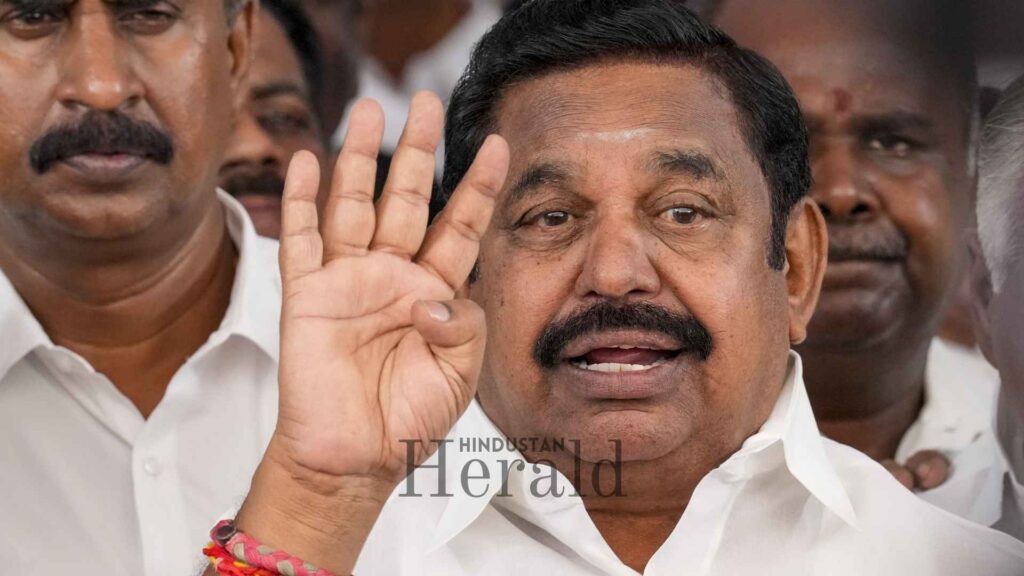
He also alleged that police are unable to root out the narcotics problem because members of the DMK were involved in drug trafficking. That is a serious accusation, and the AIADMK has been making versions of it for months, but it has not produced documented evidence in the public domain to support the claim. Still, the allegation lands in a political climate where suspicion of the ruling establishment runs high among a section of voters.
EPS has also framed the drug issue within a broader collapse-of-public-order argument. Most parties contesting these elections, except the DMK, are focusing on illicit liquor, law and order problems, and crimes in universities , a dynamic that has helped the AIADMK chief position his alliance as the unified voice of concern while the ruling party finds itself on the defensive.
What the Numbers Actually Show
The drug situation in Tamil Nadu is genuinely complicated, and cherry-picking statistics to make either side’s case is easier than it should be.
Between May 2021 and March 2025, the police seized over 1 lakh kg of ganja, almost entirely smuggled from forests in Andhra Pradesh, Odisha, and Telangana. In 2024, while ganja seizures slightly declined to 21,424 kg from 23,364 kg in 2023, NDPS Act cases rose to 11,025, reflecting intensified enforcement against diverse drugs including synthetic substances and diverted pharmaceuticals.
The DMK government would have you read those numbers as proof that enforcement is working. The AIADMK and its allies read the same figures and reach the opposite conclusion.
According to figures cited by the BJP, over 63,000 NDPS cases were registered and more than 3.3 lakh kg of drugs were seized in recent years. BJP argued that the spike in seizures, including a rise in confiscated narcotic tablets from around 39,000 in 2023 to over 1.4 lakh in 2024, reflected an expanding drug network rather than improved enforcement. That is a fair interpretive dispute, and it goes to the heart of what rising seizures actually mean: are police catching more because more is flowing in, or because they have gotten better at the job? The answer is probably some of both, and that ambiguity is exactly what makes the drug debate so potent as campaign fodder.
In just one year, Chennai police registered 1,516 cases under the NDPS Act, seized nearly 2.9 metric tonnes of ganja and over 67,700 illicit tablets, and arrested more than 4,000 individuals, among them 324 inter-state traffickers and 26 foreign nationals. The DMK government points to this as evidence of a war-footing response; critics counter that arrests alone mean little if new supply simply fills the gap.
Meanwhile, in 2025, innovative forms such as ganja-infused chocolates targeting students were seized, and under NDPS financial probes, properties worth crores were frozen. The chocolate’s details are particularly troubling because it confirms what EPS has been saying at rallies: the product is mutating to reach younger users.
How the DMK Is Responding
Chief Minister M.K. Stalin has pushed back hard, and the counter-narrative is sharp even if it has not fully cut through.
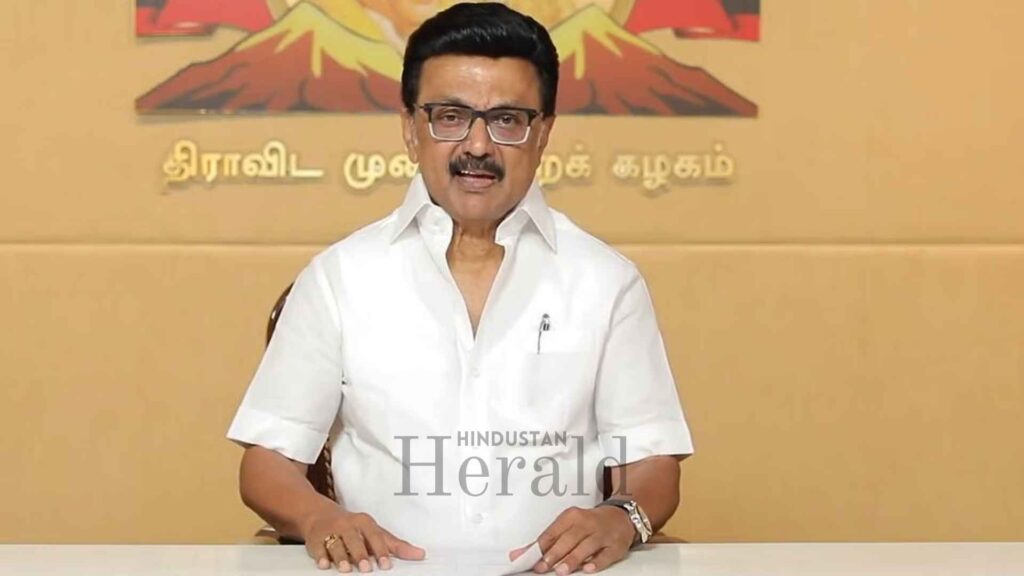
Stalin alleged that the proliferation of drugs in the state began during the previous AIADMK regime led by EPS, asserting that it was during Palaniswami’s tenure that Tamil Nadu became engulfed by drugs. He has added that the present government has been taking strong measures including active seizures and strict action against offenders. Stalin also accused the opposition of making baseless allegations for political gains ahead of the Assembly elections.
It is a move that political analysts call the “whataboutery pivot,” and it has a strategic logic: if you cannot fully own the present, at least contest the origin story. The DMK argues that the structural drug networks being dismantled today were seeded during a decade of AIADMK governance. Whether voters buy that framing, with the evidence in front of them of what they see in their own neighbourhoods, is another matter.
Tamil Nadu Police’s Operation Ganja Vettai 1.0 and 2.0 resulted in 18,083 offenders arrested, 6,026 kg of ganja seized, 521 motor vehicles confiscated, and properties and bank accounts of about 2,200 offenders frozen. The government has been pointing to these operations as a sign of systematic intent. What it has struggled to show is a corresponding reduction in street-level availability, which is ultimately what parents actually experience.
Tamil Nadu police has claimed an 88 percent conviction rate as of June 2025, yet provided no breakdown of whether these convictions involve individuals possessing drugs for personal use, street-level dealers and couriers, or the kingpins orchestrating the trade. As an independent analysis in The South First noted, high conviction rates in drug cases can simply reflect prosecution of users and easily replaceable couriers, while the actual organizers of the trade remain untouched.
Alliance Amplification and the Broader Political Bet
The drug promise is not EPS campaigning alone. The AIADMK has finalized seat-sharing agreements with its principal allies, BJP, PMK, and AMMK , and all three partners have their own versions of the law-and-order pitch, giving the anti-drug message a multi-front presence.
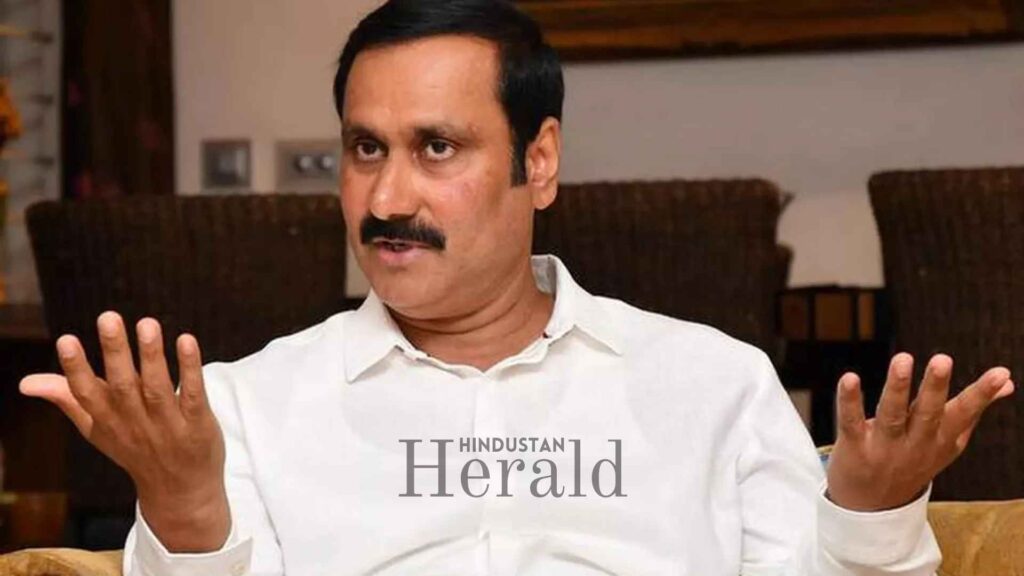
PMK leader Anbumani Ramadoss, a former Union Health Minister, has been particularly vocal. Ramadoss accused the DMK of encouraging ganja culture since 2021, citing a recent case in Tiruttani where four 17-year-old minors, allegedly under ganja influence, assaulted a migrant worker with sickles and filmed it for social media. That specific incident, widely circulated on Tamil social media platforms, has become shorthand in the campaign for everything the opposition is arguing.
Caste equations will also play a crucial role in these elections, with Hindu communities like Konars, Mukkulathor, Mutharaiyar, and Scheduled Castes likely to play a decisive role. The drug issue intersects with these demographics in ways that are not always made explicit on stage: addiction hits economically marginalized households hardest, and these communities know it.
Prime Minister Narendra Modi was present at the launch of the NDA’s Tamil Nadu campaign alongside EPS, Anbumani Ramadoss, and Tamil Maanila Congress President G.K. Vasan, signalling that the Centre is invested in the outcome and that the alliance’s moral-order messaging has top-level endorsement.
The Feasibility Problem Nobody Wants to Address
Three months. That is a tight window for something that India as a whole, and Tamil Nadu specifically, has been unable to achieve over decades.
Tamil Nadu does not grow its ganja. Almost all of the ganja seized in the state has been smuggled from forests in Andhra Pradesh, Odisha, and Telangana, and the state also serves as a transit route for high-grade ganja destined for Sri Lanka via sea routes. Disrupting those supply chains requires coordination with other state governments and central agencies, none of which can be unilaterally commanded by a chief minister within his own borders.
While Tamil Nadu has maintained zero cultivation status through sustained enforcement, with sporadic small-scale attempts quickly eliminated, opposition voices dismiss zero cultivation as a distraction. The production is elsewhere. The networks are interstate. The financial flows are digital and transnational, as evidenced by the Tiruvallur cartel bust in November 2025, which involved foreign nationals from Nigeria, DR Congo, and Senegal, operated through a Delhi-based kingpin using WhatsApp and bank accounts across northeastern states.
Promising to eradicate this in ninety days is, to put it plainly, ambitious beyond what any honest policy expert would endorse. That said, this is Indian election campaigning, and both sides play by the same rules here. The DMK has made promises in 2021 that look strained today. The asymmetry is that EPS is now making the promise as the challenger, which means he has not yet had the chance to be tested on it.
What Voters Are Actually Asking
There is something real underneath the political noise. Tamil Nadu’s drug problem is not invented. The incident involving the minor who was killed in Tirunelveli by a ganja-intoxicated attacker in January 2026, a Class 10 student named Lakshmanan who was attacked with a machete and later died, with the accused a habitual substance user with prior offences, generated genuine grief and anger. These are not abstract statistics for families in affected districts.
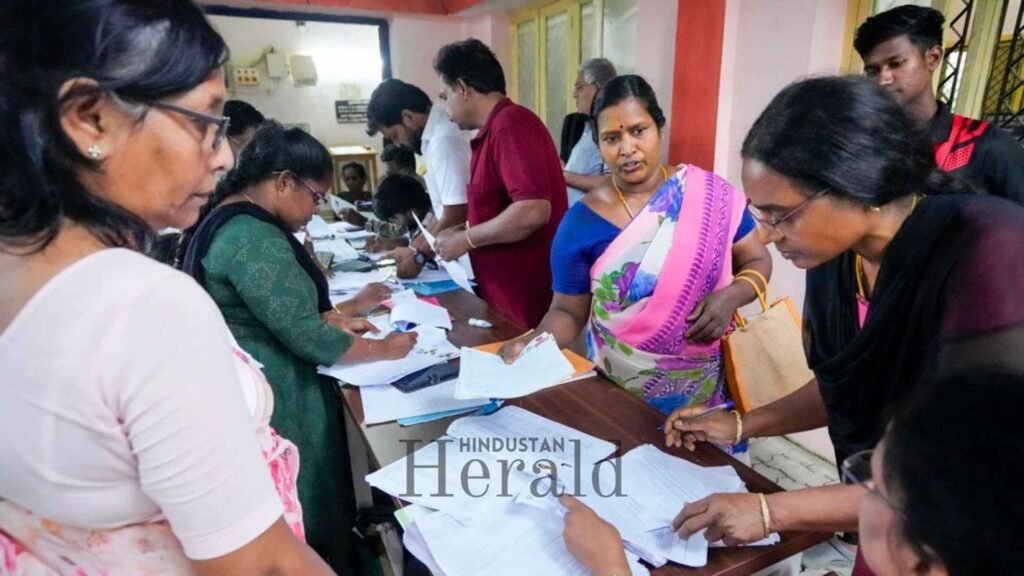
Parents in Sivakasi, Sivaganga, Tiruvallur, and dozens of other constituencies are not asking for a policy paper. They are asking someone in power to take the problem seriously. EPS is betting that his three-month promise, whatever its delivery challenges, signals seriousness in a way the DMK government has failed to project despite its operational record.
That gap between optics and output is perhaps the most politically consequential thing about this debate.
What Comes Next
With nominations closed and campaigning in its final fever, both sides will continue hammering the drug issue. Votes are scheduled for April 23, with results to be declared on May 4. EPS will keep the three-month pledge front and centre, and the DMK will keep pointing to seizure records and operational data. Neither side is likely to move the other’s core vote. The question is the anxious middle: parents who are not ideological partisans but are genuinely frightened about what their children are exposed to.
That voter is who both parties are really speaking to. And right now, the simpler, more visceral promise is carrying more force than the institutional record.
Whether that changes anything in the booth on April 23 is, for now, the only question that matters.
Stay ahead with Hindustan Herald — bringing you trusted news, sharp analysis, and stories that matter across Politics, Business, Technology, Sports, Entertainment, Lifestyle, and more.
Connect with us on Facebook, Instagram, X (Twitter), LinkedIn, YouTube, and join our Telegram community @hindustanherald for real-time updates.

Covers Indian politics, governance, and policy developments with over a decade of experience in political reporting.
- Ananya Sharma

- Ananya Sharma
- Ananya Sharma
- Ananya Sharma




 Sandeep Verma
  Arun Upadhayay