
 By Arun Upadhayay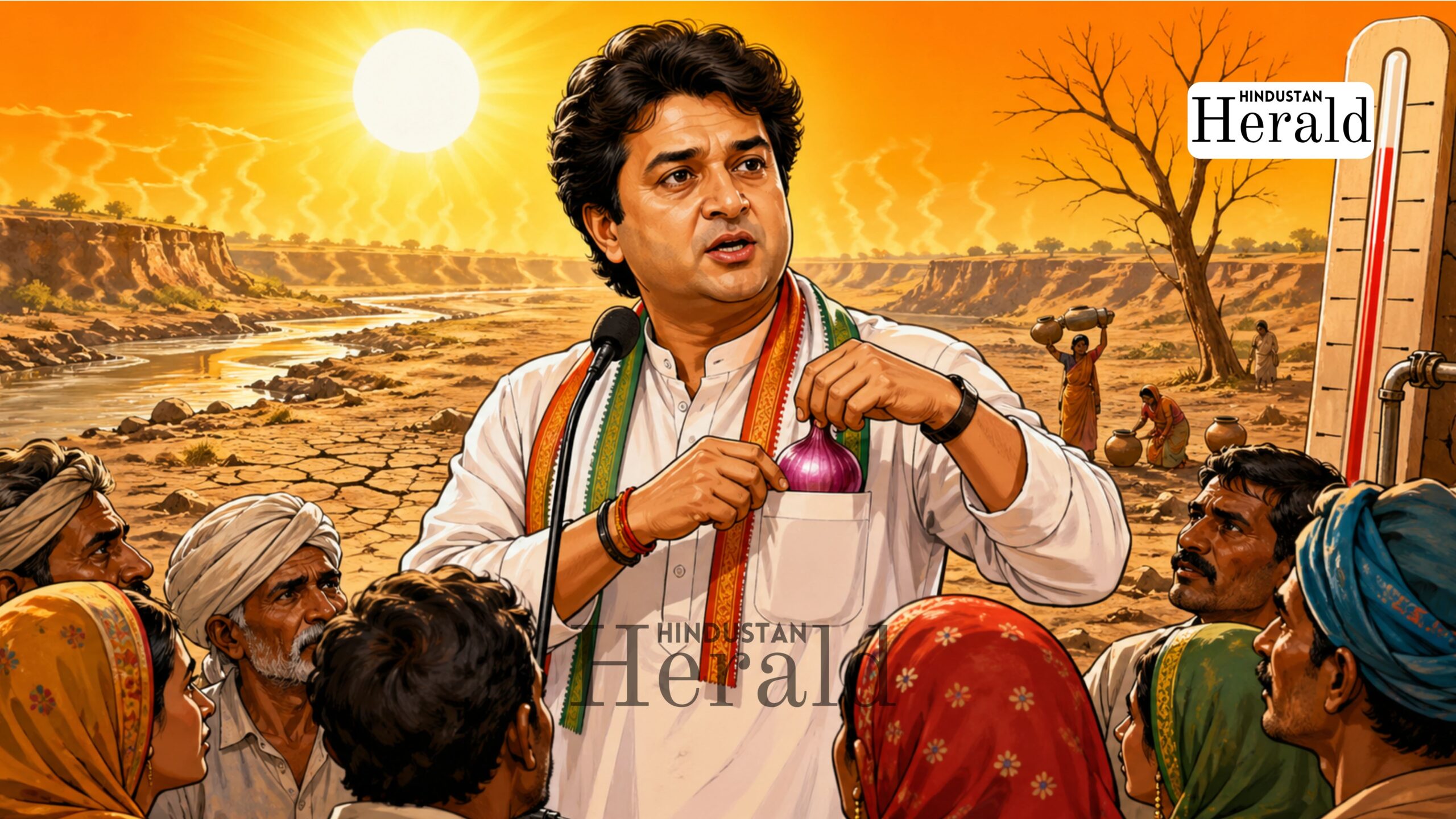
Shivpuri, April 27: There is something almost refreshing about a Union Minister stepping up to a microphone during a declared heatwave and telling people to stuff an onion in their pocket. Refreshing, and also a little bewildering.
That is more or less what happened on Sunday when Jyotiraditya Scindia, currently serving as a Union Minister in the Modi government, addressed a public gathering in Shivpuri, Madhya Pradesh, and offered what he described as a personal, time-tested answer to India’s punishing summer heat. No air conditioning. No elaborate health protocol. Just an onion, tucked into your kurta pocket, and the quiet confidence of a man who believes he was built for this weather.
The remarks have since found their way across every social media platform that exists, which, given how much Indians love a good political moment wrapped in folk wisdom, was probably inevitable.
‘This Is Chambal Skin’
Scindia told the crowd that he does not use air conditioning in his car and does not sit in air-conditioned environments. When people question how he manages in the 51-degree heat of May and June, his answer, he said, is simply: “This is Chambal skin.”
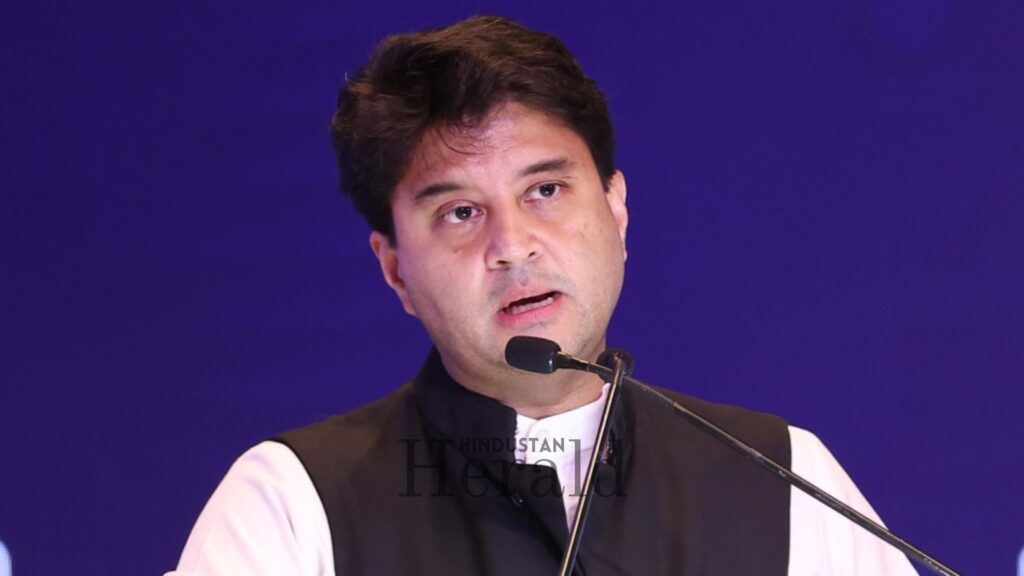
He then got to the practical part. Keep an onion in your pocket, he told the gathering. Nothing will happen to you. He also, somewhat endearingly, noted that while he may look young, his soul is old, and that as Ayurveda gains ground in modern India, people should not be too quick to abandon the old ways.
Now, the Chambal reference is not throwaway political theatre. The Chambal belt, spanning the rougher edges of Madhya Pradesh and Rajasthan, has always been one of India’s most climatically severe zones. Rocky ravines, dry heat, temperatures that climb early in the season and refuse to come down. Scindia has campaigned through this landscape for the better part of three decades. His connection to it is real, not manufactured. For him, invoking Chambal toughness is less a stunt and more a reflex, the kind of thing you say when the place has shaped you more than you shaped it.
That said, a reflex and a policy recommendation are two different things.
He Has Been Saying This For Years
What got somewhat lost in the wave of memes is that this is not a new talking point for Scindia. Back in the summer of 2023, when Gwalior-Chambal temperatures were already above 45 degrees, he landed at Gwalior airport, pulled onions out of his kurta pocket, held them up for the district administration officials waiting to receive him, and told them they should be doing the same. He said then, as he said now, that carrying an onion helps ward off heat stroke and urged officials to spread the practice.
So this is a man who actually does this. He is not borrowing a line for the crowd. Whatever one thinks of the science, the conviction appears genuine.
What The Science Actually Says
The folk belief behind the onion remedy runs old and wide across northern and central India. Ask any older woman in a village in Rajasthan or UP and she will tell you the same thing Scindia did. Raw onions in your pocket, sometimes a slice rubbed on the back of the neck, are a standard part of the summer survival kit that generations of rural Indians have used without any input from a dermatologist or a climate scientist.
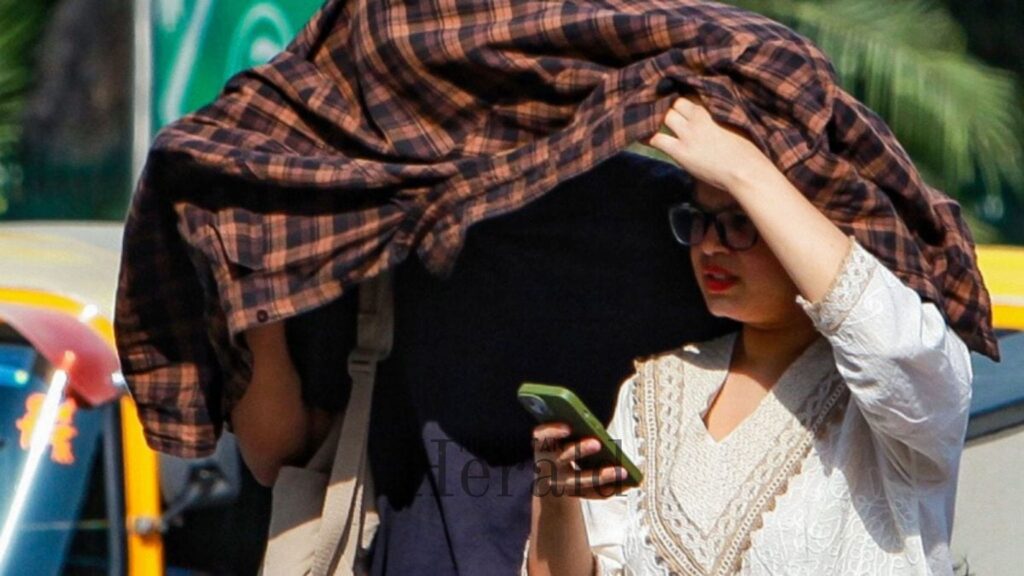
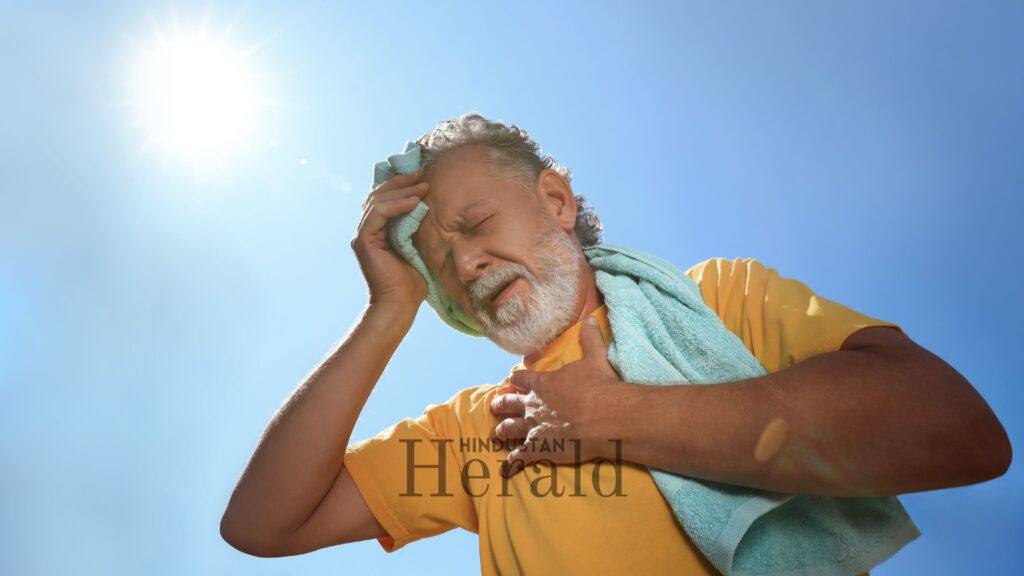
The problem is that the science has not cooperated. Public health researchers have checked the claim and found no evidence that carrying an onion in a pocket protects against heat stroke in any meaningful way. Onions do contain compounds that act as antioxidants and have mild anti-inflammatory properties when eaten, but there is nothing in the research literature to suggest that proximity to one’s thigh can draw out body heat or prevent sun-related illness. One review pointed out, fairly enough, that the strong smell of a raw onion pressed against a cotton kurta in 46-degree heat might itself become a problem before the heat does.
What actually works is less poetic but more dependable: drink water consistently through the day, not just when you are thirsty; stay out of direct sun between 11 in the morning and 4 in the afternoon; wear loose, light cotton; and if you feel dizzy, nauseous, or stop sweating despite the heat, treat that as an emergency.
The Heat Is Not Metaphorical
While the onion debate played out on Twitter, the meteorological picture on Sunday was genuinely grim. The IMD warned that maximum temperatures were ranging between 40 and 46 degrees Celsius across most of the country, with the notable exception of the western Himalayas, northeast Bihar, and the northeast. The highest recorded temperature that day was 46.9 degrees Celsius at Akola in Maharashtra.
Heat wave alerts were active for Jammu and Kashmir, Punjab, Haryana, Chandigarh, Uttar Pradesh, Rajasthan, Madhya Pradesh, Bihar, and Gujarat. Chhattisgarh was under similar warnings till April 28. Hot and humid conditions were also flagged for coastal Maharashtra, parts of Gujarat, Tamil Nadu, Andhra Pradesh, Rayalaseema, and Kerala.
Shivpuri, where Scindia was speaking, is well within this zone. The Chambal region, he invoked with such pride, is, in fact, one of the hardest-hit areas every summer. The people sitting in that crowd on Sunday were not there to debate Ayurveda. Many of them will spend the coming weeks in direct sun, working on land or construction sites or roadside stalls, without so much as a working ceiling fan waiting for them at home.
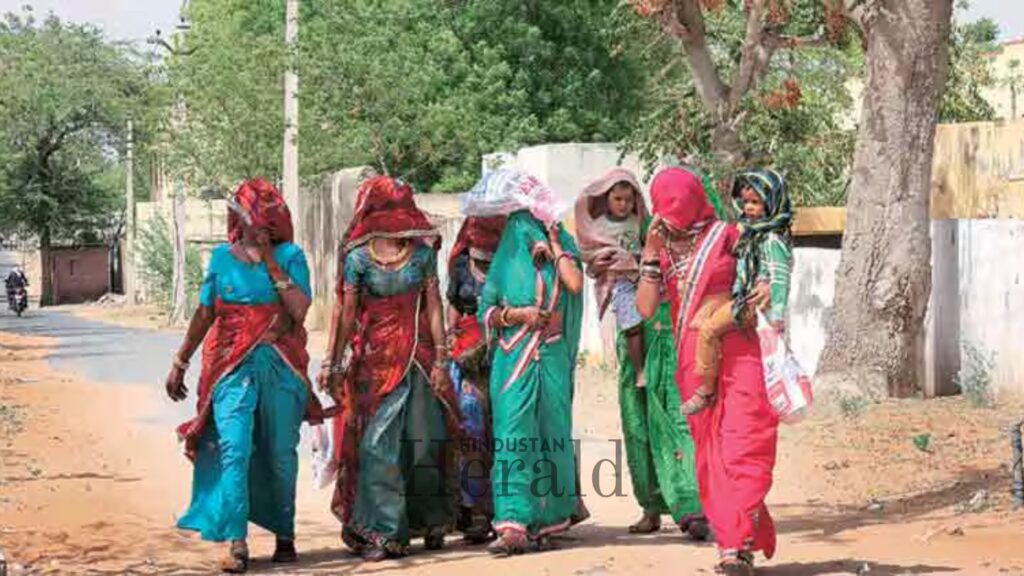
For those people, Scindia’s onion tip lands differently than it does on a political commentary panel. It sounds like something their grandmother said. It is familiar. It is comforting in the way only familiar things can be, even when the comfort is not strictly earned.
The Larger Problem With Ministerial Folk Wisdom
Here is where it gets more complicated. Scindia is not a local panchayat member speaking at a community gathering. He is a Union Minister with access to policy levers, bureaucratic networks, institutional resources, and a national platform. When someone with that profile turns up during an active heatwave to talk about onions, it creates a specific kind of distortion.
It is not that traditional knowledge is worthless. Much of it is not, and some of it, around diet, clothing, timing of outdoor work, and household cooling, has real practical value. The problem is what it displaces in the public conversation. The minutes spent debating whether Scindia’s onion pocket works are minutes not spent asking whether the district cooling centres in Shivpuri are actually open and functional, whether construction workers in the region have access to the shade and water breaks that the labour ministry’s own guidelines require, whether heat stroke deaths in the Chambal belt are being reported accurately or quietly absorbed into vague hospital records.
India’s heat mortality numbers are already thought to be severely undercounted. Researchers and public health officials have said this repeatedly. The official figures do not capture the full reality of who is dying and from what, particularly in rural areas where cause of death documentation is weak.
Against that backdrop, a minister’s viral onion moment is, at minimum, a missed opportunity. At worst, it signals a kind of comfortable distance from the actual stakes of the problem.
What Comes Next
The 2026 summer season is already tracking hot. Climate data and IMD projections both suggest that India’s extreme heat windows are arriving earlier in the year and extending longer at the back end. The communities with the least protection, daily wage workers, farmers mid-harvest, elderly people in poorly ventilated homes, urban slum residents, are the same communities that have always borne the sharpest end of this problem.
Scindia is not a villain in this story. He spoke with apparent warmth and genuine regional pride. The onion thing is, in its own way, a small act of solidarity with people who cannot afford to be delicate about the weather. But solidarity without policy is sentiment. And the country is running out of summers where sentiment will be enough.
For now, the onion is in the pocket. The real question is what else goes in alongside it.
Stay ahead with Hindustan Herald — bringing you trusted news, sharp analysis, and stories that matter across Politics, Business, Technology, Sports, Entertainment, Lifestyle, and more.
Connect with us on Facebook, Instagram, X (Twitter), LinkedIn, YouTube, and join our Telegram community @hindustanherald for real-time updates.

- Arun Upadhayay

- Arun Upadhayay
- Arun Upadhayay
- Arun Upadhayay




 Ananya Sharma and Rajiv Menon