 By Sandeep Verma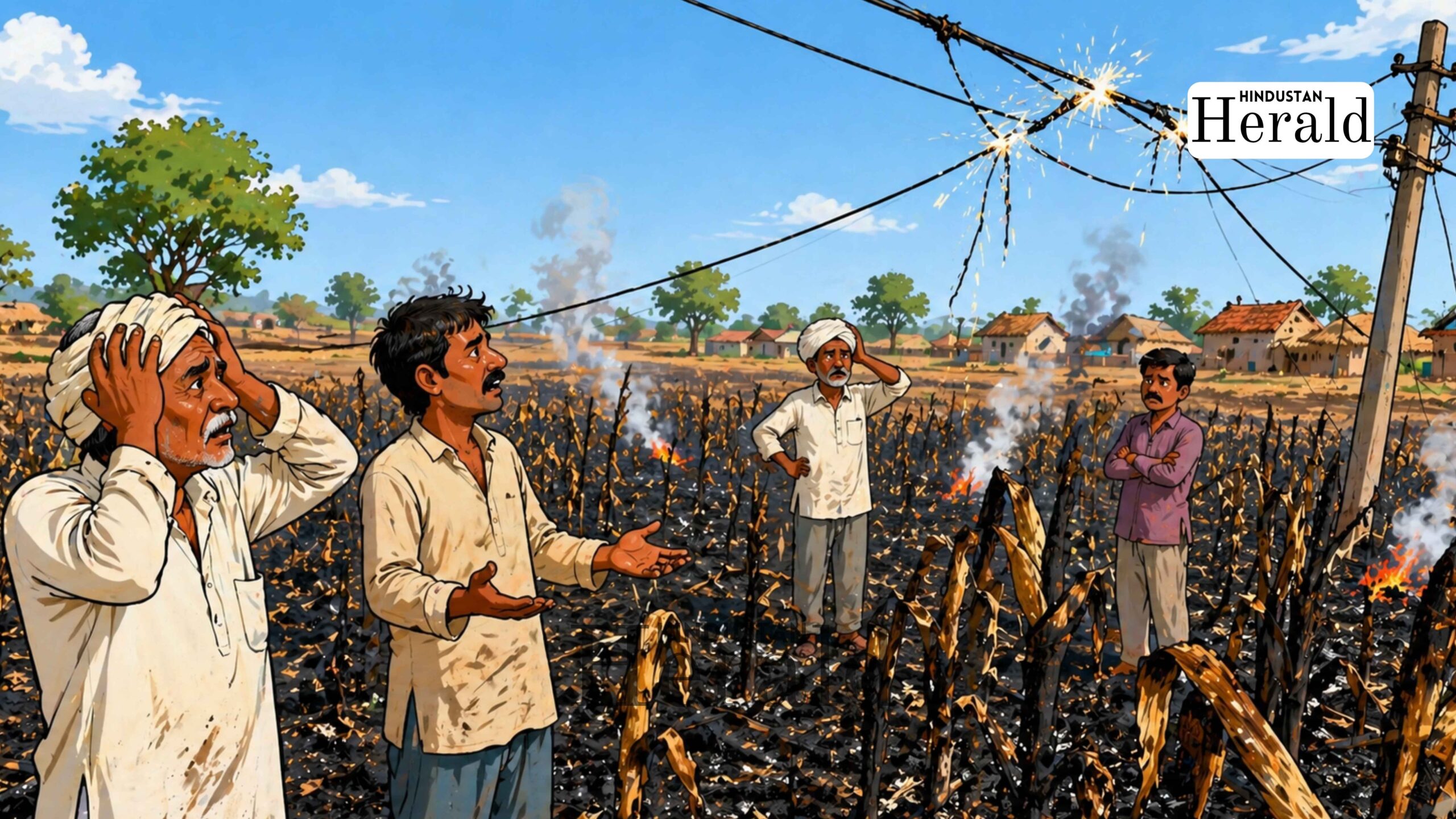
Nirmal, April 30: The maize was ready. Anyone who has farmed knows what that means. It means the worst is behind you. The soil work, the sleepless nights watching the sky, the fertiliser bills you paid on credit, the twice-daily trips to the field. All of that is done. What is left is just the waiting, and then the cutting, and then finally, the money.
For the farmers of Pembi mandal in Nirmal district, that moment never came.
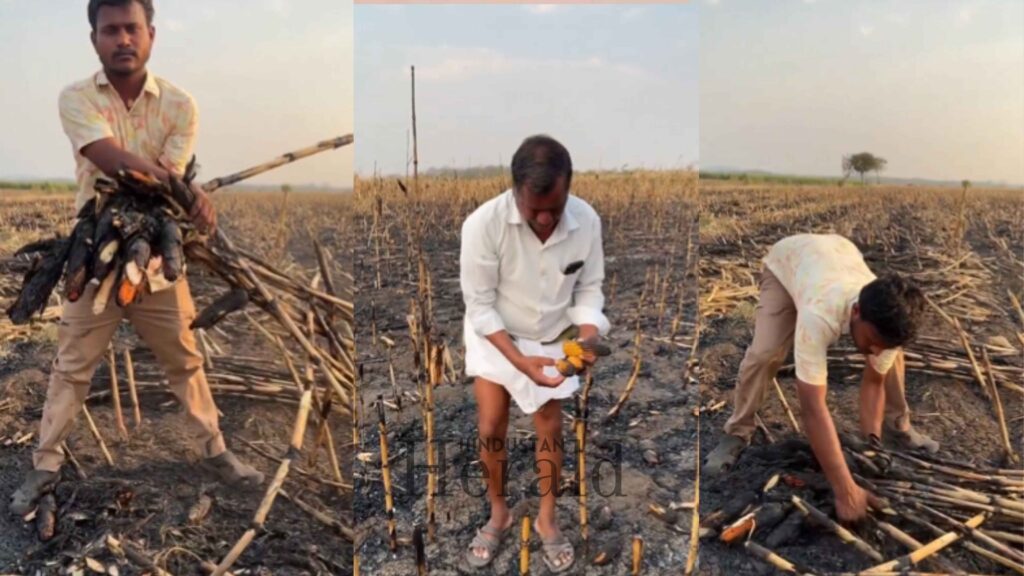
Sometime on the night of April 29, a short circuit from sagging overhead electric cables set their fields on fire. The crop did not smoulder. It burned. By the time the flames were done, roughly 12 acres of standing maize had been turned to ash. The harvest these families had been building toward for months was gone, and in its place was a blackened field and a debt that did not disappear with the crop.
No one in power said anything for a long time.
The Wire That Nobody Fixed
People in and around Pembi mandal will tell you the electrical infrastructure in agricultural areas has been a problem for years. Not a whispered concern, an open one. Wires that hang too low in the summer heat. Lines that pass directly over standing crops without adequate clearance. Transformers that no one inspects until something goes wrong. The Northern Power Distribution Company of Telangana, known as TSNPDCL, is responsible for this network. As of the time of writing, it has not issued a single word about what happened in Pembi mandal or why.
That is not surprising. Utility boards in India are rarely quick to explain failures that burned a farmer’s field rather than tripped a city substation. The incentive to stay quiet is obvious. The consequences of staying quiet, for the farmers who lost everything, are also obvious.
What happened here was not a natural disaster. A natural disaster is something you cannot prevent. A cable short circuit over a ripe harvest field is something else. It is an infrastructure failure. It is the result of a wire that was hanging too low, or sparking when it should not have been, or simply not maintained the way it should have been in a zone where the consequence of failure is someone’s entire livelihood.
That is the part of this story that tends to get buried under the relief announcements.
Numbers That Don’t Capture It
Twelve acres. On paper, that is a number. In practice, maize fields in Telangana at good yields can produce between 25 and 35 quintals per acre. At the mandi rates that have been prevailing, somewhere around Rs 1,800 to Rs 2,000 per quintal, the destroyed crop represents a potential income loss that could run anywhere between Rs 5 lakh and Rs 8 lakh, possibly more depending on the individual holdings.
That number still does not tell the full story, because it only accounts for what was lost. It does not account for what was already spent. Seeds, soil preparation, irrigation, fertiliser, pesticide, and hired labour. All of that money goes in long before any of it comes back. Farmers do not produce on savings. They produce on loans, on credit from input dealers, on advances from commission agents. When the crop fails, the debt does not.
So the real loss here is not 12 acres. The real loss is everything those families put in, plus everything they were counting on getting out, plus the compounding weight of having to start again with nothing.
Still, when the sun came up on April 30, there was no revenue officer in Pembi mandal. No agriculture department official. No insurance surveyor begins the documentation that would eventually, if the process worked as it should, translate the damage into a compensable claim. The fields were burned, and the farmers were standing in them alone.
A Response That Arrived Late

By midday on April 30, the story had made enough noise that Chief Minister A. Revanth Reddy was compelled to respond. He directed district officials to assess the damage and ensure that financial assistance reaches the affected farmers. The Collector and other authorities have reportedly begun moving on those instructions.
Credit where it is due. The Chief Minister did respond, and that matters. A directive from the top can move things that would otherwise stay stuck for weeks in bureaucratic inertia.
That said, the timeline here deserves to be noted plainly. The fire happened on the night of April 29. The Chief Minister’s response came the following afternoon. What filled that gap for the farmers in Pembi mandal was nothing. No local official, no elected representative, no party worker from either the ruling Congress or the opposition showed up to simply stand with these people and acknowledge what had happened to them.
That gap, those hours of official silence, is not a footnote. It is the story.
Because here is the thing about farming families in Telangana’s northern districts. They are not people who expect the government to solve everything. They have learned not to. What they do expect, what any reasonable person would expect, is that when something catastrophic happens through no fault of their own, someone in authority shows up. Not to make promises. Just to show up. To look at the field, to speak to the families, to make them feel like they are visible.
That did not happen in Pembi mandal. Not for a long time.
The Silence From Every Direction
The political silence in this case was comprehensive. No local MLA made a public statement. No opposition leader arrived to inspect the damage or issue a press note demanding compensation. The Bharatiya Rashtra Samithi and the BJP, both of which operate actively in northern Telangana and both of which rarely miss a chance to highlight farmer distress under the current government, were quiet.

Make of that what you will.
The media silence was perhaps even more telling. Nirmal is not a district that generates much national coverage at the best of times. A fire in a farm field, with no deaths, no dramatic rescue, no flood or storm to attach it to, is not the kind of event that moves television producers or gets a slot on the evening bulletin. There were no cameras in Pembi mandal on the night of April 29. The farmers who lost their crop did not have someone pointing a microphone at them and asking how they felt.
They felt destroyed. That much is obvious without asking.
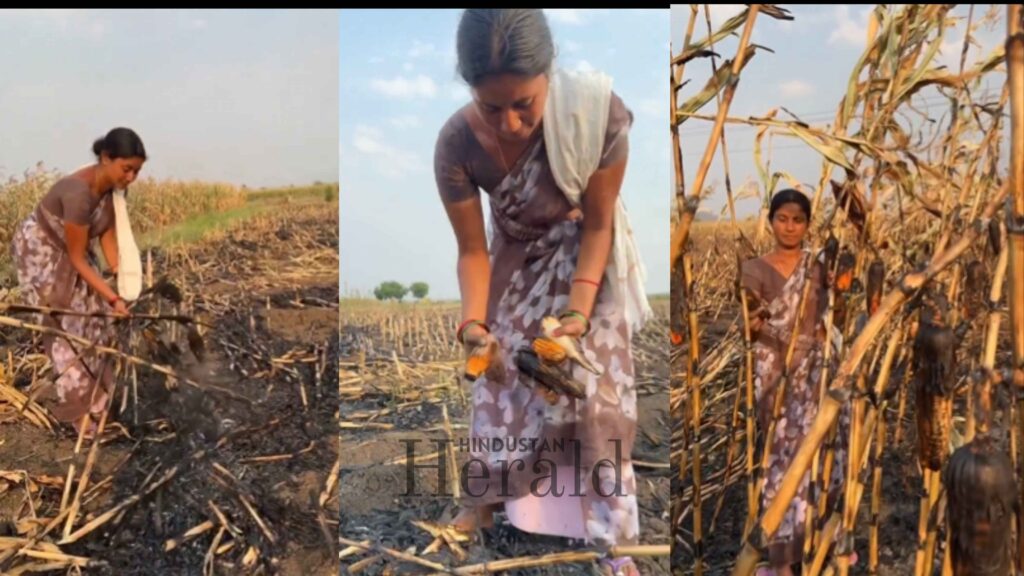
The only reason this story exists at all is because the people on the ground made noise in the ways available to them, through social media, through community networks, through the kind of informal word-of-mouth that eventually reaches someone who reaches someone else. That is a fragile and unreliable way for justice to begin. But it is often the only way for farmers in remote mandals.
This Has Happened Before
Pembi mandal has seen electrical infrastructure failures before. Telangana Today had previously reported on huts in a village within this same mandal being burned down due to an electrical short circuit linked to faulty wiring. In a different and more tragic incident elsewhere in Nirmal district, a farmer died after coming into contact with a live wire at his field while trying to irrigate his maize crop at night.
The pattern in all of these cases is the same. Rural electrical infrastructure fails. Property is destroyed, or a life is lost. An inquiry is promised. Compensation is discussed. And the lines remain exactly as they were.
TSNPDCL has a legal and operational obligation to maintain clearance between electrical transmission lines and the ground below, particularly in agricultural zones during harvest season, when crops are at their tallest and most combustible. Whether those standards are being met in Pembi mandal is a question the utility board has not yet been asked publicly, and has certainly not answered.
Someone should ask it. Loudly.
What Actually Needs To Happen Now
The Chief Minister’s instruction is a starting point. It is not an outcome. What the affected farmers need is a proper panchanama conducted by revenue officials, a verified and documented crop loss assessment that goes on record, and compensation released through the appropriate government scheme without the usual delays and paperwork spirals that eat months before a rupee reaches the farmer.

Beyond the immediate relief, TSNPDCL must be directed to conduct an urgent inspection of all electrical lines passing through agricultural fields in Pembi mandal and surrounding areas. If lines are found to be sagging, they need to be repaired before the next season begins. If the lines in question here were already flagged by local complaints and nothing was done, that is not an administrative oversight. That is negligence, and it should be treated as such.
There is also the insurance question. Crop fire damage is, in principle, covered under PM Fasal Bima Yojana for enrolled farmers. Whether the affected families in Pembi mandal were enrolled, whether their holdings qualify, and whether the documentation process will be initiated swiftly enough to be of any actual use to them right now, these are things that nobody has publicly confirmed yet.
For now, a promise has been made from Hyderabad. What happens in the next few days in Pembi mandal itself will determine whether that promise means anything. Revenue officials need to be on the ground. Agriculture officers need to begin documentation. And the families standing in those burned fields need to see a face that belongs to the government they pay taxes to and vote for.
The maize is gone. The season is finished. But the obligation has not burned away with it. If anything, it has grown.
Stay ahead with Hindustan Herald — bringing you trusted news, sharp analysis, and stories that matter across Politics, Business, Technology, Sports, Entertainment, Lifestyle, and more.
Connect with us on Facebook, Instagram, X (Twitter), LinkedIn, YouTube, and join our Telegram community @hindustanherald for real-time updates.

Regional journalist bringing grassroots perspectives and stories from towns and cities across India.
- Sandeep Verma

- Sandeep Verma
- Sandeep Verma
- Sandeep Verma