 By Kavita Iyer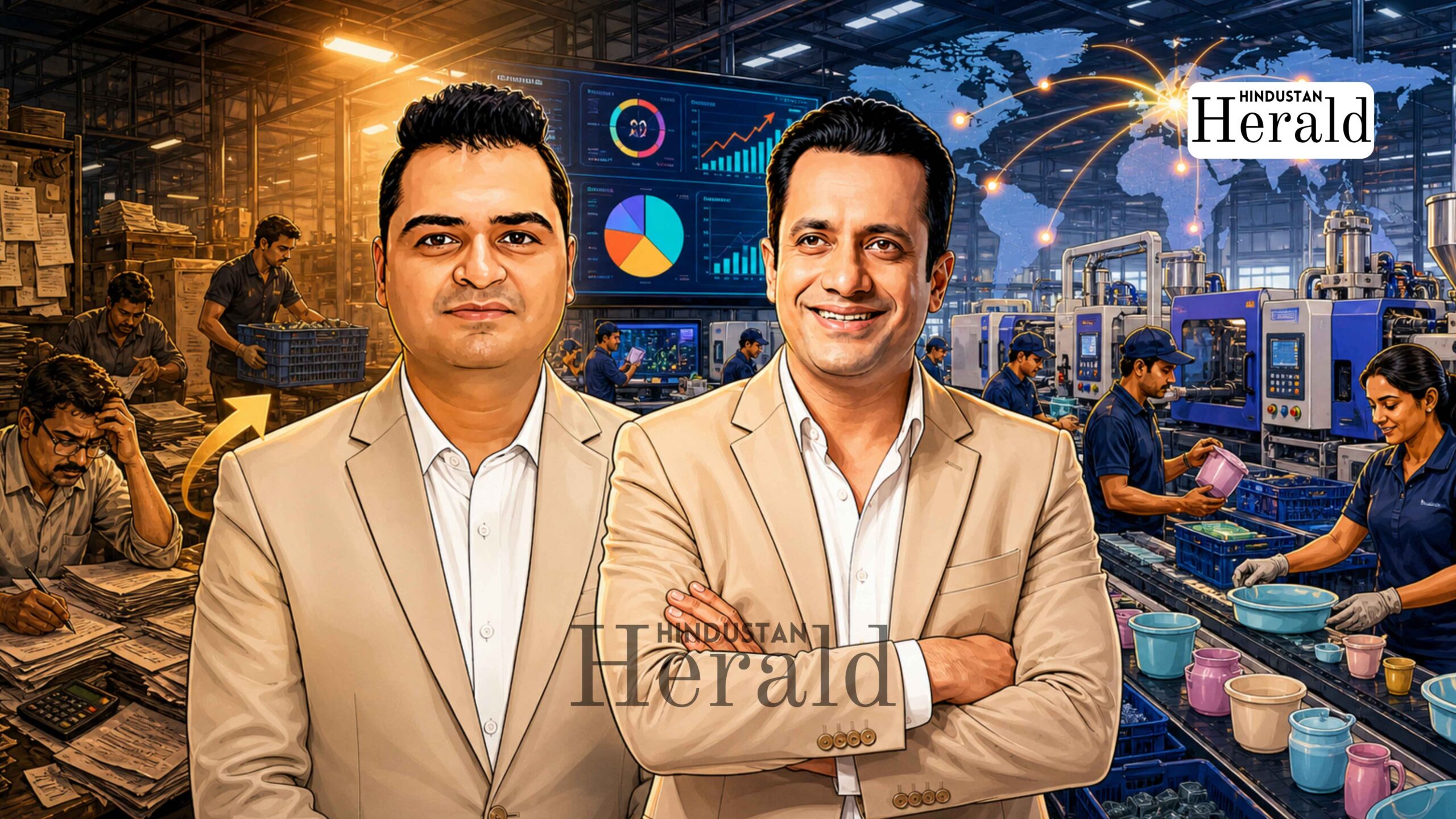
New Delhi, 1 May: Nitesh Khuranna didn’t set out to reinvent his business. He just knew something wasn’t working. Petro Industech Pvt. Ltd. his plastic bath products company, wasn’t struggling in the traditional sense. There were buyers, there were distributors, and the numbers, while not spectacular, were steady enough to keep things moving. But steady, as any founder eventually learns, is just another word for stuck.
The company had been built the old-fashioned way: personal relationships, word of mouth, the kind of trade networks that take years to cultivate. That foundation was real, and it mattered. But underneath it, the cracks were showing.
The Problems Nobody Wanted to Talk About
New employees were a particular headache. Getting someone up to speed took the better part of three months, 90 days of hand-holding, shadowing, and informal knowledge transfer before anyone could actually be trusted to do the job independently. Multiply that across a growing team, and you’re looking at a serious drag on both time and money. It wasn’t anyone’s fault, exactly. There just wasn’t a system.
Meetings were another sore spot. There were plenty of them, perhaps too many, but they rarely produced anything concrete. People talked, points were raised, and then everyone went back to doing more or less what they’d been doing before. Decisions got deferred. Accountability was fuzzy.
Meanwhile, the product side had its own quiet problem. Petro Industech was playing largely in the commodity space, competing on price like everyone else. It kept the orders coming, but it also kept the margins thin. There was no real differentiation, no clear reason for a buyer to choose them over the next manufacturer down the road.
And expansion? That depended almost entirely on who knew whom. Distributor onboarding was more of an improvised process than a defined one, which meant growth was as much a matter of luck as it was strategy.
Deciding to Do Something Differently
At some point, Khuranna decided that a lot of business owners in his position resist: he asked for outside help. The company joined Bada Business Private Limited’s Cash Growth Program, the CGP, built and guided by Dr. Vivek Bindra. It wasn’t a small commitment, and it wasn’t guaranteed to work. But it was a deliberate choice to stop running on instinct alone.

What followed wasn’t a dramatic overnight overhaul. It rarely is. It was more like a slow, methodical peeling back of layers, identifying what was broken, why it was broken, and what a functioning version of it would actually look like.
What Actually Changed
Training That Didn’t Take Forever
The 90-day onboarding problem turned out to be largely a documentation problem. There was no shortage of knowledge inside the company, it just lived in people’s heads rather than in any structured format. Once proper SOPs were built and training modules were standardized, the timeline collapsed. New hires were getting functional in 3 days. Not perfect, not fully seasoned, but capable and contributing. That’s a 97% reduction in training time, and the cost savings that come with it were immediate.
Meetings That Actually Ended With Something
The MIS dashboard implementation sounds technical, and in a sense, it is. But the real shift was behavioral. When you walk into a meeting with real-time performance data in front of you, the conversation changes. It becomes specific. It becomes accountable. The long, circular discussions that used to eat up hours got replaced by focused 30-minute check-ins. Productivity across the team, by internal estimates, went up by around 70%. That’s not a small number.
Selling Better, Not Just Selling More
Perhaps the most strategically significant change was the move away from commodity pricing. Petro Industech began repositioning toward premium products a shift that sounds simple but requires a certain confidence in your own operation. You can’t charge more if your systems are unreliable, your delivery is inconsistent, or your team isn’t aligned. The groundwork that had been laid made this shift possible. And the margin improvement that came with it set the financial foundation for everything else.
Building a Real Distribution Network
The distributor side got a complete rethink. Instead of waiting for connections to materialize organically, the company built a structured onboarding approach clear criteria for who they were looking for, defined engagement plans, and actual expansion targets. The result was a 66% increase in the distributor network. That kind of growth doesn’t happen through improvisation.
The Bigger Picture
None of this happened in isolation. The changes fed into each other. Better training meant better-performing staff. Better-performing staff meant cleaner data. Cleaner data meant sharper decisions. Sharper decisions meant the premium repositioning could actually hold. And a stronger distribution network meant there were enough channels to push that repositioning through.
What Petro Industech ended up with wasn’t just a collection of improvements it was something closer to an actual operating system for the business. Growth stopped being something that happened to them and started being something they could plan for.
The company is now projecting 300% growth. Whether that lands exactly on target or falls somewhere close to it, the trajectory is real. You can see it in the structure, in the numbers, in the way the team operates now versus two years ago.
In Khuranna’s Own Words

“Our collaboration with Bada Business under the Cash Growth Program has completely changed the way we operate. From reducing inefficiencies to building a scalable system, we are now focused, data-driven, and prepared for exponential growth.”
It’s the kind of quote that can sound rehearsed when stripped of context. But knowing what the company looked like before the 90-day onboarding, the directionless meetings, the thin margins, the ad hoc distributor relationships, it lands differently. It reads less like a testimonial and more like a man who genuinely surprised himself.
What This Story Is Really About
Petro Industech was never a broken company. It was a capable one operating well below its potential, held back not by lack of effort but by lack of structure. The talent was there. The market presence was there. What was missing was the architecture to turn all of that into something scalable.
That’s the part that often gets overlooked in business transformation stories it’s rarely about fixing something that’s completely fallen apart. More often, it’s about taking something that mostly works and building it into something that consistently does.
That’s what happened here. And that’s what makes it worth paying attention to.
Stay ahead with Hindustan Herald — bringing you trusted news, sharp analysis, and stories that matter across Politics, Business, Technology, Sports, Entertainment, Lifestyle, and more.
Connect with us on Facebook, Instagram, X (Twitter), LinkedIn, YouTube, and join our Telegram community @hindustanherald for real-time updates.

Former financial consultant turned journalist, reporting on markets, industry trends, and economic policy.
- Kavita Iyer

- Kavita Iyer
- Kavita Iyer
- Kavita Iyer