
 By Ananya Sharma and Arun Upadhayay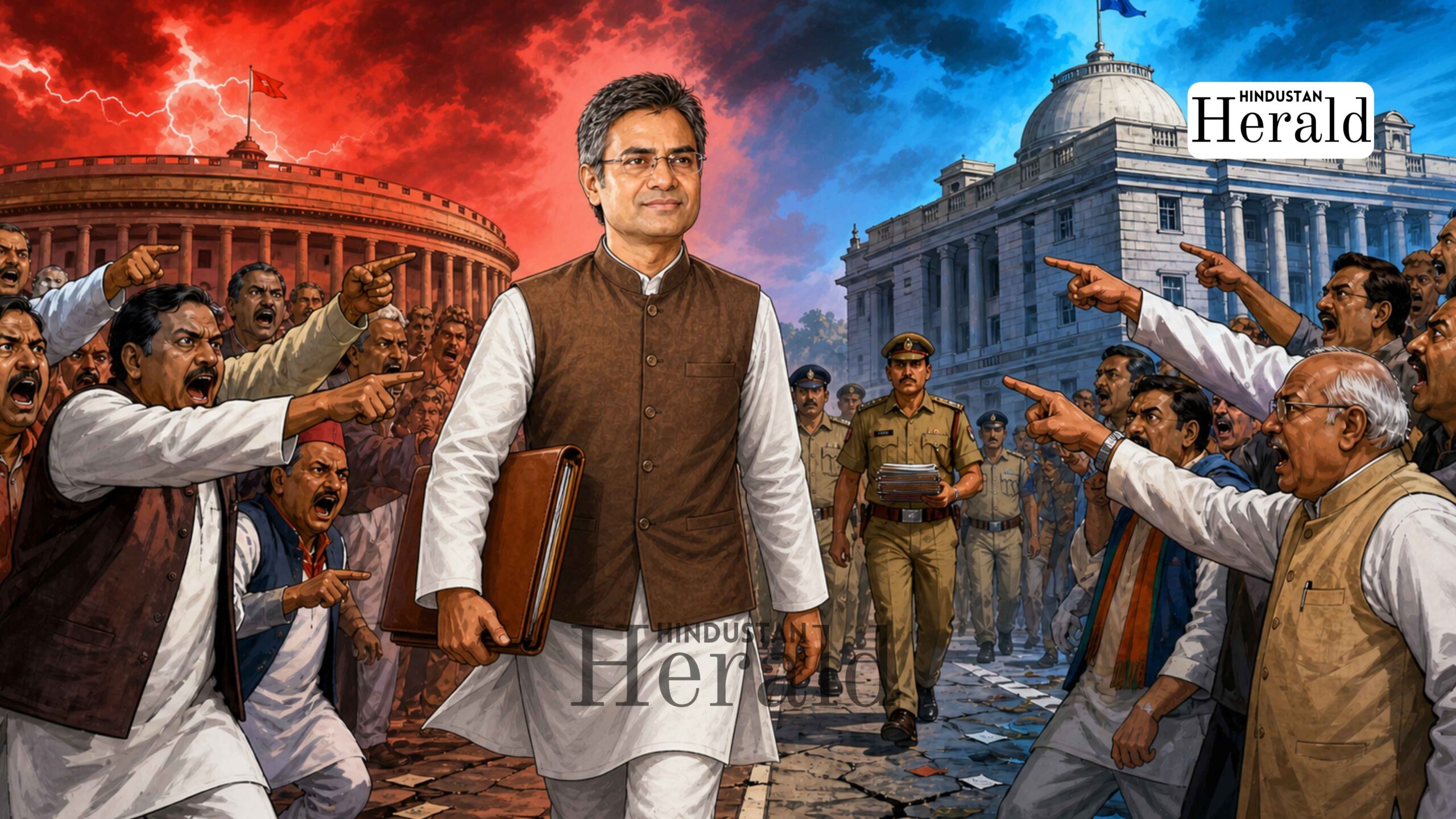
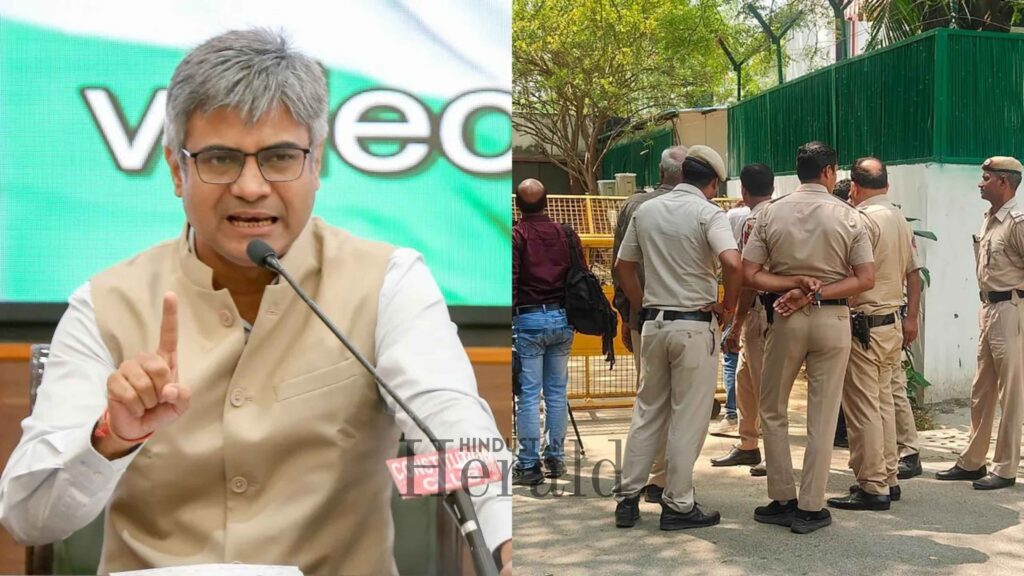
New Delhi, May 2: Two FIRs. Non-bailable. Filed in two separate districts of Punjab. And the man they are aimed at had already left his Delhi home before the police even knocked on his door.
That is where things stand with Sandeep Pathak right now, a Rajya Sabha MP who, barely eight days ago, was one of the most powerful organisational figures inside the Aam Aadmi Party, and who is today a BJP member with Punjab Police looking for him across state lines.
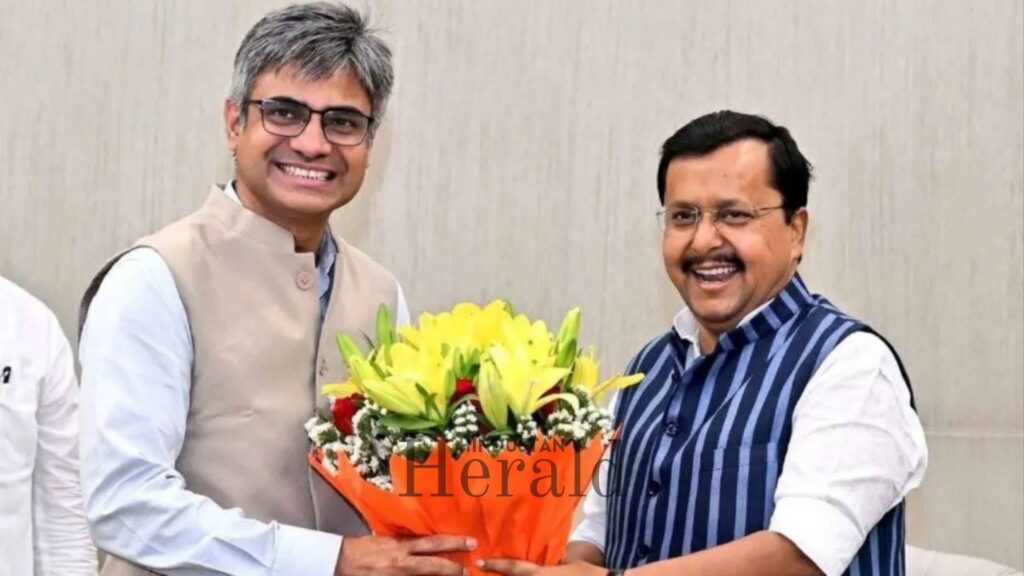
The FIRs, confirmed by sources cited by PTI on Saturday, allege harassment of women and corruption. The charges were registered under non-bailable sections. A team of Punjab Police arrived at Pathak’s residence in New Delhi only to find he had already stepped out. Delhi Police followed shortly after, and security around the premises was tightened. Pathak, speaking from somewhere the cameras could not find him, said he had no knowledge of any FIRs and that the police had not contacted him at all. He said he had always worked with honesty and integrity. “The country is bigger than any party I will never betray it, nor allow anyone else to do so,” he said.
It is the kind of statement that could have been made on any given day over the last ten years, and nobody would have blinked. But right now, eight days after he walked out of the AAP, it lands very differently.
The Man Who Built AAP’s Punjab Machine
Here is the thing about Sandeep Pathak that most casual political watchers probably do not know. He was never the face of anything. No primetime panel debates, no press conference theatrics, no Twitter army of his own. He was the person who made sure all of that ran smoothly for everyone else.
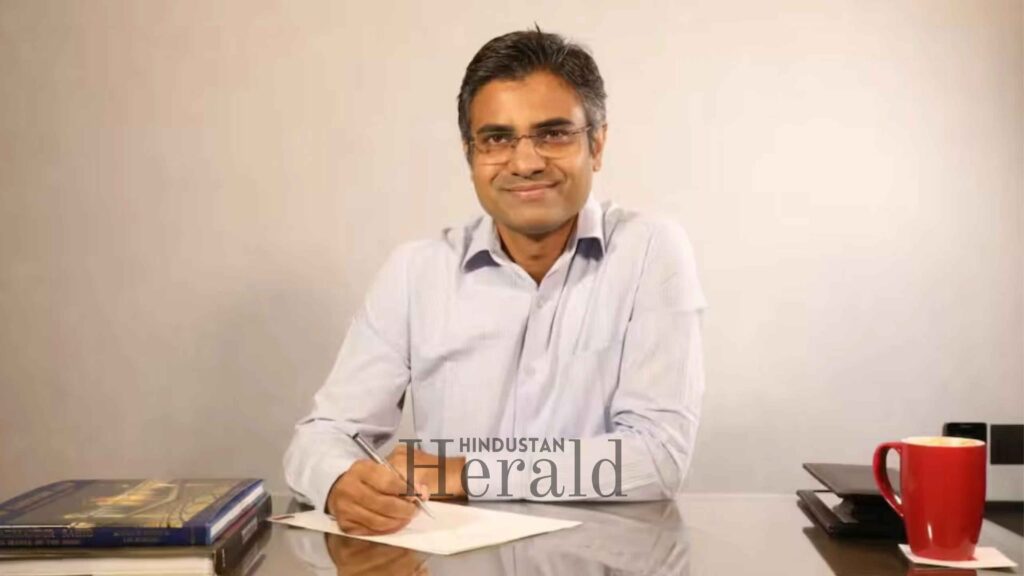
Before politics, Pathak was an academic and not in a vague, ceremonial sense. He holds a PhD from Cambridge in high-temperature superconducting materials. He did post-doctoral work at Oxford and MIT. He taught at IIT Delhi. When a man with that kind of training decides to give a decade to a political party, he brings something unusual with him: a systems brain. The ability to look at a machine and understand exactly what makes it work, and what will make it break.
That is what he gave AAP in Punjab. He did not just manage relationships. He ran data analysis on candidates. He built the organisational scaffolding. He identified the right people for the right roles and made sure the election strategy was stress-tested before it was deployed. When AAP swept Punjab in 2022, a result that stunned even some within the party, Sandeep Pathak was the man most credited with engineering it. He served as in-charge for Gujarat and co-in-charge for Punjab and Himachal Pradesh. He was, in every practical sense, the architect of AAP’s ground presence in the state.
He was also a Rajya Sabha MP from Punjab since April 2022, a position the party gave him in recognition of exactly that contribution.
So when he walked out on April 24, he did not just leave. He took the blueprint with him.
The Day Seven MPs Crossed Over
The defection itself was choreographed with some care. On April 24, Sandeep Pathak joined six other AAP Rajya Sabha members, Raghav Chadha, Ashok Mittal, cricketer Harbhajan Singh, Swati Maliwal, Vikram Sahney, and Rajinder Gupta in announcing they were quitting AAP and merging with the BJP. Three of them, Chadha, Pathak, and Mittal, went directly to the BJP headquarters and met party president Nitin Nabin, who traditionally welcomed them, with sweets.
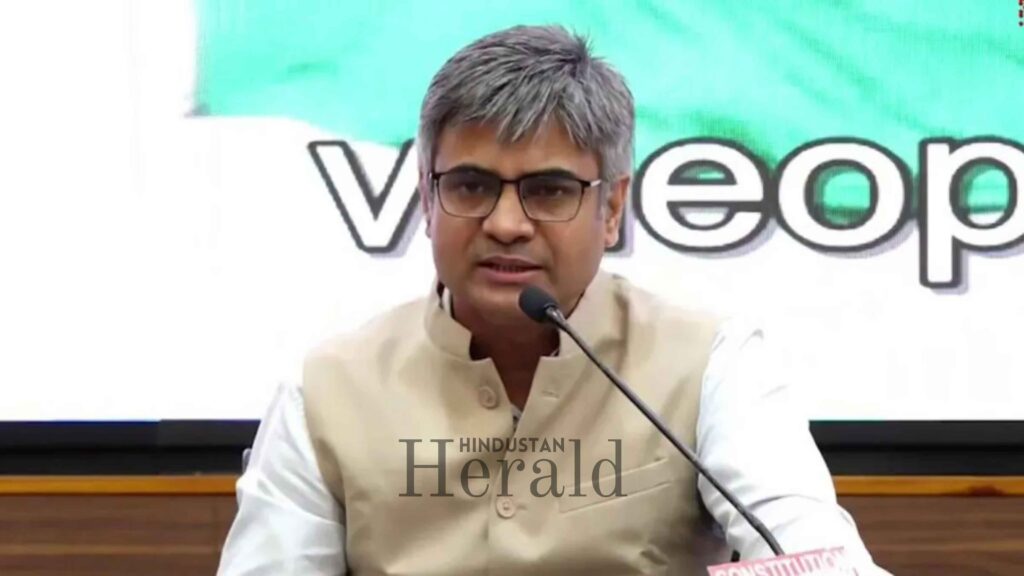
The constitutional arithmetic here was deliberate. Seven of AAP’s ten Rajya Sabha MPs moved together, which took their combined strength well past the two-thirds threshold required under the Tenth Schedule of the Constitution. That threshold matters because it is the exact number needed to avoid disqualification under the anti-defection law. Had even one of them gone alone, they would have risked losing their seat. By moving as a bloc, they closed that window entirely.
Sandeep Pathak, at the press conference that day, was candid about the personal weight of the decision. He said he had spent ten years inside the party. That every political choice he made was taken with the party’s interests in mind. That working within AAP had become difficult, though he did not elaborate extensively on why. “I had never thought that such a situation would ever occur in my life. But it did,” he said, before confirming he was joining the BJP.
AAP’s Sanjay Singh called it betrayal of the party, and of the people of Punjab who had voted for AAP on the strength of promises that these very leaders had helped deliver.
Bhagwant Mann’s Response
The Punjab government moved on multiple fronts quickly. Chief Minister Bhagwant Mann called a special one-day Assembly session on Friday, won a confidence motion, and made it clear that the state government was not rattled at the legislative level, regardless of what was happening in the Rajya Sabha. He has also announced that he will meet President Droupadi Murmu on May 5 to demand a formal recall of the defecting MPs, a move that is more of a political statement than an enforceable constitutional mechanism, but one that signals how aggressively AAP intends to pursue this in the public arena.
And then came the FIRs against Pathak.
Sandeep Pathak is not the only defector who has since faced regulatory or legal action. According to Business Today, a team of more than ten officials from the Punjab Pollution Control Board raided the Trident Group’s unit in Barnala district last Thursday evening this was days after Trident Group chairman emeritus Rajinder Gupta, one of the seven defecting MPs, joined the BJP. The officials collected samples of effluent, groundwater, and other materials. A PPCB official confirmed the raid but framed it as standard compliance activity.
Two separate actions. Two separate defectors. Within the same week.
Vendetta or Accountability The Question Everyone Is Arguing About
The BJP came out swinging on Saturday. Punjab BJP working president Ashwani Sharma called the FIRs a textbook example of political vendetta, accusing the AAP government of using Punjab Police as a weapon against those who had left the party. On X, Sharma wrote that there was no rule of law left in Punjab and that what was unfolding was pure fear from Bhagwant Mann and Arvind Kejriwal. The Shiromani Akali Dal echoed the criticism, also questioning the timing.
The timing question is the one that will not go away, and it is genuinely uncomfortable to wave aside. Sandeep Pathak spent ten years inside AAP. He held senior positions throughout that period. He was in charge of entire states. He was deeply embedded in the party’s Punjab operations right up until the day he left. If the allegations against him are real and documented, the question of why they surfaced specifically in the week after his defection is one that the Punjab government will need to answer clearly, not just to the BJP, but to anyone trying to assess these cases on their merits.
That said, the charges themselves are not trivial. Harassment of women and corruption are serious allegations. Non-bailable FIRs are not routine paperwork. If the evidence exists and holds up, none of Pathak’s political choices change the legal picture. Accountability does not expire when someone switches parties. The problem, as always in Indian politics, is that the moment legal process and political timing collide like this, it becomes almost impossible for the public to separate the two, and both sides know it.
What Punjab Is Really Watching
Underneath all the noise, the stakes are fairly straightforward. Punjab goes to assembly elections in 2027. AAP currently holds the government. The BJP, for all its national dominance, has consistently failed to convert that into state-level traction in Punjab. Having Sandeep Pathak in its corner, a man who knows exactly how AAP’s Punjab apparatus was built, where its strengths lie, and where the pressure points are, gives the BJP something it has not had before: institutional knowledge of the opposition, from someone who built it.
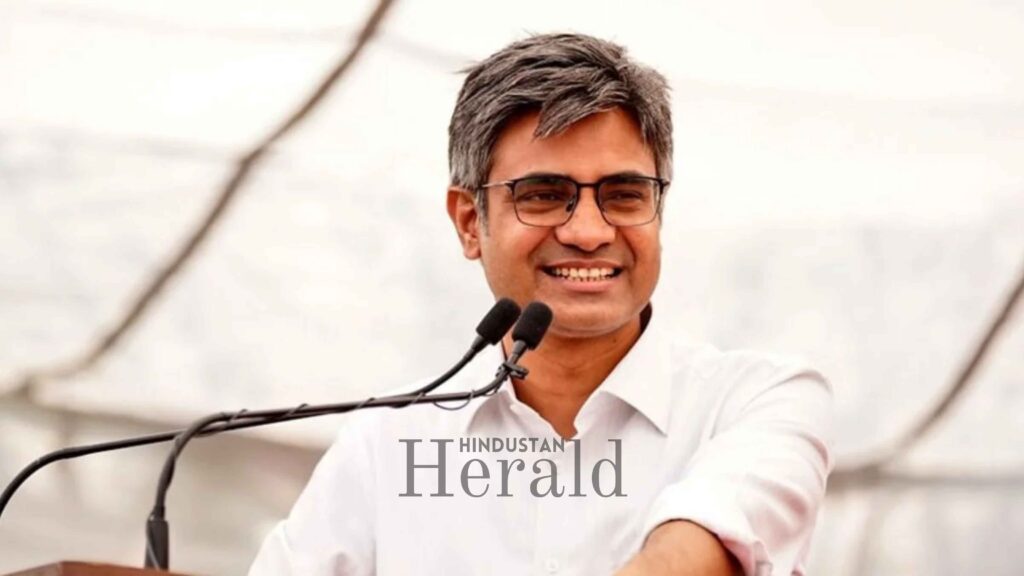
For AAP, the losses are harder to quantify but very real. Pathak was not just a vote in the Rajya Sabha. He was the party’s operational intelligence in a state it cannot afford to lose. The FIRs may slow him down, or complicate his political re-entry, but they do not undo the damage his departure has already caused.
As of Saturday afternoon, Sandeep Pathak remains unreachable by the Punjab Police at his Delhi address. The BJP is calling it political persecution. AAP has not responded to the BJP’s vendetta claims in detail. And Punjab, which has seen its share of political convulsions over the decades, is watching to see which version of this story it is actually living through.
For now, nobody knows.
Stay ahead with Hindustan Herald — bringing you trusted news, sharp analysis, and stories that matter across Politics, Business, Technology, Sports, Entertainment, Lifestyle, and more.
Connect with us on Facebook, Instagram, X (Twitter), LinkedIn, YouTube, and join our Telegram community @hindustanherald for real-time updates.

Covers Indian politics, governance, and policy developments with over a decade of experience in political reporting.
- Ananya Sharma

- Ananya Sharma
- Ananya Sharma
- Ananya Sharma





- Arun Upadhayay
- Arun Upadhayay
- Arun Upadhayay
- Arun Upadhayay




 Sandeep Verma