 By Sandeep Verma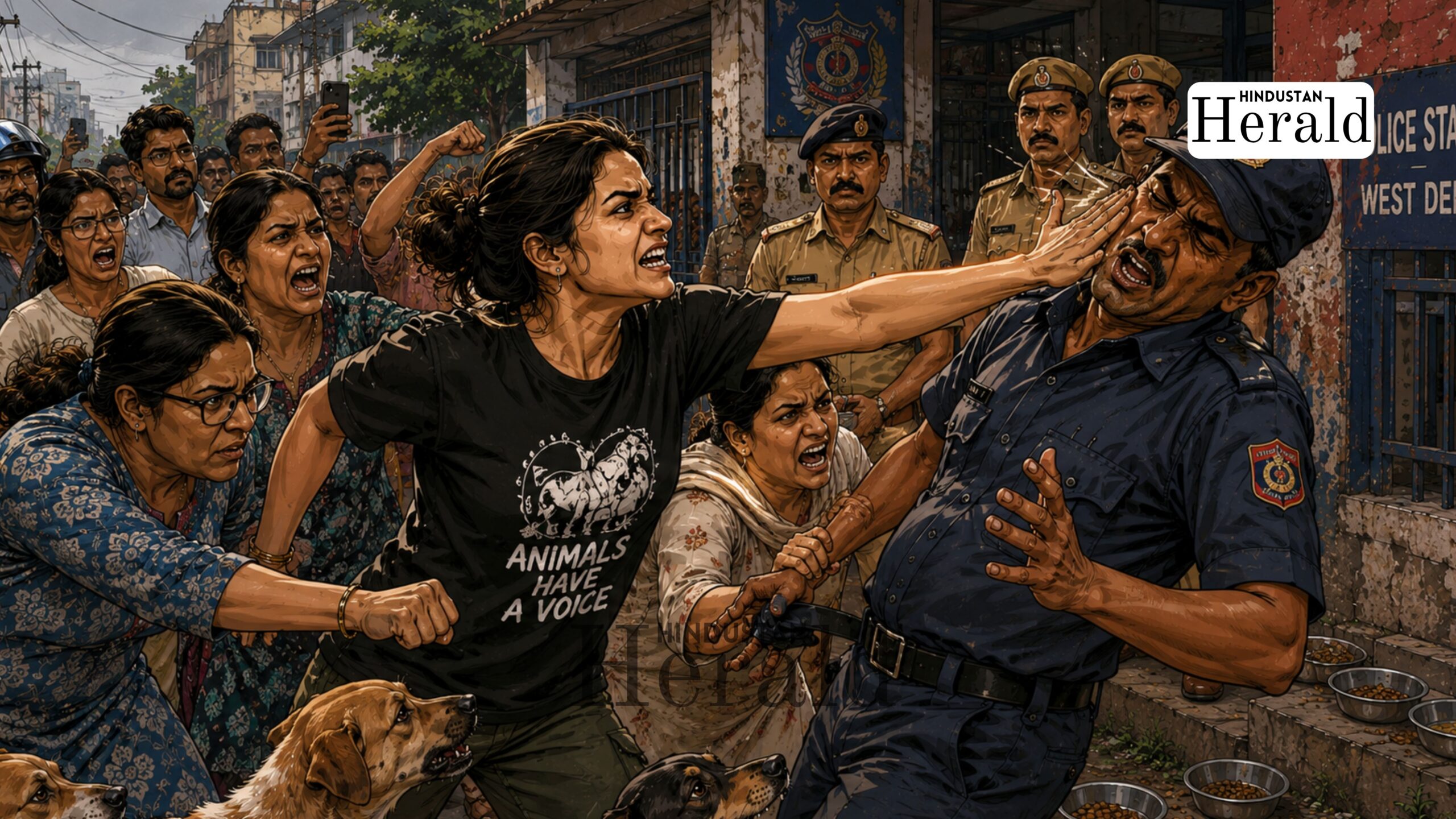
New Delhi, May 10: There is a video going around, and depending on who you are, it will make you angry in very different ways.
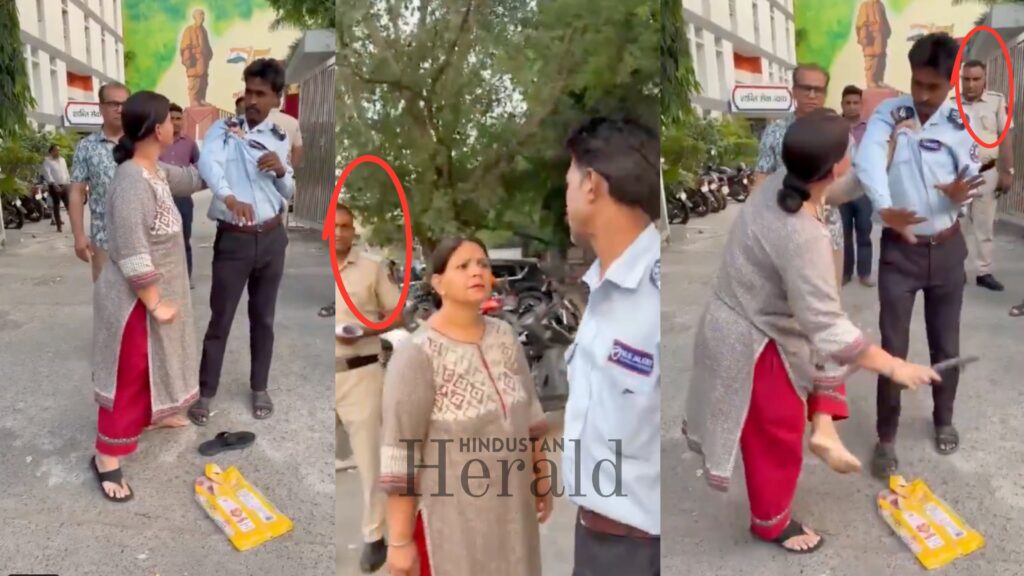
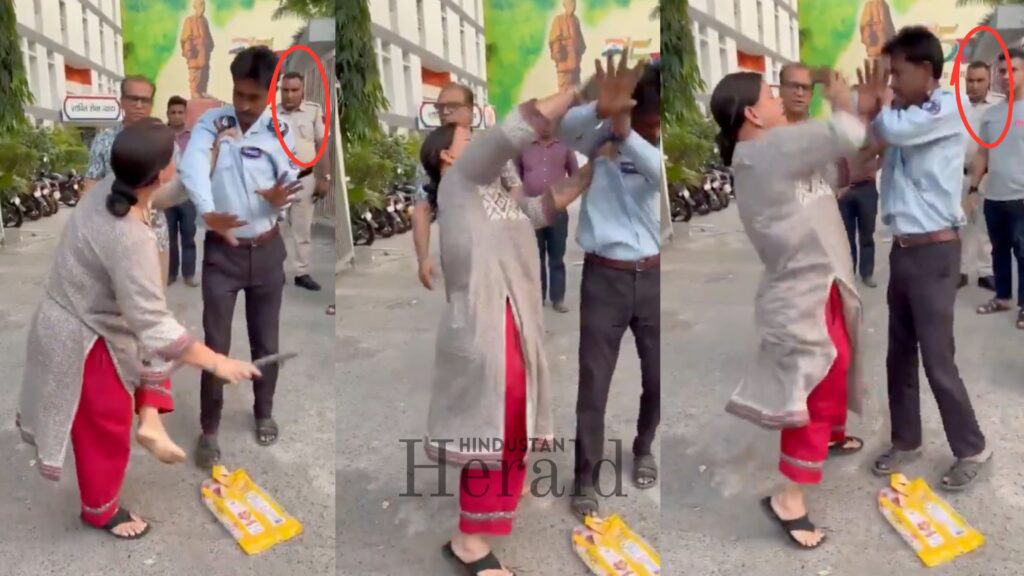
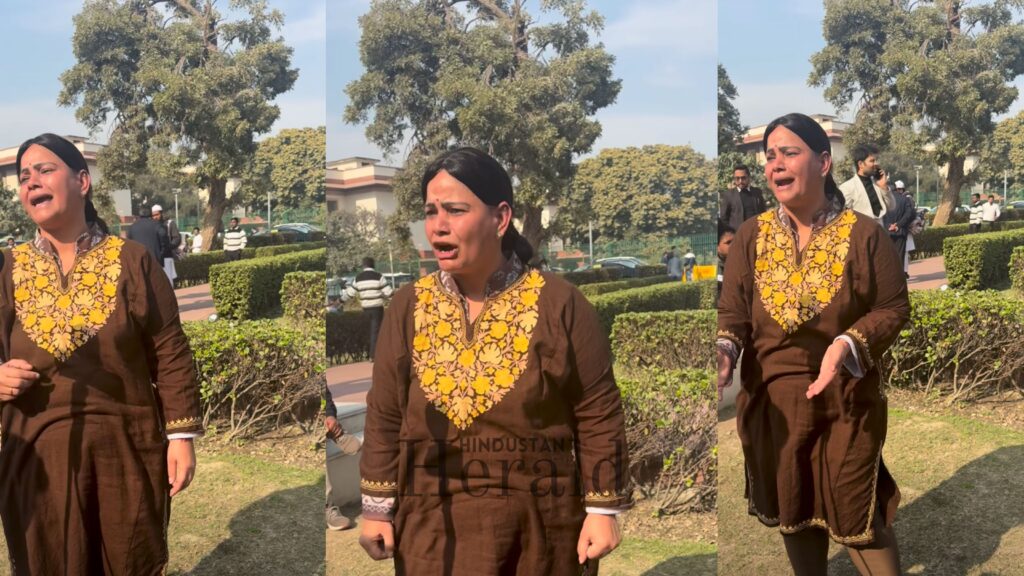
Shot somewhere near the Kirti Nagar police station in west Delhi on the morning of May 9, it shows a woman, identified as Jasmeet Kaur Arora, hitting a uniformed security guard. First with her hand. Then with a slipper. A few uniformed Delhi Police officers are visible in the frame. They do not move. They do not intervene. They watch.
That detail, the watching, is the part that has stuck with people.
What Witnesses Say Happened Before the Camera Rolled
The confrontation did not begin with the slap. According to witnesses at the scene, the security guard, reportedly employed at a building near the police station, had earlier that morning beaten a stray dog to death with a stick. By the time Arora reached the spot, the dog was already gone. No officer had done anything about it. No FIR had been filed. No one had even been questioned.
Arora, who has been involved in stray dog welfare in west Delhi for several years, feeding programmes, rescues, the quiet unglamorous work, apparently reached a point that morning where the absence of any official response became intolerable. What followed is on camera.
Whether what she did was right is one conversation. What drove her to do it is another, and arguably the more important one.
The Officers Who Just Stood There
People online have directed as much anger at the police personnel visible in the video as at either of the two people directly involved in the confrontation. And it is not hard to understand why.
There was, allegedly, an animal cruelty incident. There were police officers present. Then there was a physical assault, also with police officers present. Action was taken in response to neither.
Delhi Police has put out no statement on this. No arrest has been reported as of Saturday evening, not of the guard accused of killing the dog, and not of Arora for what the video plainly shows. The silence from the institution whose station sits at the centre of this story has been, to put it plainly, conspicuous.
This is not the first time this particular complaint has been made. A 2011 Delhi High Court order specifically directed police to protect community dogs and the people who care for them. It declared that harming, relocating, or killing a stray dog was an offence, and that those feeding street dogs were entitled to protection. That order is now fourteen years old. Its practical impact in west Delhi localities, where a dog was apparently beaten to death steps from a police chowki, appears to have been limited.
A Law With a Fifty-Rupee Price Tag on Animal Life
Part of the problem, a large part of it, is what the law actually says.
India’s Prevention of Cruelty to Animals Act has been on the books since 1960. Under it, the penalty for killing or maiming an animal, beating it to death with a stick included, is fifty rupees. In most cases, people do not even pay that. The law exists. The teeth do not.
Animal welfare advocates have been pushing for amendments for years. Draft legislation proposing imprisonment of up to five years for serious cruelty has been floated and discussed. It has not become law. And so the situation remains what it is: a legal framework that treats the death of a stray dog as less consequential, financially and criminally, than a parking violation.
In practice, what this means is that anyone trying to pursue a cruelty case tends to rely on provisions under the Bharatiya Nyaya Sanhita, specifically sections related to mischief by killing or maiming animals, which carry heavier consequences. But getting an FIR registered under any of these provisions, when the victim is a stray dog, typically requires an advocate willing to stand at a police counter and argue for it. Sometimes for hours. Sometimes without success.
Delhi Has Been Fighting This War for a While Now
The Kirti Nagar video did not drop into a city at peace with itself on the question of stray dogs. Delhi has been in open conflict about this for at least the past two years, and the tension has only grown.
In mid-2025, the Supreme Court directed that stray dogs be removed from residential localities across Delhi-NCR. Animal welfare groups protested. The backlash was significant enough that the court eventually moderated its position, requiring that sterilised, vaccinated, and de-wormed dogs be returned to their original locations rather than displaced permanently. Rabid or aggressive animals remained an exception.
That course correction helped, somewhat. But the court’s order had also included a provision slapping a penalty of twenty-five thousand rupees on animal advocates who interfered with authorities implementing removals. Activists were quick to flag how vague that language was, and how easily it could be used against feeders or rescue workers doing entirely legitimate work.
The central government, for its part, has been pushing the Animal Birth Control Rules of 2023, which mandate sterilisation and vaccination programmes and promote the capture-neuter-vaccinate-release model. Last July, three ministries jointly wrote to state governments urging them to cover at least seventy per cent of stray dogs under sterilisation drives. Whether that target is anywhere close to being met in west Delhi is a question nobody in authority seems eager to answer.
The Woman in the Video
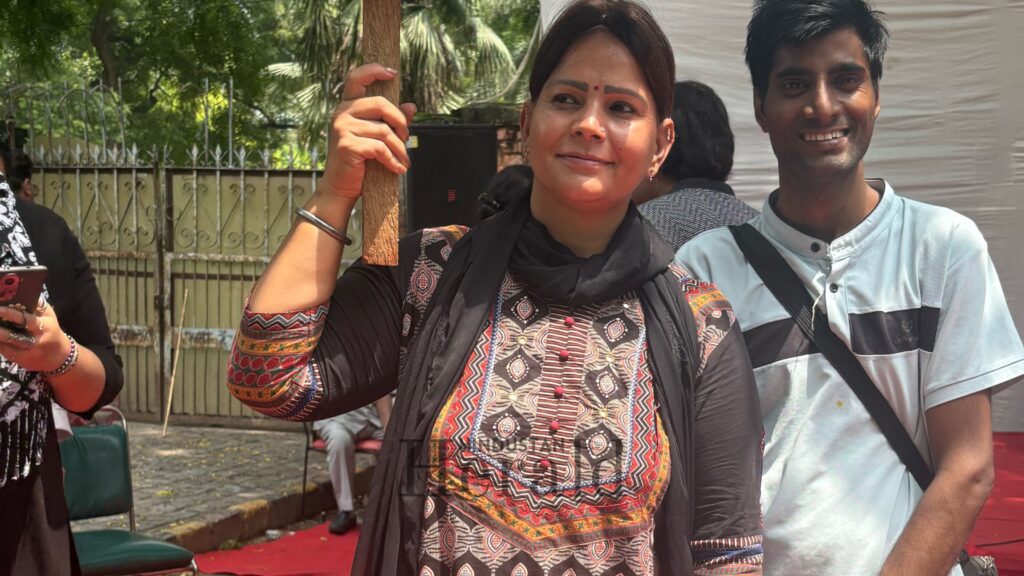
Jasmeet Kaur Arora is not a name most people in Delhi would have recognised before Friday. She is, by all accounts from those who know her, the kind of person who shows up. Winters, heat waves, it does not much matter. She feeds dogs in her area, coordinates rescues, does the work that gets very little recognition and generates very little income.
That kind of sustained commitment, year after year, tends to build a particular relationship with the animals you look after. It also tends to build a particular kind of breaking point.
None of that makes what she did legally defensible. Hitting someone, whatever the provocation, is assault. And the provocation here, as real as it appears to be, was not a courtroom verdict. The guard she struck had been accused by witnesses of killing a dog. He had not been tried or convicted of anything. Taking physical action against him in that moment was, by any standard reading of the law, the wrong call.
Still, to watch the video and feel nothing about the circumstances that produced it requires a particular kind of detachment that most people, it turns out, do not have.
When the System Consistently Fails, Someone Eventually Snaps
That is really what this comes down to. Not the slap, not the slipper, not the social media storm that followed any of it.
Animal rights advocates in Delhi will tell you, and will show you documentation to support it, that getting police to register an FIR when a dog is killed is an exercise in frustration. That cruelty cases pile up without consequence. That the fifty-rupee fine is not a deterrent because it was never designed to be one. That the gap between what the law says and what actually happens is wide enough to drive years of accumulated rage through.
When that is the daily reality of people who care for street animals in this city, the appearance of a video like this one is not a surprise. It was probably a matter of time.
That does not mean the answer is vigilantism. It is not. But the question of why a woman standing outside a police station, surrounded by officers, felt that physically striking someone was the only option available to her, and why the officers around her did absolutely nothing at any point in this sequence of events, is a question that demands a real answer from an institution that has so far offered none.
For now, as of Saturday evening, no case has been registered. No statement has been issued. No action has been taken. The dog is dead, the video is viral, and Delhi Police is, characteristically, quiet.
Stay ahead with Hindustan Herald — bringing you trusted news, sharp analysis, and stories that matter across Politics, Business, Technology, Sports, Entertainment, Lifestyle, and more.
Connect with us on Facebook, Instagram, X (Twitter), LinkedIn, YouTube, and join our Telegram community @hindustanherald for real-time updates.

Regional journalist bringing grassroots perspectives and stories from towns and cities across India.
- Sandeep Verma

- Sandeep Verma
- Sandeep Verma
- Sandeep Verma