
 By Shelesh Joshi and Rajiv Menon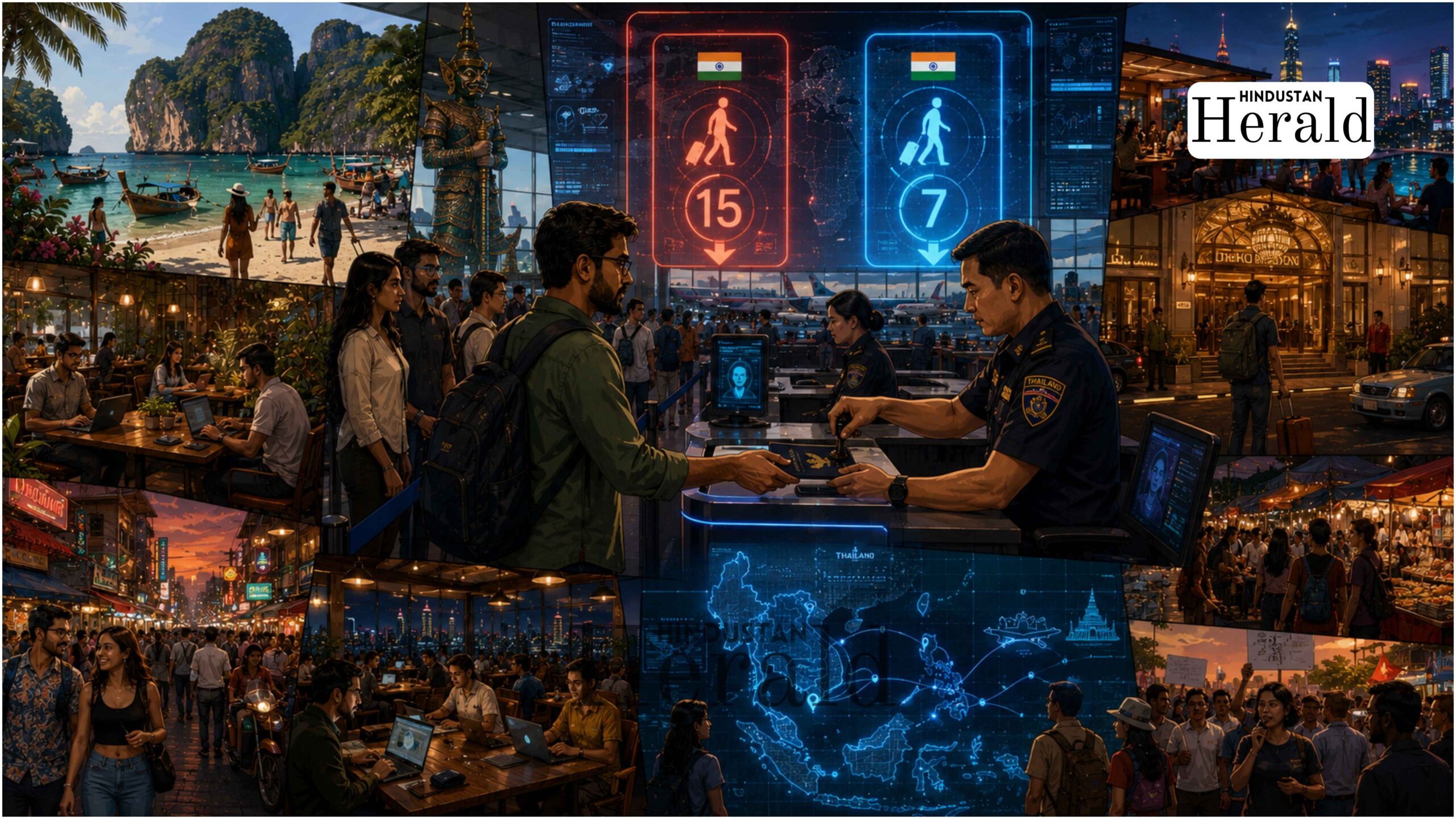
Bangkok / New Delhi, May 20, 2026: Nobody made a big deal out of it. No press conference, no dramatic televised address, no trending hashtag. The Thai cabinet sat down, approved a change, and the news trickled out the way these things usually do through immigration notices, a few government circulars, and eventually a flood of confused posts on travel forums from people who had already booked their flights. But it matters. Especially if you are one of the millions of Indians who travel to Thailand every year.
From June 1, 2026, landing in Thailand on an Indian passport gets you 30 days. It used to get you 60. That is the policy change in one line. But the story behind it is more interesting than the number.
Go Back Three Years and It All Makes Sense
Thailand in 2022 was genuinely hurting. The country runs on tourism the way some places run on oil, and two years of pandemic shutdowns had turned the tap off almost completely.

The beaches of Phuket were quiet in a way that felt surreal. Bangkok’s street food alleys were running at a fraction of their normal pace. Guesthouses that families had operated for two generations had shuttered. The damage ran deep and spread wide. So the government did what any administration in that position would do. It made itself easier to visit.
The visa-free window that had historically sat at around 30 days for most passport holders was pushed up to 60 days for nationals of over 90 countries. No embassy appointment, no advance paperwork. Show up, get your stamp, and you had two full months. People came. They really came.
Indian arrivals crossed 1.8 million in 2024, per the Tourism Authority of Thailand, still growing through early 2025. Europeans returned. Americans returned. And then came a wave nobody had quite planned for: Russian nationals who, following years of geopolitical disruption, had been quietly relocating pieces of their lives to Southeast Asia. On paper, it looked like a recovery story. The numbers were heading right. Officials were pleased.
But on the ground, in the actual neighbourhoods of Chiang Mai and parts of Bangkok, something was shifting in ways that did not show up in any tourism ministry spreadsheet.
What the Numbers Were Not Showing
Spend a morning in the Nimman neighbourhood of Chiang Mai in 2024 and the frustration becomes immediately obvious. What had been a locally rooted, mixed neighbourhood had slowly become something closer to a co-working campus. Coffee shops full of foreigners on laptops from morning to closing. Monthly apartment rents climbing in ways that made no sense for local incomes. Thai small business owners, quietly at first and then not so quietly, noting that they were being edged out of spaces their families had occupied for decades. The same pattern was repeating in pockets of Bangkok and stretches of Phuket.
The people driving this were mostly freelancers and remote workers who had done the maths and realised that Thailand offered a genuinely great quality of life at a cost their foreign incomes could easily absorb. Fast internet, good hospitals, incredible food, warm weather, relatively safe streets.
For a software engineer from Bengaluru earning in dollars, or a British designer working for London clients, the numbers made obvious sense. The problem was that Thailand had never designed its visa-free policy for this. It was built for tourists. People who come, spend, and move on.
The long-stay laptop crowd was something different. And the infrastructure of obligations that normally comes with living somewhere, paying local taxes, contributing to local systems, simply did not exist for them. They were using a tourist lane to live what was functionally a resident’s life. A significant number were not even keeping to the 60-day limit.
According to Bangkok Post, the Thai Immigration Bureau recorded over 130,000 overstay cases in 2025 alone. Officials described it as “unsustainable.” In at least one public statement, they used the word “exploited.” Ministries do not use that word casually.
Why the Government Finally Moved
Prime Minister Paetongtarn Shinawatra’s government was getting pressure from several directions at once. From immigration, the overstay numbers and the informal working situations. From local communities, the neighbourhoods-changing-too-fast grievances. From within the hospitality industry itself, a quiet but persistent argument that long-stay budget visitors were generating far less economic value per head than shorter, higher-spending tourist trips. Cutting the window back to 30 days addressed all of this without requiring anything dramatic.

It is not a ban. It is not even especially restrictive by global standards. It is, more than anything, a correction. A return toward the pre-pandemic baseline. The 60-day window was always a temporary emergency measure. What nobody fully anticipated was how quickly a certain type of traveller would restructure their whole lifestyle around it.
When a temporary policy starts enabling permanent behaviour, governments revisit it. That is exactly what happened here.
What Actually Changes for You
This is where a lot of coverage has been genuinely unhelpful, either scaring people who have nothing to worry about or glossing over the details that actually matter. If your Thailand trips run a week or two, which describes the vast majority of Indian leisure travellers, you will feel nothing from this change. Nothing at all. You were never anywhere close to the 60-day mark. Book your flights normally.
If you do longer trips combining Bangkok with islands like Krabi or Koh Lanta, even generous itineraries usually sit comfortably inside 30 days. Two weeks on the islands, a week in the city, a few days in Chiang Mai you are still fine. Where it starts to bite is with two specific groups.
The first is the remote worker and freelancer crowd. Those who had been using the 60-day window to base themselves in Thailand for months, doing a quick visa run to Penang or Kuala Lumpur every couple of months to reset the clock. That model still technically works but each re-entry now gives 30 days instead of 60, meaning far more frequent border runs and considerably more inconvenience.
Thailand is signalling pretty plainly that if you want to live there, formal channels exist for that purpose. The second group is older Indian travellers, the retirees and semi-retired professionals who had quietly made Chiang Mai into something of an informal Indian expat haven. Good hospitals, low costs, beautiful surroundings, a sizable enough Indian community to feel comfortable. For them, the path forward now runs through Thailand’s Privilege Card scheme or specific long-stay visa categories rather than repeated visa-free entries.
For anyone landing after June 1 with trips pushing beyond a month, sort this out with the Royal Thai Embassy in New Delhi or the consulates in Mumbai or Chennai before you fly. Do not assume the stamp you got last visit is the stamp you will get this time.
Vietnam Is Not Being Subtle About This
If you are running tourism strategy out of Hanoi right now, this week has been a good one. Vietnam made a deliberate bet in 2023 when it pushed its own visa-free window to 45 days, well above what Thailand was offering at the time and now 15 days more generous than Thailand will offer from June. That was not accidental.
Vietnamese tourism officials had been watching the long-stay market carefully and positioned themselves as the more welcoming alternative. That decision looks considerably smarter today.

Da Nang has been building co-working infrastructure seriously. Ho Chi Minh City has improved its connectivity, its food scene, its accommodation options, all while keeping costs competitive. For the remote worker who had Thailand at the top of their list, the calculation has shifted at least a little.
Thailand is not panicking over this. The culture, the food, the beaches, the ease of getting around none of that disappears because of a visa policy adjustment. But the automatic dominance Thailand has held in the long-stay travel market is softer now, and everyone in the region knows it.
Indonesia is watching too. The debate over whether to tighten Bali’s visa access has been running quietly for a while, driven by genuine community frustration over what mass long-stay foreign arrivals are doing to the island’s housing costs and local culture. Thailand has just shown that a major tourism economy can pull this lever without collapsing. That matters in Jakarta’s internal conversations.
The Part Nobody Is Really Talking About
There is a dimension to this story that most travel-focused coverage skips entirely. The countries not affected by this change are the ones already on 30-day exemptions: China, Japan, South Korea, and the ASEAN nations. None of them feel this at all.
The reduction applies specifically to countries that had received the extended window as a post-pandemic courtesy, and India, the UK, the US, Germany, and Australia are all in that group together.
It is not hostile toward India specifically. But it does reflect a hierarchy in how Thailand thinks about its inbound travel relationships. Regional neighbours and strategic partners sit in one category. Everyone else, regardless of diplomatic warmth, sits in another.
India has been working genuinely hard over the last several years to improve the mobility its passport offers globally. Progress is real but slow. The Thailand situation is a clean reminder that goodwill between governments does not automatically translate into visa privilege. Host nations make these calls on their own domestic terms.
India’s Ministry of External Affairs had not issued a formal travel advisory at the time of writing. That needs to change before June 1, because the confusion is already building at the travel agent level, particularly in smaller Indian cities where agents are still quoting the old 60-day policy to clients who have no reason to doubt them.
Where Things Actually Stand
Thailand is not done with tourists. The country’s entire economic architecture depends on people wanting to visit and that is not going to change because of one policy shift. What is changing is the line between what a tourist looks like and what a long-term informal resident looks like. Thailand is drawing that line more clearly and attaching the appropriate visa to each side of it.
Thirty days is a reasonable window. For the overwhelming majority of Indian travellers, it is genuinely more than enough. For those who want to stay longer, formal options exist, the Destination Thailand Visa, the long-stay schemes, the Privilege Card, and using them is the appropriate thing to do if you are spending serious time in someone else’s country.
Phuket, Bangkok, Chiang Mai they should absolutely stay on your list. Just know the current rules before you book, plan your dates around 30 days unless you have the right visa in hand, and do not book 55 nights of accommodation expecting 60 days on your stamp.
Thailand is still one of the best decisions an Indian passport holder can make for international travel. It just comes with one fewer month of the no-questions-asked variety.
Stay ahead with Hindustan Herald — bringing you trusted news, sharp analysis, and stories that matter across Politics, Business, Technology, Sports, Entertainment, Lifestyle, and more.
Connect with us on Facebook, Instagram, X (Twitter), LinkedIn, YouTube, and join our Telegram community @hindustanherald for real-time updates.

Tracking world politics, global markets, trade movements, policy decisions, and the changing balance of economic power.
- Shelesh Joshi

- Shelesh Joshi
- Shelesh Joshi
- Shelesh Joshi





Specializes in South Asian geopolitics and global diplomacy, bringing in-depth analysis on international relations.
- Rajiv Menon
- Rajiv Menon
- Rajiv Menon
- Rajiv Menon


 Neeraj Kapoor and Rajiv Menon