 By Shelesh Joshi and Rajiv Menon
New Delhi, May 22: There is something almost poetic about the world’s most powerful rocket being stopped by a pin. Not a software glitch. Not a fuel leak. Not a catastrophic structural failure. A hydraulic pin on a launch tower arm that simply refused to let go, and with it, one of the most anticipated rocket launches in years quietly fell apart forty seconds before it was supposed to change history.
Tens of thousands of people had made the trip to the Gulf Coast of South Texas for this. Camping chairs, telephoto lenses, thermoses of coffee going cold in the evening heat. Singer Nicki Minaj was somewhere in that crowd, wearing a Starship t shirt, singing her 2012 hit to the assembled masses. “This is historic. This is a major moment, y’all,” she told them before the holds began.
She was right about the moment. Just not about the night. The countdown ran. The rocket stood fuelled and ready. The SpaceX webcast had over a million people watching from around the world. Then at T minus 40 seconds, the clock froze. Restarted. Froze again. Engineers worked quietly in the background while the commentators did their best to fill the growing silence. The window closed, and that was that.
Starship Version 3, the rocket built to return humans to the Moon and eventually reach Mars, had been beaten by a stuck pin on a launch tower. SpaceX CEO Elon Musk posted on social media shortly after: “The hydraulic pin holding the tower arm in place did not retract.” Teams would try again Friday at 5:30 PM Central Time, he said. The world waits one more day.
A Pin, A Plume, And Forty Seconds
Here is what the engineers actually saw on Thursday night. The quick disconnect arm on the SpaceX launch tower is designed to detach from the rocket once propellant loading is complete. On Thursday it did not. An unexpected pressure plume appeared near the arm during the final countdown sequence. The automated systems, doing precisely what they are built to do, froze the clock.
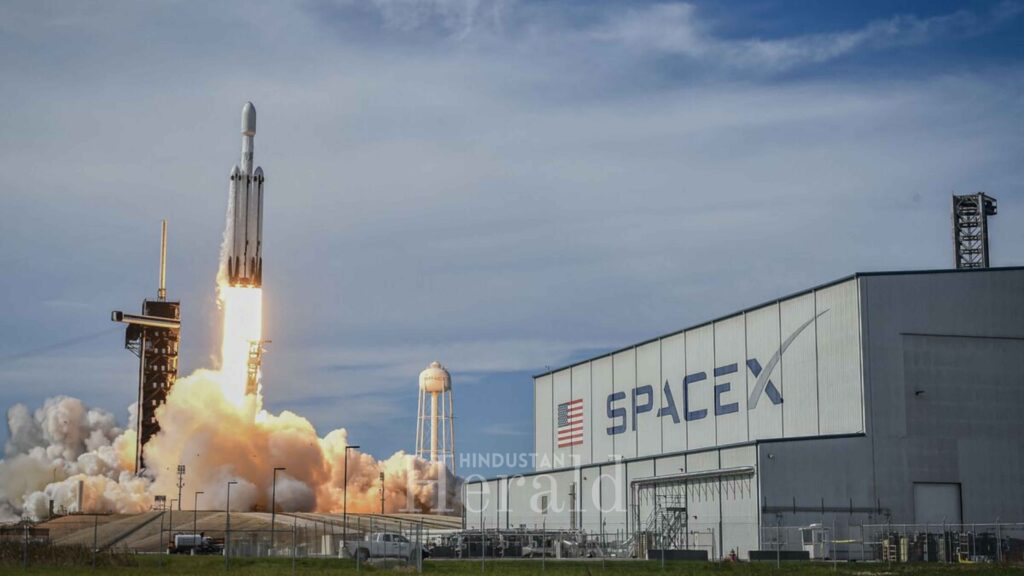
The team tried twice to recycle the countdown. They checked propellant tank temperatures. They ran through every troubleshooting procedure available while a million people sat watching on their screens. None of it resolved in time. The launch window expired.
Here is what matters though. The rocket is completely fine. Every piece of hardware above the launchpad behaved exactly as it should. The full 11.5 million pounds of propellant loaded without a single hitch. The fault lived entirely in the ground support structure, not in the vehicle. In the language of aerospace, that is the difference between a frustrating evening and a genuine programme crisis.
A hydraulic pin is fixable overnight. A broken rocket is not. Friday’s window opens at 6:15 PM Eastern. Based on everything Musk said and what SpaceX engineers found overnight, the attempt is fully expected to proceed.
The Fourth Time This Year
If Thursday felt like déjà vu, that is because in many ways it was. SpaceX Flight 12 has been chasing a launch date since January. Musk said in January they were targeting March. March became April. April became May. Even within May, the date moved at least twice before Thursday’s attempt ended in silence at T minus 40.
The earlier delays were about something far more serious than a stuck pin. According to TechCrunch, one of the first SpaceX Version 3 boosters exploded during ground testing back in November 2025. That single incident knocked months off the schedule and sent engineers back into redesign work they believed was finished. That is how SpaceX Flight 12 became the first Starship test since October 2025, a seven month gap that sits uneasily with a company constantly talking about launching rockets the way airlines run flights.
The pressure has been building quietly but noticeably. SpaceX filed its IPO papers just days before Thursday’s attempt. Investors are watching. NASA is watching. And now, after all of that, a pin holds everything up.
What Version 3 Is Actually Built To Do
It is worth stepping back here, because SpaceX Starship V3 is not a minor upgrade to what flew before. It is a fundamentally different machine, and understanding what it is trying to accomplish explains why this particular launch carries such extraordinary weight.
The rocket stands roughly 10 feet taller than its predecessors. The SpaceX Super Heavy booster has been rebuilt with three larger grid fins, each 50 percent bigger than earlier versions. A component called the hot staging ring, which used to separate and fall into the ocean, now stays on the booster all the way through descent. That one change simplifies recovery significantly and makes the whole return sequence more reliable under real flight conditions.
Then there are the Raptor 3 engines, the accumulated product of three years of explosions, anomaly reports, and hard engineering lessons fed back into the design. Higher thrust, fewer failure points, more consistency under the brutal conditions of an actual launch.
On this flight specifically, SpaceX Ship 39 is set to deploy 20 dummy Starlink satellites roughly 17 minutes after liftoff. Two additional modified satellites will fly alongside the vehicle during reentry and photograph the heat shield from outside, beaming images back to engineers in real time. That last objective is genuinely new territory for the programme.

Getting useful data on how the heat shield behaves under re entry stress has been one of the hardest problems in the programme to solve. The data from those cameras could change the design approach for future SpaceX vehicles entirely. None of what is planned here is routine. Every single objective represents something the programme has been working toward since 2023.
The Year That Nearly Broke Everything
Late 2025 looked so clean and confident that it is genuinely easy to forget what the first half of that year actually looked like for SpaceX.
Flights 7 and 8 both ended in explosions. January and March respectively, the upper stage lost on both occasions less than ten minutes after launch, debris scattered across the Atlantic. The Federal Aviation Administration opened formal mishap investigations after each one. The programme was grounded twice in the same calendar year. The questions coming from outside the industry were pointed and uncomfortable. Flight 9 in May brought the first real sign of life. The Ship hit its planned velocity for the first time in the programme’s history, a genuine milestone. Then it tumbled during reentry and broke apart anyway.
The turnaround came in August when SpaceX Flight 10 became the first mission the company could genuinely describe as a complete success without any caveats. Eight dummy satellites deployed exactly on schedule. The Ship circled the Earth, fired its engines, and came down in the Indian Ocean precisely where the flight plan said. According to the Associated Press, it simply worked, start to finish.
SpaceX Flight 11 in October repeated it cleanly. Booster down in the Gulf, Ship down off the coast of Western Australia. Back to back successes for the first time in the programme’s history. Starship Version 3 is the rocket meant to make that level of performance look ordinary and repeatable.
SpaceX And The FAA Are Still Fighting, Quietly
Every Starship story eventually arrives here, at the long running and genuinely complicated relationship between SpaceX and the Federal Aviation Administration, which has been a fixture in this programme from the very beginning.
The FAA licences every SpaceX commercial launch from American soil. There is no route around that. What has been contested for years is whether the agency’s pace and scope of review is appropriate for the kind of fast moving iterative development programme SpaceX is running. The company has said publicly that FAA licensing issues range from “the frivolous to the patently absurd.” Musk has used considerably stronger language on social media. The FAA has moved, at least somewhat. According to Ars Technica, in May 2025 the agency approved an expansion allowing SpaceX to conduct up to 25 Starship launches per year from Boca Chica, a real increase from the previous ceiling of five.
The structural problem remains though. A company that wants to fly like an airline is being regulated under a framework built for an era when rockets launched a handful of times a year. That gap will not close through goodwill alone, and it is going to require legislative solutions that Congress has not yet produced.
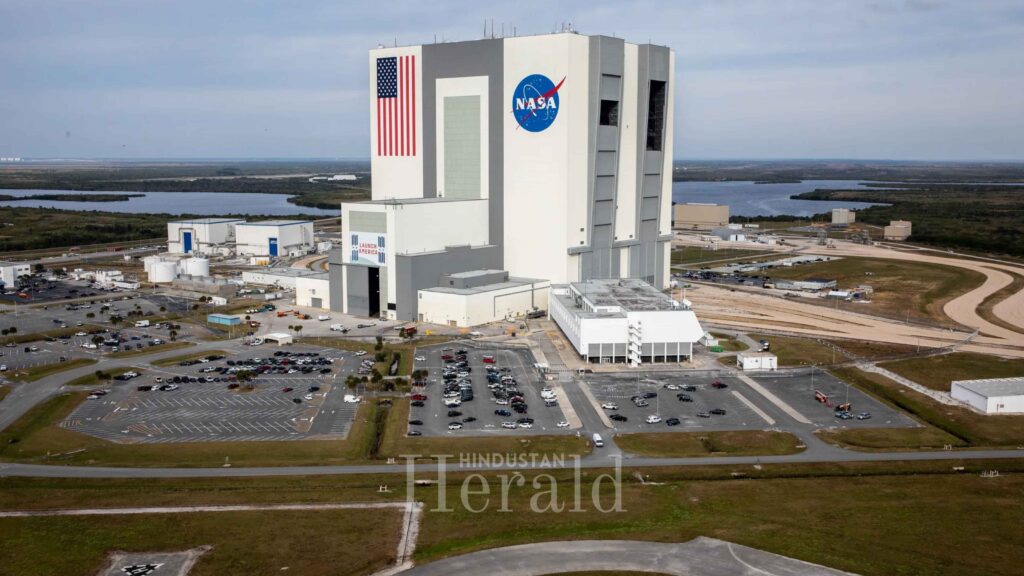
There are also consequences for commercial aviation. As per a federal environmental review cited by TechCrunch, if SpaceX begins launching from Kennedy Space Center in Florida, ground stops could ripple through Orlando, Miami, Tampa, and Fort Lauderdale airports with average delays between 40 minutes and two hours per launch event. That is the real world friction that comes with flying the world’s biggest rocket at high frequency.
Why India Is Watching More Closely Than It Lets On
There is a persistent habit in Indian media of treating every SpaceX development as an interesting foreign story with limited local relevance. That framing deserves a serious challenge. India signed the Artemis Accords in June 2023. That was a genuine strategic commitment. It aligned the country with a specific framework for how the Moon should be explored, governed, and eventually used, and at the centre of that framework sits Artemis III, the first crewed lunar landing since 1972. That mission depends entirely on SpaceX Star ship as its Human Landing System.
As reported by Space Policy Online, Artemis III is targeting a late 2027 launch. Every month SpaceX slips, that target moves. And when it moves, every cooperative agreement, every jointly planned mission, every piece of infrastructure India is building its space future around moves with it. The NISAR Earth observation satellite, built jointly by NASA and ISRO and launched in early 2025, shows what functional Indo American space cooperation actually looks like. More of it is in the pipeline, all of it within a framework that runs through SpaceX.
According to WION News, defence analyst Kaushik Ray told the South China Morning Post that India’s Artemis membership makes it a genuine stakeholder in the lunar framework, capable of building systems that connect to global lunar infrastructure rather than starting entirely from zero. That advantage is real. But it only holds if the framework delivers, and the framework only delivers if SpaceX does.
The commercial stakes are just as direct. India’s private space sector is projected to reach US$44 billion annually by 2033 according to the Federation of Indian Chambers of Commerce and Industry. If SpaceX achieves its projected launch cost reductions, the economics of getting satellites into orbit shifts for the entire market. Indian companies face both opportunity and pressure from that shift simultaneously.
Beijing Is Not Losing Sleep
While all of this plays out in South Texas, China is quietly continuing its own lunar programme on its own schedule with no apparent concern for what SpaceX does or does not manage on any given Friday.
Chang’e 7 is on the manifest for 2026. A crewed Chinese lunar landing is the stated target for 2030. Beijing does not comment on scrubs. It just keeps building.
As analysts at GK365 have noted, if Artemis III lands in 2027 as planned, it puts humans on the Moon three years before China gets there with crew. That gap matters far beyond the scientific achievement. The country that establishes a lasting presence at the lunar south pole first will have disproportionate influence over the resource agreements, the governance norms, and the political architecture of everything that follows in deep space. China and Russia have not signed the Artemis Accords. Two competing visions of space governance are developing simultaneously, and which one prevails will be shaped partly by whether the framework built around SpaceX actually delivers on schedule.
One More Surprise Before The Scrub
In the middle of all the holds and the troubleshooting on Thursday, SpaceX found time to announce that Chun Wang, the Chinese born cryptocurrency billionaire who led the private Fram2 Dragon mission last year, would fly on Star ship to the Moon and Mars.
“A lot of people talk about Mars,” Wang said in a video played during the webcast. “We like Mars, we’re gonna land on Mars, we’re gonna do a colony on Mars, but let’s get it started with a flyby.” According to Space News, Wang would fly alongside Dennis and Akiko Tito, with a circumlunar mission first and a Mars flyby to follow.
Announcing paying passengers for a rocket that has never reached orbit is either extraordinary confidence or extraordinary marketing. Given that the IPO papers were filed the day before, it is probably both. What it confirms is that the commercial pipeline is genuinely being built. Seats are being sold. Missions are being structured. The business is being constructed around a vehicle that still needs to prove what it can do. Whether Friday is the beginning of that proof is the only question that matters tonight.
One More Night, One More Try
The engineers worked through the night. The hydraulic pin has been examined and the fix is underway. The rocket sits on the pad at Starbase, healthy and ready. If Friday goes as planned, Ship 39 lifts off from Orbital Launch Pad 2, runs the most consequential test profile in the programme’s history, deploys its payloads, photographs its own heat shield from the outside, and splashes down in the Indian Ocean.
If it works, everything shifts. The IPO has its story. Artemis gets its footing back. And SpaceX finally has Version 3 in the air. If it does not, the delays compound. The questions get harder. The gap between American ambition and Chinese patience closes just a little more.
All of it, the Moon, Mars, India’s space future, the geopolitics of the lunar south pole, the commercial launch market, a multibillion dollar IPO, resting on whether a hydraulic pin cooperates on a Friday evening in South Texas. Aerospace has always been like this. The biggest ambitions in human history riding on the smallest possible things. Sometimes it is just a pin.
Stay ahead with Hindustan Herald — bringing you trusted news, sharp analysis, and stories that matter across Politics, Business, Technology, Sports, Entertainment, Lifestyle, and more.
Connect with us on Facebook, Instagram, X (Twitter), LinkedIn, YouTube, and join our Telegram community @hindustanherald for real-time updates.

Tracking world politics, global markets, trade movements, policy decisions, and the changing balance of economic power.
- Shelesh Joshi

- Shelesh Joshi
- Shelesh Joshi
- Shelesh Joshi





Specializes in South Asian geopolitics and global diplomacy, bringing in-depth analysis on international relations.
- Rajiv Menon
- Rajiv Menon
- Rajiv Menon
- Rajiv Menon