
 By Ananya Sharma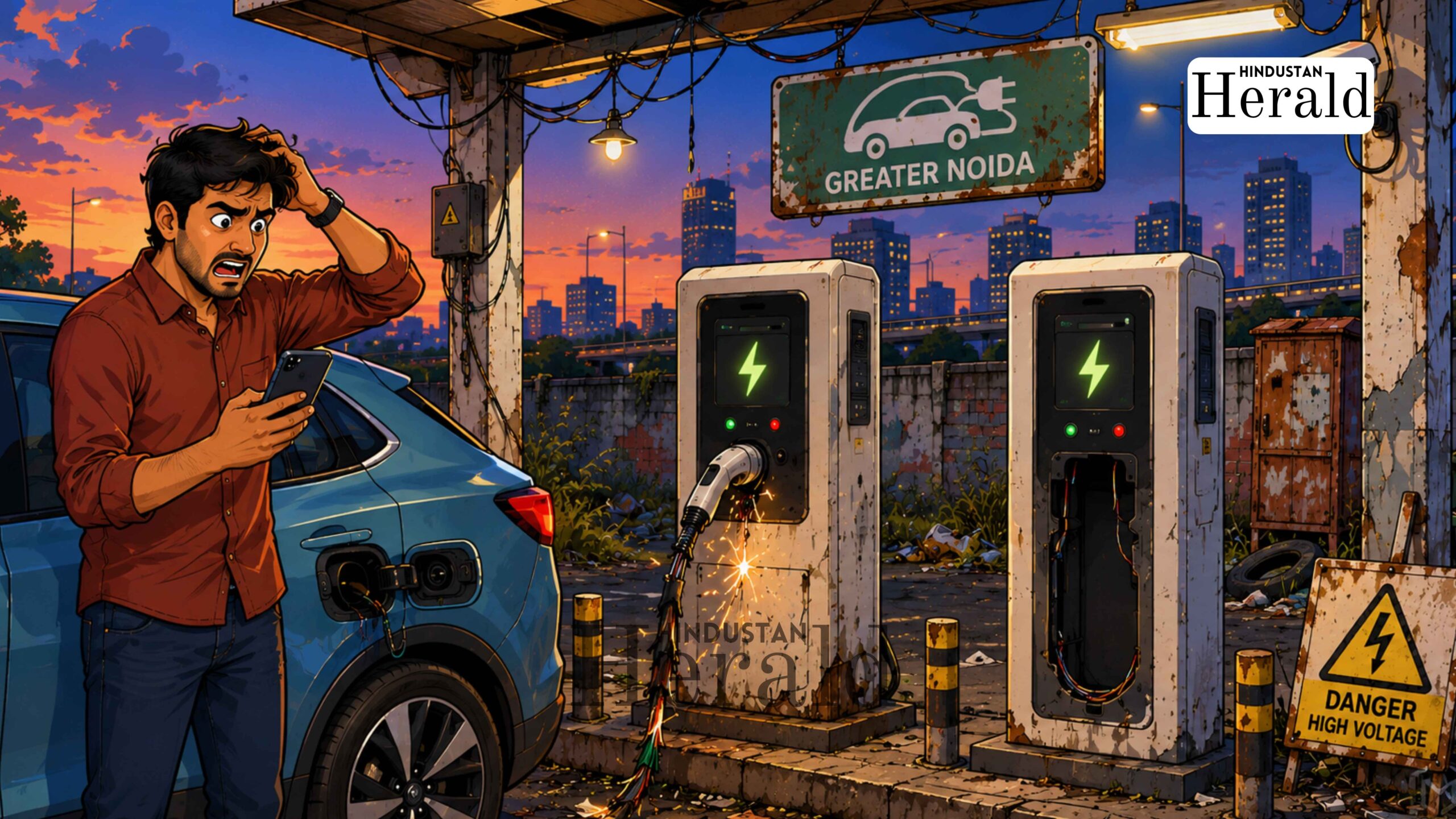
Greater Noida, May 22: Someone finally said it on camera. An electric vehicle owner, visiting the NPCL EV Charging Plaza in Tilpata, Greater Noida, pulled out his phone and filmed what he found there. One charging cable, visibly damaged. Another one, gone. Not misplaced. Gone. And the man, understandably irritated, made the point that a lot of EV users in this country have been making in group chats and comment sections for a while now: putting up a charging station is not the same thing as running one.
The video spread. Of course it did.
The Station Was There. The Chargers Were Not.
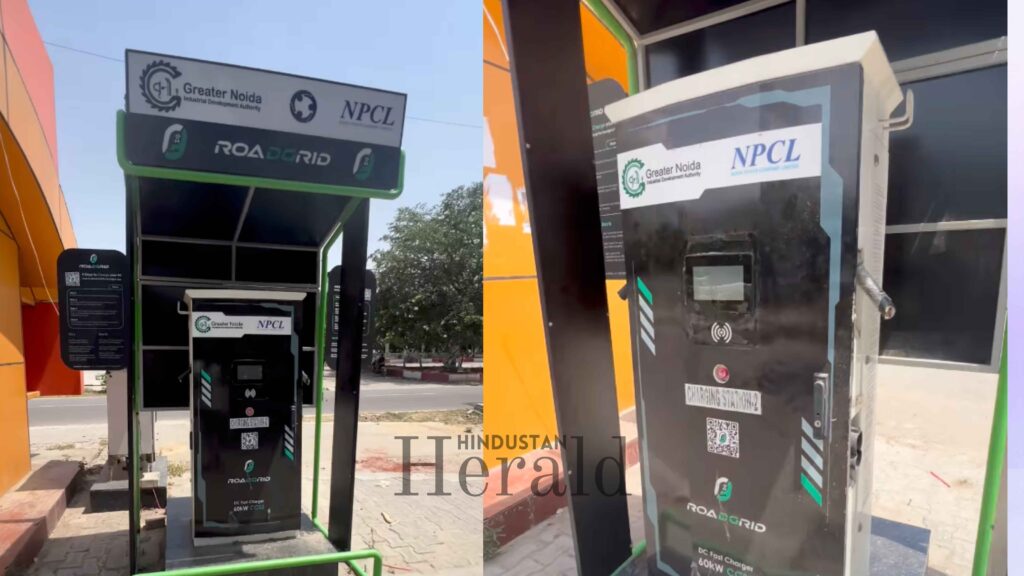
The Tilpata charging plaza is part of Noida Power Company Limited’s effort to build out EV infrastructure across Greater Noida. On any map or government report, it counts as functional infrastructure. A tick in the box. Progress toward the target.
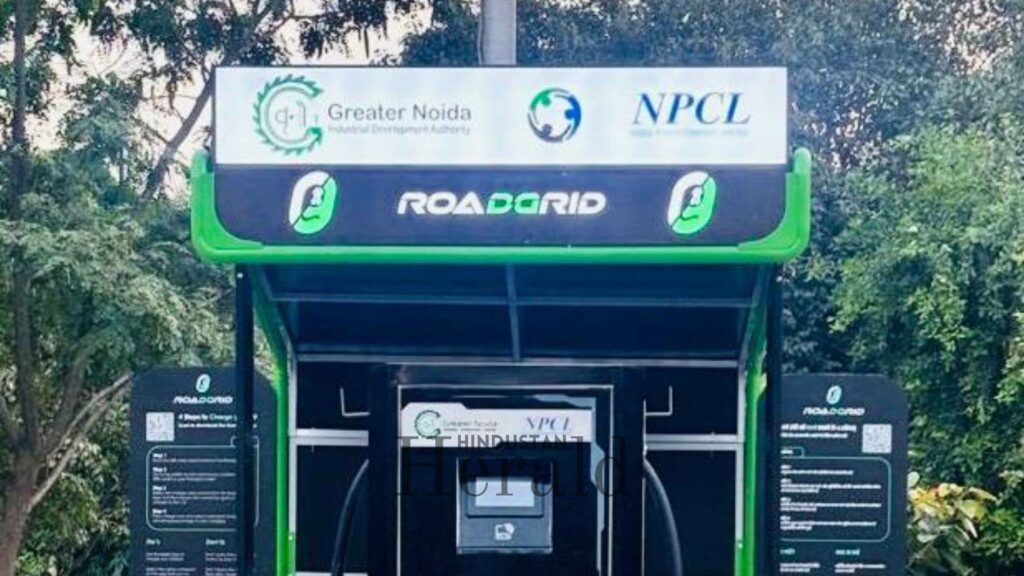
Except when this man arrived, what he found was a damaged cable on one unit and a completely missing cable on another. Whether it was stolen or just never replaced after it broke, nobody apparently thought to check. Or if they did check, nobody acted on it.
That is the part that gets to people. Not just the broken equipment. The silence around it.
For most EV owners, a dead charger is not a mild inconvenience. Depending on how much range they have left, it can flip an ordinary errand into a genuinely stressful situation. The industry has spent considerable energy reassuring buyers that range anxiety is overstated, that the network is growing, that it will be fine. Videos like this one complicate that message significantly.
Cables Do Not Just Walk Away
If the missing cable was stolen, and the video strongly implies it was, that opens up a problem the EV sector in India has been reluctant to discuss in public. Charging cables have real resale value. A decent AC charging cable runs between Rs 2,000 and Rs 8,000. A DC fast charger cable costs considerably more. In locations without surveillance, without physical security, without any kind of monitoring, they are not particularly difficult to take.
This is not a Greater Noida problem specifically. Reports of stolen or vandalised charging equipment have come in from Delhi, Bengaluru, Pune, Hyderabad and elsewhere. It tends not to make headlines because each individual incident seems minor. One cable here, one broken connector there. But collectively, it represents a slow bleed in infrastructure that was expensive to install and is apparently nobody’s responsibility to protect.
The Tilpata plaza sits in the peripheral stretch of Greater Noida, the kind of zone where civic accountability tends to get blurry. Is the charging station NPCL’s problem? The municipal body’s? The local administration’s? In practice, when things break in spaces like this, the answer is often: nobody’s, until someone makes a video.
A Number That Looks Good, Infrastructure That Does Not Work
India has been counting charging points. That has been the metric, the headline figure that gets cited in policy briefings and industry reports. The FAME scheme, successive government pushes, state-level EV policies, all of it has been measured substantially by how many chargers have been installed.
What has not been measured, at least not in any consistent public way, is how many of those chargers are actually working on any given day.
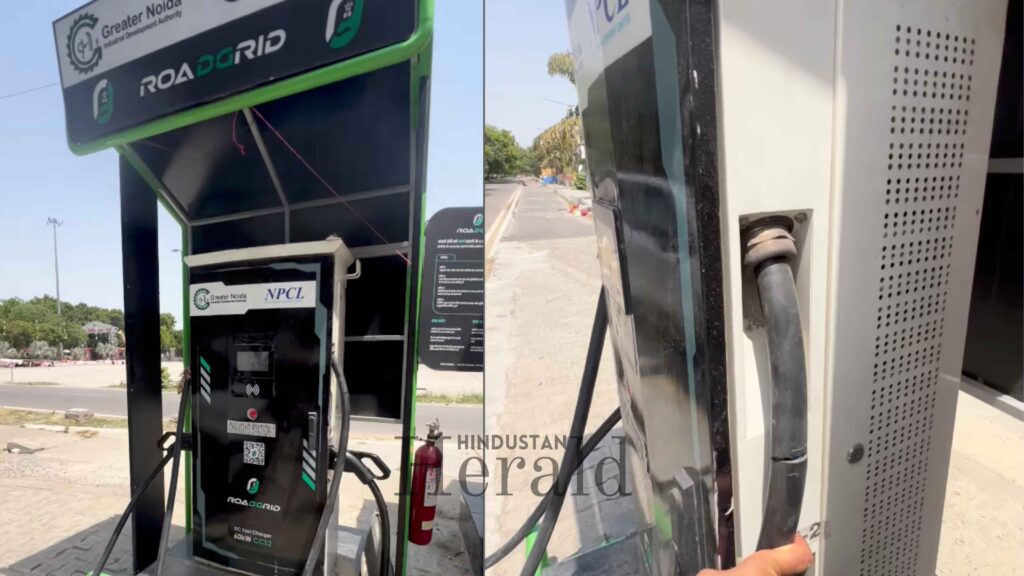
There is no standardised national system for tracking EV charger uptime across India’s public network. Operators report their own availability figures. The apps that EV users rely on for locating chargers pull from a mix of real-time hardware data and user-reported status, which means if nobody flags a broken unit, it stays listed as available. A driver plans their route around it. They arrive. And then they are standing in a parking lot with a damaged cable and a phone running low on battery, wondering who to call.
Some countries have started addressing this. Parts of Europe now tie public subsidies for charging infrastructure to minimum uptime requirements. Operators that fall below a threshold face penalties or lose their operating licence conditions. Nothing comparable exists in India yet, though the Bureau of Energy Efficiency has floated the idea of performance standards. It has not moved quickly.
The Man in the Video Is Not Just Venting
There is a tendency to watch clips like this and categorise them as public frustration, valid but ultimately just noise. That would be the wrong read here.
The person filming is making a specific and consequential argument. He is not asking for a refund. He is pointing out a systems failure: infrastructure was built, handed over, and then left to degrade with no visible mechanism for catching problems before they affect users. No monitoring. No maintenance schedule. No way for someone to report a broken cable and receive a committed response with a repair timeline.
As it turns out, this is how a lot of public EV infrastructure in India currently operates. The installation gets done. The ribbon gets cut, figuratively. And then the ongoing work of actually keeping it functional falls into a gap between whoever installed it and whoever is supposed to maintain it.
The online response to the video reflected this. EV owners from different cities came in with their own versions. A charger that showed green on the app but would not initialise. A cable with a connector so worn it would not seat properly. Stations listed as operational that had been non-functional for weeks. The common thread was not just the broken hardware. It was the absence of any feedback loop that would get it fixed.
What Actually Needs to Happen
The Tilpata video will be forgotten in a week. The algorithm will move on. But the problem it documents will not go away unless specific things change.
Charging network operators need to be required to publish real-time uptime data that is publicly accessible, not just internally tracked. Repair timelines need to be regulated, not advisory. Physical security measures including cable locking systems, cameras, and lighting need to be treated as non-negotiable requirements at public charging sites, not enhancements to be considered if the budget allows. And there needs to be a proper complaints mechanism, something with teeth, so that a broken charger at a public facility has a documented repair obligation attached to it.
NPCL has not issued any public statement on the condition of the Tilpata facility as of the time of writing. It is not clear whether the damaged cable has been repaired or the missing one replaced.
For now, the charging plaza at Tilpata is on the map. Whether it is actually usable is a different question, and apparently one that required a viral video to ask.
Stay ahead with Hindustan Herald — bringing you trusted news, sharp analysis, and stories that matter across Politics, Business, Technology, Sports, Entertainment, Lifestyle, and more.
Connect with us on Facebook, Instagram, X (Twitter), LinkedIn, YouTube, and join our Telegram community @hindustanherald for real-time updates.

Covers Indian politics, governance, and policy developments with over a decade of experience in political reporting.
- Ananya Sharma

- Ananya Sharma
- Ananya Sharma
- Ananya Sharma




 Arun Upadhayay