 By Shelesh Joshi and Rajiv Menon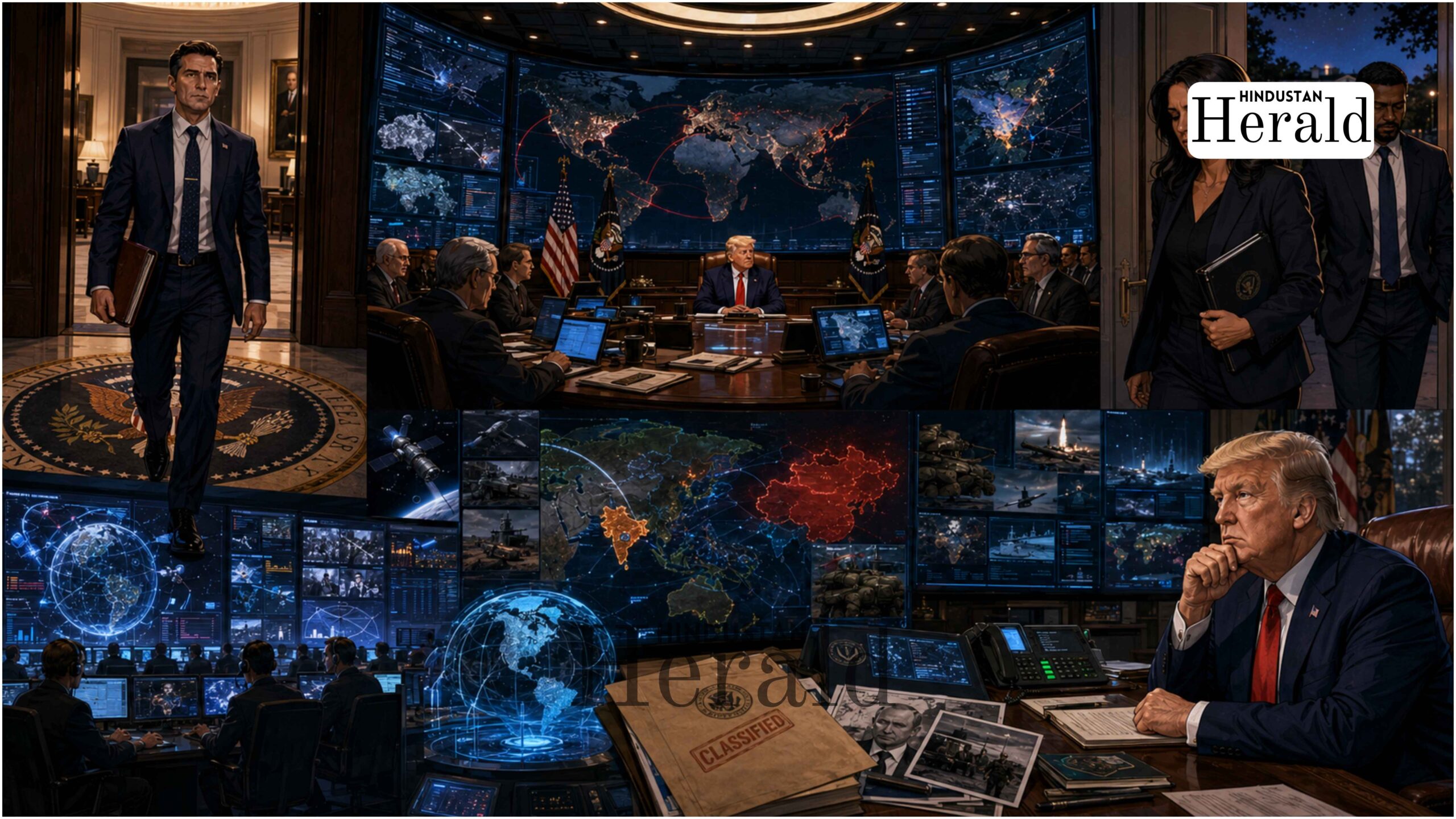
Washington D.C. / New Delhi, May 23: On a regular Friday afternoon in Washington, the woman running the most powerful intelligence operation on the planet quietly walked into the Oval Office, handed over a letter, and walked back out as a private citizen. No drama. No leaks the night before. No farewell press conference. Tulsi Gabbard, the Director of National Intelligence who oversaw 18 American spy agencies and sat in on the most classified conversations a government can have, was gone. Just like that.
And the reason she left has absolutely nothing to do with anything you have been reading about in the news. What happened next, and who stepped into her place, a career CIA man named Aaron Lukas who most of the world has never heard of, is a story that matters deeply to every country watching Washington right now, including India. Most people have barely scratched the surface of what Aaron Lukas taking this chair actually means. That changes today.
Her husband has cancer.
Abraham Williams, the quiet, steady man who has stood beside her through everything, the congressional campaigns, the presidential run, the brutal confirmation hearings, the sixteen months of running the most powerful intelligence office in the world, was recently diagnosed with an extremely rare form of bone cancer. Gabbard, without much apparent agonising, decided that the job could wait. He could not.
“I cannot in good conscience ask him to face this fight alone while I continue in this demanding and time-consuming position,” she wrote in her resignation letter. That was that.
President Trump announced on Truth Social the same evening that her deputy, career CIA officer Aaron Lukas, would serve as acting Director of National Intelligence from June 30 onwards. Washington moved on to the next story. But this one is worth sitting with a little longer, particularly because of what Aaron Lukas stepping into this role actually means for the world.
The Man Behind the Official
People who follow American politics know Tulsi Gabbard well. Very few know much about Abraham Williams, which is exactly how he seemed to prefer it. He is 37 years old. A cinematographer by profession. He first met Gabbard in 2012 when he was volunteering as a photographer on her congressional campaign in Hawaii, shooting the images that would introduce her to voters across the islands. He was there before the fame. Before the national profile. Before any of it. They have been married eleven years. He was standing beside her at her swearing-in at the White House in February 2025, watching her take charge of all 18 American intelligence agencies.
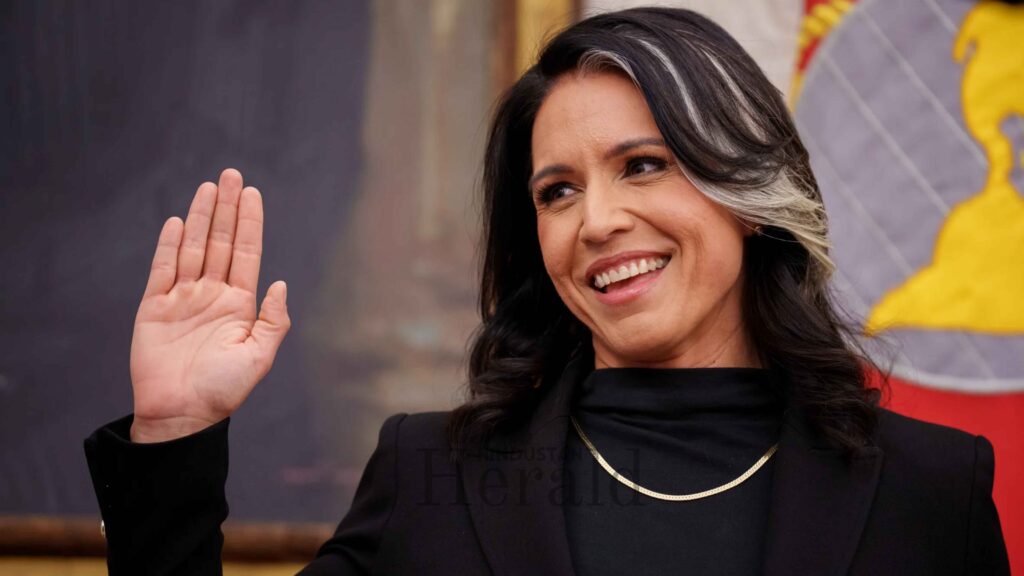
Gabbard described him in her letter as “my rock,” writing that his strength had carried her through every difficult stretch of her public life. The diagnosis, she wrote, was recent. The challenges ahead, she said, would be major. And she was not willing to be anywhere other than by his side.
Trump called it a tough battle, said the family would be in his prayers, and expressed confidence that Williams would pull through. Senator Lindsey Graham offered prayers. Messages of support came in from across the administration. For a few hours on a Friday afternoon, official Washington set the usual noise aside.
So Who Exactly Is Aaron Lukas
Here is where the story shifts from personal to genuinely consequential, and where most coverage has been surprisingly thin. Aaron Lukas is not a household name. He was never supposed to be. That is, in a very real sense, the entire point of the career Aaron Lukas built over more than two decades inside the American intelligence world.
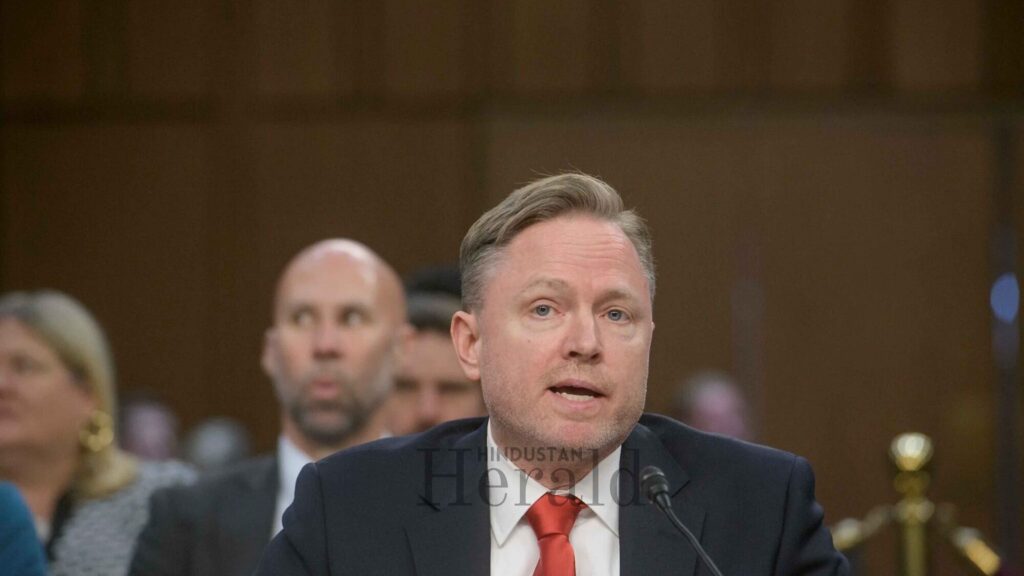
He spent those years inside the CIA doing the kind of work that is specifically designed to leave no public footprint. No television appearances. No conference speeches. No opinion pieces in foreign policy journals. At his Senate confirmation hearing last year, Aaron Lukas told lawmakers plainly that he had spent his career avoiding attention, living his covers, and staying completely off social media.
Those are not the words of someone performing modesty for a Senate audience. That is the actual vocabulary of a man who was undercover, seriously undercover, for extended periods of his professional life.
His government biography fills in what Aaron Lukas was willing to say publicly. Certified in the CIA’s most advanced tradecraft. Covert operations conducted across multiple countries. Former CIA chief of station, the person who runs all American intelligence operations in a given country and reports directly back to Langley. It is one of the hardest and most consequential roles in the entire intelligence apparatus.
Aaron Lukas is from Arkansas. He studied at Texas A&M University and later at The George Washington University. Before joining Gabbard’s team as her deputy, Aaron Lukas had worked as chief of staff to the Director of National Intelligence, as a policy analyst at the Cato Institute, and as Deputy Senior Director for Europe and Russia at the National Security Council during Trump’s first term.
The Senate confirmed Aaron Lukas as Principal Deputy DNI in July 2025 by a vote of 51 to 46. Gabbard swore him in herself two days later. Career intelligence professionals, by most accounts, think well of Aaron Lukas. In a community where institutional respect takes years to earn and evaporates quickly, that is genuinely not a small thing.
Being Fair About Gabbard’s Record
The personal circumstances of Gabbard’s departure make honest assessment feel uncomfortable. She is going home to support her husband through cancer treatment. Piling on feels wrong.
But readers who need to understand why the arrival of Aaron Lukas matters deserve a clear-eyed account, not a sanitised one. Gabbard walked into the DNI job with more political baggage than almost any intelligence chief in living memory. Her past sympathy toward Russia, her 2017 visit to Damascus to meet Bashar al-Assad, her break from the Democratic Party, all of it made her confirmation one of the most bruising the Senate had seen in years.
She scraped through. The friction did not ease after she took office. Senior career officials left the ODNI during her tenure. There were reported clashes with leadership at both the CIA and the NSA. When the administration was navigating the Iran situation earlier this year, Gabbard was, by multiple accounts, notably absent from both the public messaging and the private deliberations.
That last detail is not a minor one. The Director of National Intelligence is supposed to be the person coordinating the American response to exactly that kind of geopolitical moment. Her supporters have a counterargument, and it is not entirely without merit. Any outsider trying to reform a deeply entrenched bureaucracy is going to face institutional resistance. The intelligence community is not immune to self-protection.
But reform without results is still just disruption. And by the measure of results, the ODNI was less stable when Gabbard left than when she arrived. That is precisely why the professional background Aaron Lukas carries into this role matters as much as it does.
What Aaron Lukas Stepping In Means for India
Indian readers might be tempted to file this under “American internal affairs” and scroll past. That would be a mistake, and here is why. The ODNI shapes what the President of the United States believes is happening in the world every single morning. It coordinates intelligence across 18 agencies. It determines how, and how much, allied intelligence services are brought into the American picture. India has significant equities in all of that.
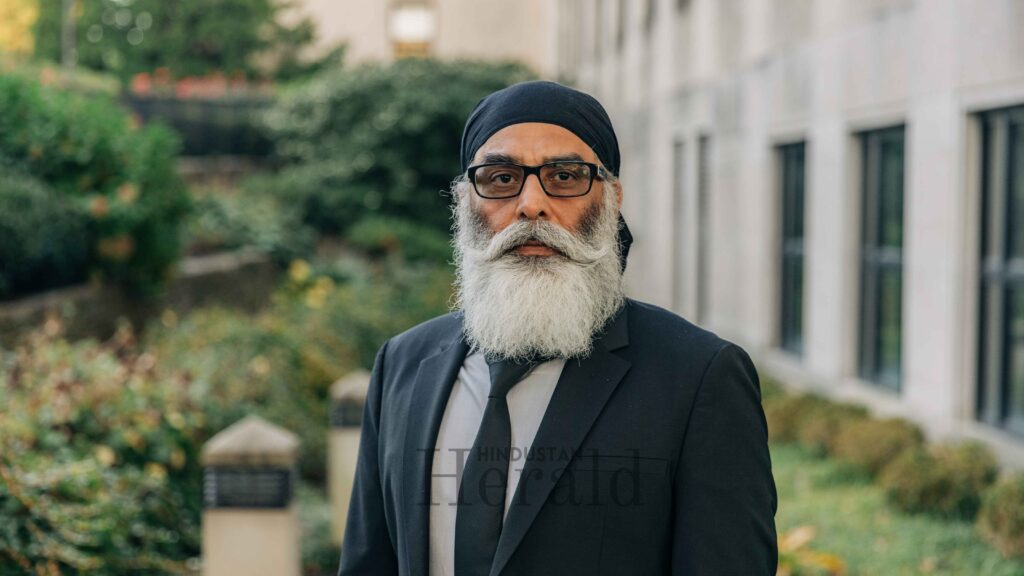
The Gurpatwant Singh Pannun case is the obvious starting point. The FBI and Department of Justice investigation into an alleged Indian government-linked plot to kill the Khalistani separatist leader on American soil has been sitting quietly in the background of the bilateral relationship since late 2023. It has not gone away. It has not been resolved.
The DNI’s office is directly involved in how the intelligence dimensions of that case are handled. A career professional like Aaron Lukas, who has spent decades working within and alongside the FBI and the DOJ, manages that kind of bilateral sensitivity very differently from a political appointee whose relationship with career officials was always strained. Whether Aaron Lukas presses the Pannun investigation or quietly allows it to be managed through diplomatic channels will be one of the earliest real signals of his approach to the India relationship.
Then there is the Quad. What started as a diplomatic conversation between India, the United States, Australia, and Japan has developed real operational intelligence content beneath the surface. The protocols governing what RAW and the CIA actually share at the working level, the frameworks around Chinese naval movements in the Indo-Pacific, the real-time communication channels between partner agencies, all of this is shaped by whoever sits at the top of the ODNI.
A leadership change matters operationally for India, even when the strategic direction at the heads-of-government level stays constant. The arrival of Aaron Lukas in this role is therefore not an abstract development for New Delhi. New Delhi will say nothing in public. That is the right instinct. Quietly, though, everyone who matters on the Indian side will be watching Aaron Lukas closely.
The Acting Problem, Stated Plainly
Polite coverage tends to glide past this, so it is worth being direct. An acting DNI carries less institutional weight than a confirmed one. Not because of anything personal to Aaron Lukas. Because of what “acting” means in the world of intelligence diplomacy.
When Aaron Lukas sits across from the director of MI6, or the chief of RAW, or his counterpart in Mossad, those people know he has not been confirmed in this specific role. They know the appointment can be reversed. They know his tenure has no fixed floor. Intelligence partnerships are built on trust, and trust is built partly on continuity and permanence. An acting official, however capable Aaron Lukas clearly is, asks partners to invest in a relationship that the White House could end quietly at any moment.
The Trump administration gets flexibility from this approach. That flexibility has a cost, and the cost is paid in the currency of allied confidence. In quiet times, that is manageable. Right now, with four simultaneous crises demanding serious intelligence coordination, it is a complication nobody needed.
The World Aaron Lukas Is Walking Into
Ukraine is still burning. The ceasefire diplomacy that briefly generated optimism has stalled, and Western intelligence support for Kyiv remains as critical as ever. Taiwan is still a pressure point. Chinese military activity in the region has stayed elevated through the first half of 2026, and the intelligence assessments driving the American and allied response run directly through the ODNI that Aaron Lukas now heads.
South Asia is fragile. The India-Pakistan standoff following the Pahalgam attack last year did not end cleanly. It paused. American intelligence played a quiet role in keeping that pause from collapsing, and maintaining that capability through the transition to Aaron Lukas takes deliberate, careful work.
And the Middle East, as always, keeps producing its own emergencies faster than anyone can fully manage them. That is the inbox Aaron Lukas inherits. June 30 is the start date. There is no orientation period.
Where This Leaves Things
Aaron Lukas has the credentials for this job. The career, the tradecraft, the institutional relationships, the experience of working at the highest levels of both the operational and policy sides of American intelligence.
Whether that is enough, given the acting designation and the sheer scale of what Aaron Lukas is stepping into, is genuinely uncertain. Tulsi Gabbard made her choice. She chose her husband over the job. There is not a person reading this who, in their honest moments, would say she chose wrong.
The question now is what the intelligence community does with the time between now and whenever Aaron Lukas either gets confirmed permanently or is replaced by someone who is. For India, the answer to that question matters more than most people in either capital are currently letting on.
Stay ahead with Hindustan Herald — bringing you trusted news, sharp analysis, and stories that matter across Politics, Business, Technology, Sports, Entertainment, Lifestyle, and more.
Connect with us on Facebook, Instagram, X (Twitter), LinkedIn, YouTube, and join our Telegram community @hindustanherald for real-time updates.

Tracking world politics, global markets, trade movements, policy decisions, and the changing balance of economic power.
- Shelesh Joshi

- Shelesh Joshi
- Shelesh Joshi
- Shelesh Joshi




Specializes in South Asian geopolitics and global diplomacy, bringing in-depth analysis on international relations.
- Rajiv Menon
- Rajiv Menon
- Rajiv Menon
- Rajiv Menon