 By Neeraj Kapoor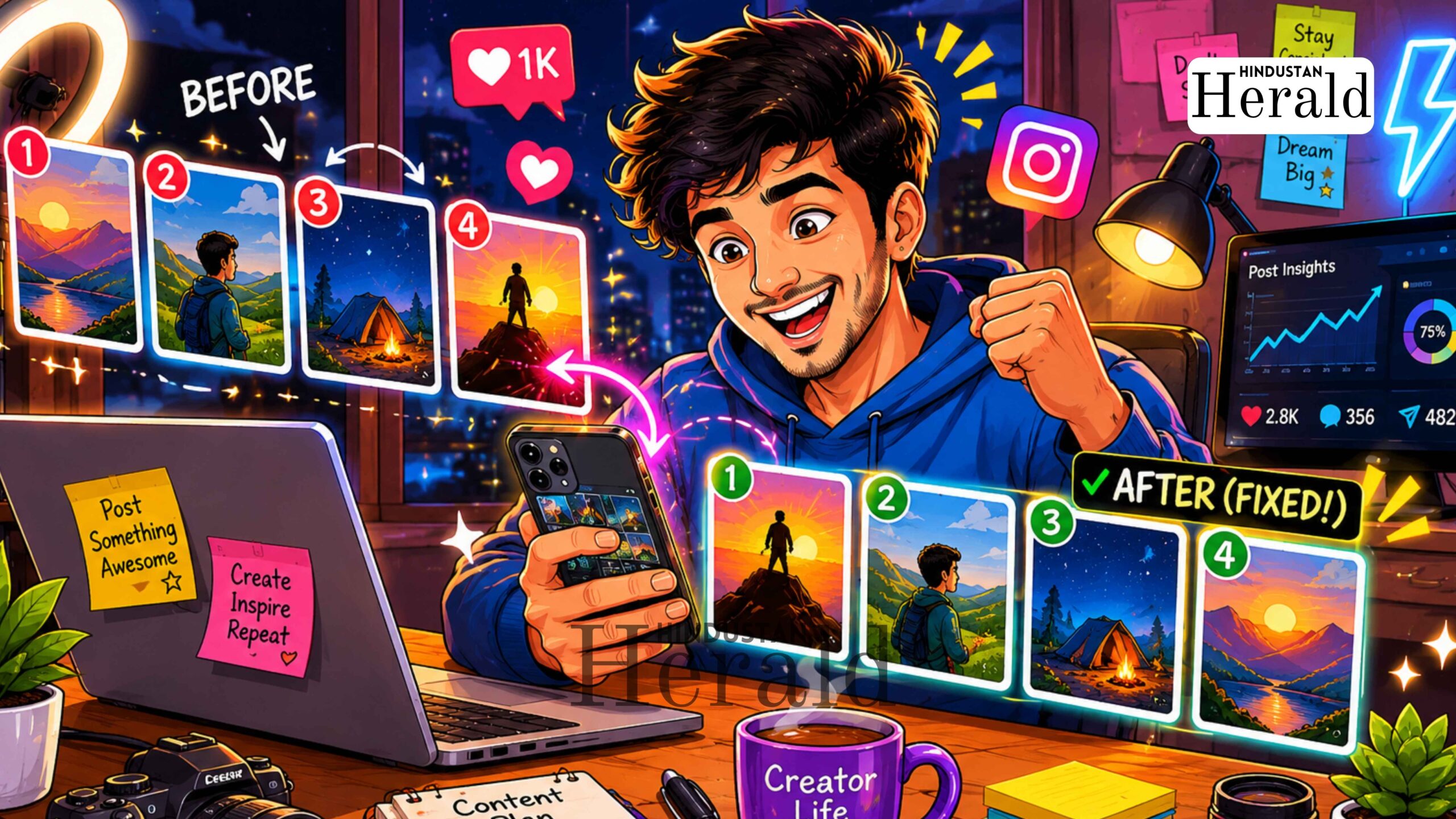
New Delhi, May 25: You post the carousel. You step back. And then you see it slide three was supposed to go first. The whole thing is out of order.
For years, Instagram gave you one option: delete the post, lose every like and comment you had already collected, and start over from scratch. No undo. No fix. Just a clean wipe and the quiet humiliation of rebuilding something you already built once.
That era is over.
Instagram has rolled out carousel reordering meaning you can now shuffle the slides in a published carousel post without touching anything else. The engagement stays. The caption stays. The post stays. You just move things around until the order makes sense, and nobody on the other side ever knows you changed a thing.
So What Actually Changed
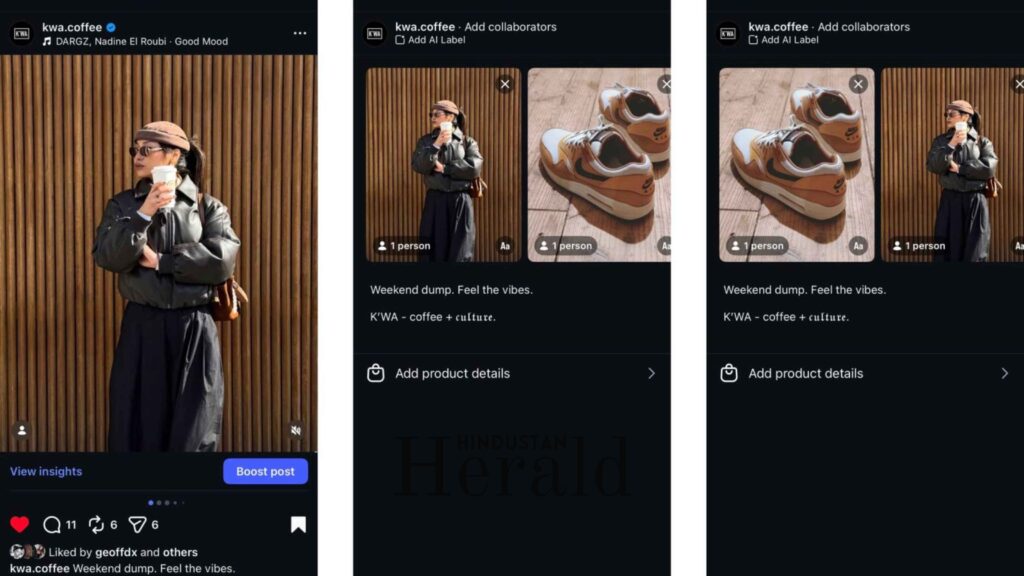
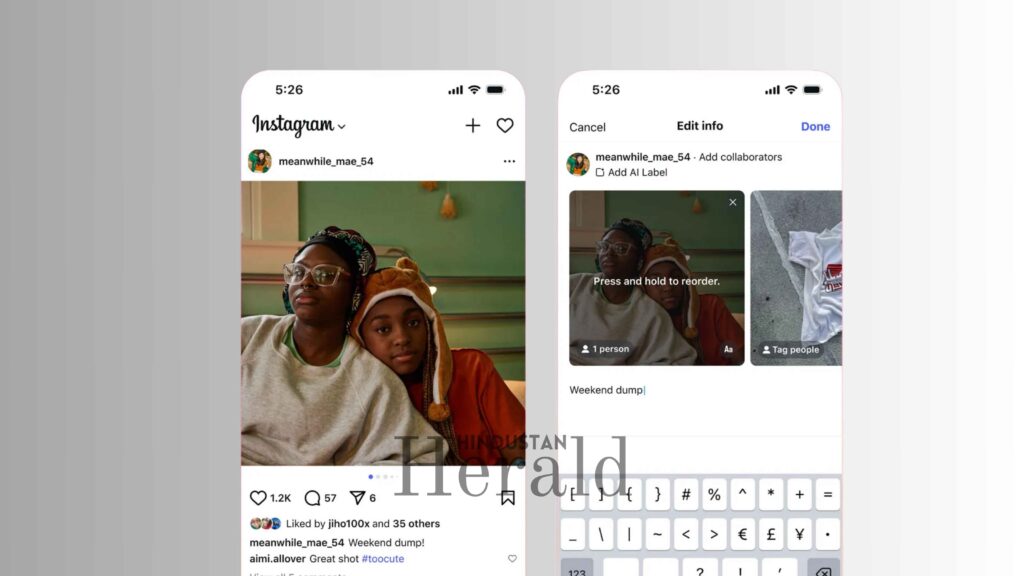
The feature went live in late March 2026 and the steps could not be simpler. Go to your profile, tap the carousel, hit the three dots in the top right corner, select Edit, then long-press any photo or video and drag it left or right into the position you want.
That is the whole thing. No tricks, no workarounds, no third-party apps. Native, built right in, exactly where you would expect to find it.

And the part that will matter most to anyone who has been burned by this situation before: your likes, comments, and shares do not disappear. The post does not reset. You are rearranging slides, not deleting and reposting. Everything your audience already left on that post stays exactly where it is.
What It Still Cannot Do
Worth being upfront about this before expectations run too far ahead. You cannot add new photos or videos to a carousel after it has already been published. That has not changed and there is no indication it is changing anytime soon.
So if you forgot to include a particular image entirely, that is still a new-post situation. What this covers is the sequence of what is already there. Think of it as rearranging furniture in a room rather than adding new furniture. The room stays the same. The layout is what you are working with.
Why This Was Such a Big Deal for So Long
Most people do not think about this until they are running a page regularly. But once you are managing an account for a business, for a brand, for your own creative work you learn very quickly that the first slide in a carousel is not just the first slide.
It is the make-or-break moment. It is what someone sees before they decide whether to swipe at all. Get it wrong and the rest of the carousel might as well not exist because most people will not stick around long enough to see it. The algorithm picks up on that too. Low swipe-through signals a weaker post and the reach suffers accordingly.
For years the only fix was a full delete-and-repost. Start from zero. For personal accounts that is inconvenient. For businesses that had already run paid promotion on a post, or for creators who had just pushed it to a large following, it was a real and measurable setback. Social media managers have been asking Instagram for this fix for so long that it had become something of a running joke in professional creator circles.
Instagram apparently took notes. Eventually.
Who Feels This the Most
Casual users posting photo dumps will appreciate it. But the people this update genuinely changes things for are the ones running accounts with some kind of purpose behind them.
Small business owners across India who use carousels to showcase products know that the first slide is the shop window. If the wrong item is front and centre, footfall drops. Content creators building step-by-step tutorials in carousel format, where the sequence is literally the content, have had to be surgical about getting the order right before hitting post because there was no recovery if they got it wrong. Marketing teams at larger organisations where content goes through multiple rounds of approval and someone almost always has a note after the post is already live for them, this feature removes what was previously an unresolvable problem.
Carousels already drive noticeably stronger engagement than single-image posts across most metrics. Adding the ability to adjust slide order post-publish means you can respond to how a post is actually performing rather than being locked into whatever decision you made in the ten seconds before you hit share.
Is It There Yet for Everyone
The rollout started March 24, 2026, but Instagram is staggering it rather than switching it on for every account simultaneously. If you open a carousel right now and do not see the drag option inside the Edit menu, it has not arrived for your account yet.
Keep the app updated. Give it a few days. It is coming.
This Is Bigger Than It Looks
On the surface this is a small editing feature. Zoom out a little and it is part of a longer pattern.

In August 2024, Instagram raised the carousel limit from ten slides to twenty giving creators more room to tell stories within a single post. Now the platform is allowing post-publish reordering. The format is gradually becoming more flexible, more forgiving, more accommodating of the reality that content creation is messy and people make mistakes and good work should not be buried because of a sequencing error made at the moment of posting.
India has one of the biggest Instagram user bases anywhere in the world. For the millions of creators, small businesses, and everyday users here who treat the platform not as a hobby but as a genuine tool for income, for community, for reach updates like this one carry real weight.
You will probably not feel it until the next time you post a carousel out of order, reach for delete out of habit, and then remember you do not have to anymore.
Thirty seconds. New sequence. Done.
That is what this update actually is.
Stay ahead with Hindustan Herald — bringing you trusted news, sharp analysis, and stories that matter across Politics, Business, Technology, Sports, Entertainment, Lifestyle, and more.
Connect with us on Facebook, Instagram, X (Twitter), LinkedIn, YouTube, and join our Telegram community @hindustanherald for real-time updates.

Tech writer passionate about AI, startups, and the digital economy, blending industry insights with storytelling.
- Neeraj Kapoor

- Neeraj Kapoor
- Neeraj Kapoor
- Neeraj Kapoor