 By Shelesh Joshi and Rajiv Menon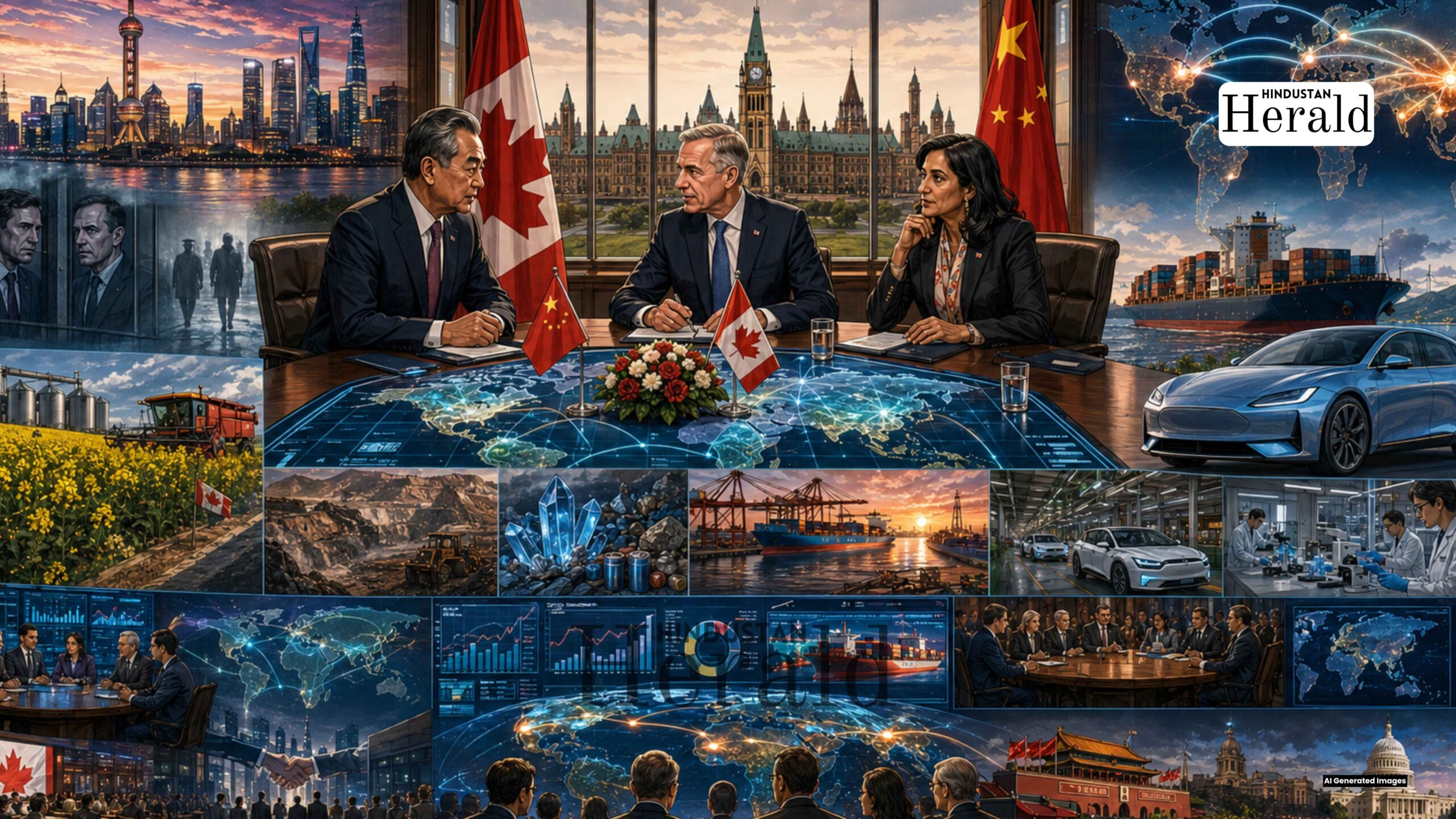
Ottawa, May 29: Something quietly extraordinary is unfolding in the Canadian capital this week. The Wang Yi Canada visit has not fully registered with most people yet but it should. This is bigger than a diplomatic courtesy call. This is a genuine reckoning.
Wang Yi is in Ottawa. The same Wang Yi who stood at a Canadian press conference in 2016, looked a journalist in the eye, and told her that her question about China’s human rights record was “full of prejudice and arrogance.” That clip went around the world. It did not exactly leave a warm impression.
And yet here he is. Back in Canada. Sitting across the table from ministers. Reportedly planning a hike through the Gatineau Hills with Foreign Affairs Minister Anita Anand like the past decade simply did not happen. It did happen. All of it.
The visit runs three days. Wang meets Anand formally on Friday and sits down separately with Prime Minister Mark Carney. People familiar with the schedule say the hike through the Gatineau Hills is planned for Saturday, the kind of deliberately relaxed, human detail that both governments clearly want photographed and circulated. Whether that hike happens or gets quietly dropped from the schedule, the fact that it was planned at all tells you something. Someone in both foreign ministries decided that a walk in the woods was the right image for this reset. That is not an accident.
Ten years since a Chinese foreign minister came here for bilateral talks. A decade. Think about that for a moment. In diplomatic terms, a decade of silence between two countries that trade over C$124 billion worth of goods every year is not normal. It is a sign of something genuinely broken..
Quick Summary
- Xi Jinping is expected to visit Washington in September 2026, his first American state visit since 2015, and this Ottawa stop is widely seen as preparation for that moment
- Wang Yi’s visit from May 28 to 30 is the first bilateral visit by a Chinese foreign minister to Canada in 10 years, since June 2016
- In January 2026, Canada slashed tariffs on Chinese electric vehicles from 100% down to 6.1%, opening the door to 49,000 Chinese EVs annually
- China agreed to cut canola tariffs from 84% to roughly 15%, rescuing a trade that was worth C$4.9 billion to Canadian farmers as recently as 2024
- Canada-China bilateral trade reached C$124 billion in 2025, growing nearly 5% even in the middle of a tariff war
- Michael Kovrig and Michael Spavor spent 1,019 days in Chinese detention before being released in September 2021
What Actually Broke It
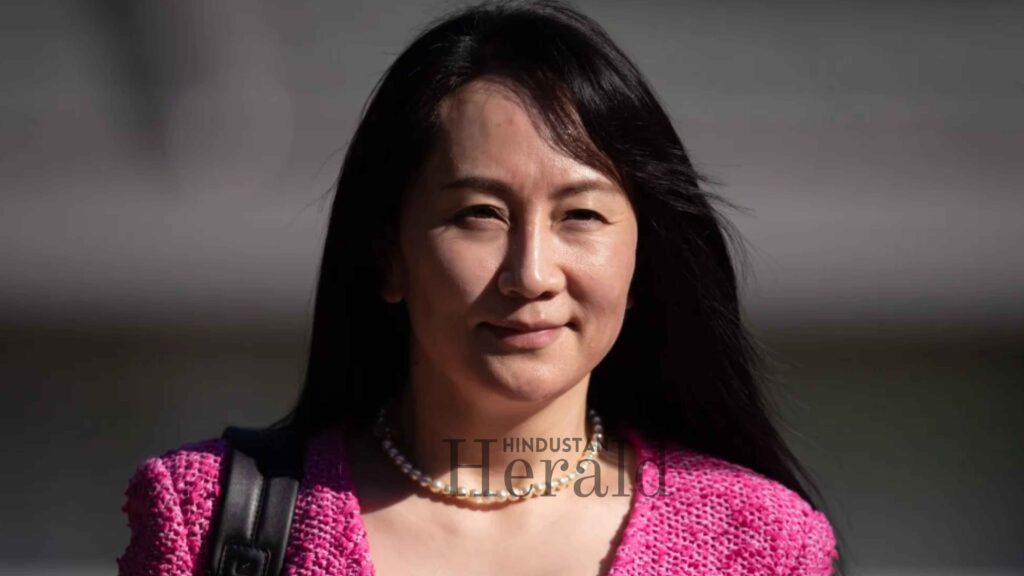
Most people know the broad shape of the story. The details are worth sitting with. December 2018. Meng Wanzhou, the Chief Financial Officer of Huawei and the daughter of the company’s founder, arrives at Vancouver International Airport. Canadian border agents are waiting. She gets arrested on an American extradition warrant. The allegation is that she misled banks about Huawei’s dealings in Iran, violating American sanctions. Sanctions, it is worth noting, that Canada was not itself party to. Beijing’s response came fast. Within roughly 48 hours, two Canadians disappeared into the Chinese detention system.
Michael Kovrig was a former diplomat, thoughtful and careful, someone who had spent years working on exactly the kind of Canada-China relationship that was now being used against him. Michael Spavor was a businessman who had quietly built cultural and people-to-people connections with North Korea for years, the kind of unglamorous work that almost nobody notices until something goes wrong. Both men were accused of national security offences. The charges were vague, shifting, and widely understood by anyone paying attention to be entirely pretextual. The message from Beijing required no translation. You took one of ours. We took two of yours.
The “Two Michaels” spent the better part of three years inside the Chinese system. Harsh conditions. Limited consular access. Their families did what families do in those situations. They waited. They spoke publicly when they could. They tried not to show how scared they were.
Meng Wanzhou was eventually allowed to return to China in September 2021. Kovrig and Spavor walked free the same day. Nobody in any official capacity called it a swap. Nobody had to. The timing made the nature of the arrangement perfectly clear to anyone watching. You might think that after all of that, the relationship would have slowly, painfully found its way back toward something functional. It did not.
Justin Trudeau never really figured out what to do with China. He was too economically tied to it to walk away and too politically cautious to genuinely engage. So the relationship just sat there. Bruised. Stagnant. Going nowhere. Trade kept flowing because the economic gravity between the two countries is simply too powerful to stop, but there was nothing warm or intentional about any of it.
Then Donald Trump came back into the White House and started squeezing Canada in ways that nobody in Ottawa had seriously planned for. Steel tariffs. Aluminum tariffs. Threats to the fundamental architecture of Canada-US trade. Suddenly the assumption that had underpinned Canadian economic life for decades, that Washington was a reliable, allied partner, looked shaky in ways it never had before. Mark Carney inherited that mess. And he made a decision that surprised a lot of people.
The Decision That Changed Everything
Carney is not what you would call a conventional politician. He ran the Bank of Canada through the 2008 financial crisis. He ran the Bank of England through Brexit. He thinks in systems. He thinks in probabilities. He does not have the instincts of someone who rose through constituency politics. He has the instincts of someone who has spent his career identifying risks that other people have not priced in yet.
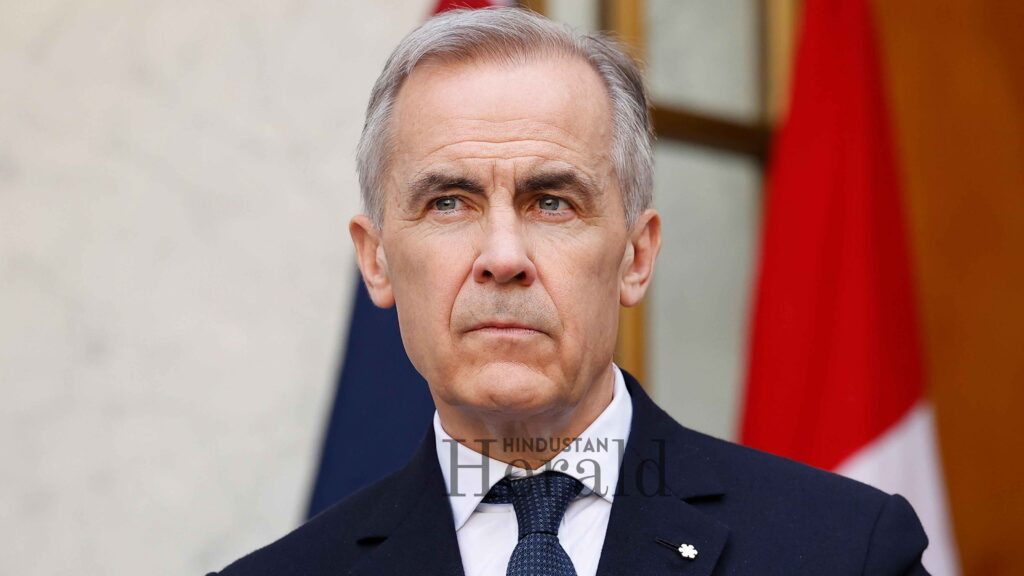
When he looked at Canada’s situation, one of the things he saw was that his country had put almost all of its economic weight onto one relationship, the American one, and that relationship was now being actively destabilised by the person running Washington. That is not a comfortable position to be in.
China, for all its genuine complications, is the world’s second largest economy. It was buying Canadian energy. Canadian minerals. And until the tariff war turned ugly, it had been buying enormous amounts of Canadian canola. The economic case for engagement was sitting there, obvious and largely unaddressed, because the political cost of making it had always felt too high. Carney decided the political cost of not making it was higher.
He moved carefully at first. Anand met Wang Yi at the ASEAN Regional Forum in Kuala Lumpur in July 2025. Cordial. Establishing channels. Not overreaching. Carney met China’s Premier Li Qiang on the sidelines of the UN General Assembly in New York in September. A step forward. Anand flew to Beijing in October for a proper sit down with Wang Yi. Then, that same month, Carney himself finally sat across from Xi Jinping at the APEC summit in Gyeongju, South Korea.
That was the first time a Canadian Prime Minister and the Chinese President had met properly since 2017. Carney called it a turning point. He was not wrong. By January 2026, Carney was in Beijing for a full state visit. First one in eight years. He came back describing a “landmark deal” and a new “strategic partnership.” For once, those phrases were not entirely hollow.
Canada agreed to open its market to 49,000 Chinese electric vehicles per year at a tariff of 6.1%. Compare that to the 100% tariff that Trudeau had slapped on Chinese EVs just over a year earlier. That is not a policy adjustment. That is a reversal. A significant, deliberate, politically costly reversal that Carney made anyway because he calculated the economics demanded it.
China in return agreed to bring its retaliatory tariffs on Canadian canola seeds from 84% down to around 15%. It lifted punishing duties on canola meal, lobster, crab, and peas. It opened China to Canadian tourists on a visa free basis. For the farming communities in Saskatchewan and Alberta that had watched their Chinese market disappear almost overnight, that canola commitment landed like a lifeline. Not a guarantee. A lifeline. There is a difference, and farmers know it. Wang Yi’s visit this week is essentially the audit. Checking whether the January commitments are actually being followed through. Keeping momentum. Making sure the machinery is working the way both governments publicly claimed it would.
The Numbers Behind All the Diplomacy
Forget the press releases for a moment and just look at the trade numbers, because they tell the story more honestly than any joint statement. When Canada welcomes Chinese FM Wang Yi this week, the economic backdrop behind all the warm photographs is staggering in its scale and its contradictions.
Canada-China bilateral merchandise trade reached C$124 billion in 2025. That is up nearly 5% from 2024. And this growth happened while the two countries were actively in a tariff dispute with each other. Think about what that says. The economic relationship between Canada and China is so deeply wired into both economies that even deliberate political hostility could not stop it from expanding.
Canadian energy exports to China jumped 78% in a single year. Minerals and metal ores were up 42%. The Trans Mountain pipeline expansion quietly rewired where Alberta’s oil was going, and a significant portion of it started moving toward Chinese refineries. That happened without much fanfare. The market found its way.
Agriculture told a completely different and considerably darker story. Farm exports to China collapsed 33% as the canola tariffs hit. That erased C$4.9 billion worth of annual trade that Prairie farmers had come to depend on. The collapse was fast. It was painful. It was personal for thousands of families who had built their operations around the Chinese market over years and decades.
That pain is precisely why Canada welcomes Chinese FM Wang Yi not just with diplomatic courtesy but with genuine economic urgency. The canola file is not a talking point in Ottawa. It is a livelihood crisis for communities across Saskatchewan and Alberta that have been waiting for this moment for the better part of two years.
China is Canada’s second largest trading partner. That is a fact that does not shift with the diplomatic weather. Carney is simply the first Canadian Prime Minister in recent memory who has been willing to look at that fact clearly, say it out loud, and act on it. The question this week is whether Wang Yi leaves Ottawa having given those farmers something real to hold onto, or just another warm statement to file away.
The Wang Yi Canada Visit That New York Was Always Building Toward
Something worth understanding about how Wang Yi arrived in Ottawa this week. The Chinese foreign minister’s visit did not begin in Canada. He did not fly in quietly from Beijing. He came via New York, and the timing was deliberate.
China holds the rotating presidency of the UN Security Council this month. Wang chaired a high level Security Council meeting on May 26. He attended a session of something called the Group of Friends of Global Governance, a coalition Beijing quietly assembled at the UN in December 2025. He sat down with Secretary General António Guterres. He met a queue of foreign ministers.
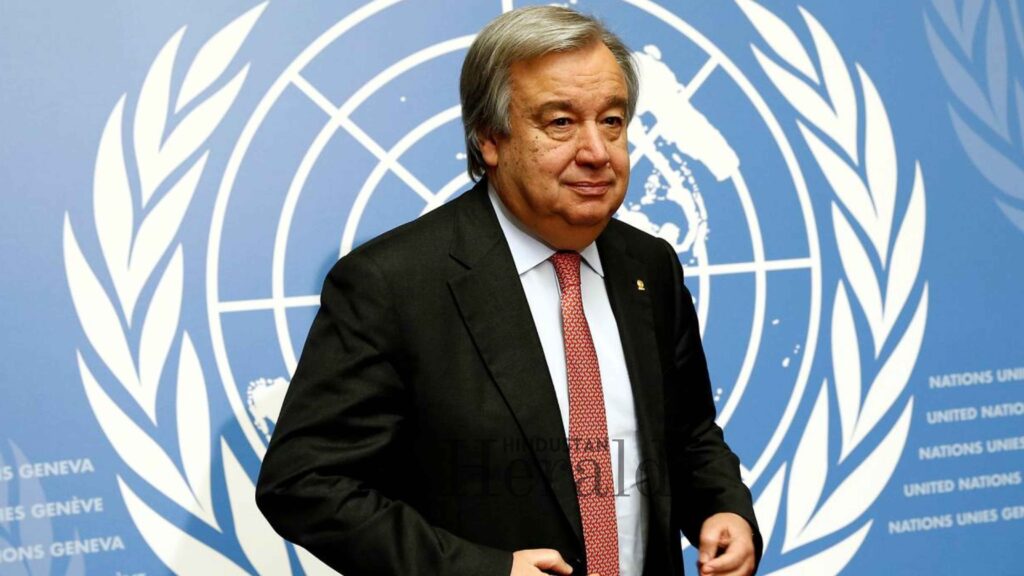
By the time the Chinese foreign minister’s visit shifted from New York to Ottawa, Wang was not arriving as a bilateral trade envoy. He was arriving as the representative of a country that had just spent several days visibly running one of the world’s most powerful multilateral institutions. That framing matters. It is not accidental.
Beijing is building a particular story about itself right now. The story of a responsible, stabilising global force at a moment when Washington has become, in the eyes of many capitals, increasingly erratic and hard to predict. Every multilateral stage China occupies reinforces that story. Every Western democracy it pulls into a warmer relationship adds to it.
Xi Jinping is also expected to visit Washington in September 2026 for what would be the first Chinese state visit to America since 2015. Wang Yi confirmed last week the visit is on, after Trump extended a formal invitation. A smooth and photographed few days in Ottawa, a friendly hike in the Gatineau Hills, a warm joint statement all of it feeds the narrative Beijing wants circulating before Xi walks into the White House.
The Chinese foreign minister’s visit to Canada is, in that sense, not just a bilateral event. It is a chapter in a much longer story Beijing has been writing carefully for years. China plays long. It usually does.
The Discomfort Nobody Is Fully Addressing
Here is the part of the story that the official statements and the hiking photographs are not capturing. Chinese Ambassador Wang Di gave an interview to The Globe and Mail at the end of April that landed in Ottawa’s political community like a stone in still water. He warned, with very little diplomatic cushioning, that the strategic partnership would be damaged if Canadian parliamentarians kept visiting Taiwan or if the Royal Canadian Navy continued transiting the Taiwan Strait. Sit with that for a second.
Canada’s navy has been sailing through the Taiwan Strait regularly for years. Ottawa considers it an international waterway. Beijing considers it internal Chinese territory. The ambassador was not just raising a concern. He was issuing a condition. Maintain this partnership on our terms, or we reconsider the terms. That is not how allies talk to each other. It is not even how respectful rivals talk to each other. And plenty of people in Ottawa noticed.
Opposition politicians said plainly what they thought. That the Carney government was allowing Beijing to write the behavioural rules for a relationship Canada was now economically invested in. That quiet self censorship on Taiwan, Hong Kong, and human rights was the invisible price being paid for canola market access. That this was not principled pragmatism. It was something closer to dependency with better branding.
There is also a memorandum of understanding reportedly signed between the RCMP and China’s Ministry of Public Security that the government has still not made public. That document keeps surfacing in opposition questions. The government keeps not answering clearly. In a partnership both sides describe as being built on trust, that opacity is an odd choice.
Carney’s people argue that engaging Beijing is not the same as agreeing with Beijing. That the alternative, continued diplomatic freeze while American tariffs multiply and global trade alignments shift without Ottawa at the table, is the genuinely reckless option. There is real logic in that position. Honest logic. But logic and honesty are not the same as transparency. And Canada’s public has not been given the full version of this conversation yet.
What everyone can agree on is that Wang Yi will not be scolding any journalists at a press conference this trip. Both sides have too much riding on the atmosphere. The 2016 clip still surfaces in Canadian media whenever China comes up. Beijing knows the damage that moment did. This visit is supposed to feel different. So far it does. Whether it is different in the ways that actually matter is harder to say.
What Beijing Is Really After
Step away from the trade figures and the diplomatic language and ask a simpler question. Why is Wang Yi in Ottawa right now? The honest answer is that China is operating in America’s backyard, deliberately and patiently, at a moment when America’s closest neighbour is more economically vulnerable and more politically frustrated with Washington than it has been in living memory.
Beijing does not need Canada to become a Chinese ally. That is not the goal and it is not realistic. What China needs, what is genuinely valuable to Beijing’s strategic position, is for Canada to hesitate. To introduce enough economic entanglement and diplomatic complexity into Ottawa’s decision making that automatic alignment with Washington on Taiwan, on Huawei, on technology supply chains, becomes harder to sustain without thinking twice.
Hesitancy at the margins of Western coalitions is worth a great deal to Beijing. You do not need a country to switch sides. You just need it to pause. To weigh costs before joining. To ask whether the economic relationship can absorb the diplomatic consequence.
China has been watching Trump strain the Canada-US relationship and it has been patient. It moved when the moment was right. That is not improvisation. That is strategy playing out over years. The people running Ottawa’s foreign policy know this. They are not naive. But knowing the game and having a clean answer for how to play it are two different things.
What New Delhi Should Be Thinking About
This might feel distant from India. It is not. Wang Yi came to New Delhi last August. That visit mattered more than it was given credit for at the time. It signalled a genuine beginning to India-China rapprochement after years of deep post Galwan hostility. Wang met Prime Minister Modi directly. New mechanisms for managing the contested Himalayan border were established. Early signals of economic normalisation emerged cautiously.
So right now Beijing is managing a thaw with New Delhi, a reset with Ottawa, a multilateral narrative at the UN Security Council, and the preparation of Xi’s landmark Washington summit. All simultaneously. All driven by the same foreign ministry machinery. All guided by the same underlying strategic logic. China is working every available relationship at once. Methodically. Without visibly rushing anywhere.
For India, the specific concern around the Canada-China reset lives in the Indo-Pacific. Canada is in the middle of revising its Indo-Pacific Strategy. If a Canada that is now economically dependent on Beijing starts quietly softening its regional positions on Taiwan, on Huawei’s role in critical infrastructure, on semiconductor supply chain security, the effects ripple outward in ways that are not always visible until they matter.
Carney’s government has tried to run the India relationship in parallel. Anand was in New Delhi in October 2025, sitting across from S. Jaishankar and Piyush Goyal, working toward a framework on trade, clean energy, and security. Ottawa is genuinely trying to hold multiple significant relationships without choosing between them. That is the right instinct. It is also genuinely hard. And when the hard choices eventually come, because they always come, the way Canada responds will tell New Delhi more about the real nature of this Beijing reset than anything in any joint statement.
A Hike in the Hills and What Comes After
So here we are. Wang Yi in Ottawa. The meetings are happening. The hike in the Gatineau Hills is apparently still on the schedule. Photographs will be taken. Both governments will call it progress. And in some genuine, measurable sense, it will be progress.
The canola tariff commitments from January need to be honoured. The EV quota framework needs to be implemented properly. The 28 measures in the economic roadmap need to actually move. None of that is guaranteed just because two ministers signed a document in Beijing four months ago. Wang Yi’s presence in Ottawa this week is partly about making sure the machinery keeps running. But the larger question sitting underneath all of this is one that nobody in either capital is addressing quite directly enough.
China has not changed in the ways that actually matter. It is still the country that held Kovrig and Spavor for nearly three years as diplomatic pawns. Still the country whose ambassador arrived in Ottawa this spring with a list of behavioural demands attached to a relationship Canada had just publicly invested enormous political capital in. Still the country that destroyed Canadian canola exports without credible justification and restored access only when Beijing decided it served Chinese interests to do so.
Carney knows all of this. He is engaging anyway. Because from where he sits, the cost of not engaging looks genuinely worse. That might be the right call. Given what Trump has done to the Canada-US relationship, given the economic arithmetic, given the shifting shape of global trade, it very possibly is the right call. But right calls made for the right reasons can still have consequences that were not fully anticipated.
The hike will happen, or it will not. The photographs will circulate. The joint statement will land in inboxes around the world and be read carefully in Washington, in New Delhi, in Tokyo, in Canberra. And then Wang Yi will fly home to Beijing. And the real test of what this week actually meant will begin quietly, in the spaces between the headlines, in the decisions Ottawa makes the next time Beijing asks for something that costs more than canola tariffs and EV quotas. That moment will come. It always does.
Stay ahead with Hindustan Herald — bringing you trusted news, sharp analysis, and stories that matter across Politics, Business, Technology, Sports, Entertainment, Lifestyle, and more.
Connect with us on Facebook, Instagram, X (Twitter), LinkedIn, YouTube, and join our Telegram community @hindustanherald for real-time updates.

Tracking world politics, global markets, trade movements, policy decisions, and the changing balance of economic power.
- Shelesh Joshi

- Shelesh Joshi
- Shelesh Joshi
- Shelesh Joshi



Specializes in South Asian geopolitics and global diplomacy, bringing in-depth analysis on international relations.
- Rajiv Menon
- Rajiv Menon
- Rajiv Menon
- Rajiv Menon