 By Shelesh Joshi and Rajiv Menon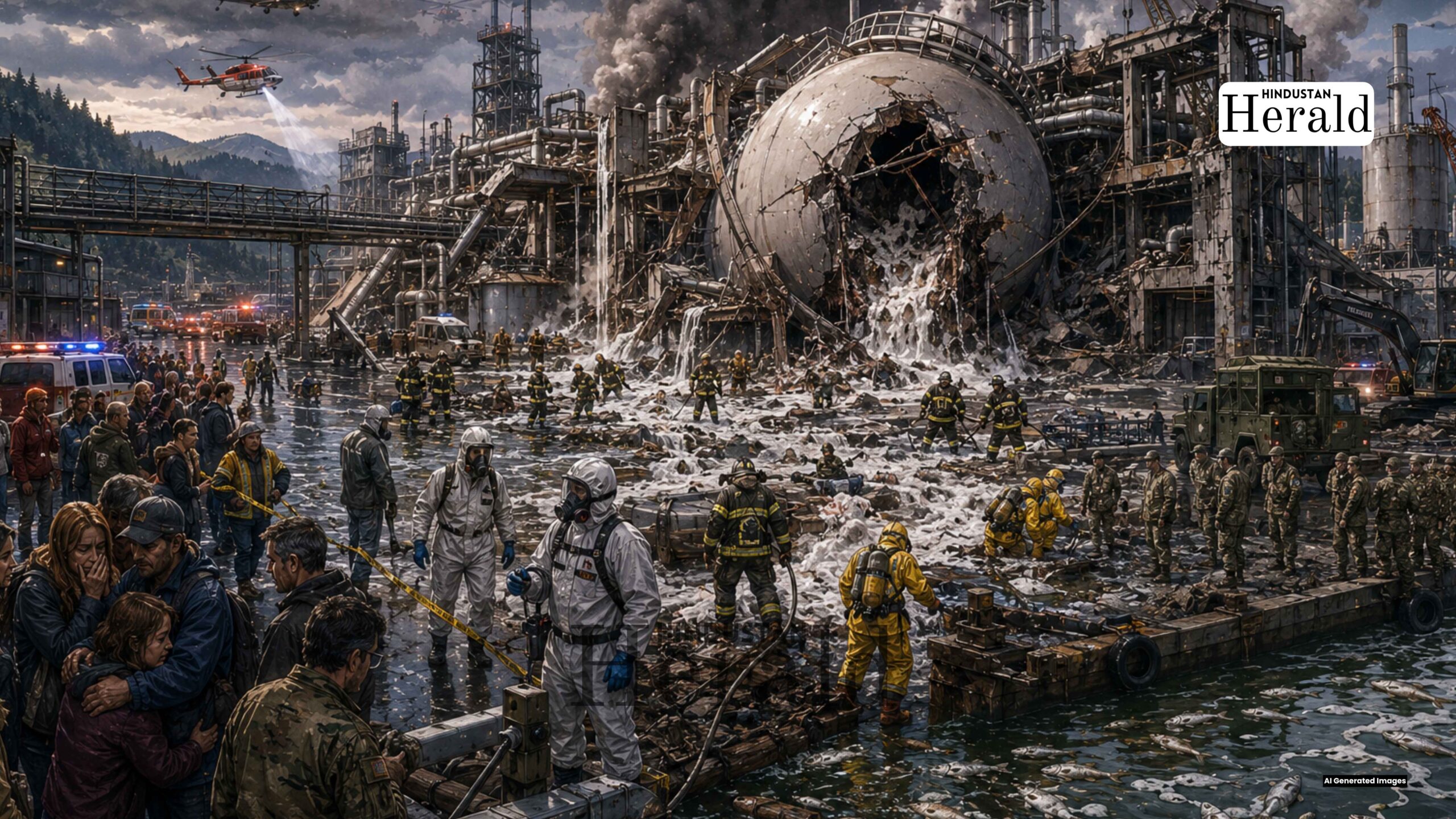
Longview (Washington State), May 28: Gilbert Bernal’s Bible study group met on Tuesday night like they always do. Except they didn’t do Bible study. They just sat there. Together. Talking about Gilbert, because Gilbert had gone to work that morning and the building he worked in had, without warning, turned into something that nobody was walking out of easily. His family said it the only way you can say something like that. Amazing husband. Amazing father. Amazing grandfather. Our family will never be the same.
That sentence is the whole story. Everything else, the chemical readings, the press conferences, the corporate statements from Tokyo, all of it is just the scaffolding around that one sentence. There are at least ten other families in Longview, Washington holding the same sentence right now, in their own words, about their own person.
Quick Summary
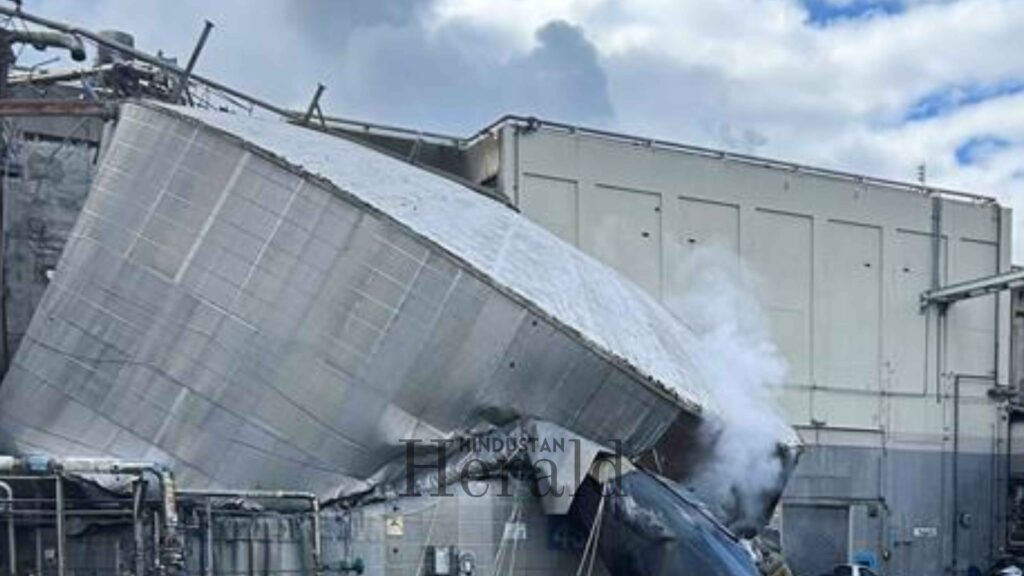
- A 900,000 gallon chemical storage tank imploded at the Nippon Dynawave Packaging Co. mill in Longview, Washington, at approximately 7:15 a.m. on May 26, 2026.
- At least 2 workers have been confirmed dead, with 9 more officially listed as unrecovered; the total presumed death toll stands at 11.
- The tank held white liquor, a caustic mix of sodium hydroxide and sodium sulfide capable of causing second and third degree burns on skin contact.
- The facility, owned by Japanese multinational Nippon Paper, employs roughly 1,000 people across its pulp, paper, and liquid packaging operations and produces 300,000 metric tons of premium paperboard annually.
- Washington Governor Bob Ferguson mobilised the National Guard Civil Support Team and the National Guard Homeland Response Force to assist with decontamination and recovery.
- Chemical contamination from the implosion reached the Columbia River, killing approximately a dozen carp; residents near Washington Way and Prudential Boulevard were advised to avoid local dikes and ditches pending water testing.
It Was Just a Tuesday Morning
Longview is not famous. It is not the kind of place that appears in travel pieces or economic forecasts. It is a mill town of about 38,000 people pressed up against the Columbia River, about 50 miles from Portland, the kind of place where the paper mill is not a landmark, it is just the place where people work. Where your dad worked. Where you work now. Where your brother took a job last year because the pay was decent and the shifts were steady.
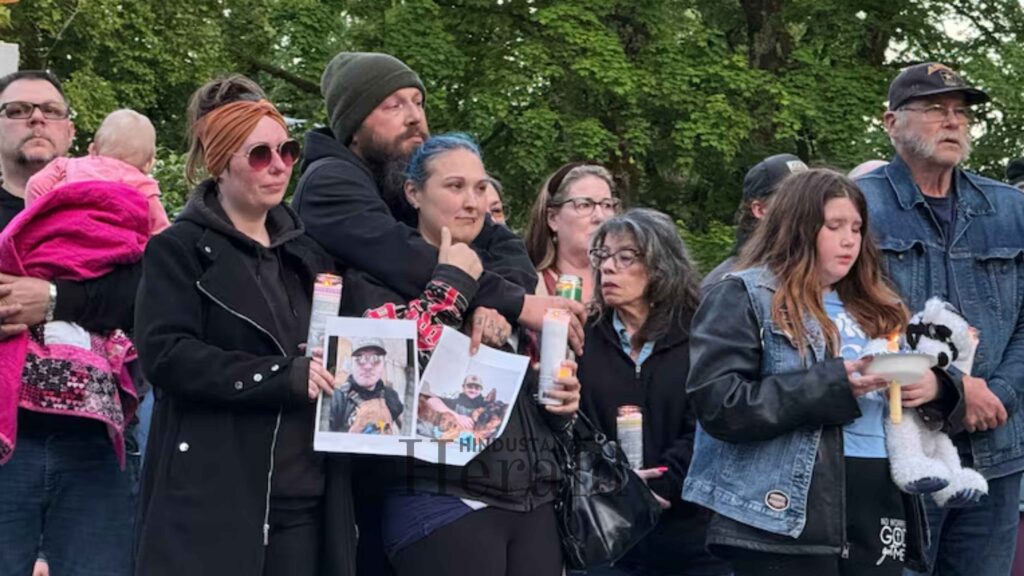
On the morning of May 26, the early shift had just settled in when a storage tank holding close to 900,000 gallons of an industrial chemical called white liquor imploded. There was an alarm. People ran. Some got out. Nine did not. 9 missing after Washington paper mill tank implosion.
Two are confirmed dead. More died later at a burn centre in Portland. The total number of people who are not going home from that shift, not now, not ever, is believed to be eleven. Eleven people who packed a lunch or grabbed coffee on the way in and never made it back to their cars.
Why Rescuers Couldn’t Just Go In
The question everyone keeps asking is why it took so long. Why two days later were the nine missing workers still inside? Why weren’t teams in there within hours?
Here is why.
White liquor is what paper mills use to break wood down into pulp. It is a mixture of sodium hydroxide and sodium sulfide, and the simplest way to describe what it does to a human body is this: it does not stop. It burns through skin and it keeps going. The injuries it causes are not the kind treated at a regular hospital. They are the kind that get you airlifted to a specialist burn unit where doctors talk in percentages.
The tank was about two thirds full when it failed. Roughly 600,000 gallons suddenly in motion inside an industrial building, hitting walls, floors, equipment, people. By Wednesday, around 25,000 gallons were still sitting in the debris, leaking slowly, and the building itself was threatening to collapse further. Engineers had to go in section by section, bracing and stabilising before the hazmat teams could follow. You cannot rush it. You cannot tell the building to hold still because families are waiting outside. It holds when it holds and not before. So the nine missing workers stayed inside, and the town stayed outside, and everyone waited.
The Man at the Press Conference
The most honest moment of this entire disaster did not come from an official statement. It came at the end of Tuesday evening’s press conference, when officials were doing the standard wrap up and a man pushed through to the front. He had two sons inside that building. Both unaccounted for.
He wanted to know what was being done and he wanted a real answer, not language carefully constructed to avoid saying the worst thing out loud. He did not get one. There was nothing to give him. Nobody in that room could look him in the eye and tell him what he needed to hear, because what he needed to hear did not exist yet. Maybe it still does not.
That moment, a father at a barrier, asking about his boys, is what this story actually is. Not the parts per million of sodium sulfide in the river water. Not the OSHA investigation timeline. A father asking about his sons and a row of officials who had no answer.Mayor Erik Halvorson got up to the microphone that night and said Longview had entered a period of profound tragedy and deep mourning. He meant it. You could hear it in how he said it.
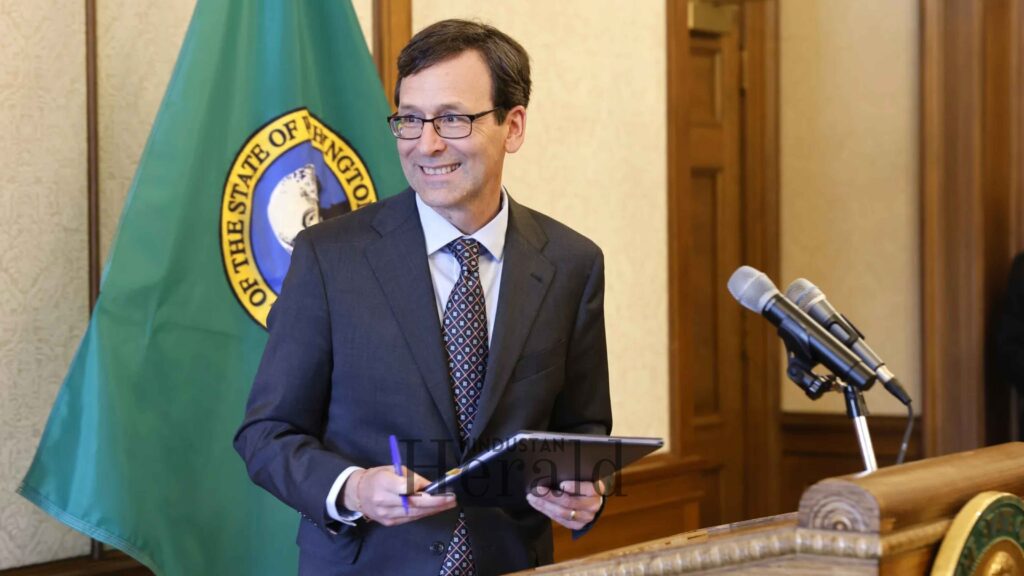
Governor Bob Ferguson drove to Longview himself. He did not send someone. He came, stood outside the facility in the afternoon, and announced that the state was sending in the National Guard Civil Support Team, the people who specifically handle chemical disasters, and the Homeland Response Force, trained for exactly the kind of contaminated environment that the inside of the Nippon Dynawave building had become.
At R.A. Long Park that night, a sixteen year old named Kaeden Beck showed up to the vigil and got down and laid candles on the ground one by one. Nobody organised him. He just came and did it, the way young people sometimes surprise you by knowing exactly what a moment requires.
Gilbert
His name was Gilbert Bernal and he was an electrician. His friend Todd Cornwell knew him from church, from the same Tuesday evening Bible study group that sat together this week without their Bibles. Cornwell told anyone who would listen that Gilbert was the kind of man who showed up. When the local church school started flooding once, Gilbert was already there helping before most people had even heard about it.
He was the first confirmed death. His family identified him before officials released anything formal. They were waiting, as of this writing, for his body to be released to them so they could begin whatever you begin after something like this. Eight other families are in some version of that same waiting room right now.
The Company, and the Questions It Has to Answer
Nippon Dynawave Packaging is not an independent American operation. It is owned by Nippon Paper, a large Japanese company that bought this Longview mill from Weyerhaeuser back in 2016 for $285 million. About a thousand people work there across the two divisions. The plant makes 300,000 metric tons of paperboard every year, the kind that ends up as your coffee cup or your cereal box, sold under the Structure Pak and Structure Serv brand names. Nippon Paper released a statement of condolences. That is the bare minimum and they did it. What is harder to square is the history of this specific building.
In July 2023, the mill had a serious fire. Wood chip piles caught and burned badly enough that Portland, fifty miles away, was logging unhealthy air quality. The cause was investigated and nobody ever publicly said what started it. Then in 2025, another fire on the same property. No injuries that time. And now a tank holding nearly a million gallons of caustic chemical has imploded and eleven people are dead or missing. Three serious incidents. Same facility. Three years. At what point does a pattern stop being a coincidence?
OSHA will investigate. They have not said when. They have not said how deep it will go. Whether anyone will ask the harder question of how this building’s safety record was being monitored between 2023 and today is something we will find out in the coming months.
This Is Not Just an American Story
If you are reading this in India and thinking this feels distant, stay with it for a moment. The chemicals that failed in Longview are sitting in storage tanks at paper and pulp mills across Andhra Pradesh, Odisha, Madhya Pradesh, Telangana right now. Today. Same chemicals. Same industrial process. In some cases, much older equipment. In some cases, the last serious independent safety inspection was longer ago than anyone would be comfortable admitting publicly.
Longview had National Guard units and OSHA and a governor who drove down personally. It had a modern emergency response infrastructure and it still took two days to safely enter the building where eleven people were. What does the emergency response infrastructure look like at a smaller mill in a smaller Indian town? What happens when the tank fails there?
That question is not rhetorical. It is the question that India’s industrial regulators should be sitting with this week. On the market side, a facility producing 300,000 metric tons of premium food grade paperboard annually is now effectively offline for an unknown period.
North American buyers will start looking for alternative sources sooner rather than later. Indian manufacturers with the right product quality and export certifications have a genuine opening if they move on it. And Indian importers sourcing specific kraft grades from this region need a backup plan, probably yesterday.
What Longview Looks Like Right Now
The recovery teams are back inside the building. Moving carefully, section by section, chemical readings guiding every step. They will find the nine missing workers. Everybody knows what they will find when they do. Outside the facility, the town keeps going because it has to. People are dropping food off at each other’s houses. The union hall has been open around the clock. The vigil candles at R.A. Long Park keep burning down and keep getting replaced.
Someone in this town is ironing a shirt for a funeral they have not been officially told to attend yet, because they know what the officials already know, and grief does not wait for a press release. Gilbert Bernal’s family is waiting for his body. A father is waiting for news about two sons. Eight other families are waiting for whatever version of closure is possible after something like this, which, if you have ever been through it, you know is not very much closure at all.
The mill will reopen. These things do. The paperboard will get made again. The shifts will resume and new workers will clock in at 7 a.m. and the town will keep being a town because it does not have any other option. But Tuesday, May 26 is now a date that Longview carries. In a town of 38,000, eleven people is not a statistic. Eleven people is the electrician from your Bible study. It is your neighbour’s sons. It is the guy who showed up when the school flooded without being asked. Eleven people is most of what a small town is made of.
Stay ahead with Hindustan Herald — bringing you trusted news, sharp analysis, and stories that matter across Politics, Business, Technology, Sports, Entertainment, Lifestyle, and more.
Connect with us on Facebook, Instagram, X (Twitter), LinkedIn, YouTube, and join our Telegram community @hindustanherald for real-time updates.

Tracking world politics, global markets, trade movements, policy decisions, and the changing balance of economic power.
- Shelesh Joshi

- Shelesh Joshi
- Shelesh Joshi
- Shelesh Joshi




Specializes in South Asian geopolitics and global diplomacy, bringing in-depth analysis on international relations.
- Rajiv Menon
- Rajiv Menon
- Rajiv Menon
- Rajiv Menon