
 By Shelesh Joshi and Rajiv Menon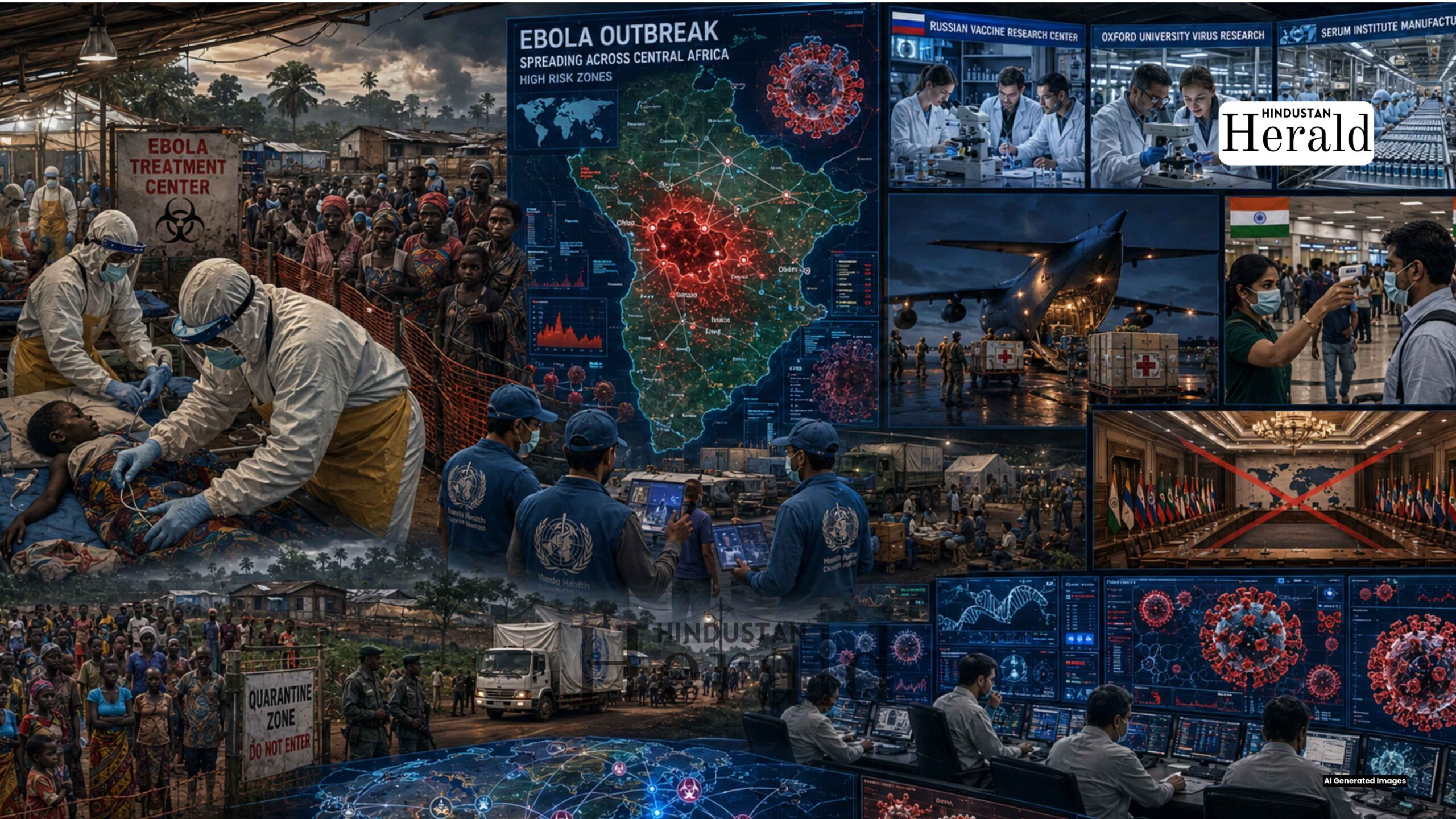
New Delhi, May 27: A health worker in eastern Congo went to work today with no vaccine in their system and no proven drug on the shelf behind them. Most headlines will not tell you that. What they will tell you is that Moscow just announced something that could change that picture entirely, or do nothing at all. Right now, even the scientists involved cannot say which one it is.
Quick Summary
- WHO recorded over 900 suspected cases and 220 suspected deaths from the Bundibugyo Ebola outbreak across DRC and Uganda as of May 25, 2026.
- Russian Health Minister Mikhail Murashko announced that scientists have developed a vaccine against the new Ebola strain, with the Russian Embassy in South Africa making the public disclosure on May 26, 2026.
- Gamaleya Centre chief Alexander Gintsburg said the genetic similarity between the Bundibugyo strain and the existing vaccine strain is approximately 60 to 70 percent, though no targeted efficacy tests have been conducted.
- Oxford University experts are racing to develop a dedicated Bundibugyo vaccine that could enter clinical trials within 2 to 3 months, in collaboration with the Serum Institute of India.
- India issued a nationwide Ebola travel advisory on May 21, 2026, covering citizens travelling to or returning from affected African countries, with no confirmed cases reported in India so far.
- The India Africa Forum Summit, scheduled to begin in Delhi on May 28, has been postponed due to the escalating Ebola health situation.
The Strain Nobody Bothered to Prepare For
Ask most people what they know about Ebola and they will tell you about 2014. West Africa. The images that played on television for months. That outbreak was Zaire strain, the one that eventually got the world to fund serious vaccine development. Merck’s Ervebo came out of that pressure. Years of work, enormous money, genuine political will. It works. Bundibugyo is not Zaire.
No vaccine. No treatment. Nothing sitting in any government stockpile that was specifically made for this strain. The mortality rate is lower than the Zaire strain, somewhere between 25 and 40 percent, but that number is cold comfort when the virus is moving through communities in eastern DRC where the nearest functioning hospital might be hours away on a road that barely exists.
Bundibugyo showed up before. Uganda in 2007, DRC in 2012. Both times it was contained fast enough that the global health establishment did not feel the sustained pressure needed to fund a dedicated vaccine. The crisis passed. Attention moved elsewhere. The same thing that happened after SARS in 2003, after H1N1, after the first Congo Ebola outbreaks. The fire goes out and everyone walks away from the ash. One day the ash catches again. That day appears to be now.
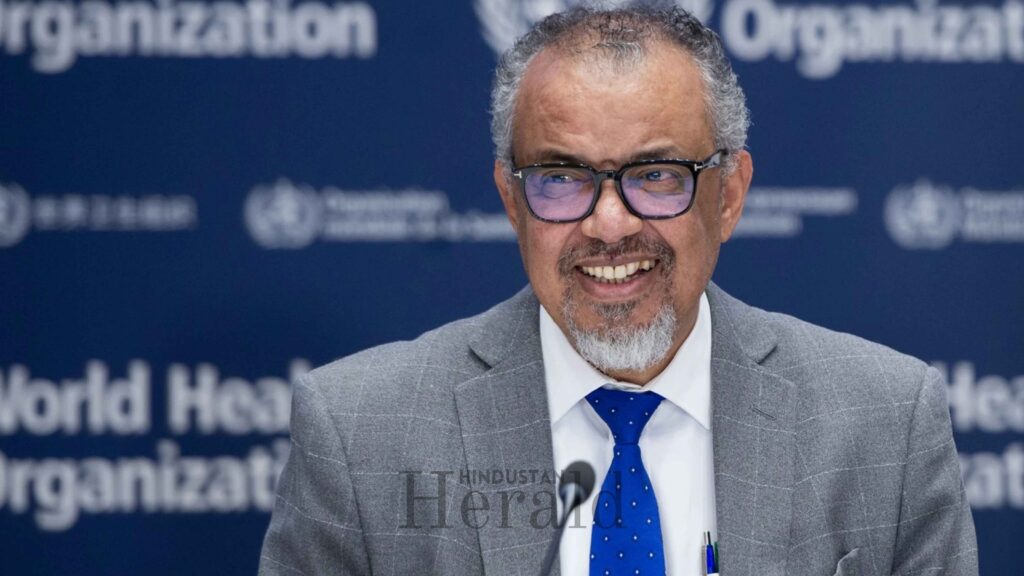
By May 25, WHO Director General Tedros Adhanom Ghebreyesus was telling a ministerial briefing that suspected cases had crossed 900 and suspected deaths had reached 220. The confirmed figures are smaller, 101 cases and 10 deaths, but Tedros did not pretend those numbers capture the real picture. They do not. There are infections in villages where a health team has not set foot. There are people who died at home whose illness was never tested. The gap between suspected and confirmed is not a rounding error. It is a map of everything the response has not reached yet.
Uganda has five confirmed cases and one death. The virus crossed a border. The epicentre stays in Ituri Province, eastern DRC, which is one of the more difficult places on this planet to run an outbreak response. Conflict for years. Communities that have watched outside interventions come and go and mostly leave things worse. Trust does not exist here by default. It has to be built, slowly, conversation by conversation, and an accelerating outbreak does not give you that kind of time.
The WHO declared a global health emergency on May 17. The Africa CDC declared a continental security emergency shortly after. Both matter. Neither one is a vaccine.
What Moscow Said, and What It Left Out
On May 26, the Russian Embassy in South Africa posted on X. Russian scientists had developed a vaccine against the new Ebola strain. Health Minister Mikhail Murashko made the official announcement. The post also mentioned that the vaccine may protect against the Bundibugyo strain driving the current outbreak. That word may is carrying an enormous amount of weight in that sentence.
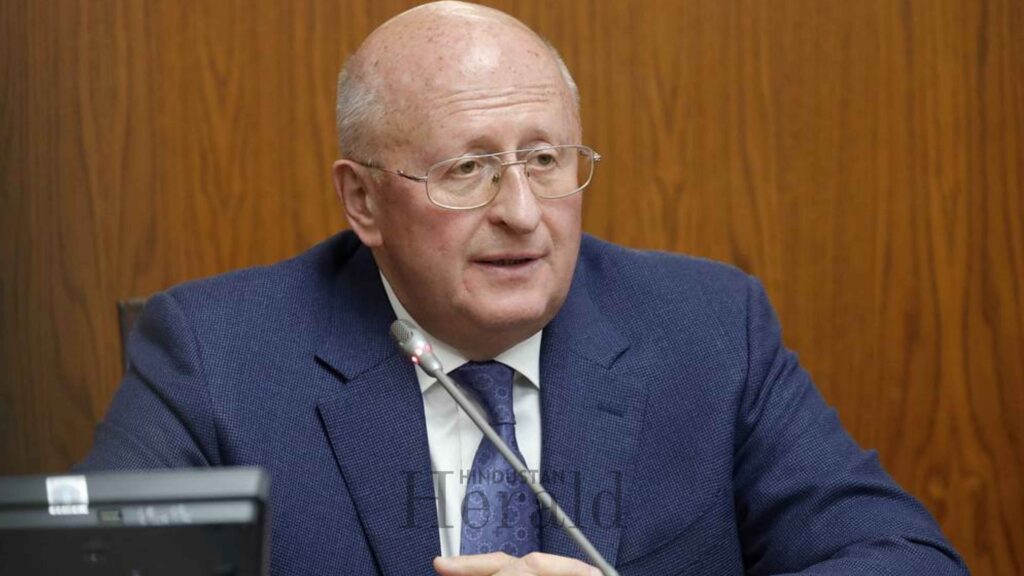
The person behind the scientific claim is Alexander Gintsburg, the head of the Gamaleya National Centre in Moscow. Gamaleya built Sputnik V. The institution is serious and Gintsburg is not someone who talks without a basis. When he spoke to Izvestia he explained his reasoning carefully. The genetic similarity between Bundibugyo and the strain the existing Russian vaccine was built around is somewhere in the 60 to 70 percent range. That overlap, he argued, means the vaccine could plausibly offer some degree of protection. He recommended that health workers going into the outbreak zone get vaccinated with the existing drug rather than walk in with nothing.
That is a defensible position. When there is genuinely nothing else available, something with a logical scientific basis for working is better than an empty shelf. But here is what Gintsburg also said, the part that deserves more attention than it has received.
Gamaleya does not have a physical sample of the Bundibugyo strain. Without the actual virus to test against, there is no way to run a proper efficacy trial. The genetic similarity argument is sound science. It is not a clinical result. His own words, when he spoke to Izvestia, were careful and honest: “I believe the existing vaccine may confer immunity against this pathogen, though we have not tested it.”
That sentence should lead every story on this announcement. Not because the claim is dishonest but because the difference between a tested vaccine and a reasonable scientific inference is not a small distinction in the middle of an outbreak. Both have value. They are not the same thing.
The GamEvac Combi vaccine does have real clinical history behind it. It was properly trialled in Guinea and Russia between 2017 and 2019. Double blind, randomised, published. The platform earned its credibility. What it did not earn is a result specifically against Bundibugyo, because that test was never run. One more thing. This announcement came through an embassy on social media. Not a scientific journal. Not a WHO briefing. Not a press conference with data attached. The Russian Embassy in South Africa posted it to X.
Russia has spent years building a relationship with African governments around the idea that Moscow is the partner that shows up when the West does not. Sputnik V was in African markets when wealthy countries were still arguing about dose sharing and COVAX was struggling to deliver. The pattern is consistent and it is not accidental. None of that makes the Gamaleya science wrong. It does mean that anyone reading this announcement should hold two things in their head at once: a credible scientific hypothesis, and a deliberate geopolitical communication strategy. Both are operating here simultaneously.
Oxford Is Racing. Pune Might Be in the Picture.
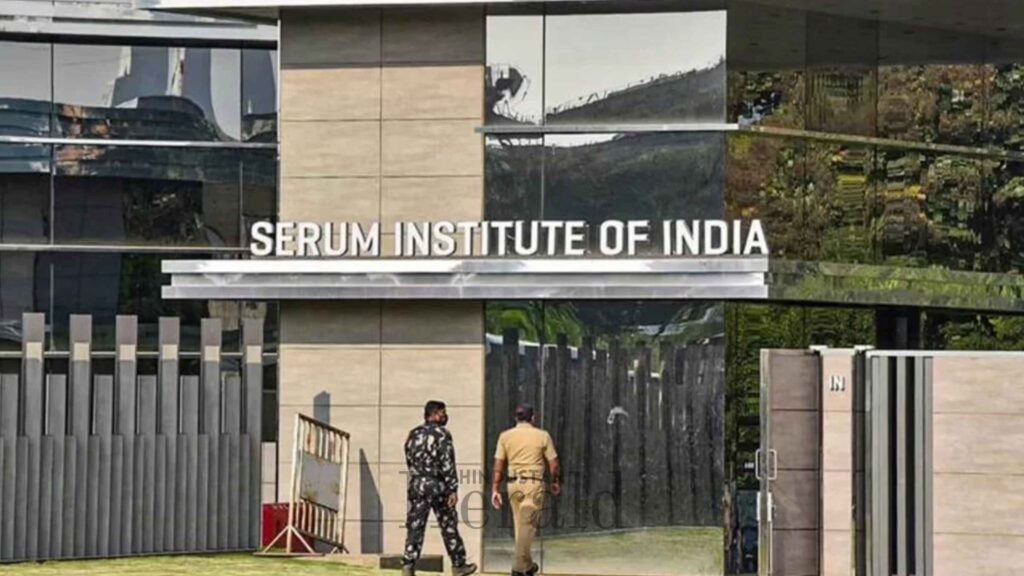
Russia is not the only one moving. It is just the one that made the most noise this week. Researchers at Oxford University are working on a dedicated Bundibugyo candidate and believe they could be ready to begin clinical trials within two to three months. The Serum Institute of India in Pune is reportedly part of those early conversations. Serum and Oxford have worked together before, and Pune’s manufacturing capacity is genuinely significant. If the candidate moves through trials and works, the speed at which doses can be produced at scale matters enormously. No formal statement has come from either institution yet, but the involvement of Serum, if confirmed, is not a minor detail.
The WHO’s research lead Dr. Vasee Moorthy put the global timeline plainly at a recent briefing. The stronger of the two candidates currently in development is six to nine months from having doses ready for human trials. The other might be ready in two to three months but does not yet have animal data strong enough to justify moving to humans. Six to nine months is a long time when the outbreak is moving today.
Ervebo, the approved Merck vaccine for the Zaire strain, is being discussed as something of a bridge. There is limited animal study data suggesting it might offer partial cross protection against Bundibugyo. Researchers are not confident enough in that data to make strong recommendations. But the conversation is happening because the alternative, sending health workers into the field with absolutely nothing, is already the reality and it cannot stay the reality indefinitely.
Why India Has More Skin in This Than Most People Realise
India’s connection to eastern and central Africa is not the kind of thing that gets discussed much in domestic news, but it runs surprisingly deep.
There is a large Indian diaspora across Uganda, Kenya, Tanzania, and neighbouring countries. Traders, doctors, teachers, business owners, families that have been there across generations. Beyond the diaspora, India has development financing, educational exchange programmes, and diplomatic investments in the region that have been carefully built over decades. These are not abstract connections. They are people who travel between India and Africa regularly, who have relatives on both sides, who are directly in the path of whatever this outbreak becomes.
On May 21, the Ministry of Health and Family Welfare and the Ministry of External Affairs put out a joint advisory. Avoid non essential travel to DRC, Uganda, and South Sudan. Watch for symptoms if you are returning. Stay updated through embassy channels. No confirmed Ebola cases in India, the advisory noted.
Both ministries moving together rather than the health ministry alone is a signal worth reading. This was not routine public health communication. When foreign affairs and health issue something jointly, the government is saying this crosses a line into strategic concern.
Then the India Africa Forum Summit was postponed. This event was due in Delhi on May 28. Heads of government, senior delegations, trade and investment discussions months in the making. It was postponed. That decision costs India something real diplomatically and it was made anyway, which says a great deal about how the situation is being read internally.
Back in 2019, India formally ranked Ebola among the top ten viral threats to the country. That was not a press release. It was a policy classification that triggered the building of surveillance frameworks specifically designed for this scenario. Those frameworks are now being activated. Not loudly. Not in ways designed to generate alarm. But activated.
What Is Actually Happening in Ituri Right Now
All the announcements and declarations and postponements are happening at some distance from the actual crisis, which is taking place in villages and clinics in eastern DRC where the practical situation is very hard.
Health workers are doing contact tracing in communities that have historical reasons, accumulated over years of difficult experience, to be suspicious of outside health interventions. Previous outbreak responses in this part of Congo brought restrictions on movement, military presence, disruption to daily life, and in several cases violence against health teams. People remember. When a family member develops a fever, the decision of whether to report it or keep them quietly at home is not made in a clean logical space. It is made against everything that has happened before.
Contact tracing depends on people coming forward. Isolation depends on patients agreeing to it voluntarily. The entire non pharmaceutical response to this kind of outbreak runs on a foundation of community cooperation that has been damaged repeatedly in this region and rebuilt only partially each time.
So health workers are doing the old work. Find cases. Trace contacts. Isolate confirmed patients in conditions that do not make their families feel like they have handed someone over to disappear. Implement strict infection control in every space where sick people might have been. It can work. It has worked in the DRC before, in outbreaks that looked just as bad at the start. But it works slowly, and every day the response is behind the virus is more transmission chains that now need untangling.
No Neat Ending to Write Here
The honest version of where this stands is not a comfortable one. Russia has offered something that might work and has not been properly tested against this strain. Oxford is developing something that will not be ready for months. The approved vaccines do not cover Bundibugyo. India has taken the threat seriously enough to postpone a flagship diplomatic summit. The WHO has declared the highest level of emergency it can declare. And the outbreak is still moving.
What happens in the next four to six weeks in Ituri Province will determine most of what comes after. If the containment holds, if transmission slows, if communities cooperate enough for contact tracing to get ahead of the spread, this can be controlled. It has been done before in places just as difficult.
If it does not hold, if cases start appearing in South Sudan or Rwanda or Central African Republic, the situation changes in ways that will be hard to bring back under control quickly.
There is no tidy conclusion available right now because the story is not finished. What exists is a virus moving through one of the hardest places on earth to stop anything, a vaccine claim from Moscow that is more scientific inference than proven result, a set of timelines from Oxford that stretch into months the outbreak cannot afford to wait, and a global health system responding to a threat it had years and two prior outbreaks to prepare for. It chose not to. Now everyone is catching up. India is paying attention. The rest of the world would do well to do the same
Stay ahead with Hindustan Herald — bringing you trusted news, sharp analysis, and stories that matter across Politics, Business, Technology, Sports, Entertainment, Lifestyle, and more.
Connect with us on Facebook, Instagram, X (Twitter), LinkedIn, YouTube, and join our Telegram community @hindustanherald for real-time updates.

Tracking world politics, global markets, trade movements, policy decisions, and the changing balance of economic power.
- Shelesh Joshi

- Shelesh Joshi
- Shelesh Joshi
- Shelesh Joshi




Specializes in South Asian geopolitics and global diplomacy, bringing in-depth analysis on international relations.
- Rajiv Menon
- Rajiv Menon
- Rajiv Menon
- Rajiv Menon