
 By Shelesh Joshi and Rajiv Menon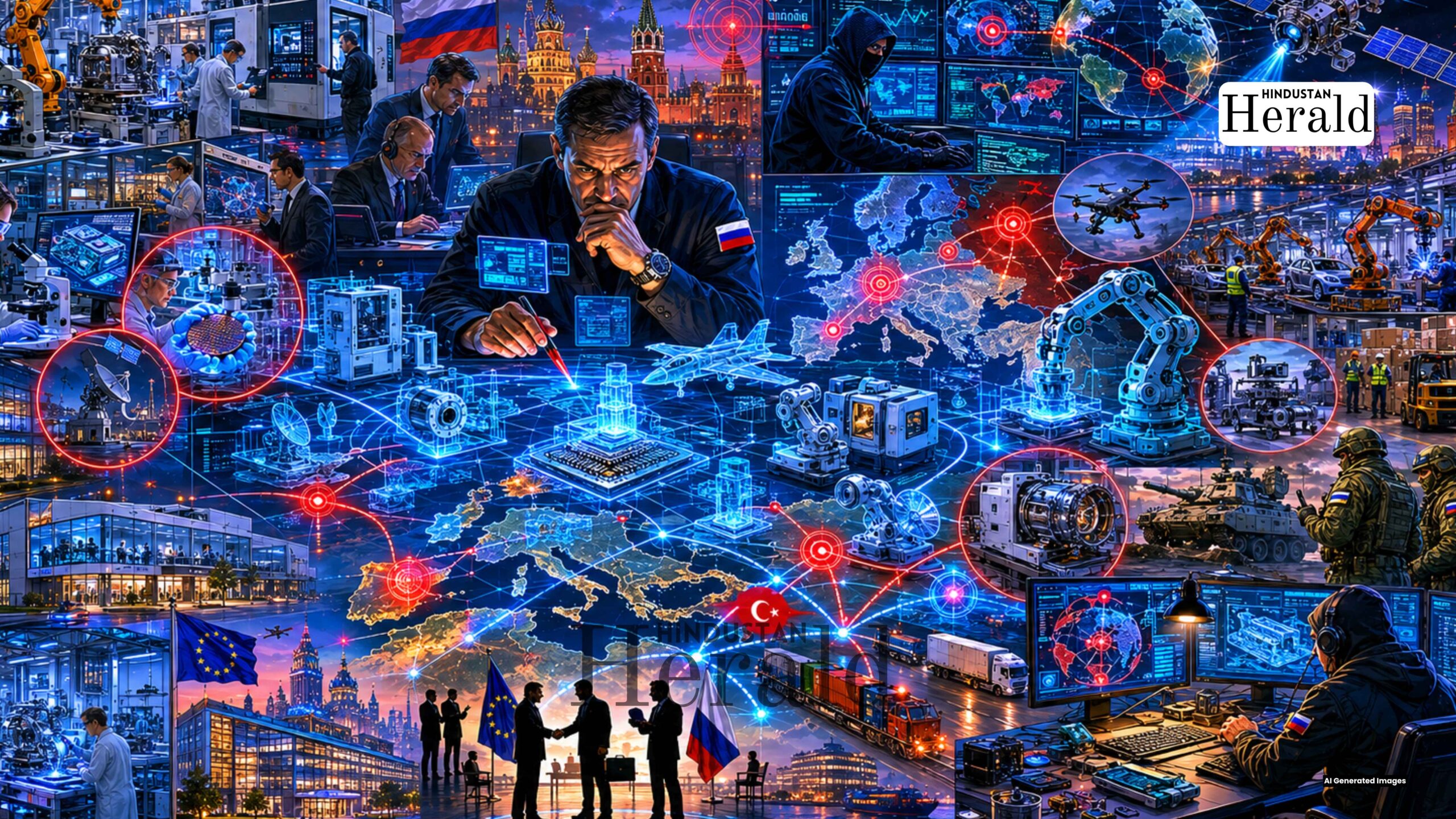
New Delhi, May 30: Nobody is stealing nuclear codes anymore. The new target is a circuit board. A drilling machine. A piece of software that tells a factory what to cut and how deep. That is what Russian spies want. And according to three senior European intelligence officials who spoke directly to The Associated Press, Moscow is going after it with a kind of methodical, institutional hunger that has rattled Western security agencies across the continent. This is not rogue operators or freelance hackers. This is a coordinated, state backed effort to plug the holes that four years of Western sanctions have punched into Russia’s ability to fight a war.
Quick Summary
- Three senior European intelligence officials confirmed to The Associated Press that Russian spies are running active technology theft operations using fake companies and recruited middlemen across Europe. (Source: The Associated Press, May 30, 2026)
- Russia’s 2026 budget deficit was planned at 3.7 trillion rubles ($52.1 billion) for the full year but had already reached 3.4 trillion rubles ($47.9 billion) by the end of February alone. (Source: The Associated Press, May 30, 2026)
- About a third of Russia’s entire GDP is currently being directed toward the war effort, according to Juha Martelius, Director of Finland’s Security and Intelligence Service. (Source: The Associated Press, May 30, 2026)
- Swedish police arrested two people in May 2026 on suspicion of violating sanctions linked to a company in Turkey that made dozens of shipments of metalworking machine tools to Russia. (Source: The Associated Press, May 30, 2026)
- Anne Keast Butler, Director of the UK’s signals intelligence agency, stated that almost 500,000 Russian soldiers have been killed in Ukraine since the full scale invasion began in 2022. (Source: The Associated Press, May 30, 2026)
- Russian spies targeted a Swedish power plant in a cyberattack last year, attempting to destroy it. The attack failed only because the system detected the intrusion in time. (Source: The Associated Press, May 30, 2026)
The Machinery Behind the Theft
Christoffer Wedelin, deputy head of operations at the Swedish Security Service, told the AP something that sounds almost mundane until you sit with it. “They really know what they need,” he said, describing Russian spies as putting “serious effort” into acquiring advanced machine tools, factory equipment, research, and dual use technology. The specificity of the demand signals not improvisation but a shopping list. A very long, very specific shopping list.
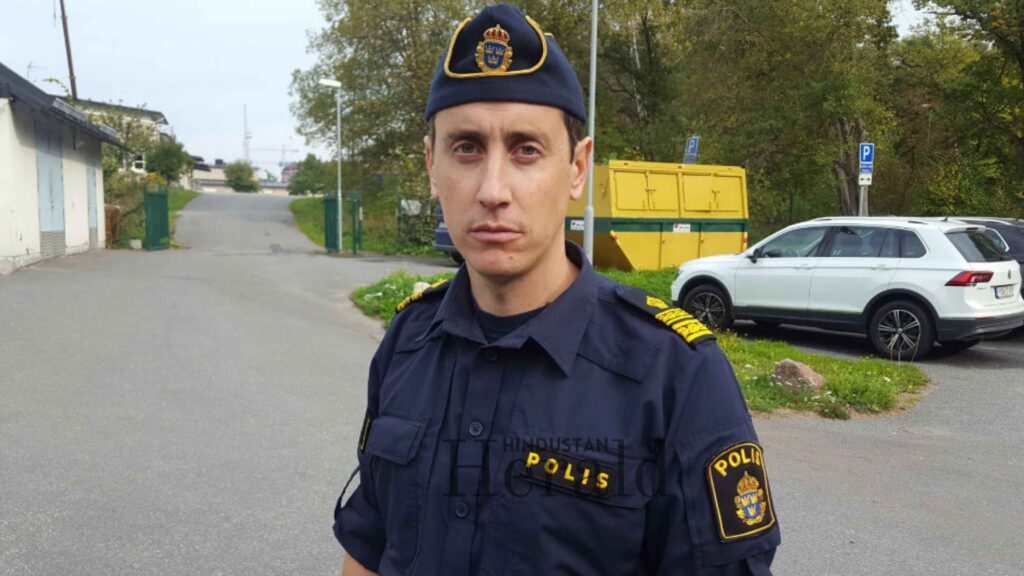
According to Wedelin, in Sweden specifically, Russian spies are targeting the defense industry and high end research on the country’s most advanced weaponry, including the Gripen fighter jet. They are also trying to procure camera and laser technology developed for civilian purposes that could be integrated directly into Russian weapons systems.
The term “dual use technology” keeps appearing in every briefing, every sanctions document, every court filing connected to this issue. It sounds bureaucratic. It is anything but. Dual use means a component that works in a refrigerator compressor and a missile guidance system. A CNC machine tool that can shape a kitchen cabinet or a tank barrel. A microcontroller that regulates your car’s air conditioning or tells a drone where to turn.
According to Wedelin, all of Russia’s security and intelligence services are contributing to this state directed procurement effort. “All of the security and intelligence services in Russia are helping out on the state’s efforts to get this,” he told the AP. That is not a small operation. That is a mobilised intelligence apparatus redirected, at least partly, toward industrial acquisition.
Russian Spies Eye Tomorrow: Russia’s Long Game on Western Technology
What makes this moment more unsettling than a simple wartime procurement story is the longer horizon behind it. Juha Martelius, Director of Finland’s Security and Intelligence Service, told the AP that Russian spies are not only trying to sustain the current war. They are stealing Russian technology gaps clean by targeting what the West has spent decades building. The goal, Martelius made clear, is to keep pace with the West, or gain an edge over it, in the decades ahead.
“We’re talking about space technology, quantum, arctic technology, marine technology,” Martelius said, adding that space technology is something Russia needs “right now,” though he declined to elaborate further. Countries use such technology for satellite imaging, communications, and navigation, capabilities with both civilian and deep military significance that no sanctioned economy can easily replicate on its own.
Russian spies are also targeting sanctioned computer technology and software updates for machine tools, Martelius said. These are not glamorous acquisitions. They are the unglamorous backbone of industrial production, the kind of Russian technology deficit that does not make headlines but quietly determines whether factories run or stall.
This is the part of the story that gets less attention than it deserves. A Russian spy operating in a European technology firm is not just keeping today’s weapons firing. Every piece of stolen research, every piece of acquired software, every sanctioned component that makes it through is laying the foundation for tomorrow’s arsenal.
Russian spies are not working on a one year horizon. They are working on a twenty year one. And that, more than any single shipment or cyberattack, is what keeps European intelligence chiefs awake at night.
How Aggressive Has This Gotten
The shift in Russian intelligence behaviour has been notable enough that Wedelin used a specific word to describe it: a “switch.” Russian spies are no longer particularly concerned about being caught. “They’re no longer caring as much about potential attribution after their activities, so they are taking greater risks to achieve their goals,” Wedelin told the AP.
That is a significant statement from a serving intelligence official. It means the calculation inside Moscow has changed. Getting the technology matters more than staying hidden. The desperation of an economy under pressure is showing up in the operational posture of its spies.
On Wednesday, Anne Keast Butler, Director of the UK’s signals intelligence agency GCHQ, accused Russian spies of “relentlessly targeting” the United Kingdom and its European allies, stealing technology and plotting both sabotage and assassination attempts, as reported by the AP.
In Sweden, Russian linked actors attempted to “destroy” a power plant last year. The attack failed because the system detected the intrusion in time, Wedelin told the AP. Before that incident, Swedish security services had mostly observed reconnaissance activity or intelligence gathering linked to cybercriminals. The attempted destruction of physical infrastructure represented something new and considerably more dangerous. Moscow is also deploying cyberattacks against European firms and critical infrastructure to gather information it could exploit “when they get the chance and when it serves their purpose,” Wedelin said.
Russian Espionage in Action: The Arrests That Reveal the Method
The arrests did not happen in a shadowy intelligence operation. They happened in plain sight, inside a legitimate looking trade corridor, which is precisely the point of Russian espionage in 2026.
In May 2026, Swedish police arrested two individuals on suspicion of violating sanctions connected to a company in Turkey that had made dozens of shipments of metalworking and metal turning machine tools to Russia, according to the AP report. Two people detained. Dozens of shipments. A paper trail running through a NATO adjacent country. That is Russian espionage not as a Cold War thriller but as a logistics operation.
The Turkey connection is not incidental. It reflects a pattern that intelligence officials have described repeatedly in recent months. Russian espionage networks and their recruited intermediaries deliberately route restricted goods through third countries that are not bound by Western sanctions, using them as transit corridors to move technology that cannot be legally shipped directly from Europe. The method is simple by design. The simplicity is what makes it so difficult to shut down completely.
As these Russian espionage schemes grow more complex and more layered, companies across Europe risk becoming unwitting participants in Russia’s war supply chain without ever knowing it. Christoffer Wedelin of the Swedish Security Service was direct about this when speaking to the AP. “Companies need to be more aware they could unwittingly become part of Russia’s war supply chain,” he said.
That warning does not stop at Europe’s borders. It carries specific weight for Indian companies as well, operating in a trade environment where goods flow between India and Russia at record volumes, and where Western regulators are watching those flows with increasing attention. Russian espionage does not discriminate by geography. It follows the supply chain wherever the supply chain leads. And right now, significant parts of that chain run directly through South Asia.
Russia’s Economy: The Numbers Behind the Desperation
To understand why Russian spies are operating with such intensity, the economic numbers reported by the AP are essential context. Kaupo Rosin, head of Estonia’s Foreign Intelligence Service, told the AP plainly: Russia’s economy “is not doing well at all.”
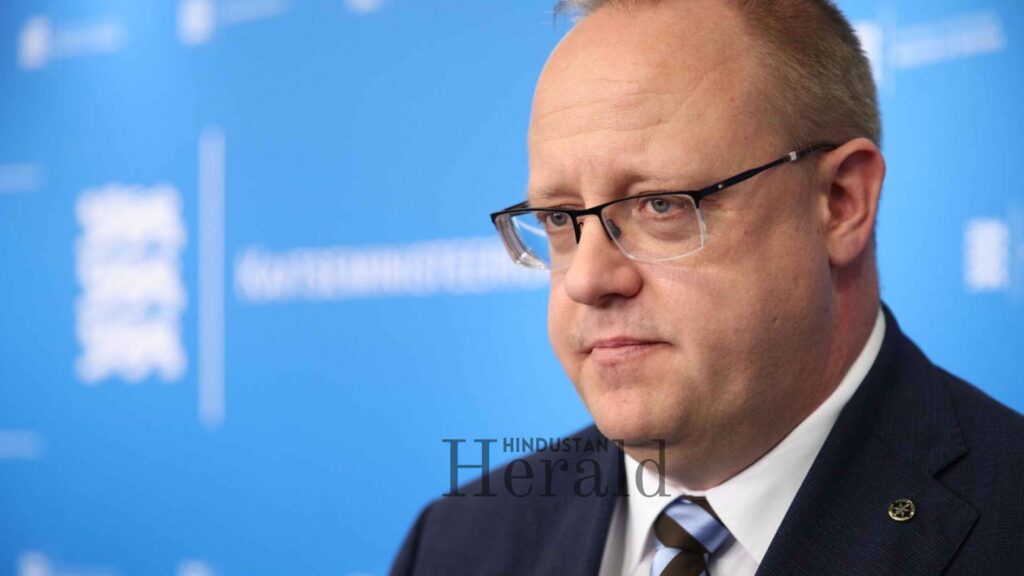
About a third of Russia’s entire GDP is currently being directed toward the war effort, according to Martelius. That is an extraordinary proportion for a peacetime structured economy to absorb over any sustained period. The war and the sanctions that followed have slowed growth and fuelled stubborn inflation throughout the Russian economy.
Russian officials had budgeted a deficit of 3.7 trillion rubles, equivalent to $52.1 billion, for all of 2026. By the end of February alone, that deficit had already reached 3.4 trillion rubles, or $47.9 billion, according to Rosin. The year was barely two months old.
The outbreak of the Iran war on February 28 provided temporary relief by causing oil prices to spike, improving Russia’s energy revenues. The United States granted sanctions waivers for the sale of Russian oil, and the United Kingdom watered down its own sanctions in an attempt to lower global fuel costs. That revenue improvement helped, but according to Rosin, “it doesn’t save them.” If Western pressure continues, Rosin told the AP, Moscow could be facing a genuine financial crisis before the end of 2026.
What Russian Officials Are Saying Privately
Perhaps the most telling detail in the AP report is not about technology or economics. It is about morale. Rosin told the AP that intelligence seen by Estonia’s Foreign Intelligence Service shows a noticeably gloomier outlook among Russian officials over the past six months. The narrative of “total victory” in Ukraine, once a fixture of internal Russian discussions, has quietly disappeared. Officials are privately asking “what is this all for,” Rosin said, citing his agency’s intelligence reports.
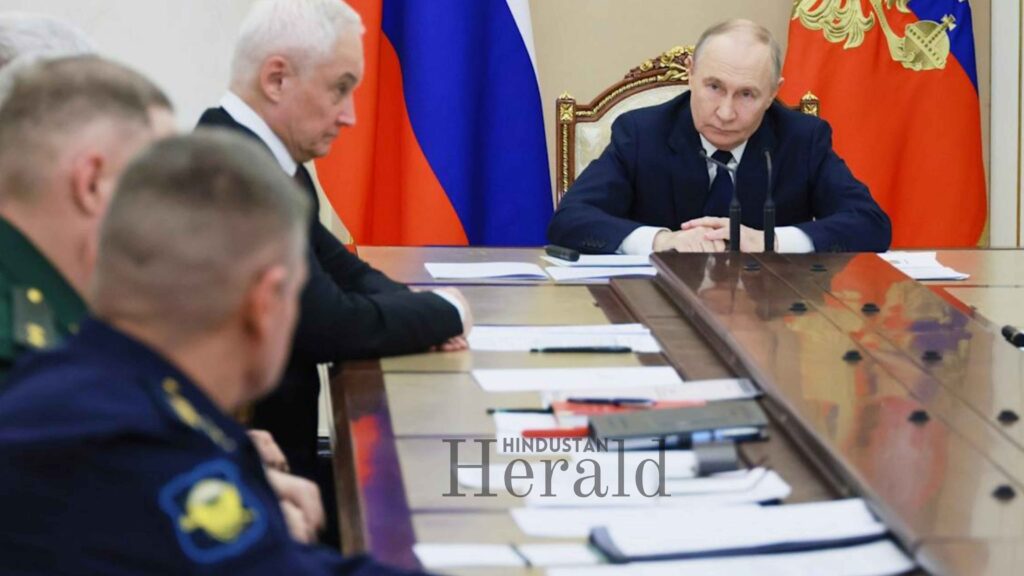
Martelius, of Finland’s intelligence service, said that while some reports on the war in Ukraine may have been “sanitized” before reaching President Vladimir Putin’s desk, he believes Putin has a fairly clear picture of the economic challenges his country faces. But, Martelius cautioned, that does not mean political change is coming. “It is very dangerous to start analyzing Russia as if it is some country like ours,” he told the AP. “It is not.”
That observation matters. A leadership that understands its economic problems but does not respond to them the way a Western democracy might is a leadership that will keep sending its spies after microchips and machine tools, regardless of the cost or the consequences.
The Bigger Picture
What is unfolding is not simply a spy story. It is the visible consequence of an economy under siege attempting to sustain a major industrial war while intelligence services carry out the procurement work that sanctions have made impossible through legal channels.
Russian spies are stealing the technology because there is no other way to get it. The sanctions have made legal acquisition impossible. Domestic substitution has not kept pace. And the war consumes components faster than any alternative supply chain can replenish them.
Keast Butler of British intelligence told the AP that almost 500,000 Russian soldiers have been killed in Ukraine since the full scale invasion began in 2022. That figure, if accurate, speaks to the scale of what Russia is sustaining, and to the industrial demand that scale creates. Weapons, vehicles, guidance systems, communications equipment: all of it needs components, and many of those components can only come from the West.
Russian spies are the gap between what Russia needs and what it can legally obtain. They are not a peripheral element of the war effort. According to the European intelligence officials who spoke to the AP, they are central to it. And the switch that Wedelin described, the one where Moscow stopped worrying about attribution, stopped caring about being caught, started taking greater risks to reach its goals, suggests that the pressure is not easing. It is intensifying.
For companies, governments, and countries that do business anywhere near this supply chain, that is not an abstract security concern. It is an active, escalating, and well resourced problem sitting at the intersection of espionage, economics, and an industrial war that shows no sign of ending soon.
Stay ahead with Hindustan Herald — bringing you trusted news, sharp analysis, and stories that matter across Politics, Business, Technology, Sports, Entertainment, Lifestyle, and more.
Connect with us on Facebook, Instagram, X (Twitter), LinkedIn, YouTube, and join our Telegram community @hindustanherald for real-time updates.

Tracking world politics, global markets, trade movements, policy decisions, and the changing balance of economic power.
- Shelesh Joshi

- Shelesh Joshi
- Shelesh Joshi
- Shelesh Joshi




Specializes in South Asian geopolitics and global diplomacy, bringing in-depth analysis on international relations.
- Rajiv Menon
- Rajiv Menon
- Rajiv Menon
- Rajiv Menon