
 By Shelesh Joshi and Kavita Iyer
Taipei, June 2: There is a particular kind of quiet that falls over a trade show audience when they realise they are watching history happen in real time. Not the polite quiet of a scripted product reveal. The other kind. The kind where people stop typing and just look up.
That is roughly what happened on Monday at Computex 2026 in Taipei, when Jensen Huang unveiled the Nvidia RTX Spark superchip and told a room full of the world’s most cynical technology journalists that he was about to reinvent the personal computer. Standing at the podium in that black leather jacket he never seems to retire, he said it with the quiet confidence of someone who had already done the math.
And if even half of what Nvidia is claiming holds up in real world use, the laptop market that Intel and AMD have jointly owned for forty years is about to get very complicated.
Quick Summary
- Nvidia unveiled the RTX Spark Superchip at Computex 2026 on June 1, 2026, its first ever dedicated processor for Windows PCs, ending a four decade duopoly held by Intel and AMD.
- The chip combines a 20 core Arm CPU, a Blackwell GPU with 6,144 CUDA cores, and up to 128 gigabytes of LPDDR5X unified memory on a single TSMC 3nm package.
- 6 major PC brands including Dell, HP, Lenovo, ASUS, Microsoft Surface, and MSI confirmed RTX Spark laptops and compact desktops shipping between September and November 2026.
- Markets moved fast: Intel fell 6%, AMD dropped 5%, Qualcomm shed 7%, while Nvidia gained roughly 4% and Microsoft climbed 3.1% in pre market US trading.
- Nvidia’s next generation data centre platform Vera Rubin has also entered full production, with OpenAI, Anthropic, SpaceX’s xAI, Oracle, and CoreWeave confirmed as early customers.
- No India specific pricing has been announced; global availability is expected by fall 2026, with Indian rollouts subject to individual OEM timelines.
The Forty Year Assumption That Nvidia RTX Spark Just Broke
Here is something worth sitting with for a moment. Every Windows computer you have used in your life, every laptop your office ever bulk ordered, every desktop your school lab ran on, almost certainly had an Intel or AMD chip inside it. Not because those were the only options in theory. But because, in practice, they were the only options that mattered.
That assumption, baked into procurement decisions and supply chains and developer ecosystems for four straight decades, started cracking on Monday morning. Nvidia announces a new AI chip for personal computers, and this is not a graphics card tucked into the side of a machine.
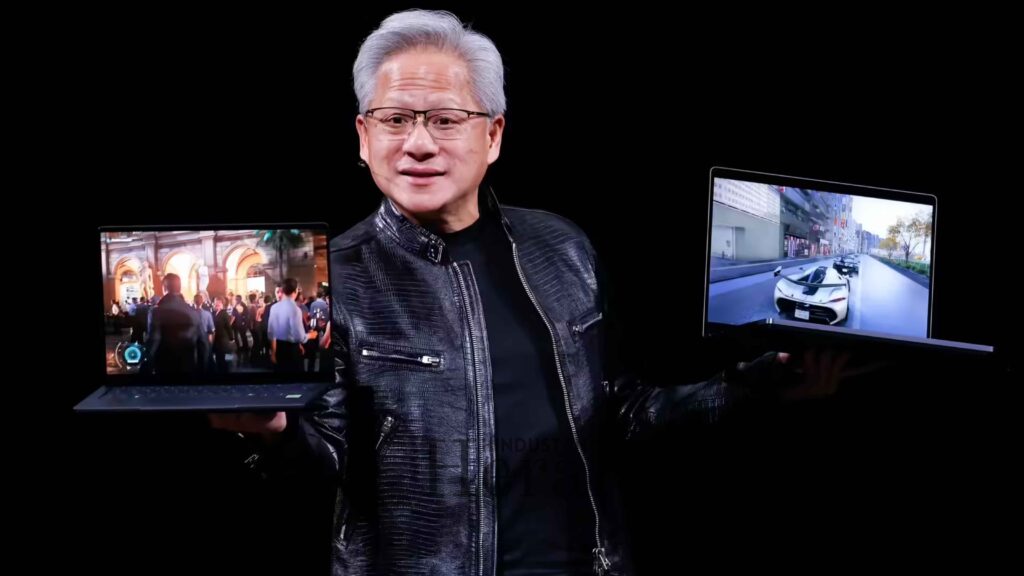
Nvidia, a company that built its reputation on making your games look better and more recently on being the backbone of the global AI boom, formally entered the market for Windows PC processors. Not with a partnership. Not with an add on. With a full processor, the brain of the machine, designed to replace the Intel Core chip sitting at the heart of laptops that hundreds of millions of people use every day.
Huang called it “the reinvention of the PC.” He has a habit of grand proclamations, and the technology press has learned to receive them with moderate scepticism. But this time, the specification sheet is hard to argue with.
Nvidia Announces a New AI Chip for Personal Computers: What the RTX Spark Actually Is
The RTX Spark is what the industry calls a system on chip, which is a fancy way of saying that what used to require multiple separate components now lives on a single piece of silicon.
It pairs a 20 core Arm based CPU, built under Nvidia’s Grace design and developed in partnership with Taiwan’s MediaTek, alongside a Blackwell generation GPU carrying 6,144 CUDA cores and fifth generation Tensor Cores. Those two components talk to each other through Nvidia’s NVLink C2C interconnect rather than the slower pathways conventional chips use, which is a significant reason the performance numbers are what they are.
Throw in up to 128 gigabytes of LPDDR5X unified memory, memory bandwidth of 300 gigabytes per second, and AI compute performance reaching 1 petaflop, and you have a chip that, until very recently, you could only find in professional workstations at the cost of a used car.
The whole thing is built on TSMC’s 3nm process, the same cutting edge fabrication that Apple uses for its M series chips. And the first laptops it powers will apparently be as thin as 14 millimetres, which means Nvidia is not just chasing performance here. It is going after the premium ultrabook market that Apple has long treated as its private garden.
MediaTek deserves a mention that it rarely gets in these announcements. The Taiwanese chip designer played a genuine role in the CPU design, not just a licensing arrangement. Their fingerprints are on the power efficiency and connectivity architecture of the platform. It also reflects something broader: the most sophisticated AI hardware in the world is increasingly being assembled through East Asian partnerships, with Taiwan at the centre of nearly every supply chain that matters.
The Thing That Actually Changes How You Work
Specifications are easy to recite. The part that is harder to explain, but probably more important, is what the RTX Spark makes possible that simply was not possible before on a personal device.
Nvidia says this chip can run AI language models of up to 120 billion parameters entirely on the machine, with context windows up to one million tokens, without a single request leaving your device and travelling to a cloud server somewhere.
To put that in plain terms: the kind of AI capability that, until now, required a data centre and a subscription routed through someone else’s infrastructure can now, reportedly, sit entirely on your laptop. Your documents do not leave the machine. Your queries do not get logged on a server in another country. The AI works with your files, your calendar, your emails, and the output stays with you.
For a lot of people, that probably sounds like a feature. For enterprise users handling legally sensitive documents, for medical professionals, for legal teams, for anyone in India’s growing financial technology sector working with client data, it is something more significant than a feature. It is a compliance answer.
Microsoft has been working with Nvidia on this for three years, quietly building what they are calling a native Windows experience for personal AI agents, including new security controls and a framework called Nvidia OpenShell that is meant to help AI agents operate safely on primary devices without creating new attack surfaces.
Three years of joint development is not nothing. This is not a rushed product bolted together for a trade show. It is a platform that two of the world’s most valuable technology companies have been quietly building toward for a while.
Huang put it plainly during his keynote: “For 40 years, you launched apps. Click. Type. With RTX Spark and Microsoft Windows, you ask, and the PC does the work.”
Whether that vision translates into daily reality for ordinary users remains to be seen. But the infrastructure to support it is now, apparently, actually here.
Who Is Making These Machines and When Do They Ship?
The device lineup for RTX Spark is wider than you might expect for a first generation platform. Dell, HP, Lenovo, ASUS, MSI, and Microsoft Surface are all confirmed as launch partners, with devices expected between September and November 2026. Acer and GIGABYTE will follow in a later wave. That is six major brands shipping simultaneously on launch, which tells you something about how much confidence the OEM community has placed in this platform.
Microsoft’s contribution is particularly telling. The company revealed the Surface Laptop Ultra, a new flagship with an RTX Spark chip inside and a 15-inch mini LED touchscreen. Microsoft building its premium laptop around Nvidia silicon, rather than Intel or AMD, is not a minor endorsement. It is a signal that the company sees AI native local computing as the defining characteristic of where Windows needs to go next.
ASUS is reportedly planning to spread RTX Spark across its ProArt creator line as well as its ROG and TUF gaming ranges, which gives the chip one of the widest initial form factor footprints of any new processor architecture in recent memory.
For Indian consumers, pricing remains an open question. Nvidia and its OEM partners have not announced India specific figures, and given the premium positioning of these first devices, import duties will push them toward the upper end of the market. The first RTX Spark laptops will not be for everyone. But Nvidia’s pattern with RTX graphics cards suggests that whatever lands at the top of the range eventually filters down. It just takes a couple of years.
What This Did to Intel and AMD’s Morning
Markets have a way of cutting through the noise, and Monday’s market reaction was not subtle. Intel dropped roughly 6%. AMD fell around 5%. Qualcomm lost nearly 7%. Apple slipped 0.6%. Meanwhile Nvidia gained roughly 4% and Microsoft jumped 3.1%.
For Intel, this is a genuinely difficult moment. The company has spent the better part of four years restructuring, responding to AMD eating into its CPU market share, responding to Nvidia taking over the AI accelerator space that Intel thought it could compete in, and trying to revive a manufacturing operation that fell behind TSMC. A credible new competitor entering its core consumer PC processor market, on top of all of that, is not a problem with an easy answer.
AMD is in a somewhat stronger position technically, but the dynamics are similar. Neither company built its strategic roadmap around the scenario where Nvidia decided the consumer PC processor market was worth its attention.
Qualcomm’s situation is arguably the most complicated. It spent years and real money trying to establish the Snapdragon X as a viable Arm based alternative to Intel inside Windows laptops. The results were mixed, hampered by software compatibility issues that kept enterprise buyers cautious. Nvidia’s RTX Spark enters the same Arm for Windows space but brings something Qualcomm never had: an enormous existing developer ecosystem built around CUDA and RTX, decades of software optimisation, and brand recognition that carries real weight with the gaming and creative professional communities.

Neil Shah, analyst and co-founder of Counterpoint Research, called the announcement a move that is “revolutionising how PCs would look” in the years ahead. That kind of language from a usually measured analyst is worth noting.
Vera Rubin: The Other Announcement Nobody Should Overlook
Buried slightly under the RTX Spark headlines, Huang also confirmed that Vera Rubin, Nvidia’s next data centre AI platform, has entered full production.
This matters. The Vera Rubin platform pairs Nvidia’s Vera CPUs with Rubin GPUs over sixth generation NVLink, delivering roughly 3.5 times the AI training performance and 5 times the inference performance of its Blackwell predecessor. The Vera CPU alone features 88 custom Olympus cores and hits memory bandwidth of 1.2 terabytes per second.
Early customers confirmed so far include Anthropic, OpenAI, SpaceX’s xAI, Dell, Oracle, and CoreWeave. The production reality was driven home in an unusually direct way: Michael Dell posted on X during Huang’s keynote that his company had already delivered AI servers built on Vera Rubin NVL72 racks to CoreWeave. Live confirmation during a live keynote is either a very well orchestrated move or genuine momentum. Probably both.
Huang described the Vera CPU as being built for “a market that never existed before,” by which he means the inference and agentic AI workloads that now demand far more from general purpose processor cores than model training ever did. “This is going to be our new major growth driver,” he said.
Taken with the RTX Spark, the picture is now clear. Nvidia is competing at both ends of the computing stack simultaneously: data centres through Vera Rubin, personal devices through RTX Spark, with a single software ecosystem connecting all of it. That is a structural advantage that Intel and AMD, both of which have tried to compete in AI infrastructure without matching success, are going to find difficult to neutralise quickly.
India’s Stake in All of This
India is not just a passive consumer market in this story. It is an increasingly active participant in the supply chain and the strategic landscape that makes these announcements possible.
On the consumer side, the honest picture is that the first wave of RTX Spark devices will land beyond the reach of most Indian laptop buyers. Import duties on premium hardware, combined with the premium positioning of first generation AI PCs, will keep these machines in the enthusiast and enterprise segment initially. India’s average laptop buyer is not the target for a 14mm thin AI superchip laptop in fall 2026.
But the segment that is the target, India’s community of AI developers, animation and VFX professionals, game developers, and content creators, is growing faster than most people outside the industry realise. Those users have real reasons to care about a laptop that can run large AI models locally without needing a cloud subscription.
The strategic dimension is more significant. India’s investment in semiconductor design through the India Semiconductor Mission and the Modified Programme for Semiconductors and Display Fabs is oriented precisely toward the kind of Arm based chip design that Nvidia, Qualcomm, and Apple are now betting the PC market on. India is home to design centres for most of the companies directly involved in this story, including Qualcomm, Intel, Texas Instruments, and Nvidia itself.
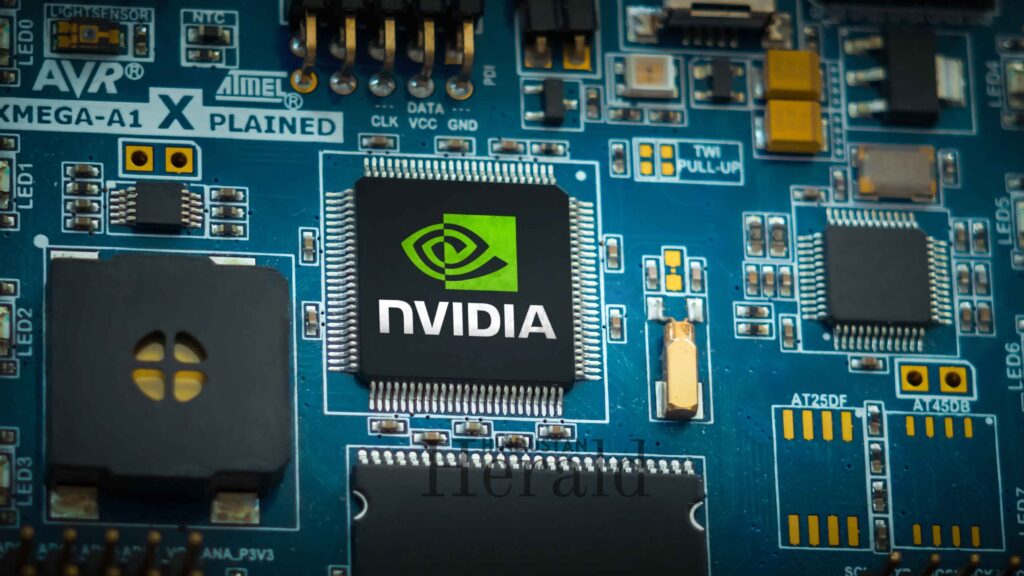
As the PC chip market fragments from a two player x86 world into a multi architecture landscape, those design centres become more strategically important, not less. Indian engineering talent that has spent years working on Arm based designs is suddenly sitting at the centre of where the industry is moving.
The Honest Question Nobody Has Answered Yet
For all of Huang’s certainty, there is a question hanging over the RTX Spark that no keynote slide can answer: will it actually work as advertised, in the hands of real users, on real workloads?
The history of Arm based Windows chips is not entirely encouraging. Qualcomm’s Snapdragon X was also announced with considerable confidence, and the software compatibility issues that followed kept it out of the mainstream for longer than anyone wanted. Nvidia’s integration with Microsoft is deeper, its software stack more mature, and its developer relationships stronger. But the proof will be in the benchmarks and the bug reports, not the keynote.
The global DRAM and NAND memory shortage also adds a practical constraint. OEM partners building RTX Spark devices will face pressure on component costs and production capacity at exactly the moment they need to launch competitive products. That could push launch prices higher than ideal or delay availability in markets like India where supply chains take longer to reach.
Still, the direction of travel is clear enough. AI is leaving the cloud. Not entirely, and not immediately, but the shift toward on device intelligence that the RTX Spark represents is real, it is technically credible, and it is backed by the most valuable company in the world at its current peak of influence. Lian Jye Su of research group Omdia put it simply: “For consumers, it means more choices, which is always a good thing.”
That is understated, perhaps deliberately so. What happened in Taipei on Monday was not just a new chip announcement. It was Nvidia signalling, in the clearest terms yet, that the personal computer is no longer Intel’s or AMD’s to define. And that, after forty years, is a genuinely remarkable thing to watch.
Stay ahead with Hindustan Herald — bringing you trusted news, sharp analysis, and stories that matter across Politics, Business, Technology, Sports, Entertainment, Lifestyle, and more.
Connect with us on Facebook, Instagram, X (Twitter), LinkedIn, YouTube, and join our Telegram community @hindustanherald for real-time updates.

Tracking world politics, global markets, trade movements, policy decisions, and the changing balance of economic power.
- Shelesh Joshi

- Shelesh Joshi
- Shelesh Joshi
- Shelesh Joshi





Former financial consultant turned journalist, reporting on markets, industry trends, and economic policy.
- Kavita Iyer
- Kavita Iyer
- Kavita Iyer
- Kavita Iyer