 By Ananya Sharma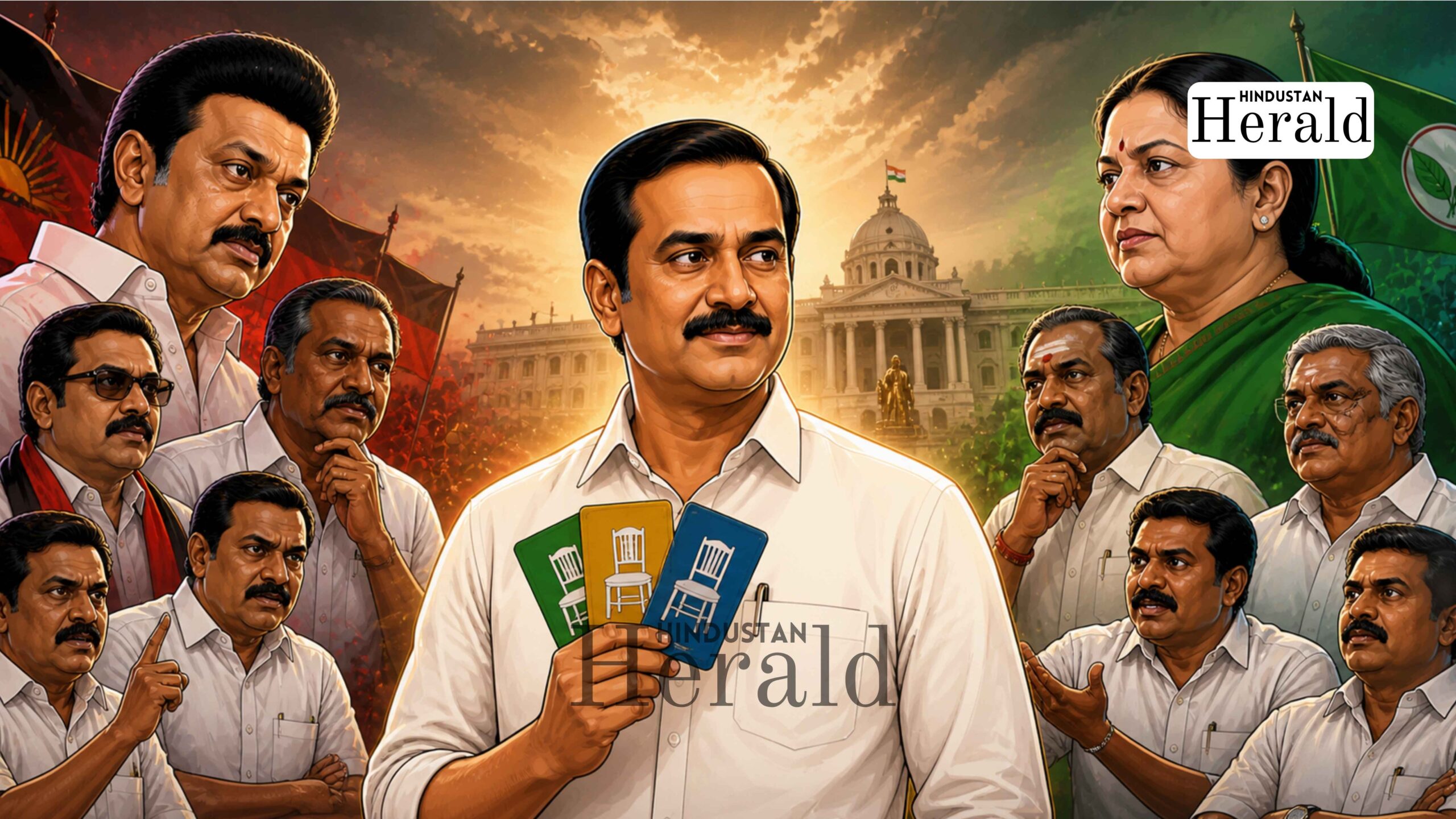
Chennai, May 5: There is something almost poetic about the way Anbumani Ramadoss has handled the aftermath of Tamil Nadu’s most dramatic election in decades. His party lost. The alliance he backed got routed. And yet, there he was on Monday, issuing a measured, dignified statement asking everyone to accept the people’s verdict. No theatrics. No blame game. Just a politician who has been around long enough to know when to fight and when to step back.
That is the story of Anbumani right now. Pragmatic, careful, and very much alive in a political landscape that just got turned completely upside down.
A Verdict Nobody in the NDA Saw Coming
The numbers from May 4 were brutal for the AIADMK-led front. Vijay’s Tamilaga Vettri Kazhagam walked into its first-ever election and walked out with 107 seats in a 234-member house. For a party that did not exist four years ago, that is not just a win. It is a thunderclap.
The DMK, which came into this election as the ruling party, managed only 59 seats. The AIADMK front, which had gone in with the confidence of a tested opposition, was left looking at numbers that told a story of near-total collapse in large parts of the state.
For the PMK, the damage was quieter but still real. The party contested 18 seats as part of the NDA alliance. As counting trends settled on May 4, they were ahead in five. Five. That gap between expectation and outcome is not something you paper over with a press statement, and Anbumani Ramadoss knows it.
Still, he did not sulk. “In this election, the Tamizhaga Vetri Kazhagam, led by Vijay, emerged victorious by securing a majority of the constituencies. This represents a democratic mandate delivered by the voters of Tamil Nadu,” he said in a statement reported by PTI. He went further, praising the youth of the state for backing Vijay with hopes of cleaner governance and wishing the new political force a successful tenure.
It was, by any measure, a graceful exit from the battle. Whether it was also a calculated opening move for the next chapter is a question worth sitting with.
The Five Seats That Now Matter
In a hung assembly, five seats are nothing. TVK needs 118 to govern alone. It has 107. That gap does not close itself, and the conversations now happening in party offices across Chennai involve exactly the kind of arithmetic that makes smaller parties suddenly important.
The PMK held on in Pennagaram, Gingee, Vikravandi, and Jayankondam, where party candidates built margins ranging from a nail-biting 547 votes to a more comfortable 4,000-plus. And Sowmiya Anbumani, Anbumani’s wife, won from Dharmapuri, which is about as much of a home ground as the family has in electoral politics.
That Dharmapuri wins means something. It says that at the ground level, in constituencies where the party has done the actual work of building community relationships over years, the support is still there. The party’s Vanniyar base has not evaporated. It has just been tested.
Before the counting day, Anbumani Ramadoss had pointedly not ruled out supporting TVK if the numbers demanded it, even though his party had spent the campaign on the opposing side. As per MSN’s election coverage, he kept his options open in a way that raised eyebrows within the AIADMK camp but made complete sense as a survival strategy. Now those whispers have become the central political conversation in the state.
The Father-Son War That Nobody Wanted to Talk About
For all the talk of alliances and vote shares, the real story inside the PMK this election season was far more personal. S. Ramadoss, the party’s founder and Anbumani’s father, and his son went to war. Not metaphorically. Literally, in court.
The dispute was over the party itself: its name, its election symbol, its organisational authority. The disagreement had been building through 2025, rooted in what sources described as a clash over leadership autonomy and who actually runs the PMK. It ended up before the Madras High Court, which directed that the matter be taken up by a civil court after the elections. So the legal fight continues.
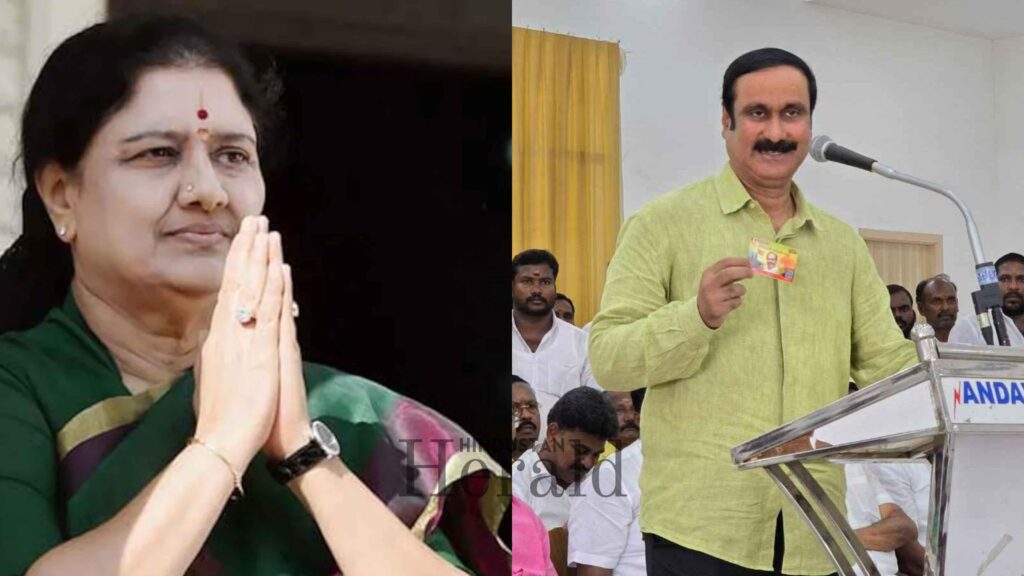
In the meantime, the elder Ramadoss ran his own operation. He aligned with V.K. Sasikala’s outfit and fielded candidates in constituencies where the Vanniyar vote was in play, essentially trying to cut into his own son’s support base. As DT Next reported during the campaign, both factions were effectively competing for the same community votes, which benefited neither.
It is an unusual thing to see in Indian politics, even by the standards of Tamil Nadu, which has had its share of family feuds played out in public. The father and son who built PMK together, who shared platforms and strategies for years, spending the 2026 election on opposite sides. The Madras High Court case has not gone away. Whatever the government formation process looks like, that internal reckoning is still coming.
Anbumani on Medical Colleges: Policy Work in the Middle of an Election
A day before counting, Anbumani Ramadoss was also making news on an entirely different front. In a statement cited by Free Press Journal, he claimed that the National Medical Commission had scrapped a regulation that had long blocked the creation of new medical colleges in southern states. According to him, this opens up space for six new government medical colleges in Tamil Nadu districts that currently have none: Kancheepuram, Ranipet, Tirupattur, Mayiladuthurai, Perambalur, and Tenkasi.
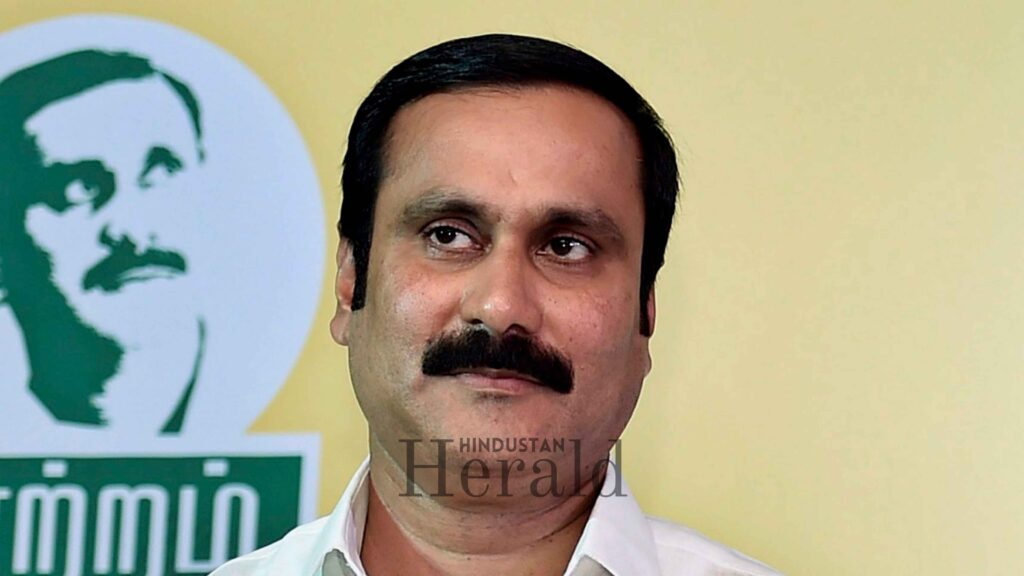
He also argued that the 16 existing government colleges running at 100-student intake for years could now expand, potentially adding around 1,550 seats across the state. He said PMK would push for this under an AIADMK government.
That last part now needs rewriting. There is no AIADMK government coming. But the underlying policy argument does not disappear because the election went sideways. Anbumani Ramadoss has been banging the drum on healthcare access for two decades, going back to his time as Union Health Minister under Manmohan Singh between 2004 and 2009, when he set up the National Rural Health Mission and attempted to push through a National Alcohol Policy. He knows this subject, and his credibility on health issues is genuinely one of the more durable assets he carries into any political negotiation.
Where Things Go From Here
Tamil Nadu’s political situation right now is live and moving. TVK has 107 seats and needs a few more to govern. The DMK is in talks with its traditional allies. VCK, CPI(M), and CPI leaders were scheduled to meet M.K. Stalin at the DMK headquarters on Wednesday, as reported by DT Next, reflecting just how fast the realignment conversations are moving.
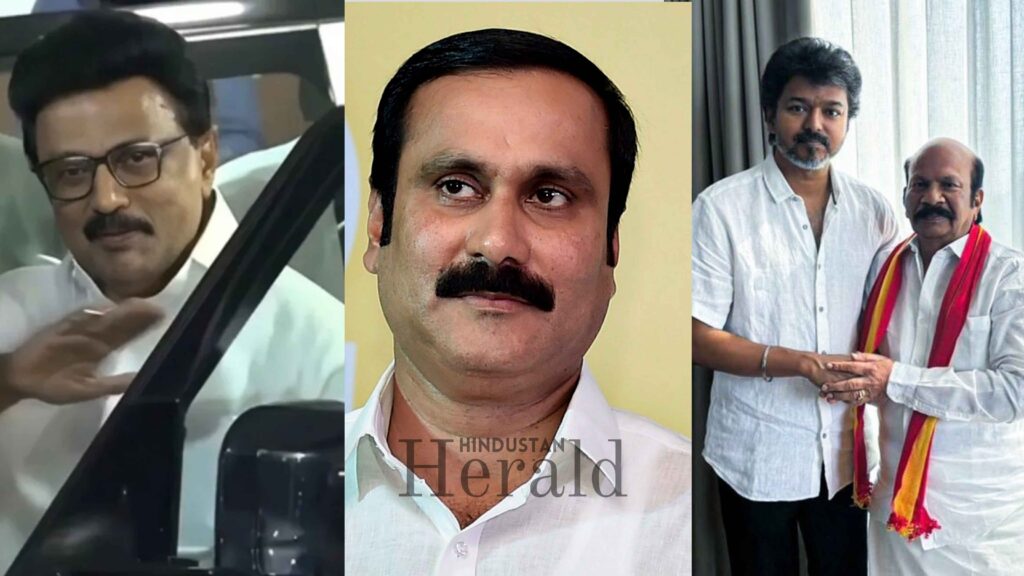
The PMK’s position in all of this is genuinely open-ended. Anbumani’s statement accepting the TVK mandate was warm enough to signal goodwill, vague enough to preserve negotiating room. For a man who has spent his career balancing community interests against coalition arithmetic, that is entirely on brand.
The father-son legal dispute will resurface once the government formation dust settles. The NMC medical college push will need a new political address. And the PMK will have to do the hard internal work of figuring out what five seats in a TVK-era Tamil Nadu actually means for its future.
For now, Anbumani Ramadoss is watching, waiting, and keeping his options very deliberately open. That is not a weakness. In Tamil Nadu politics, that is usually called experience.
Stay ahead with Hindustan Herald — bringing you trusted news, sharp analysis, and stories that matter across Politics, Business, Technology, Sports, Entertainment, Lifestyle, and more.
Connect with us on Facebook, Instagram, X (Twitter), LinkedIn, YouTube, and join our Telegram community @hindustanherald for real-time updates.

Covers Indian politics, governance, and policy developments with over a decade of experience in political reporting.
- Ananya Sharma

- Ananya Sharma
- Ananya Sharma
- Ananya Sharma