
 By Arun Upadhayay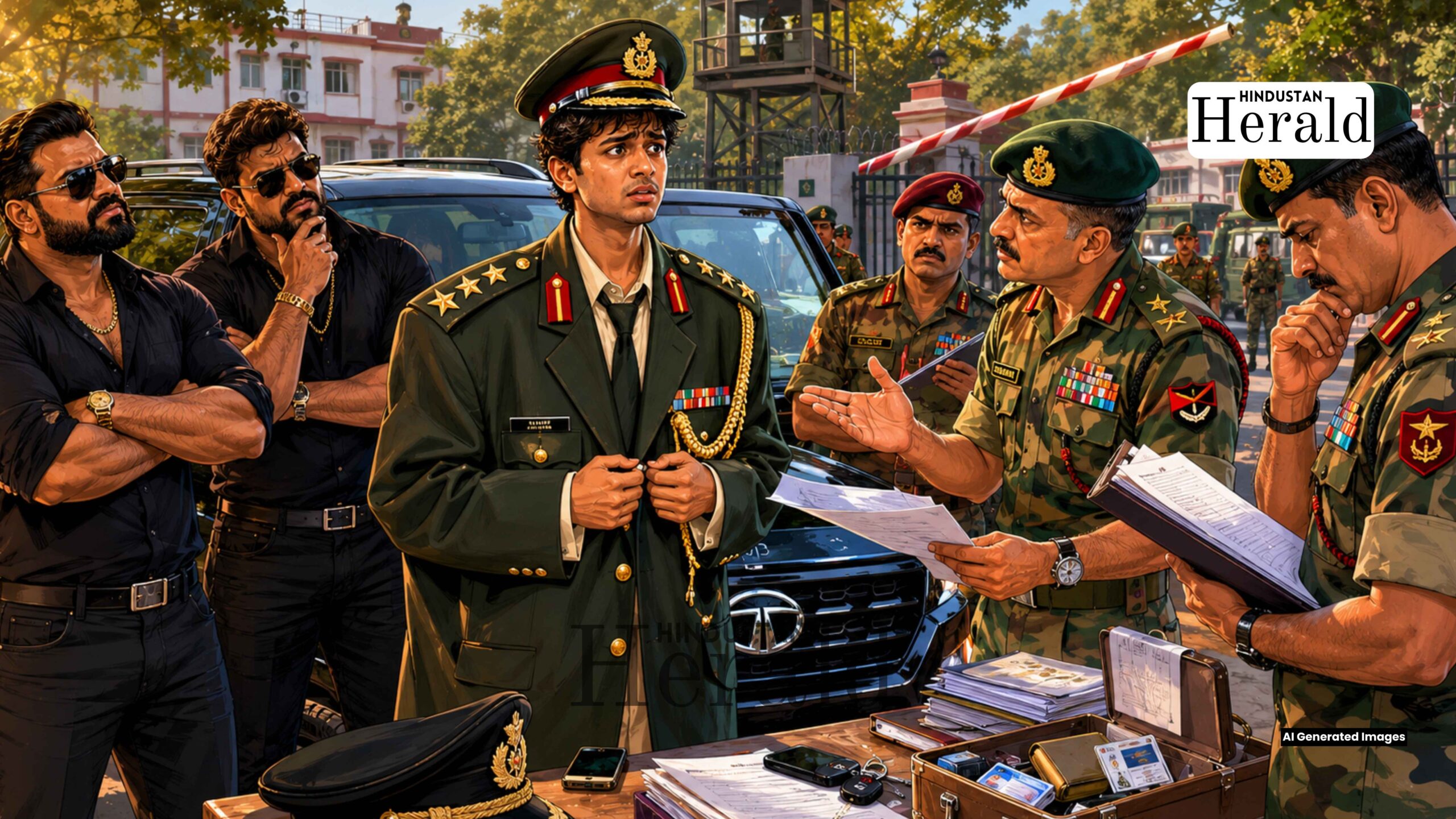
Shahjahanpur, June 13: He wore the uniform. He carried the stick. He arrived in a Tata Harrier with a star flag fluttering on the bonnet, flanked by two muscular men he called his commandos. For months, 21-year-old Aryan Verma of Durga Enclave Colony, Shahjahanpur, moved through his world as a Brigadier in the Indian Army. Not a retired one. Not an honorary one. The youngest-ever Brigadier in the history of the Indian Army, by his own telling.
On June 12, 2026, the Army called his bluff. Literally.
A Sting Years in the Making
It did not take a full intelligence operation to spot Aryan Verma. What gave him away was a visit to the Shahid Museum inside the Shahjahanpur Cantonment area, where he showed up in full military uniform, introduced himself as a Brigadier, and apparently believed no one would ask questions.
They did.
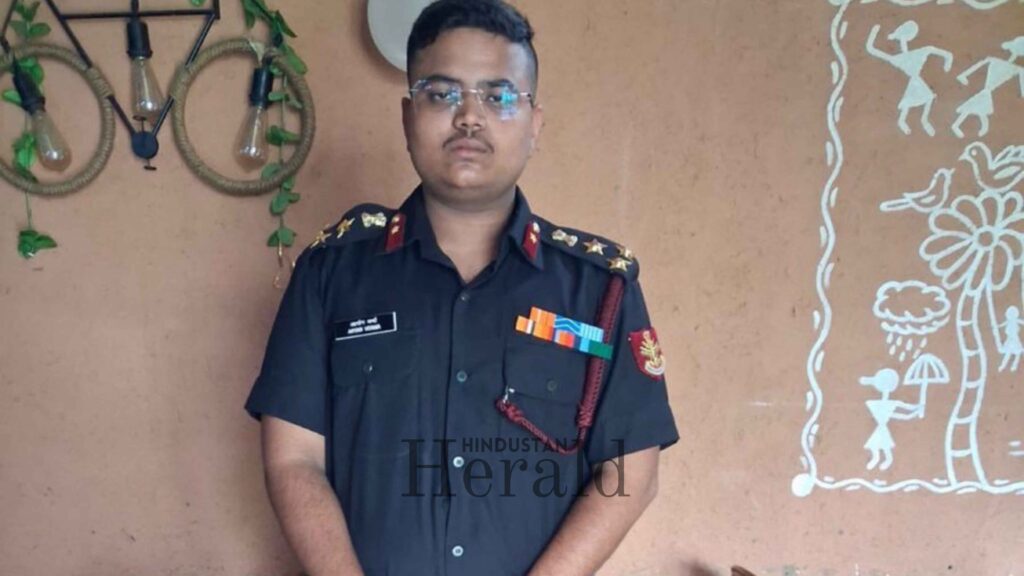
Army officials, suspicious but not yet certain, chose not to confront him on the spot. Instead, they set a quiet trap. He was invited back to the cantonment, this time under the civilian cover of being asked to deliver a motivational speech to young recruits. No uniform required. Just a man, a room, and some words of inspiration.
Aryan Verma came in uniform anyway.
That decision sealed it. He was detained immediately. The rank insignia on his shoulders, the regimental stick in his hand, the star flag on his vehicle, the two bouncers he had dressed up and introduced as NSG commandos, and the fake military ID card in his pocket were all that the Army needed to see. The arrest followed.
From NEET to Nametape
The question every journalist in the country will ask today is a simple one: how did a 21-year-old with no military service pull this off for several months?
The answer, uncomfortable as it is, starts with a familiar story.
Aryan Verma was a NEET aspirant, the lakhs-strong tribe of young Indians who spend years chasing the medical entrance exam that serves as the gateway to becoming a doctor. He failed. Repeatedly. It is not yet clear from available reporting how many attempts he made, but the failure was consistent enough that by the time he was arrested, the NEET angle had become central to how police and media were framing the story.
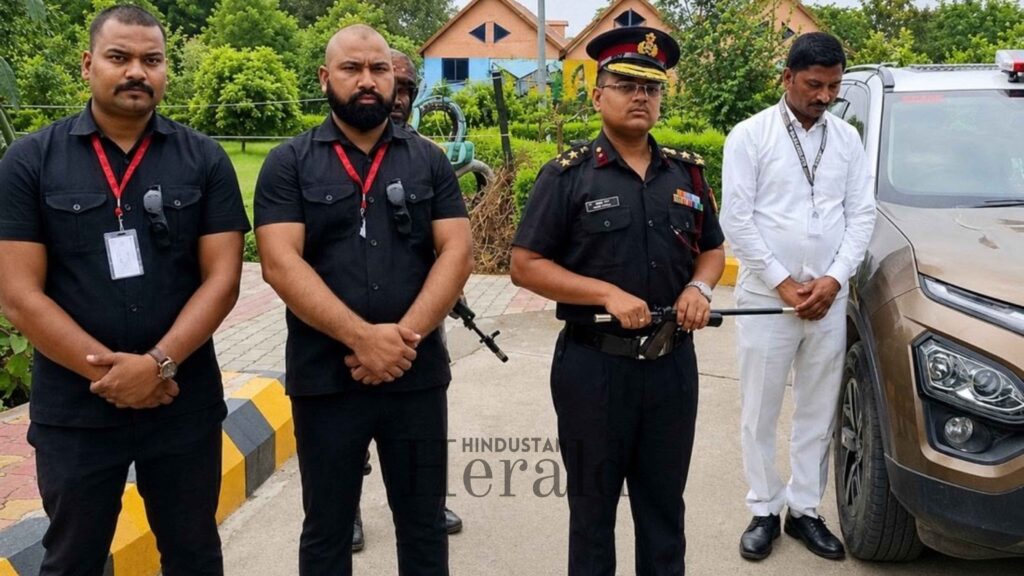
What happened between the exam hall and the cantonment gate is still emerging. But somewhere in that gap, Aryan Verma built an alternate identity. He acquired or fabricated Army insignia, a fake identity card, a regimental stick, and enough paraphernalia to make the costume convincing at a glance. He purchased or borrowed a Tata Harrier SUV, mounted a star flag on it, the kind reserved for senior military officers, and recruited two men to act as his personal security detail.
He told people he was a Brigadier. A Brigadier is a one-star general officer in the Indian Army, typically a man in his late 40s or early 50s with decades of commissioned service behind him. Aryan Verma is 21.
Still, for months, it apparently worked.
Why This Story Is Not Just About One Boy
Cases of military impersonation in India are not new. They surface every few years, scattered across districts, usually involving fake officers demanding freebies from hotels and shops or attempting to access restricted areas. What makes the Aryan Verma case unusual is the scale of the performance, the duration, the props, the vehicle, the entourage, and the specific claim of being the youngest Brigadier ever, a claim so audacious it almost functioned as its own camouflage.
People tend to doubt the modest lie. The enormous one sometimes just lands.
That said, there is something else going on here that deserves attention, and it has nothing to do with the Army’s competence in catching him. It has to do with what drives a 21-year-old to build this particular fantasy.
The NEET examination sits at the centre of one of independent India’s more brutal academic bottlenecks. Lakhs of students attempt it each year. A fraction clear it. The rest are left to recalibrate, often without the family or institutional support needed to do so gracefully. The psychological toll is documented, the dropout rates are real, and the desperation that follows repeated failure is not something that can be solved with a new exam schedule.
This does not excuse impersonation of a military officer, which is a serious offence under Indian law. It does ask the question of what happens to young people when every legitimate door feels closed and the only options left are either invisibility or invention.
Aryan Verma chose invention.
What the Law Says, and What Happens Next
Under the Indian Army Act and provisions of the Indian Penal Code, impersonating a military officer carries significant legal consequences. Wearing a uniform or insignia you are not entitled to, fabricating identity documents, and misrepresenting yourself as a commissioned officer are each punishable offences. Taken together, Aryan Verma faces a combination of charges that could result in substantial prison time.
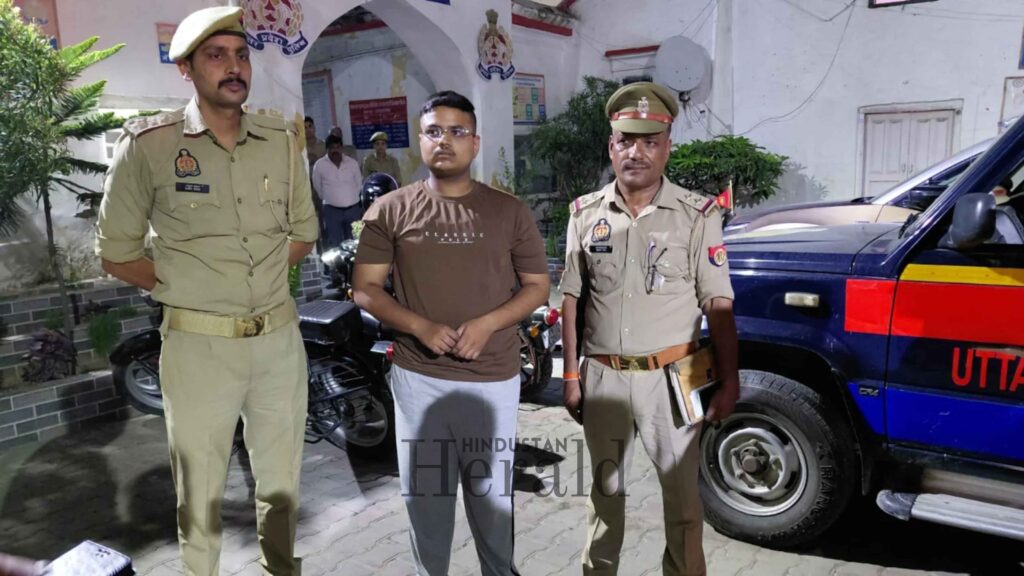
As per sources close to the investigation, a formal FIR has been registered and the case has been handed to local police following the Army’s initial detention. The two men who posed as NSG commandos are also under scrutiny.
The fake ID card, the insignia, the air pistol recovered from him, and the star flag on the Harrier are all part of the evidence record. The air pistol, in particular, adds a separate layer of legal exposure related to arms possession.
For now, the Shahjahanpur police are working through the investigation while the Army has apparently chosen to keep its distance from the public aspects of the case, as is standard practice.
The Uniform as Symbol
There is a reason this story has run on every major news channel in the country today. It is not simply that a young man pretended to be something he was not. That happens constantly, in small and large ways, across every professional field.
It is that he chose the uniform.
In India, the military uniform carries a particular weight. It stands in for sacrifice, for discipline, for a kind of moral seriousness that civilian life is often perceived as lacking. For young men from small cities, men who have watched neighbours and relatives join the forces and return transformed, the uniform is not just clothing. It is a compressed version of everything respect looks like.
That Aryan Verma wanted that so badly he spent months constructing an elaborate fiction to inhabit it says something worth sitting with. Not in his defence, but as a fact about the pressure young men in this country are under.
He failed his medical exams. He could not become a doctor. He could not join the military through the proper channel either, given that a 21-year-old Brigadier is a mathematical impossibility. So he wore the uniform anyway, drove the car, carried the stick, and walked into a cantonment believing, perhaps, that the performance was enough.
It was not. The Army, as it turned out, was watching.
Stay ahead with Hindustan Herald — bringing you trusted news, sharp analysis, and stories that matter across Politics, Business, Technology, Sports, Entertainment, Lifestyle, and more.
Connect with us on Facebook, Instagram, X (Twitter), LinkedIn, YouTube, and join our Telegram community @hindustanherald for real-time updates.

- Arun Upadhayay

- Arun Upadhayay
- Arun Upadhayay
- Arun Upadhayay



 Neeraj Kapoor
  Ananya Sharma
  Prakash Nair