 By Ananya Sharma
Nashik, April 11: What began as a worried mother and father knocking on a police station door is now one of the most unsettling corporate crime cases India has seen in years. The TCS BPO office in Nashik, Maharashtra, a facility located near Wadala village, one of the city’s predominantly Muslim neighbourhoods, is at the centre of a sprawling racket of alleged sexual exploitation, religious coercion, and organised forced conversion that investigators say ran largely undetected for close to four years. Seven people have been arrested. Nine FIRs have been filed. A dedicated Special Investigation Team is examining over 40 hours of CCTV footage. And the company’s own HR official now sits in police custody.
This case does not belong to the fringes. It happened inside one of the country’s most visible multinational corporations.
How It Started: A Family’s Alarm, a Police Station Visit
The case first surfaced after the parents of a young woman working at the company approached the police, raising concerns about a sudden and drastic change in their daughter’s behaviour. She had begun wearing a burqa and observing Ramzan fasts, which alarmed her family and prompted them to seek police intervention.

What followed was not a single complaint but a cascade. As investigators began examining the initial grievance, several other employees came forward with allegations, and nine criminal cases have so far been registered in connection with the case.
The office is a BPO-style operation. Young women, many of them fresh graduates from smaller towns around Nashik, were brought in with the promise of steady corporate employment. Unemployed young women were lured into joining with the promise of attractive salaries. Once employed, they were placed under constant surveillance by specific team leaders who operated the floor.
That surveillance, investigators now allege, was not routine floor management. It was, according to police, the opening stage of a methodically planned racket.
The Accused: Who They Were, What They Did
Those arrested have been identified as Asif Ansari, Shafi Sheikh, Shah Rukh Qureshi, Raza Memon, Tausif Attar, and Danish Sheikh, along with a woman whose identity has not yet been disclosed. All of them held supervisory roles within the company and were directly responsible for managing junior staff.

Preliminary investigations revealed that the accused targeted young women employees aged between 18 and 25, deliberately identifying those facing financial difficulties during job interviews by collecting details about their family background and household income.
According to police, the targeting went further than informal observation. The victims claimed that the accused had formed dedicated WhatsApp groups where they would regularly share intelligence about which employees were facing personal problems, such as a troubled marriage, emotional distress, or financial anxiety, anything that could be exploited. X
The allegations documented across the nine FIRs paint an extremely detailed picture of how the exploitation worked in practice. In one complaint, the accused are alleged to have hurt the complainant’s religious sentiments by making objectionable remarks about Hindu deities, and to have formed a physical relationship with her under the false promise of marriage. A male complainant told police that his Hindu customs were repeatedly mocked by colleagues and that he was pressured to perform prayers associated with another religion. He also alleged that he was forced to consume meat, including beef and mutton, despite repeatedly objecting.
The religious coercion, as investigators describe it, was not spontaneous workplace bigotry. Police sources say investigators are examining claims that one individual was taken to Mumbai for a religious procedure linked to conversion, and photographs connected to an alleged conversion attempt have reportedly been recovered during the investigation.
Some victims also claimed that they were compelled to adopt Islamic practices, including wearing a burqa and observing Ramzan fasts.
The Undercover Operation That Broke the Case Open
Perhaps what is most remarkable about this case is how it was ultimately confirmed: not through digital forensics or a whistleblower tip, but through a daring piece of old-fashioned undercover police work.
The case took a dramatic turn when seven women police officers entered the company in disguise. They attended a meeting inside the office and reportedly witnessed inappropriate behaviour by one of the accused towards women employees. Officials said the accused was caught during this operation. The seven women police officers reportedly worked within the company for nearly a week before the operation concluded.
Police are now examining more than 40 CCTV footage clips from inside the office to gather additional evidence.
That a multinational company operating a BPO floor required a week-long undercover police infiltration to confirm what multiple internal complainants had already reported says something stark about how thoroughly the internal complaint mechanisms had failed.
The HR Failure: Silence Treated as Policy
The case’s most damning institutional revelation may not involve the accused directly. It concerns what happened when victims tried to raise the alarm through legitimate channels.
Nashik’s assistant commissioner of police told reporters that when a complainant reported sexual harassment to HR, she was advised to stay calm, as some gestures were described as common in MNCs. Police noted that this inaction effectively enabled the accused, indicating possible complicity at the management level.
That inaction has now been treated as a criminal matter rather than a corporate governance failure. The company’s HR official, identified as Ashwini Ashok Chainani, was taken into custody from Pune’s Loola Nagar after an initial investigation established that complaints of the victims were not acted upon. A case has been registered under Crime Registration Number 163/2026, pursuant to Sections 75, 78, 79, 49, 356, and 3(5) of the Bharatiya Nyay Sanhita.
The arrest of an HR functionary for allegedly sitting on abuse complaints is unusual in Indian corporate legal history. It sends an unambiguous signal: the Prevention, Protection and Redressal of Sexual Harassment at Workplace Act, known as POSH, is not decorative legislation. Companies that bury complaints may now find their human resources personnel facing personal criminal liability.
BJP city president Sunil Kedar noted that a woman from Nashik had previously sent an email to the company’s headquarters in Pune highlighting this issue, but the company chose to ignore it. The suggestion that warnings existed well before the police became involved will form a central line of questioning for the SIT.
The Investigation: MCOCA, an SIT, and a Helpline
The Nashik Police has booked the accused under the stringent provisions of the Maharashtra Control of Organised Crime Act (MCOCA), and the operation was carried out under the supervision of the city police commissioner, based on precise intelligence inputs. A Special Investigation Team, led by ACP (Crime) Sandeep Mitke, is taking charge of the investigation, following orders from Police Commissioner Sandeep Karnik.

MCOCA is not routinely applied to workplace crimes. Its invocation here signals that police believe this was not a matter of individual misconduct but of an organised criminal network operating within corporate infrastructure. The act, traditionally used against organised crime syndicates, applies when investigators can demonstrate continuity, conspiracy, and multiple acts committed by an organised group.
Authorities have shared a WhatsApp number for other victims to come forward, and investigators believe more may do so as the probe deepens.

State minister Nitesh Rane reacted to the case, claiming that nearly fifteen victims may have submitted complaints and urging others who had faced similar harassment to come forward. Rane further questioned the role of the company’s human resources department and asked why no action had been taken earlier.
When the arrested accused were produced before the court, a crowd of nearly 600 people gathered outside. The scene underscored the intensity of public feeling around the case, which has rapidly acquired political as well as legal dimensions.
Political Fallout and the Communal Framing Debate
Chief Minister Devendra Fadnavis described the allegations as extremely serious and said the police acted swiftly in exposing the matter. Fadnavis, who also holds the home ministry portfolio, ordered a probe and praised the police for acting quickly.

Several BJP leaders, including Nitesh Rane, have publicly used the phrase “Corporate Jihad” to characterise the case, framing the religious dimension as its defining feature. BJP City President Sunil Kedar stated that the racket appeared to involve individuals from a specific religious community within the company, and demanded a transparent inquiry along with action against the company management.

The communal framing has drawn both political traction and criticism. Those who support it argue that the religious dimension of the allegations, specifically the systematic targeting of Hindu employees for conversion by accused who are all Muslim, cannot be analytically separated from the crime itself. Critics, including civil society voices, argue that the “Corporate Jihad” language risks obscuring a workplace safety and institutional accountability story behind a communal political frame, potentially deterring survivors from other religious or community backgrounds from coming forward with workplace abuse complaints.
Both arguments have merit, and neither cancels the other. This case is simultaneously about organised sexual exploitation, about corporate negligence and complicity, and about the alleged use of religious coercion as a tool of abuse. Reducing it to any single frame distorts the full picture.
What This Case Exposes About India’s IT Sector
India’s IT and BPO industry employs tens of millions of people. A substantial and growing proportion of that workforce consists of young women from Tier 2 and Tier 3 cities, often navigating their first professional environments with limited institutional support networks, far from extended family, and economically dependent on continued employment.
The complaints cover a period stretching from 2022 to early 2026, painting the picture of a systematic operation rather than isolated incidents. That a racket of this alleged scale could operate for nearly four years inside a globally recognised brand is a question every major IT and BPO employer in India now needs to answer, not just TCS.
The POSH Act has been on the books since 2013. Most large companies boast robust Internal Complaints Committees on paper. Yet the Nashik case demonstrates, grimly and in detail, that the existence of those structures means little if HR functionaries treat formal complaints as reputational threats to be managed rather than grievances to be investigated. The arrest of Chainani is a direct consequence of that institutional failure.

Still, the case raises a harder structural question. How many junior employees, aged between 18 and 25, facing financial vulnerability, and seated directly below the supervisors they would need to file a complaint against, actually feel empowered to use any formal channel? The power asymmetry is the enabling condition. Until the architecture of complaint mechanisms is redesigned around the realities of that asymmetry, POSH compliance will remain a documentation exercise.
Where the Case Stands Today
As of April 11, seven people are in custody. Nine FIRs have been registered. The SIT is examining CCTV footage, digital communication records, and workplace data. A dedicated helpline remains active for additional victims. The probe into whether a Pune-based complaint was wilfully ignored is ongoing. Maharashtra’s home ministry has signalled that the inquiry will not stop at the arrested individuals if evidence of wider complicity emerges.
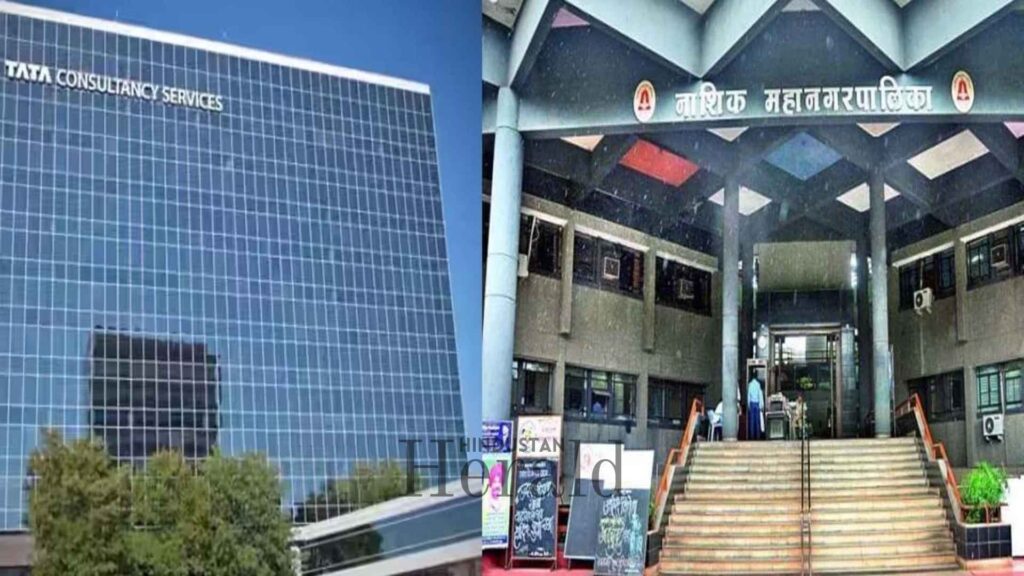
TCS, as of publishing, has not issued a comprehensive public statement on the matter. That silence, given the scale of what has been alleged and the arrest of the company’s own HR official, is itself becoming part of the story.
For now, the case sits at the intersection of workplace law, corporate accountability, organised crime law, and communal politics. The SIT’s report will be closely watched. So will the government’s response to any findings of institutional inaction extend beyond the individuals already in custody? And so, frankly, will TCS’s next move.
Stay ahead with Hindustan Herald — bringing you trusted news, sharp analysis, and stories that matter across Politics, Business, Technology, Sports, Entertainment, Lifestyle, and more.
Connect with us on Facebook, Instagram, X (Twitter), LinkedIn, YouTube, and join our Telegram community @hindustanherald for real-time updates.

Covers Indian politics, governance, and policy developments with over a decade of experience in political reporting.
- Ananya Sharma

- Ananya Sharma
- Ananya Sharma
- Ananya Sharma