
 By Ananya Sharma and Kavita Iyer
Mumbai, April 16: India’s IT and BPO sector finds itself in the middle of an uncomfortable reckoning this week. What began as a criminal investigation into a Nashik BPO unit of Tata Consultancy Services has now spilt over into a much broader public conversation about religious neutrality, hiring practices, and workplace conduct across some of the country’s biggest corporations. The latest company pulled into this churning debate is Tech Mahindra, whose Goregaon office in Mumbai became the subject of viral social media claims over alleged religious bias, and which has now formally denied all the allegations.
The company’s denial came on April 15, a day after the claims had already spread widely across platforms and drawn political attention at the highest levels of the Maharashtra government.
The Post That Started It All
The controversy around Tech Mahindra traces back to April 12, when Ashutosh J. Dubey, an advocate at the Bombay High Court and the head of the BJP Maharashtra’s Social Media Legal and Advisory Department, shared a message on X that he said was sent to him directly by a female employee at the company’s BPO unit in Goregaon, Mumbai.
The message alleged biased hiring practices, unequal workplace policies, and religious favouritism during festivals. The employee also claimed that the office pantry had been declared a “Footwear-Free Zone” during Ramzan to facilitate prayers and iftar, with colleagues reportedly being asked to comply in the name of “unity.”
In the message, the employee, who reportedly joined the company four months ago and is part of a process linked to an overseas telecom client, alleged that over 60 per cent of employees in that particular process are Muslim. The message also alleged that corporate policies are not applied uniformly, claiming that Muslim women employees are permitted to wear burkha and niqab inside office premises, and that this makes it difficult to identify individuals.
The employee further alleged that during the month of Ramzan, Muslim employees were given what they described as “total freedom,” including daily iftar gatherings held in the office canteen where employees assembled in large numbers. Additionally, the employee named an HR official, alleging that the individual plays a key role in hiring and is responsible for what they described as a skewed workforce composition.
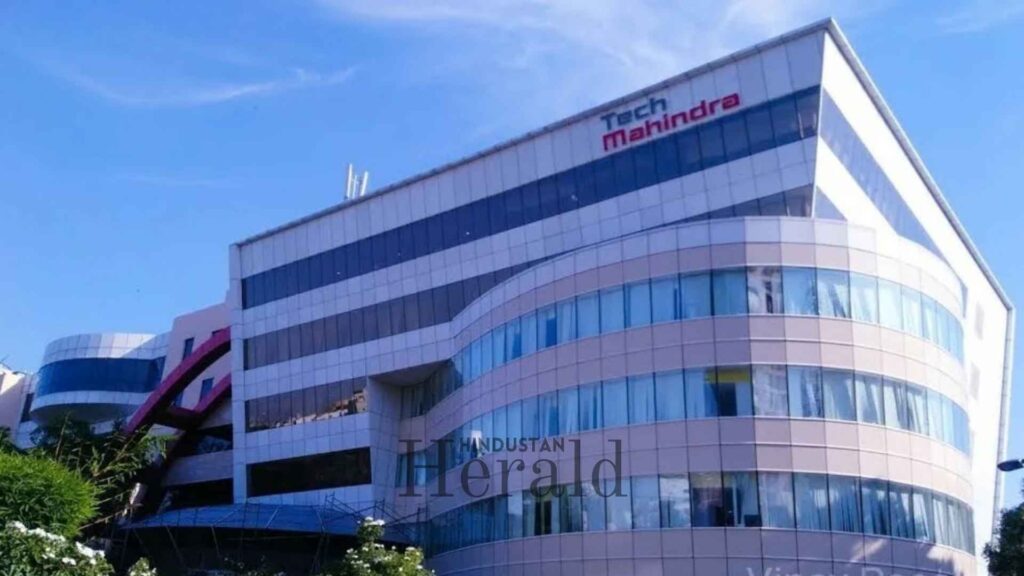
The post also alleged that a “mini Pakistan-like” atmosphere prevailed at the Goregaon campus. Dubey subsequently shared another post making similar claims about the company’s Telangana office.
It is important to state clearly: the authenticity of the messages and all the allegations within them has not been independently verified. The employee who sent the message has not been identified, and it is not known whether the concerns were ever raised through formal internal channels at the company.
Tech Mahindra Pushes Back
Tech Mahindra rejected the allegations, calling the viral social media claims “inaccurate and unfounded” after conducting an internal review. A company spokesperson stated: “This is with reference to recent social media posts alleging religious bias within Tech Mahindra. We confirm that the image titled ‘Footwear Free Zone’ is not from any of our offices, and the anonymous post regarding hiring practices is false.” Reiterating its internal values, the company said: “
At Tech Mahindra, we are firmly committed to building an inclusive, respectful workplace where every individual is treated with dignity and fairness, without discrimination of any kind, including based on religion.” The company added that it would “continue to review our policies and processes to ensure that our values are upheld consistently, and that no coercive or inappropriate conduct is permitted or carried out in any manner whatsoever.”
That is about as categorical a denial as a corporate communications team can issue. But denials, no matter how firmly worded, rarely fully extinguish a fire that has already been burning across social media timelines for 72 hours.

Dubey also tagged Chief Minister Devendra Fadnavis and the Ministry of Corporate Affairs, calling for an inquiry into alleged biased hiring and unequal policies across IT companies to safeguard merit and constitutional principles.
The political escalation of what began as an anonymous employee’s message speaks to the charged atmosphere in which all of this is unfolding.
The TCS Nashik Case: The Fire That Lit the Fuse
To understand why the Tech Mahindra allegations spread as quickly as they did, it is necessary to step back and look at what has been happening in Nashik over the past several weeks. The two cases are distinct in nature and severity, but the public has largely been reading them in the same frame.

A major controversy erupted at the Tata Consultancy Services BPO unit in Nashik after eight women employees came forward with allegations of sexual harassment, mental abuse, and attempts to force religious conversion. The complaints led to the formation of a Special Investigation Team, with police registering multiple FIRs and arresting seven accused so far. Among those arrested is a senior HR manager who was also a member of the company’s Internal Committee under the Prevention of Sexual Harassment framework, raising serious concerns about internal accountability mechanisms.
The case has taken a more serious turn with allegations of religious coercion. Maharashtra minister Girish Mahajan claimed that victims were allegedly pressured to offer namaz, consume beef, and were subjected to attempts at religious conversion.
He further suggested the possibility of a larger racket, stating that women may have been lured with job opportunities and later blackmailed using compromising photos and videos. The investigation has expanded into digital and financial trails, with police seizing at least 78 emails and chat records from official devices, which are being examined in detail.
The case was partly uncovered through a covert police operation. Acting on a tip-off regarding unusual religious practices of an employee, police deployed constables, including women officers, disguised as housekeeping staff inside the office. The undercover operation, conducted over nearly two weeks, reportedly revealed patterns of harassment, coercion, and attempts to influence employees’ religious practices. Based on these findings, the first FIR was registered at the Deolali police station in March.
Responding to the allegations, Tata Consultancy Services stated that it maintains a “zero-tolerance policy towards harassment and coercion of any form” and confirmed that all accused employees have been suspended pending investigation.
The TCS case is a live criminal matter with verified arrests, multiple FIRs, and a functioning SIT probe. The Tech Mahindra situation, at least as of now, is an unverified social media storm. But the public conflation of the two has created a climate where every similar claim is treated as confirmation of a pattern, regardless of evidence.
A Wider Wave of Unverified Claims
The Nashik case appears to have opened a floodgate. Social media has been flooded with testimonies from employees across multiple companies and cities, including claims from individuals identifying themselves as working at Barclays in Pune, Flipkart in Mumbai, and various other firms. Screenshots of workplace chat messages have also been circulated.
While the Nashik case is under investigation, with FIRs, arrests, and an SIT probe forming the backbone of verified developments, the flood of testimonies emerging online remains largely unverified.
This is a genuinely difficult journalistic and civic moment. The TCS Nashik case, with its undercover police operation, multiple arrests, and documented evidence, represents a serious and credible criminal investigation that demands full accountability. The wave of social media posts that followed, however, is something quite different.
Claims made anonymously, without documentation, through political intermediaries on X, carry a different evidentiary weight. Treating them with the same level of urgency risks normalising a form of trial-by-social-media that can devastate reputations and inflame communal sentiment without any of the procedural safeguards that protect both accused and accuser in a court of law.
That said, dismissing the broader anxiety wholesale would also be a mistake. The fact that so many employees from different industries and cities felt compelled to share their experiences, however unverifiable, suggests that questions around workplace fairness, religious accommodation, and equal opportunity employment in India’s corporate sector deserve serious, structured examination, not a social media pile-on.
The Religious Accommodation Question
At the heart of the Tech Mahindra controversy, setting aside the more inflammatory claims, is a legitimate question that workplaces across India, and indeed the world, are wrestling with: how should a secular corporate environment handle religious accommodation?
Workplaces in urban India are deeply plural. They house employees from every faith, caste, and regional background. Accommodating the practices of a religious festival, whether that means closing early for Diwali, allowing time off for Friday prayers, or giving employees flexibility during Ramzan, has long been a part of informal workplace culture in India. When those accommodations become formalised or, as alleged in the Tech Mahindra post, enforced on employees of other faiths, the equation changes.
The specific claim that a pantry was declared a “footwear-free zone” and that employees were asked to comply in the name of “unity” touches a nerve precisely because it suggests that accommodation had shifted into imposition. Tech Mahindra has denied this specifically, saying the image cited in the viral posts was not from any of its offices. But the underlying tension it points to is real and worth acknowledging.
India’s corporate sector does not yet have a clearly codified framework for religious accommodation at work. The Prevention of Sexual Harassment Act provides a reasonable template for what structured internal accountability can look like. A similar statutory or voluntary framework for religious neutrality in the workplace may be overdue.
Political Stakes and the Risk of Overreach
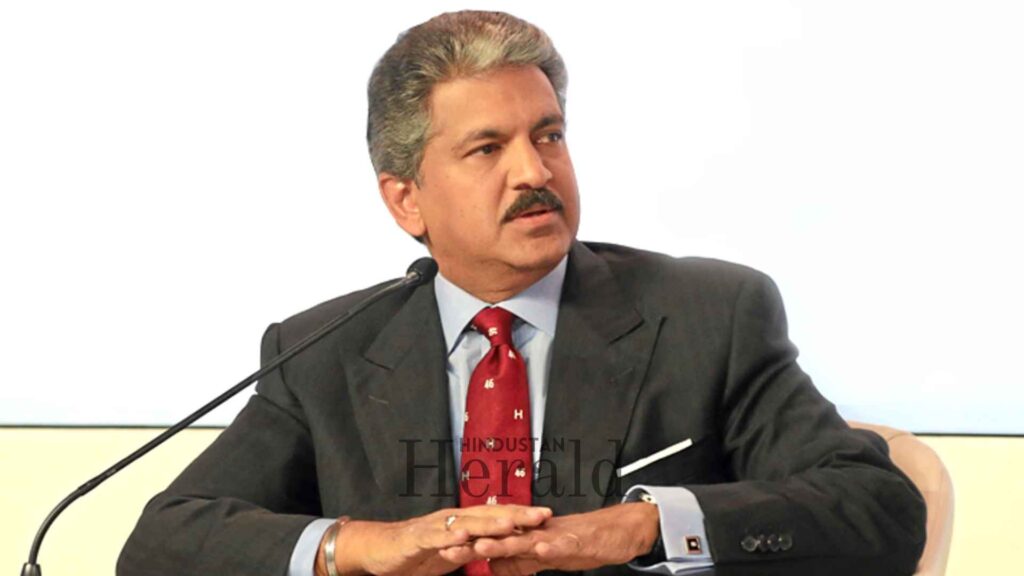
Users on social media tagged Anand Mahindra, urging his intervention, while others stressed the need for a fair and unbiased investigation before concluding.
The involvement of a BJP-affiliated advocate as the primary amplifier of the Tech Mahindra claims will inevitably colour how different sections of the public receive the story. That is not an accusation of bad faith, but it is a factual context that readers deserve to have.
Political actors in India have, across party lines, used corporate controversies to score points, and the line between legitimate whistleblowing and manufactured outrage is not always easy to draw.
Still, political motivation in the messenger does not automatically make the message false. The allegations need to be investigated properly, through the company’s internal mechanisms and, if the employee or anyone else wishes to file a formal complaint, through legal channels. Viral posts and ministerial tweets are no substitute for that.
What Comes Next
For Tech Mahindra, the immediate reputational fire appears to have been partially controlled by the swift denial. The company’s statement was clear and direct, and its commitment to reviewing internal policies offers at least a procedural anchor. Whether that translates into any visible internal audit or structural change remains to be seen.
For the TCS Nashik case, the investigation is very much ongoing. With 78 emails under SIT scrutiny, digital and financial trails being examined, and political pressure mounting on multiple fronts, the next few weeks will be critical in determining the full scope of what allegedly occurred there.
For India’s IT and BPO sector more broadly, this moment is a call to take workplace policy, particularly around POSH compliance, equal opportunity employment, and religious neutrality, far more seriously than it has until now. These industries employ millions of young Indians, many of them women, many of them working night shifts and in high-pressure environments. The structures meant to protect them need to actually work.
For now, the Goregaon story remains what it was when it started: a set of unverified claims, a corporate denial, and a political firestorm burning in the background of a more serious criminal case in Nashik. Whether anything more solid emerges will depend on whether the anonymous employee at the centre of it chooses to step forward through formal channels, and whether anyone with authority is willing to take a genuinely neutral look at what is happening inside these offices.
Stay ahead with Hindustan Herald — bringing you trusted news, sharp analysis, and stories that matter across Politics, Business, Technology, Sports, Entertainment, Lifestyle, and more.
Connect with us on Facebook, Instagram, X (Twitter), LinkedIn, YouTube, and join our Telegram community @hindustanherald for real-time updates.

Covers Indian politics, governance, and policy developments with over a decade of experience in political reporting.
- Ananya Sharma

- Ananya Sharma
- Ananya Sharma
- Ananya Sharma





Former financial consultant turned journalist, reporting on markets, industry trends, and economic policy.
- Kavita Iyer
- Kavita Iyer
- Kavita Iyer
- Kavita Iyer




 Herald Desk
  Ayesha Khan