
 By Ananya Sharma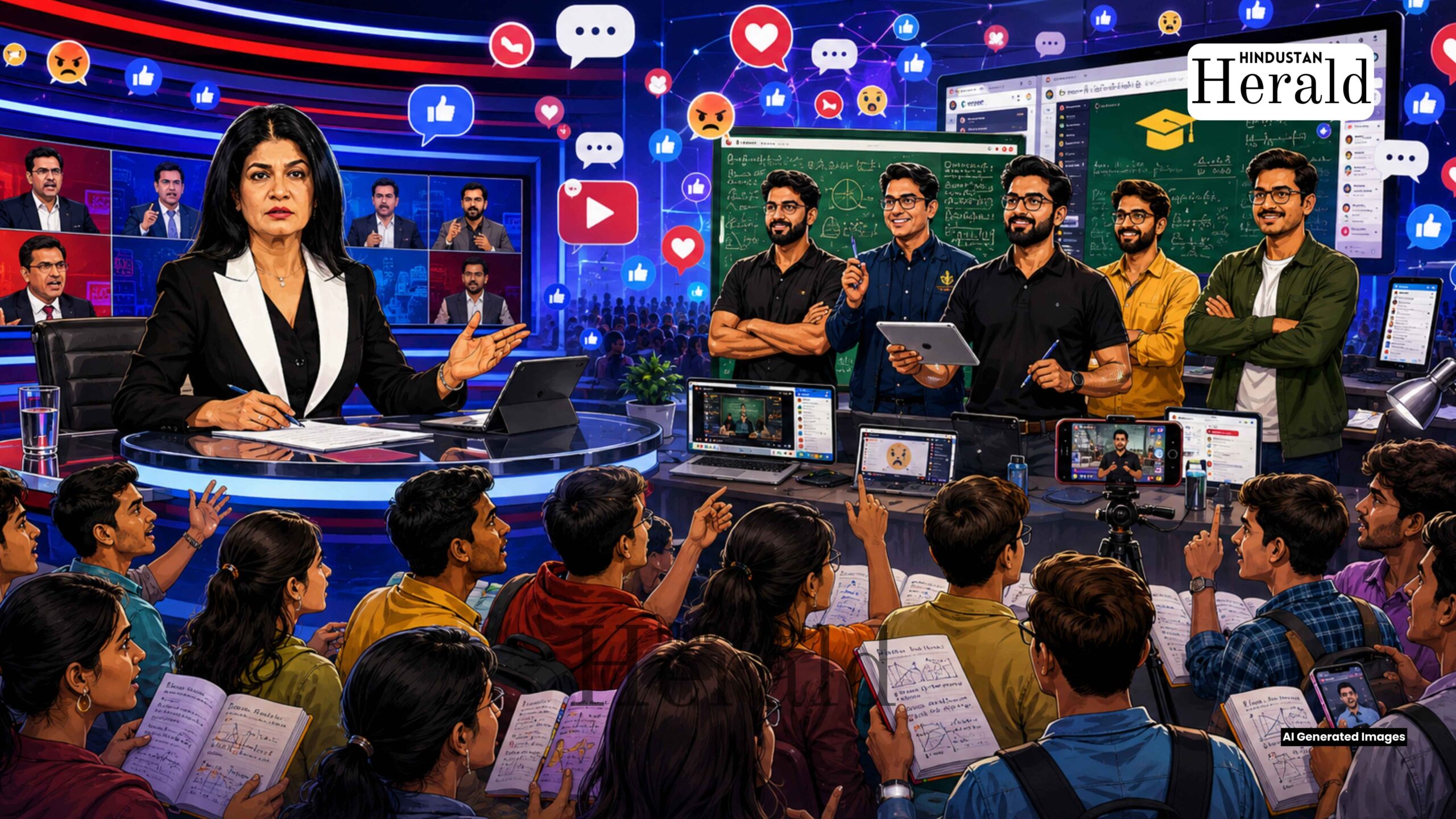
New Delhi, May 31: There is a sentence that has been echoing across every corner of the Indian internet since Thursday evening, and it did not come from a student, a politician, or a tech entrepreneur. It came from a primetime news anchor sitting behind a studio desk, referring to some of India’s most followed educators as “do kaudi ke” worthless, essentially and calling them “big frauds.”
That anchor is Anjana Om Kashyap, a senior journalist and managing editor at one of Hindi television’s biggest news channels. And those remarks, made during a live debate broadcast on May 29-30, 2026, have since triggered one of the more unusual media storms of this year one where the people fighting back are not politicians or celebrities, but teachers.
When the Studio Attacked the Classroom
The debate clip spread with unusual speed. In it, Anjana Om Kashyap went after YouTube educators with language that was hard to misread. The teachers on these platforms, she argued, “know nothing.” They draw things on blackboards not to educate, but to “grab views, do drama, and make money from students.” And then she delivered the phrase that lit the match: she called them “do kaudi ke” a Hindi expression that roughly translates to “not worth two coins” adding that they had “no knowledge” but were slowly starting to believe they were very important people who could speak on any subject.
The clip went viral almost immediately. By May 30, it was being clipped, shared, captioned and debated across Twitter, Instagram, YouTube and Facebook and the reaction from India’s enormous online education community was swift, emotional, and pointed.
That said, what made this moment different from most television controversies was who responded, and how.
Educators Push Back, and They Do Not Hold Back
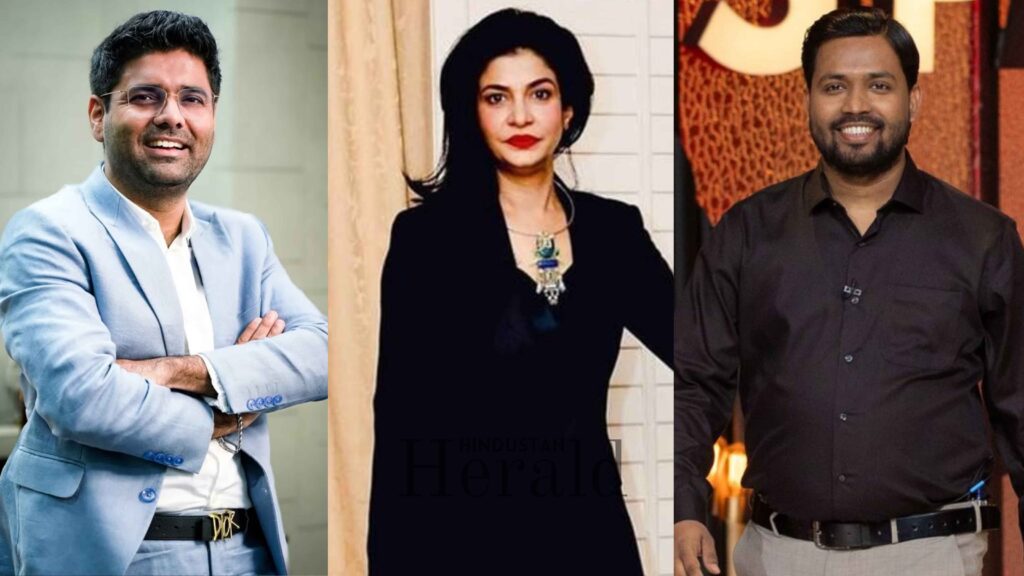
Abhinay Sharma, better known as Abhinay Sir and the founder of the widely followed Abhinay Maths channel, was among the first to respond in public. His question was a simple one: if YouTube teachers know nothing, then who exactly has been preparing millions of students for JEE, NEET, SSC and UPSC examinations over the past several years?
It was not a rhetorical throwaway. It pointed at something real. Across India, especially in towns and cities where expensive coaching institutes are simply not an option, YouTube education has functioned as the only credible alternative for competitive exam preparation. Abhinay Sir’s channel alone serves hundreds of thousands of students preparing for government jobs largely young people from working-class families who cannot spend tens of thousands of rupees on private coaching.
Suman Mam, who teaches through the Ocean Gurukuls platform, posted her own rebuttal and it was considerably sharper in tone. She pointed out that she runs free marathon classes on YouTube for students who cannot afford anything else, and asked why a news anchor sitting in an air-conditioned studio was calling her and her peers frauds. More pointedly, she called out the broader pattern of primetime television chasing TRP ratings while ignoring real educational crises like paper leaks and student unemployment.
The reference to Khan Sir the Patna-based educator with tens of millions of followers also surfaced repeatedly in the backlash. Many commentators online noted that the timing of the remarks appeared connected to his earlier public criticism of certain media practices, though that link has not been confirmed in any official statement.
What Students Said, and Why It Stung
Perhaps what made this controversy genuinely difficult for the anchor and the channel to simply wait out was the volume and texture of the student response.
Millions of comments, posts and video reactions poured in over a 24-hour window. But these were not the usual anonymous trolling that television anchors brush off. These were students many of them from Bihar, UP, Rajasthan, Jharkhand and other states where quality offline education remains inaccessible describing in specific terms how a particular YouTube teacher had helped them crack an exam, understand a concept, or simply not give up on their preparation.
The argument that kept coming up, again and again, was about access. During COVID-19, when schools closed and coaching centres locked their doors, it was YouTube teachers who kept the lights on for millions of students preparing for competitive examinations. That period is not abstract history for this generation it is lived experience. And the suggestion that the people who carried them through that period were frauds landed, for many of them, as something close to personal.
The phrase “do kaudi ke” cheap, insignificant, unworthy particularly grated. Not because it was new or especially harsh, but because it was directed at educators who, in the eyes of their students, had given them something priceless: a real shot at a government job, a career, a different life.
The Broader Fault Line
Still, it would be too simple to frame this as just a case of a television anchor saying something careless and facing blowback. The controversy has exposed something older and more complicated a deepening mistrust between mainstream television news and the digital education ecosystem that has grown up alongside it over the past decade.
Television news channels in India have faced sustained criticism for prioritising spectacle over substance, for running debates that generate heat without illuminating anything, and for using primetime to stage confrontations rather than report on ground realities. Against this backdrop, YouTube educators many of them products of the same competitive examination system they now teach have built audiences that number in the tens of millions, often by doing something straightforward: explaining things clearly and honestly to people who need to understand them.
The irony pointed out by several commentators online was hard to miss. A medium that has itself been questioned repeatedly for credibility and editorial standards was accusing another medium of being fraudulent and driven by money.
That does not mean every YouTube educator is without fault. The platform has its own ecosystem of misinformation, unverified claims and genuinely problematic actors. There are YouTube channels that overpromise and underdeliver, that use emotional manipulation to sell courses, and that make students pay for things that do not help them. A serious debate about the quality and accountability of online education would be a worthwhile one.
But the remarks made during the broadcast did not target specific bad actors. They swept up an entire community millions of students and hundreds of teachers under a single dismissive label. That is what the backlash was really about.
No Apology, No Clarification For Now
As of May 31, 2026, neither Anjana Om Kashyap nor the channel where the debate aired have issued any public apology or clarification regarding the remarks. The controversy continues to trend on social media, with educators posting rebuttal videos and students sharing personal testimonials about how online education changed their lives.
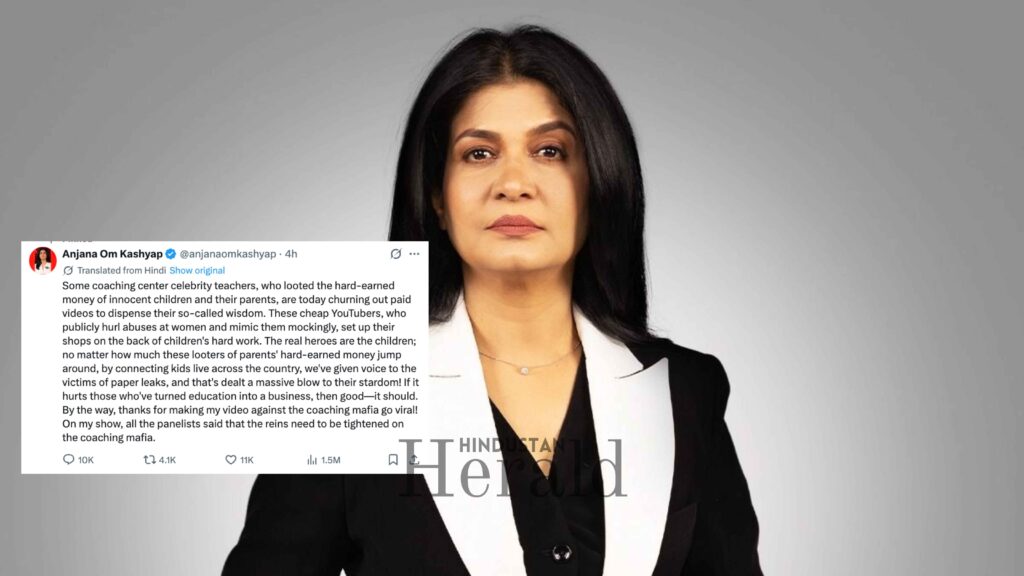
The silence from the studio side is being read in different ways. Some observers say it is standard practice for television news to simply wait controversies out. Others argue that in this case, with the response being so large and so personal, that strategy may not be enough.
For now, the debate has moved well beyond the original clip. It has become a referendum on a larger question: who actually serves Indian students, and who gets to decide?
That question, as it turns out, is one that millions of ordinary young people across this country feel very strongly about. And on this occasion, they made sure their answer was heard.
Stay ahead with Hindustan Herald — bringing you trusted news, sharp analysis, and stories that matter across Politics, Business, Technology, Sports, Entertainment, Lifestyle, and more.
Connect with us on Facebook, Instagram, X (Twitter), LinkedIn, YouTube, and join our Telegram community @hindustanherald for real-time updates.

Covers Indian politics, governance, and policy developments with over a decade of experience in political reporting.
- Ananya Sharma

- Ananya Sharma
- Ananya Sharma
- Ananya Sharma




 Ayesha Khan
  Sandeep Verma