
 By Arun Upadhayay
New Delhi, April 17: So this guy rented a Rolls-Royce, made chai next to it, charged Rs 300 a cup, and lost money. Then he got on Instagram and told everyone exactly how much he lost.
That last part is what broke the internet.
Deluxebhaiyaji, as he calls himself online, is not a businessman in the traditional sense. He is a creator. The kind who gets an idea at some point during the week, thinks “what if,” and then actually goes and does it instead of just posting about it. This week, what he did was park one of the most expensive cars on the planet next to a chai tapri setup and ask strangers if they wanted to sit inside a Rolls-Royce and drink saffron tea.
A surprising number of people said yes.
He Spent Rs 1 Lakh Just to Rent the Car
Let that land for a second.
The Rolls-Royce rental alone cost him Rs 1 lakh. Not the tea. Not the posters he printed. Not the branded umbrellas he gave to guests. Not the little booth he set up to make the whole thing look presentable. Just the car, for the day.
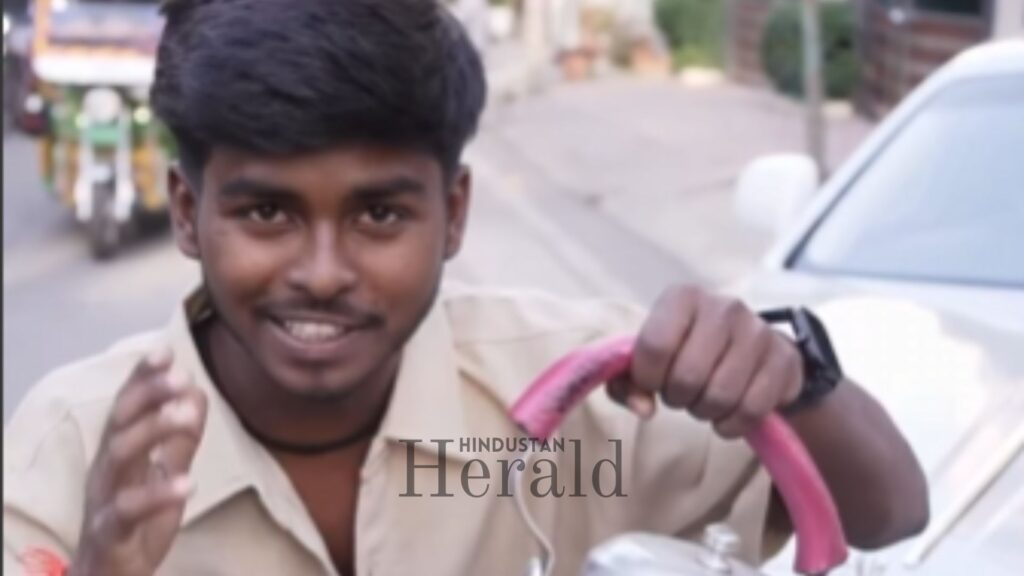
He partnered with a local tea vendor to handle the actual brewing. The chai was not your average roadside cutting. It was saffron tea, priced at Rs 300 a cup, which in most parts of India will get you looks that range from amused to genuinely offended. The real draw though was not the tea at all. It was the car. Pay up, sit inside, get a branded umbrella, maybe a short ride. Have a story to tell at dinner.
His pitch to every passerby was one line: “Have you ever had tea in a Rolls-Royce?”
It worked. People stopped. Families came over. A crowd built up naturally, the way crowds do in India when something is slightly strange and worth staring at. By all accounts the event had real energy.
Then He Counted the Money
Total spent: roughly Rs 1.08 lakh.
Total earned: Rs 88,400.
Loss: around Rs 19,600.
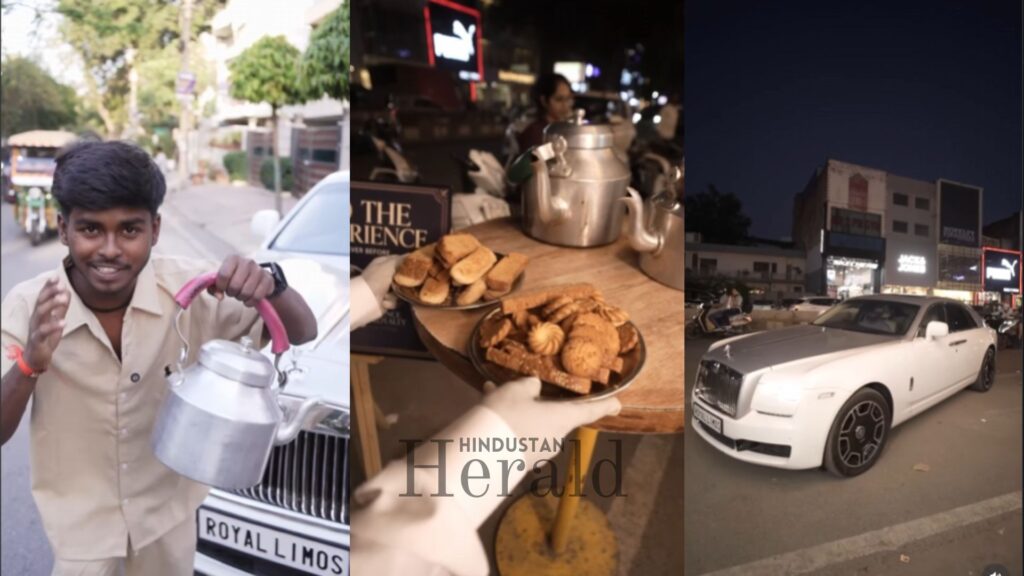
He posted the numbers himself. No spin. No “this was a long-term investment in my brand.” No talk of learnings or pivots or audience growth metrics. Just: here is what I spent, here is what I made, here is the gap. According to Asianet Newsable, it was that openness, more than the stunt itself, that struck a chord with people online.
And honestly, that tracks. We are used to creators showing us the wins. The new car. The brand deal. The screenshot of the transfer. The moment where it all clicks. What we seldom see is someone coming back the next day and saying, right, so it did not work out the way I hoped, here are the exact numbers.
That kind of thing still feels rare enough to be remarkable.
Why Rs 300 Chai Next to a Rolls-Royce Makes Complete Sense in India
On paper, this stunt sounds ridiculous. In practice, it makes a very specific kind of sense that anyone who has grown up in this country will immediately recognise.
Chai in India is not just a hot drink. It is the one thing that genuinely cuts across every line, class, income, region, and language. The same cup, more or less, that a construction worker drinks at 7 in the morning is the one a senior bureaucrat has sent to his desk at 11. It belongs to everyone. Nobody owns it. Nobody gatekeeps it.
A Rolls-Royce is the precise opposite of all that. It is a car that exists, functionally, to be out of reach. In India, where base prices for the marque start well above Rs 6 crore, a Rolls-Royce is not really a vehicle. It is a statement. Often a very loud one.
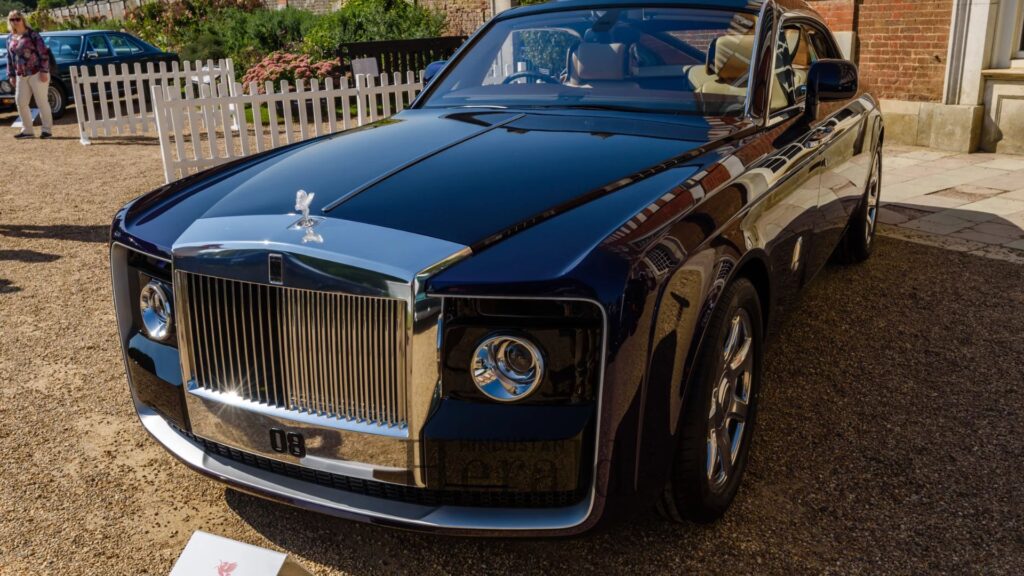
Put those two things next to each other and something interesting happens. The gap between them becomes the point. People are not buying tea at Rs 300. They are buying the experience of standing inside that gap for a few minutes, of being in a photograph where the background is a Rolls-Royce, of having something to say at the end of the day that sounds better than “I had chai on the way home.”
That is not stupidity. That is a very human thing.
The Creator Economy Has an Honesty Problem, and This Guy Accidentally Fixed It
India now has one of the largest bases of short-form video creators anywhere in the world. Hundreds of thousands of people filming, editing, posting, grinding for views and followers and brand deals and the possibility that one video will change everything.
Most of that content, if you spend enough time watching it, starts to feel the same. The formula is not hard to spot. Aspirational setup. Dramatic reveal. Uplifting conclusion. Everything worked out. Everything was worth it. Keep watching.
Deluxebhaiyaji broke that formula without making a big deal of breaking it. He just told the truth about what happened. The stunt was creative and fun and drew real people and real energy, and it also lost him roughly twenty thousand rupees. Both things are true. He said both things.
People responded to that like they were thirsty for it. Because they probably were.
There is a generation of young Indians watching creator content right now who are also trying to figure out whether to start something, whether to take a risk, whether the gap between what they see online and what their own life looks like means they are doing something wrong. When someone shows up and says: I tried this weird thing, it did not make money, I do not regret it, that is actually useful information. It is more useful than another success story.
What About the People Who Actually Showed Up
This is the part that tends to get lost in the conversation about virality and numbers.
Real people came to this thing. Families. Regular people who were passing by or heard about it and decided to come see. They paid Rs 300, which is not a small amount for a cup of tea in most Indian households, and they sat inside a car they will in all likelihood never own, and they drank saffron chai, and someone probably took a photo, and they went home with something they did not have that morning.
That something is hard to name precisely. A memory, maybe. A story. The small particular pleasure of having done something unexpected on an otherwise ordinary Thursday.
Deluxebhaiyaji said at some point that people’s happiness mattered more to him than profit. That could sound like something you say to explain away a loss. Except that the footage does not really support that reading. The people in the video look like they are genuinely having a good time. Not performing happiness for the camera. Actually enjoying themselves, which in the middle of a regular week is nothing.
So Was It Worth It
That depends entirely on what you think the point was.
As a business, no. You cannot build a sustainable income by renting a Rs 1 lakh car and selling Rs 300 chai at a loss. The math does not work and a few commenters on the video pointed this out, not cruelly, just accurately.
As a piece of content, yes. The video spread. New people found his page. The name deluxebhaiyaji is now attached to a specific idea in the minds of everyone who watched, which is: this is someone who will try something unusual and tell you honestly what happens.
That is nothing either. In the creator economy, trust is the actual currency and trust is built slowly, usually through small repeated moments of not performing, not optimising, not presenting a version of yourself that has been filtered until it no longer resembles a real person.
One honest loss, shared openly, can do more for that than a dozen polished success videos.
Still, the Rs 19,600 is gone. He knows that. He said that. And somewhere out there, a few hundred people are telling someone about the time they had saffron chai in a Rolls-Royce, which cost a young man twenty thousand rupees to make possible, and which he says he does not entirely regret.
India has always had a soft spot for that kind of madness.
Stay ahead with Hindustan Herald — bringing you trusted news, sharp analysis, and stories that matter across Politics, Business, Technology, Sports, Entertainment, Lifestyle, and more.
Connect with us on Facebook, Instagram, X (Twitter), LinkedIn, YouTube, and join our Telegram community @hindustanherald for real-time updates.

- Arun Upadhayay

- Arun Upadhayay
- Arun Upadhayay
- Arun Upadhayay




 Herald Desk
  Ayesha Khan