
 By Ananya Sharma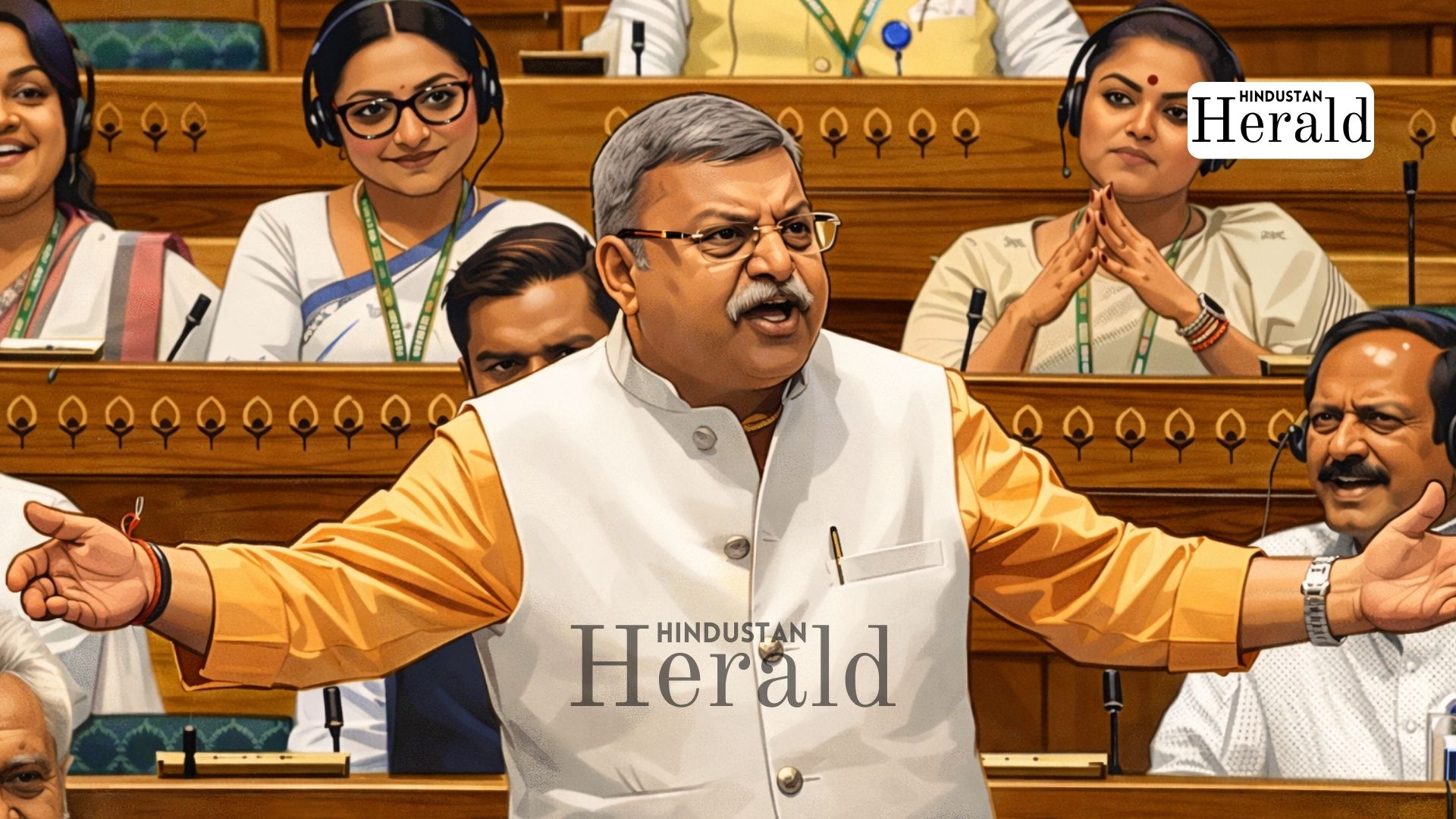
Kalyan Banerjee,New Delhi, April 17: Let’s be honest about what happened in the Lok Sabha on Thursday. A sitting Prime Minister made a joke at an Opposition MP’s expense, the ruling benches laughed, and the clip was on every WhatsApp group in the country within the hour. Narendra Modi, mid-speech during the debate on the Women’s Reservation and Delimitation Bills, turned toward the Opposition and said, roughly translated: “Oh brother, let him speak, the poor man’s mouth is locked there, he isn’t even allowed to speak in Bengal.” The target was Kalyan Banerjee, TMC’s four-term MP from Sreerampur, who had been raising slogans from his seat.
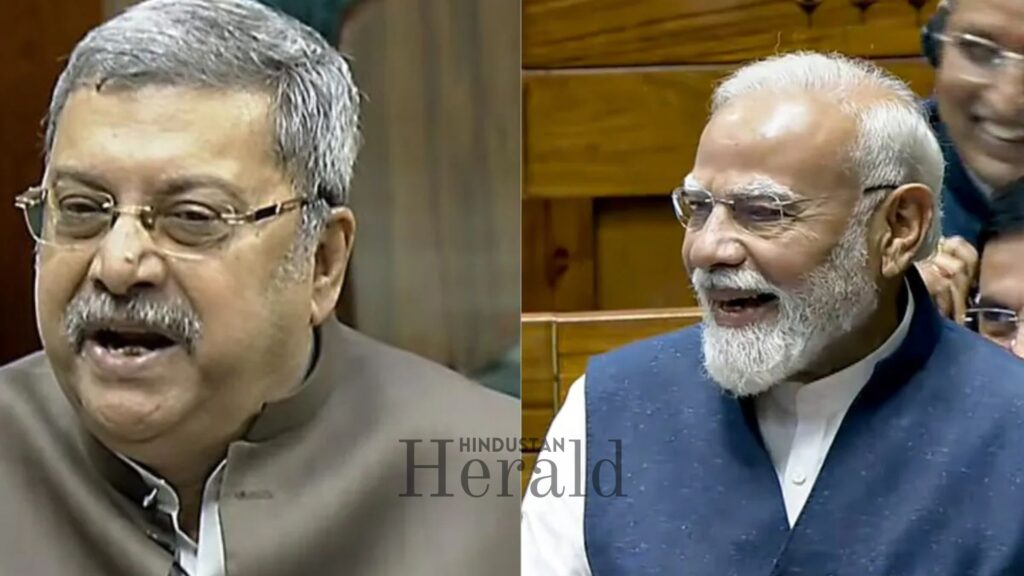
The House laughed. Social media loved it. And in the process, what Banerjee had actually said before that the argument that prompted the sloganeering in the first place got buried under a punchline.
That argument deserves more than a footnote.
What Banerjee Actually Said
The TMC’s Chief Whip in the Lok Sabha had risen to speak on the Women’s Reservation Bill and had done something relatively rare in Indian parliamentary debate: he separated the principle from the politics. His party, he said, supports women’s reservation. Always has. The problem is not the idea. The problem is what the government has decided to attach to it.
He then raised something that most television anchors skipped past in their rush to air the Modi clip. He asked, plainly and on the record, why Parliament had been called into a special three-day sitting at exactly the moment when West Bengal and Tamil Nadu are holding assembly elections. He went further would this happen, he asked, if Uttar Pradesh were going to the polls instead?
According to Newsonair’s coverage of the Lok Sabha proceedings, Banerjee called the timing “unfair and unfortunate,” and demanded that women’s reservation be implemented on Parliament’s existing seat strength, without bundling it with a delimitation exercise that he and his party see as a completely different animal.
It was a pointed intervention. And it touched a nerve, which is probably why it earned a Prime Ministerial joke rather than a Prime Ministerial response.
Three Bills, One Messy Package
To understand the row, you need to understand what the government has actually introduced this week. It is not one bill. It is three, and they are designed to work together in ways that not everyone agrees with.
The first seeks to operationalise the Nari Shakti Vandan Adhiniyam, the Women’s Reservation Act passed in 2023, which promises 33 per cent of Lok Sabha and assembly seats to women. That Act has been sitting unimplemented since it was passed, because it was tied to a census and delimitation exercise that had not happened. The second bill is a Constitutional Amendment to delink the reservation from the census. The third is the one making everyone nervous: a Delimitation Bill that proposes to expand the Lok Sabha from 543 to 850 seats, based on population data from the 2011 census.
As reported by Business Today, the government plans to have the women’s reservation in place before the 2029 general elections, with constituency boundaries redrawn based on the 2011 census rather than waiting for the 2027 census.
Taken together, it is an enormous legislative undertaking. Whether it is a sincere one is what the Opposition is fighting over.
The South’s Fear and the Federal Question
The TMC’s discomfort is real, but the deeper anxiety in this debate belongs to the southern states, and it is not a small thing.
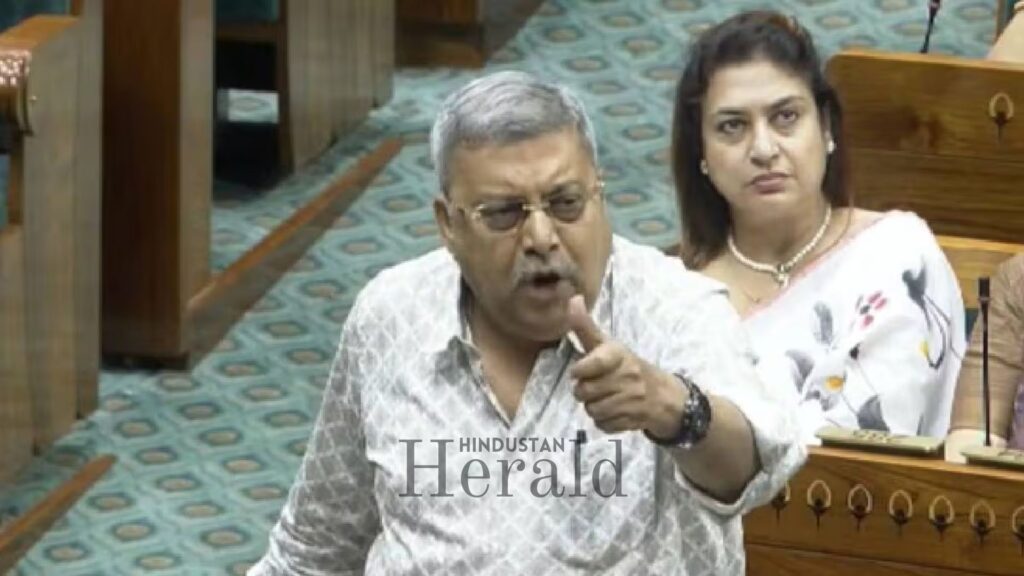
States like Tamil Nadu, Kerala and Andhra Pradesh have, over decades, brought their population growth under control. They invested in public health, in women’s education, in family planning. They followed the rules, broadly speaking, of what good governance is supposed to produce. States in the north, particularly Uttar Pradesh and Bihar, have had much higher population growth rates. A delimitation exercise based on population would, by simple arithmetic, give more parliamentary seats to the states that grew faster. Southern states get penalised for doing what the government told them to do.
As reported by Outlook India, Congress, TMC, DMK and the Samajwadi Party have all raised the argument that the delimitation proposal could shift political power towards the north, weakening the federal balance. The Opposition has demanded that any all-party consultation on this happen after the Bengal and Tamil Nadu elections are done.
Sonia Gandhi put it in the starkest terms possible, describing the delimitation proposal as “extremely dangerous” and an assault on the Constitution. DMK’s K Kanimozhi alleged inside the House that these bills were specifically designed to disrupt elections in Tamil Nadu and other states.
The government’s response, from PM Modi himself, was that there would be no discrimination between states, north or south, big or small. Whether that assurance satisfies the Southern Bloc remains to be seen.
Banerjee’s Track Record in Parliament
Kalyan Banerjee is not the sort of politician who stumbles into controversy accidentally. He is a Senior Advocate of both the Supreme Court and the Calcutta High Court, and has been practising since 1981. He has won Sreerampur four consecutive times 2009, 2014, 2019, 2024. As Chief Whip, he is the person responsible for keeping TMC’s parliamentary group in line, which also means he is usually the one the party puts up when it wants someone who can argue, not just shout.
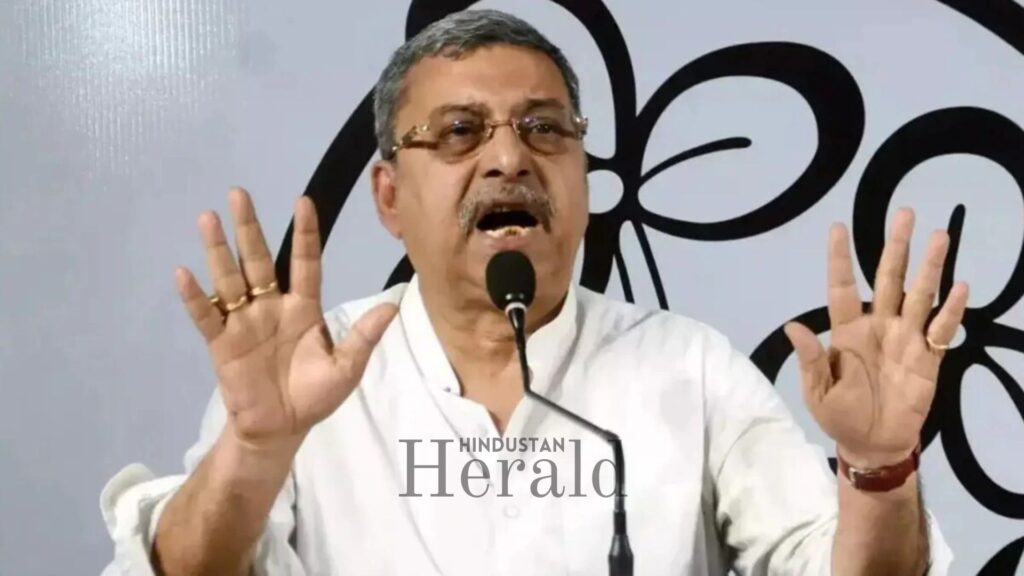
His relationship with the BJP benches has never been warm. Earlier this year, he was suspended from the Joint Parliamentary Committee on the Waqf Amendment Bill after a confrontation during proceedings. The BJP has, on multiple occasions, questioned his conduct in Parliament. BJP MLA Shankar Ghosh once publicly said Banerjee was “not fit for Parliament.” The TMC, predictably, sees it differently.
On Thursday, his role was to get the party’s objection on the official record in a way that could not be dismissed as mere disruption. He managed it. Before the sloganeering began, before Modi’s quip, he had already made his argument: support the reservation, reject the package, and stop calling Parliament into session while Bengal votes.
The Bengal Background
Six days from now, West Bengal begins voting. The first phase runs April 23, the second on April 29, with counting on May 4. All 294 assembly seats are up for grabs.
The TMC goes into this election carrying considerable baggage. Fifteen years of continuous rule, corruption scandals that have dragged on for years, the RG Kar hospital rape and murder case that shook the state in 2024, and recruitment scams across multiple government departments. The anti-incumbency is real, and the BJP has been running a high-intensity campaign, with the party’s central leadership directly involved. According to opinion surveys cited by media outlets, the race is competitive in ways that it perhaps has not been before.

Against that backdrop, every move by the Centre is being read in Kolkata as either a provocation or an opportunity. The TMC has spent the pre-election period accusing the Election Commission of India of acting at the Centre’s behest on matters ranging from the Special Intensive Revision of voter rolls to the transfer of state officials. As reported by Asianet Newsable, Banerjee filed a PIL on this very issue, accusing the EC of undermining the fundamental right to vote and hitting India’s federal structure. Chief Minister Mamata Banerjee has echoed these accusations repeatedly on the campaign trail.
The special parliamentary session, from the TMC’s perspective, is simply one more item on a long list of grievances. The timing is either a coincidence or it isn’t. The party has firmly decided it isn’t.
What the BJP Is Saying
The ruling party’s position is not complicated. The Women’s Reservation Bill is a historic piece of legislation that has waited long enough. The delimitation exercise is constitutionally necessary. The timing of the session is a parliamentary matter, not an electoral one. And if the Opposition refuses to cooperate, that is their choice to explain to women voters across the country.
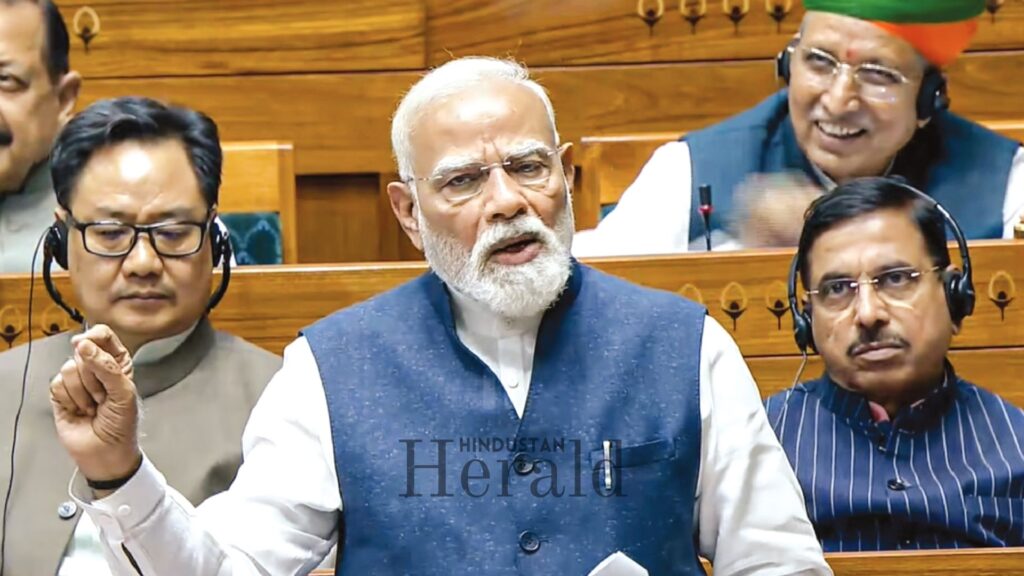
PM Modi’s speech in the House made the case for the bills in broad strokes, a historic step, long overdue, and women deserve their rightful place. The dig at Banerjee, while clearly unscripted in its delivery, fit neatly into the BJP’s wider narrative about TMC’s internal culture. The suggestion that Mamata does not allow her own MPs to speak freely is not new; it has been a BJP talking point for years. Modi simply made it land with better comic timing than usual.
Still, the government needs numbers it does not currently have. Constitutional amendment bills require a two-thirds majority in Parliament. The BJP cannot pass these bills alone. It needs the Opposition, or at least parts of it, to vote in favour. That is the leverage the Opposition is holding, and why the debate has been as charged as it has been.
For Now, Two Contests Running at Once
There is something almost absurd about the situation. India’s elected representatives are in New Delhi debating the future shape of Parliament, while simultaneously, their parties are fighting for their political lives on the ground in West Bengal and Tamil Nadu. MPs from both states are being pulled in two directions, and everyone involved is pretending this is perfectly normal.
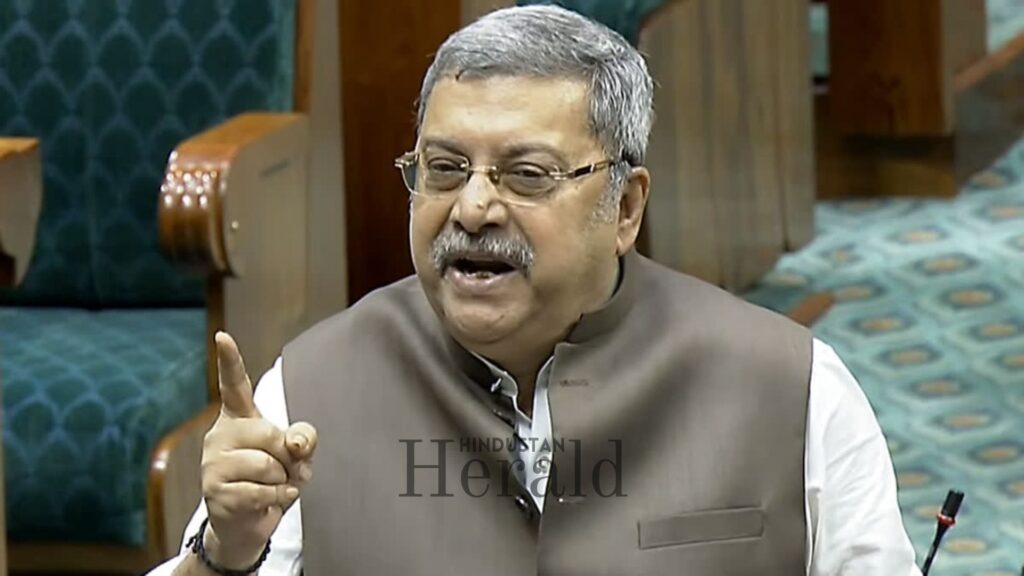
It isn’t, of course. Banerjee said as much. The question he posed would this session happen if Uttar Pradesh were the poll-bound state? is one the government has not answered cleanly. That silence matters.
The bills will likely be voted on before the session closes. Whether they pass, and in what form, will tell us something important about the state of Indian parliamentary politics beyond just the reservation numbers. And then, a few days later, Bengal votes. And the answers to both questions land at roughly the same time.
Stay ahead with Hindustan Herald — bringing you trusted news, sharp analysis, and stories that matter across Politics, Business, Technology, Sports, Entertainment, Lifestyle, and more.
Connect with us on Facebook, Instagram, X (Twitter), LinkedIn, YouTube, and join our Telegram community @hindustanherald for real-time updates.

Covers Indian politics, governance, and policy developments with over a decade of experience in political reporting.
- Ananya Sharma

- Ananya Sharma
- Ananya Sharma
- Ananya Sharma



 Herald Desk
  Sandeep Verma